REVIEW · HOSAPETE
HAMPI FULL DAY TOUR FROM HOSPET
Book on GetYourGuide →Operated by TOP TRAVEL AND TOURS P LTD. · Bookable on GetYourGuide
Stone chariots and music in ruins. This Hampi full day tour from Hospet hits the big visual hits fast, especially the Vijaya Vitthala Temple with its musical pillars (SAREGAMA) and the famous stone chariot. I also like how the day is structured around a local English-speaking guide, so you’re not just looking at stones—you’re getting the why behind them. One thing to plan for: entrance fees are not included, so your day budget needs a little extra for tickets.
Hampi is a UNESCO World Heritage Site spread across 4,100+ hectares with 1,600+ monuments, so the scale can feel overwhelming on your own. With a private AC car pickup from Hospet, guided time at the major stops, and water provided, you can pace it without feeling lost. Just keep in mind the tour is geared for sightseeing on uneven ground, not for strollers or wheelchairs.
In This Review
- Key highlights to look forward to
- Hampi’s UNESCO scale: why it helps to have a guide
- Hospet pickup and the private AC car: smoother than DIY
- Starting with Hampi orientation: how to get your bearings fast
- Virupaksha Temple: active worship and careful stone details
- Vijaya Vitthala Temple: musical pillars and the stone chariot
- Hampi Bazaar (Virupaksha Bazaar): history you can still shop
- Lotus Mahal: the lotus-inspired royal meeting space
- Elephant Stables: court power housed in stone
- Time, walking, and what to bring for a smooth day
- Price and value: what $82 buys you (and what it doesn’t)
- Who this Hampi tour suits best
- Should you book this Hampi Full Day Tour from Hospet?
- FAQ
- How long is the Hampi full day tour from Hospet?
- Where do you pick up in Hospet?
- Is there an English-speaking guide?
- Are entrance fees included in the price?
- Is the tour wheelchair accessible?
- Can I cancel and get a full refund?
Key highlights to look forward to
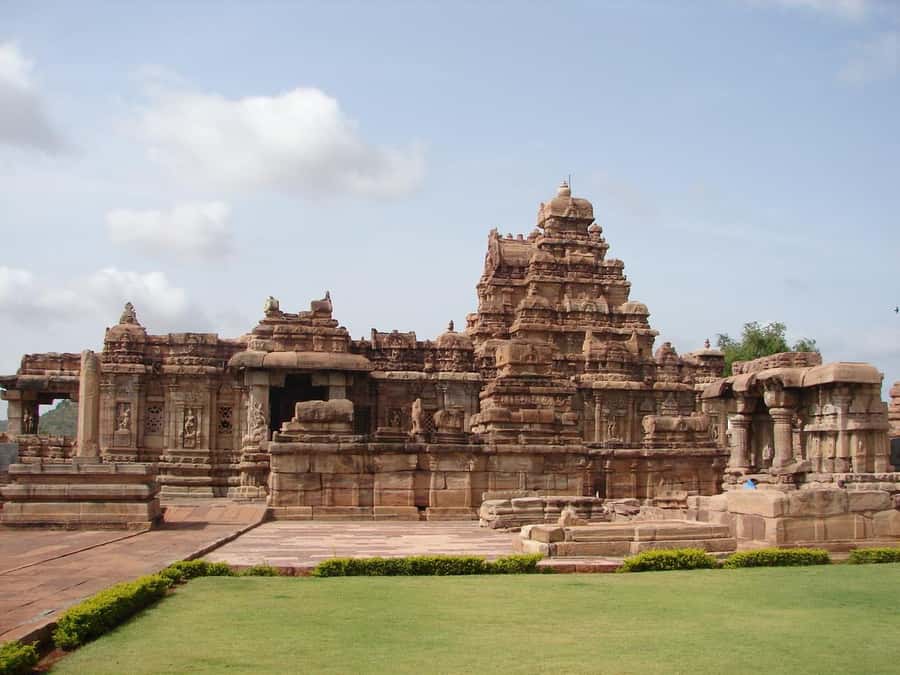
- Vittala Temple’s musical pillars (SAREGAMA): you’ll learn how the stone columns create sound and why this temple became an icon.
- Virupaksha Temple in use today: more than ruins—this one is an active place of worship dedicated to Lord Shiva.
- Stone Chariot photo moment with context: you’ll hear what it symbolizes and where it fits in Vijayanagara design.
- Lotus Mahal’s courtly design: the lotus-inspired architecture connects the architecture to royal life.
- Elephant Stables: a rare look at how the empire housed power—literally, with royal elephants.
- Private, guided pacing: you get multiple guided segments (about an hour each) and don’t feel rushed.
Hampi’s UNESCO scale: why it helps to have a guide
Hampi can feel like an entire city’s worth of monuments, scattered across a huge area. This UNESCO site covers 4,100 hectares and includes more than 1,600 monuments—temples, royal complexes, and ceremonial structures. Even if you’re only visiting for a day, you’ll want an organized route to help you connect the dots.
What I like about doing it guided is simple: you’re less likely to treat Hampi like a checklist. A good local guide helps you see patterns—temple layouts, royal spaces, and how Vijayanagara power showed up in stone. When the day is paced into focused stops, you leave with a mental map instead of just photos.
The tour also gives you time that feels practical. Each main segment is guided for about an hour, so you can pause, ask questions, and actually absorb what you’re looking at.
Hospet pickup and the private AC car: smoother than DIY
This is a private group tour with pickup from Hospet city hotels. You’ll ride in an AC car, sized to your group: a four-seater sedan for 1–2 people, an Innova-style five-seater for 3–4, and a nine-seater Traveler for 5–8.
That vehicle detail matters. Hampi ruins are spread out, and buses or shared transport can turn your day into waiting. With a private ride, you can keep the day moving and spend your time where you actually came to see.
One more practical plus: you get two 500 ml mineral water bottles per person. That’s not just comfort—it’s what helps you stay out longer between stops without scrambling for drinks.
Starting with Hampi orientation: how to get your bearings fast
You begin with pickup in Hospet and head to the Hampi area, starting with a guided Hampi overview. This first guided stretch matters because Hampi isn’t one compact monument. It’s a landscape of ruins, and you need a framework.
During this early orientation, you’ll learn how Hampi fits into the Vijayanagara Empire (14th–16th centuries) and why so many structures were built where they were. You’ll also start recognizing the types of spaces you’ll see later: sacred temple zones, royal buildings, and supporting areas that show day-to-day power.
If you’re the type who likes structure, this opening hour is a big win. It sets up the rest of the day so the temples and royal sites don’t feel random.
Virupaksha Temple: active worship and careful stone details
One of the most important stops is Virupaksha Temple, dedicated to Lord Shiva. This temple is not just a ruin behind a fence. It’s one of the oldest and most significant temples in Hampi and it remains an active place of worship.
That active status changes how you experience it. You’re not only looking at carvings and architecture; you’re sharing space with ongoing devotion. With a guide, you can focus on the details that matter—intricate stonework and the feel of the place as a living spiritual center.
Practical tip: when a temple is in use, dress and behavior really matter. You’ll want to cover appropriately and move respectfully while you take photos.
Vijaya Vitthala Temple: musical pillars and the stone chariot
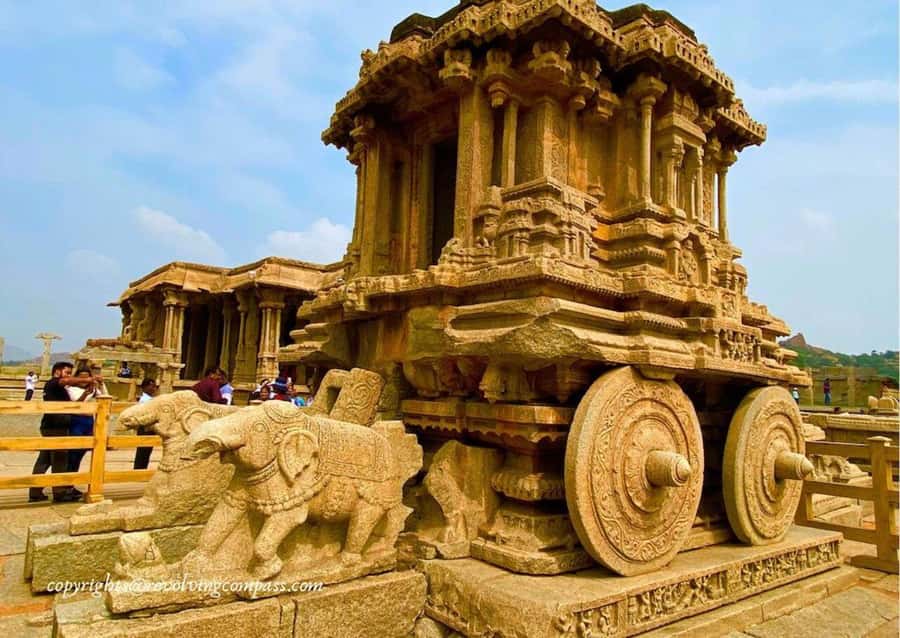
If you want one location that makes Hampi feel legendary, it’s Vijaya Vitthala Temple. It’s famous for the musical pillars—often linked with SAREGAMA—and for the stone chariot, which has become a symbol of Hampi.
With a guide, this stop becomes more than a visual wow. You get the architectural idea behind the musical pillars: how the design turns structure into sound. Even if you can’t test it like a musician, you’ll understand why the pillars are so celebrated and what they were meant to represent.
Then there’s the stone chariot. It’s a famous landmark, but the best part is learning how it fits into the temple complex’s storytelling. You’ll also get time to circle around, adjust your angle, and take photos without feeling rushed.
This is a highlight for a reason. If you only remember one thing from Hampi, it should probably be this temple’s mix of engineering and artistry.
Hampi Bazaar (Virupaksha Bazaar): history you can still shop
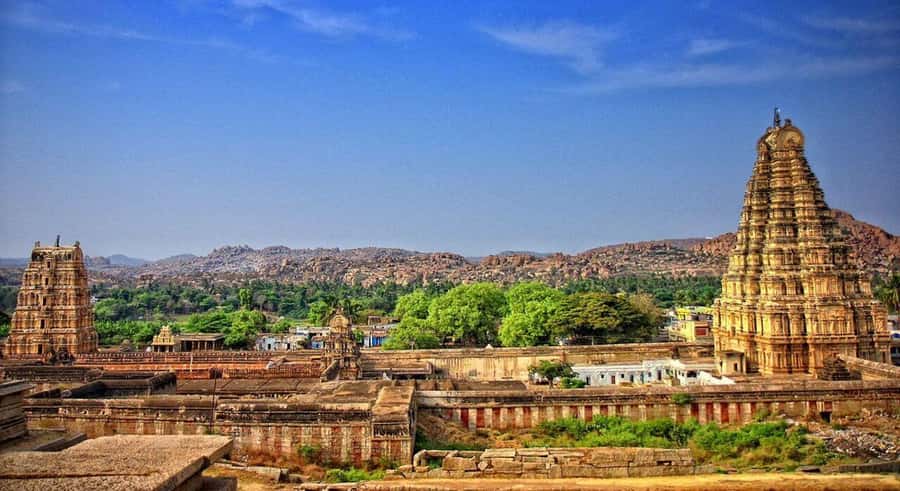
Next up is Hampi Bazaar, also known as Virupaksha Bazaar. This area connects the sacred world of temples with the practical world of markets. During the Vijayanagara Empire, it functioned as a bustling marketplace—pavilions, vendors, and daily commerce built right into the city’s rhythm.
With a guide, you’ll understand the historical role of these pavilions and how the bazaar fed the life of the empire. You can also look for shopping opportunities here, including local crafts and items connected to the area’s culture.
There’s also a cultural calendar note: the bazaar is known for events like the annual Hampi Utsav. If your dates line up, it can add energy to the experience. If not, you’ll still get the sense of Hampi as a working cultural place, not just an archaeological site.
Lotus Mahal: the lotus-inspired royal meeting space
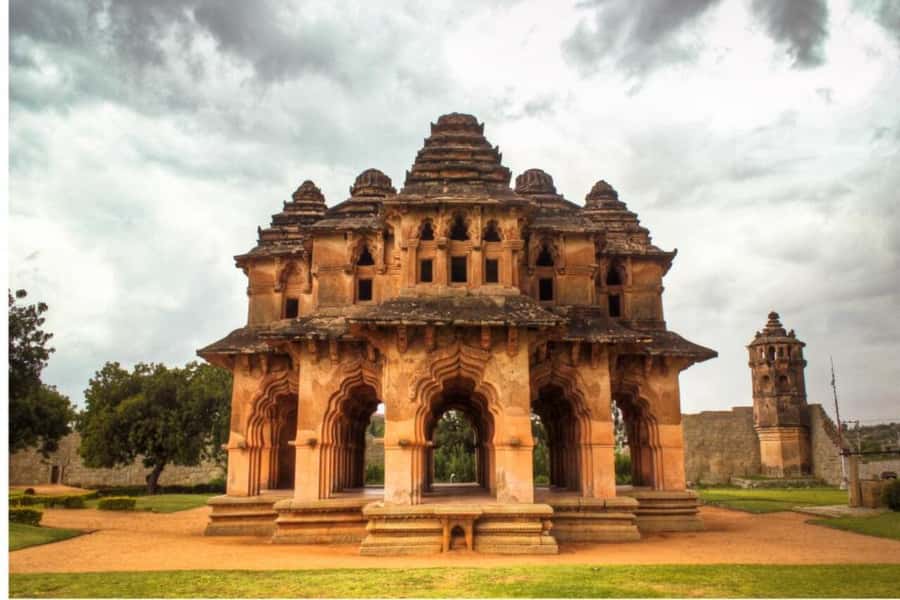
Lotus Mahal is one of those stops that looks like a surprise—an elegant, lotus-inspired structure with a story attached to royal life. It’s believed to have been a meeting place for royal women.
That detail matters because it reframes what you’re seeing. You’re not only admiring form. You’re thinking about how space was designed for specific social and court functions. It’s architecture with an audience in mind.
If you like symmetry, light, and shapes, this is a great pause in the day. It also helps break the “temple concentration” so the royal and secular dimensions of Vijayanagara Hampi feel balanced.
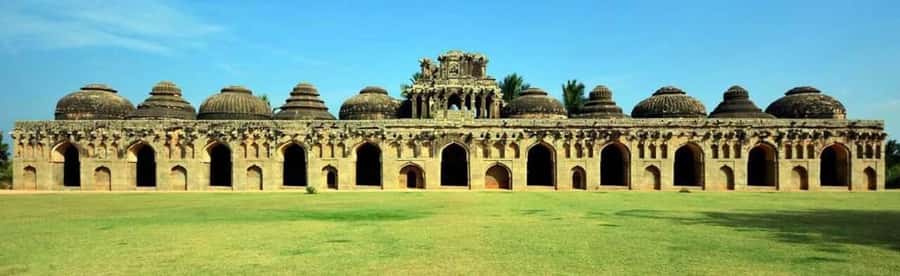
Elephant Stables: court power housed in stone
Then you’ll visit the Elephant Stables, a major architectural feature from the 15th century. These were the royal stables for the elephants of the Vijayanagara Empire.
This stop gives you a different kind of history. Instead of focusing only on worship and ceremonial temples, you see how the empire managed status and power in daily operations. Elephants were part of royal display and military capability, so the stables show how a ruler’s world required infrastructure.
With guidance, it’s easier to picture the scale of what once happened here. The stone is still; the story isn’t.
Time, walking, and what to bring for a smooth day
This tour runs about 8 hours, with multiple guided segments across the Hampi area. That means you’ll be walking between sites and spending real time looking up close at uneven, old surfaces.
The tour is not wheelchair accessible, so plan on moving your body from stop to stop. And if you’re bringing an infant, they must sit on laps.
What to bring:
- Comfortable walking shoes (ruins and stone paths can be uneven)
- A hat or cap and sun protection (you’ll spend a lot of the day outdoors)
- A light layer (weather can shift)
- A small bag for water and essentials
Also, note the rules: alcohol and drugs are not allowed on the tour. Keep that in mind if you were thinking of treating it like a picnic day.
If your goal is photos plus understanding, this is a solid way to get both without turning the day into a rushed sprint.
Price and value: what $82 buys you (and what it doesn’t)
At $82 per person, this is priced as a private full-day circuit with real added value: private AC transfer, hotel pickup and drop-off in Hospet, an English-speaking guide, and 2 bottled waters per person, plus taxes.
What you’re not paying for: entrance fees. That’s common for many heritage tours, but it’s worth planning for so you don’t get surprised at the sites. Your total cost will depend on the entrance charges in effect for the monuments you visit.
Is it good value? If you’d otherwise need to arrange transport plus find an English guide, this structure can save hassle. It also protects your time: you’re not negotiating routes between ruins all day. You’re getting a timed day with multiple guided stops.
And because it’s private, you can ask questions and adjust your pace compared with a group bus tour. That flexibility is part of why people enjoy this style of day trip.
Who this Hampi tour suits best
This is a great fit if:
- You want an organized, guided day across top Hampi sights
- You care about the stories behind Vittala Temple, Virupaksha Temple, and the royal structures
- You prefer private AC comfort over public transport
- You’d enjoy learning from a guide who brings history to life through practical explanations and stories
It’s not a great fit if:
- You’re pregnant, since the tour is listed as not suitable
- You need wheelchair access
- You’re expecting a low-walking, mostly flat route
Should you book this Hampi Full Day Tour from Hospet?
If you want Hampi’s highlights in one day without getting tangled in transport and interpretation, I’d say book it. The combination of English guidance, private car comfort, and a route that covers temples, royal architecture, and the bazaar makes the day feel complete.
Book it especially if your top goal is understanding why musical pillars, the stone chariot, Lotus Mahal, and the Elephant Stables matter—not just seeing them once from a distance.
If you’re on a tight budget and hate paying entrance fees separately, you’ll need to do a little extra math. But for most people, the $82 price is a straightforward way to buy a well-paced day with less stress.
FAQ
How long is the Hampi full day tour from Hospet?
It runs for about 8 hours, including pickup, guided time at the main sites, and the drive back to Hospet.
Where do you pick up in Hospet?
Pickup is from city hotels in Hosapete/Hospet. If you’re staying outside the city hotels area or coming from the airport/railway station, an additional charge may apply.
Is there an English-speaking guide?
Yes. The tour includes an English-speaking guide at Hampi.
Are entrance fees included in the price?
No. Entrance fees are not included.
Is the tour wheelchair accessible?
No, the tour is not wheelchair accessible.
Can I cancel and get a full refund?
Yes. You can cancel up to 24 hours in advance for a full refund.