REVIEW · KOCHI
Funny and helpful Tuk Tuk Tour in Kochin
Book on Viator →Operated by Friendly Tuk Tuk Tour · Bookable on Viator
Kochi rolls by on four wheels. This private tuk-tuk tour turns Fort Kochi into an easy, story-filled loop, with a driver who explains what you’re seeing and why it matters. I really like the combination of major landmarks and local street life, and I also like that you can customize the route to match your interests. One thing to keep in mind: if you want zero shopping stops, tell your driver up front—you may see pressure to detour into retail during this style of tour.
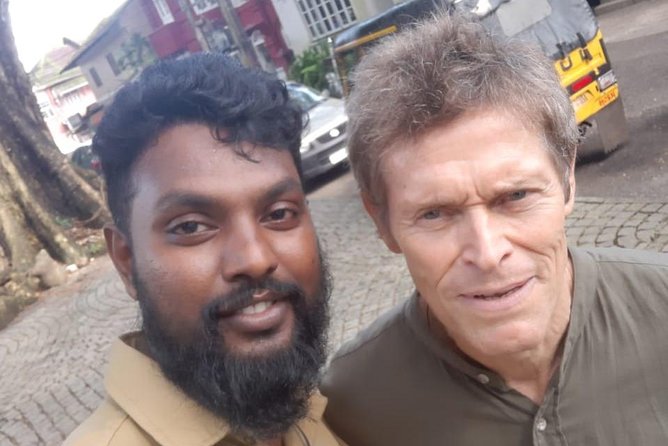
The best part is the human factor. On past rides, drivers such as Shoaib, Haris, Nishad, and Aaru have been friendly, funny, and ready to adjust to what you care about, from history to everyday Kochi habits. You’ll likely get clear English commentary, and you’ll move at a comfortable pace without the hassle of bargaining for transport.
If you’re short on time, this works fast. If you hate being rushed, build in a little buffer because the sights are packed into about 3 to 4 hours, with multiple 10 to 20 minute stops.
In This Review
- Key things I’d zero in on
- Kochi by tuk-tuk: why this private loop is good value
- Setting your route: how to make it fit your interests
- Chinese Fishing Nets: the 14th-century trading link you can see
- Fort Kochi Beach: a short pause with real sea air
- Church of Saint Francis: Portuguese-Gothic architecture and Vasco da Gama
- Dutch Cemetery and Dhoby Khana: colonial markers and everyday work
- Santa Cruz Cathedral Basilica: woodwork, altars, and stained glass
- Indo-Portuguese Museum: artifacts that explain the meet-up
- Mattancherry Palace and Paradesi Synagogue: power, trade, and tilework
- Cochin Thirumala Devaswom Temple, Jain Temple, and Jew Town streets
- Cochin Spice Market: the quickest way to taste the city’s trade roots
- Timing, comfort, and how to get the most out of 3 to 4 hours
- Who this tour fits best (and who should choose differently)
- Should you book this Kochi tuk-tuk tour?
- FAQ
- How long is the tuk-tuk tour?
- Is the tour private, and how many people can go?
- Is pickup included?
- Are mobile tickets used?
- Are entry tickets included for the sites?
- What’s the cancellation rule?
Key things I’d zero in on
- Private tuk-tuk, small-group feel: price is set per group (up to 3 in one detail; up to 4 passengers in the tour description), so you’re not stuck with strangers.
- Local driver stories you can steer: your guide adjusts the ride to your interests, and several drivers have been praised for humor and clear English.
- Fort Kochi + Mattancherry in one loop: you hit Portuguese, Dutch, Jewish, and Kerala temples close together.
- Daily life is part of the plan: you don’t just park at monuments; you also see places like the public laundry where clothes are still scrubbed by hand.
- A mix of paid and free stops: some sites list admission included, while Fort Kochi Beach is free.
- Ask for a no-shopping route: one low rating flagged an unwanted carpet-shop-type stop, so set expectations early.
Kochi by tuk-tuk: why this private loop is good value
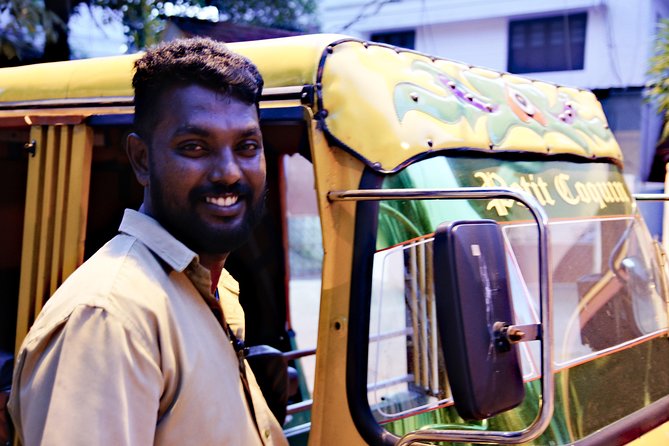
In Kochi, getting from one “must-see” to the next can turn into a whole second vacation. This tour cuts that problem down by putting you in a private auto-rickshaw style ride and letting a local driver handle the turns. You get pickup offered, a mobile ticket, and a plan that’s designed to cover a lot in a short window.
The price is per group, which is where the value really shows. Instead of paying for each person separately, you’re paying once for the vehicle experience for your party. At about $16.74 per group and roughly 3 to 4 hours on the clock, it’s one of those deals where the main “payment” is your time and flexibility. If you’re the type who likes efficient sightseeing but still wants real context, this format fits.
Also, private matters here. Kochi’s older neighborhoods can be a bit chaotic on foot, and squeezing in landmarks without constant regrouping is where a driver earns their keep. You’re not chasing your group through side streets; you’re being dropped at sensible points and guided through what to look for.
You can also read our reviews of more tours and experiences in Kochi.


Setting your route: how to make it fit your interests
The tour is built around customizable routes, which is exactly what you want in a city with layered cultures. If you’re the history-first type, ask for more time around the Portuguese and Dutch-era sites. If you care more about religion and architecture, you’ll probably want extra attention at the churches and temple stops. If you’re a food-and-market person, keep Cochin Spice Market on the list and ask the driver what’s best to see there for beginners.
Here’s the practical move that protects your experience: say what you do and do not want before you leave. Based on one negative experience, a detour into a shop that felt unnecessary can happen. If your goal is sights and local life, say something like you’d rather keep the route tight to the landmarks and avoid extra commercial stops. A good driver will respect that.
Chinese Fishing Nets: the 14th-century trading link you can see
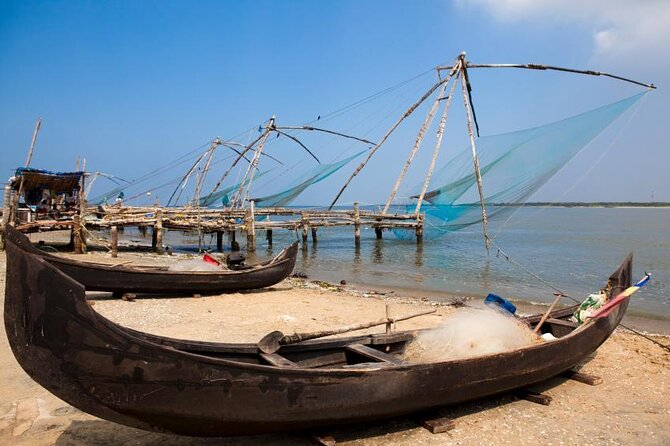
You start with the Chinese Fishing Nets, one of those Fort Kochi images people recognize instantly—huge stationary nets, angled out like they’ve been waiting forever. The story behind them is part of why this stop lands: they connect to a 14th-century Chinese trade link, which is a reminder that Kochi has long been a meeting point for traders and cultures.
What I like about this first stop is that it’s easy to understand even if you know nothing about the city. You can stand back, spot how the nets are set up, and then focus on the details your driver points out. You’ll have about 20 minutes here, and admission is listed as included, so it’s not a “quick photo then pay later” stop.
If you’re a morning person, go in ready to observe: look for how the nets are arranged and how locals work around the waterfront rhythms.
Fort Kochi Beach: a short pause with real sea air
Next comes Fort Kochi Beach, with a 20-minute break to reset. This is your chance to get away from the street noise for a moment and enjoy Arabian Sea views. It’s not designed to be a long beach day; it’s more like a breathing space inside a sightseeing loop.
What makes this stop worth it is timing. You’re between major cultural sites, and a quick coastal pause helps you keep your energy for the next stretch of churches, cemeteries, and palaces.
Church of Saint Francis: Portuguese-Gothic architecture and Vasco da Gama
The Church of Saint Francis is a big one in Kochi’s European footprint. This 16th-century church is known for its blend of Portuguese and Gothic architectural styles, and it also connects to one of the names that shows up again and again in India-Portuguese contact: Vasco da Gama.
You’ll have around 20 minutes at the church. Admission is listed as included, which makes it simpler to plan. The best way to experience this stop is to slow down for the architecture, then shift your attention to the parts of the site your driver highlights—especially the tomb of Vasco da Gama, which reflects how Kochi became important in older sea routes.
If you like places where architecture and famous names intersect, this stop is a strong match.


Dutch Cemetery and Dhoby Khana: colonial markers and everyday work
After the church, the tour pivots from grand European presence to quieter evidence of old contact.
First, the Dutch Cemetery gives you about 10 minutes of stillness. The point here isn’t scale; it’s detail. You’ll see intricately carved tombstones and graves of Dutch and other European settlers, dating back to the 17th and 18th centuries. It’s the kind of stop where your attention naturally shifts to craftsmanship—carving, lettering, and the way graves are arranged.
Then you head to Dhoby Khana Public Laundry, where life is active and hands-on. This is a centuries-old public laundry where dhobis (washermen) scrub clothes by hand. It’s about 20 minutes here, with admission listed as included.
This combo is smart: the Dutch cemetery is about remembering, while the laundry is about continuing. If you want Kochi beyond postcards, this is one of the most “you’re really here” moments on the route.
Santa Cruz Cathedral Basilica: woodwork, altars, and stained glass
Santa Cruz Cathedral Basilica brings the Portuguese influence forward again, but with a distinctly eye-catching style. You’ll visit the 16th-century basilica, and it was later elevated to cathedral status by Pope Paul IV.
Expect about 20 minutes. Admission is listed as included. What your driver will likely point out is the mix of craft and detail: ornate altars, intricate woodwork, and stained-glass windows. This is one of those stops where it helps to look both up and around, not just at the main facade.
If you like churches as architecture—rather than only as faith places—this one will hold your attention for the full time slot.
Indo-Portuguese Museum: artifacts that explain the meet-up
Next is the Indo-Portuguese Museum, again tied to the cultural exchange that shaped Kochi. You’ll have about 20 minutes, with admission listed as included.
The value here is that it gives you context for the stops you’ve already seen and the ones coming next. Instead of treating each landmark as random, the museum helps you connect the dots between Portuguese-era presence, local adaptation, and how those influences show up in everyday spaces and religious buildings.
If you like to understand what you’re looking at—not just take photos—this museum stop earns its spot.
Mattancherry Palace and Paradesi Synagogue: power, trade, and tilework
Two standout stops follow close together: Mattancherry Palace and Paradesi Synagogue.
Mattancherry Palace (about 20 minutes) was built by the Portuguese and gifted to the Kochi Maharaja. You’ll see a blend of Dutch, Portuguese, and Kerala architectural styles. It’s a reminder that “European influence” in Kochi often arrived through local systems—gift-giving, governance, and trade connections—rather than just conquest and replacement.
Then comes Paradesi Synagogue, also about 20 minutes, with admission included. This 16th-century synagogue is known as one of India’s oldest, and it’s packed with visual details: intricate tiles, ornate chandeliers, and ancient Torah scrolls.
If you like religious architecture, this is a powerful contrast pair: one site reflects palace diplomacy and colonial-era contact; the other reflects the long presence of Jewish communities tied to trade networks.
Cochin Thirumala Devaswom Temple, Jain Temple, and Jew Town streets
After the major landmark hits, you go into a slower, more atmospheric section of the tour.
At Cochin Thirumala Devaswom Temple (about 20 minutes), you’ll experience traditional Kerala architecture and intricate wood carvings. This stop is all about serenity and craftsmanship—less about big crowd energy and more about quiet details.
Then you visit the Jain Temple (about 20 minutes). The focus here is intricate carvings and sculptures that reflect Jainism’s artistic and spiritual traditions. If you’re drawn to pattern, sculpture, and the feeling of a place shaped by devotion, this is worth your time.
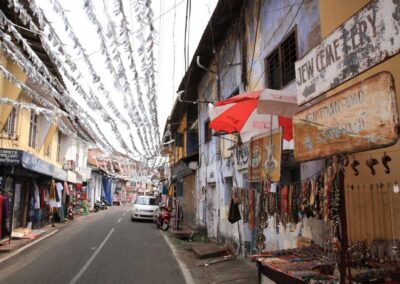
Jew Town is the street-level payoff (about 15 minutes). You’ll wander through a historic neighborhood tied to Kochi’s Jewish heritage, where you can spot colonial-era architecture, quaint shops, and local landmarks. This stop helps you understand that history isn’t only in monuments—it’s in the streets.
Cochin Spice Market: the quickest way to taste the city’s trade roots
The final stretch includes Cochin Spice Market, around 10 minutes. The point isn’t to buy your yearly pantry in one stop. It’s to experience the trading tradition that shaped Kochi’s global connections.
You’ll walk through a place where the air carries the scent of spices, and you’ll see colors and piles arranged for buyers. This is one of those sensory stops where your driver’s commentary can help you sort what’s what—especially if you’re new to the region’s spice trading.
Practical tip: if you plan to buy spices or small gifts, go in with a simple list and small bills. You’ll get a better experience if you don’t wander for too long.
Timing, comfort, and how to get the most out of 3 to 4 hours
This tour is designed to run about 3 to 4 hours, with multiple stops ranging from 10 to 20 minutes. That’s plenty of time if you’re aiming for an overview plus a few “wow” moments, but it’s not built for long sits or deep study at every site.
Comfort-wise, bring what you’d bring for walking in warm weather: light layers, sunscreen, and a hat. Even if you’re in a vehicle for most of the movement, you’ll still step out repeatedly. Also, think about your pace preference before the tour starts. If you love photos, ask your driver for a few extra moments at architectural stops. If you prefer people-watching and street vibe, focus your time on places like Dhoby Khana and Jew Town.
One more small strategy: choose your top 2 priorities before you meet. Tell your driver what you’re most excited about, and let the route flex around that.
Who this tour fits best (and who should choose differently)
I’d recommend this experience if you want:
- A private way to cover Fort Kochi highlights without transport stress
- Culture and history in a short time window
- A driver who explains what you’re seeing and can adjust when you change your mind
It might not fit as well if:
- You want long stays at fewer sites rather than quick hits across many areas
- You strongly dislike any risk of shop detours (your best defense is to clearly request a sight-only route)
Should you book this Kochi tuk-tuk tour?
Yes, if your goal is a fast, friendly, local-guided tour that mixes famous landmarks with real daily life. The value comes from the private ride, the driver-led explanations, and the way the route stacks major Portuguese, Dutch, and Jewish touchpoints alongside working Kochi spaces.
Book it especially if you like history but don’t want to do the logistics yourself. And before you roll, do one simple thing: tell your driver you want a tight route with fewer commercial stops. That one request can turn a good tour into a great one.
FAQ
How long is the tuk-tuk tour?
It runs about 3 to 4 hours.
Is the tour private, and how many people can go?
It’s a private tour for your group. The price is per group (up to 3 in one detail), and the tour description also states up to four passengers.
Is pickup included?
Pickup is offered.
Are mobile tickets used?
Yes, you’ll use a mobile ticket.
Are entry tickets included for the sites?
Some stops list admission ticket included, and Fort Kochi Beach is free. The overall listing note says charges to visit places are not included, so it’s smart to confirm what is already covered before you arrive.
What’s the cancellation rule?
You can cancel for a full refund if you cancel up to 24 hours in advance. If you cancel within 24 hours of the start time, there is no refund.