REVIEW · KOCHI
Half Day Tuk Tuk Tour in Kochi – Private Tour with Hotel Pick up
Book on Viator →Operated by Gods Own Kochi Tuk Tuk Tour · Bookable on Viator
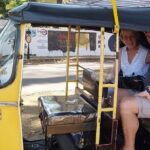
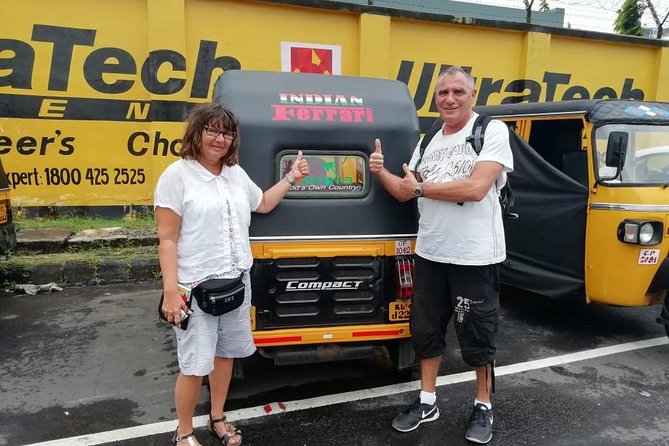
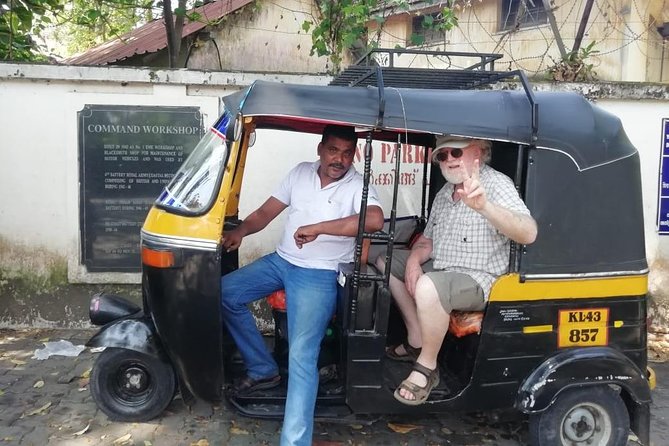
Fort Kochi makes sense fastest by tuk-tuk. I love how this route stitches together the area’s different layers of power and faith—Portuguese, Dutch, and Jewish—without turning your day into a long scramble. I also like the human touch: guides such as Mr. Joseph, Taha, Shishendra, and Manilal are calm and upbeat, and they explain what you’re seeing as you go. One thing to watch: the tour includes hotel pickup, but return drop-off details can be confusing, so confirm where you’ll end up before you climb in.
This is a true private setup, so the pace can fit your energy and photo stops. You’re paying $11.15 per person for a 2 to 5 hour window, which is often a better deal than trying to piece together auto-rickshaws and directions when you only have half a day. You’ll also want to plan for possible extra spending at a few sights where admission is marked not included.
If you want a tight, history-loaded walk through Fort Kochi and Mattancherry, this works. Just wear comfy shoes and expect you’ll spend a lot of that half-day standing, looking up at facades, and walking short distances between monuments—great for seeing a lot, not great if you hate crowds or uneven sidewalks.
In This Review
- Key things I’d clock before you book
- Fort Kochi, Mattancherry, and why this route works
- Hotel pickup and the tuk-tuk pace: simple, but confirm the ending
- Stop 1: Chinese Fishing Nets and the Malabar Coast story
- Stop 2: Jew Town, with trade and refuge in the background
- Stop 3: Princess Street and the view from Loafer’s Corner
- Stop 4: Mattancherry Palace—Portuguese build, Dutch renovation, and murals
- Stop 5: Pierce Leslie Bungalow—colonial commerce in one small stop
- Stop 6: Santa Cruz Cathedral Basilica—Portuguese roots, later British control
- Stop 7: Church of Saint Francis—India’s oldest European church
- Stop 8: Paradesi Synagogue—older than the Commonwealth claim
- Stop 9: Dutch Cemetery—tombstones as a record of movement
- Price value: what $11.15 per person buys you (and what it doesn’t)
- Who should book this half-day tuk-tuk tour
- Should you book Gods Own Kochi Tuk Tuk Tour?
- FAQ
- How long is the Half Day Tuk Tuk Tour in Kochi?
- Is this tour private?
- Is hotel pickup included?
- How much does the tour cost?
- What stops are included in the tour?
- Are admission tickets included?
- Do I get a mobile ticket?
- What are the tour hours?
- What if the weather is bad?
- Is there free cancellation?
Key things I’d clock before you book
- A private tuk-tuk route focused on Fort Kochi and Mattancherry highlights, not random city driving
- Guides with names like Mr. Joseph and Taha who make the stories easy to follow
- Major landmarks in a short window: Chinese Fishing Nets, Jew Town, Princess Street, and more
- Portuguese, Dutch, and Jewish traces show up repeatedly in churches, synagogues, and murals
- Some admission tickets aren’t included, so budget a bit for that
- Hotel pickup is included, but ask about where the tour ends (some people saw mismatches)
Fort Kochi, Mattancherry, and why this route works
Fort Kochi and Mattancherry are the part of Kochi where you can visually track centuries. You get Portuguese-era church architecture, Dutch-era restorations, and Jewish community landmarks all packed into a walkable zone. The tuk-tuk matters because it saves time and energy between stops, while still letting you actually experience each place up close.
This style of half-day tour is perfect if you’re the type who likes structure. You don’t have to decide in advance which corners are worth it, and you don’t waste hours figuring out where everything is. And because it’s private, you can linger where you care most—street views, a church doorway, or the details on palace murals.
The main tradeoff is that 2 to 5 hours flies by once you start walking. A few sights are short stops, so you’ll get an impression, not a long, slow museum-style visit. If you’re the kind of person who wants to sit for a long time with every building, you might feel a little rushed.
You can also read our reviews of more private tours in Kochi

Hotel pickup and the tuk-tuk pace: simple, but confirm the ending
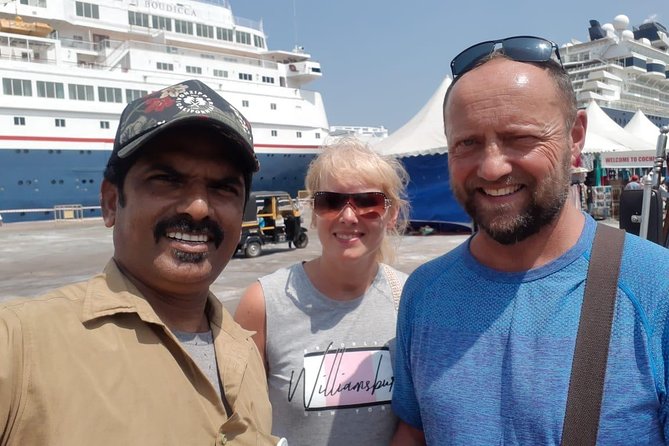
I like that this experience is built around hotel pickup. It removes a lot of friction, especially in Fort Kochi where lanes can be narrow and traffic can be unpredictable.
That said, pay attention to the end point. The info in your package can sound like it includes pickup from your hotel, but multiple experiences show that return drop-off can be treated differently. One person described an awkward ending because return to a pickup location wasn’t included; another asked about extra charges for pick and drop and received clarification that the half-day package covers pickup but not returning back to the hotel after the tour.
So here’s my practical advice: message or ask the operator ahead of time with one clear question—where will the tour finish relative to my hotel? If you need to be back at your exact pickup spot, confirm it explicitly before you go. It’s a small question that can prevent a big annoyance.
Stop 1: Chinese Fishing Nets and the Malabar Coast story
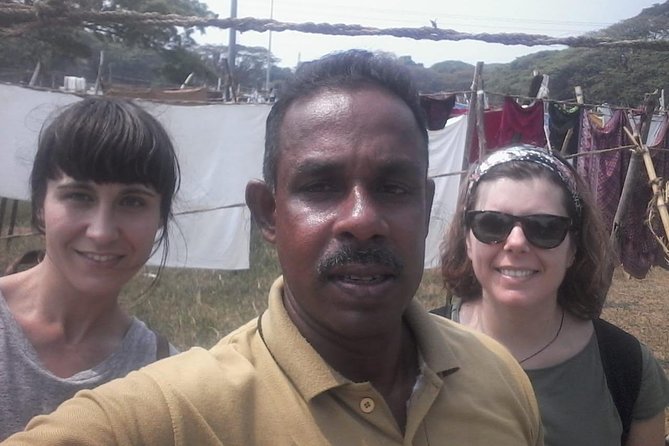
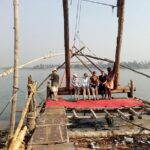
The tour starts with the Chinese Fishing Nets, the huge cantilevered nets that look almost theatrical against the harbor. They’re famous because they’re linked to early trade on the Malabar Coast, placed here between about 1350 and 1450 AD by traders from the court of Kublai Khan. Standing nearby, you quickly get why these nets became a lasting landmark: the structure is distinctive, and it signals that this coast has been watched and worked for centuries.
What I like about including this first is that it gives you a “stage.” Before you jump into churches and palaces, you see the working side of the coastline. Even if you’re not a fishing-nets person, it’s a strong visual anchor for understanding why Fort Kochi became such a crossroads.
One drawback: the stop is short. You’ll likely get photos and a quick look, but if you want to photograph in a very specific way, be ready to move on.
Stop 2: Jew Town, with trade and refuge in the background
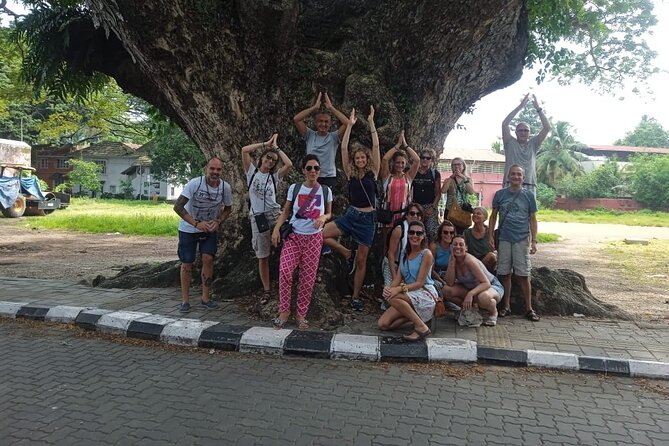
Next is Jew Town, one of the most interesting neighborhoods in Fort Kochi because it connects directly to the area’s trading history. The Jewish community was given shelter here after conflict elsewhere in 1524, following an attack linked to the Moorish Arabs and trade monopolies. It’s a reminder that places can become “home” through politics as much as through geography.
If you like street-level travel, this stop gives you something to notice: the way communities cluster, the way shops and buildings reflect practical lives, and the way an area can carry stories even when you don’t see formal plaques.
Expect about 20 minutes. That’s enough to orient yourself and learn the big narrative, not enough for a deep dive into every alley.
Stop 3: Princess Street and the view from Loafer’s Corner
Then you’re on Princess Street, early in Fort Kochi’s story, lined with European-style residences that still hold that old-world charm. It’s the kind of place where the street feels like a time capsule—without pretending it’s frozen.
The best view is said to be from Loafer’s Corner, and I think the tour’s structure makes sense here. You’re not just walking past facades; you’re being pointed toward where the angles look best.
This is a good stop for photos and for getting a feel for how the neighborhood “breathes.” It’s also short, so if you want a long break, grab snacks later.
Stop 4: Mattancherry Palace—Portuguese build, Dutch renovation, and murals
Mattancherry Palace is one of the stops that makes the tour feel more than just sightseeing. Built by the Portuguese in 1557 and later renovated in 1663 by the Dutch, it’s a physical record of shifting control. What you’ll look for inside (if you decide to pay the admission) is the mural work: scenes related to the Ramayana are part of what’s displayed.
This is the kind of stop that rewards your attention. You start noticing how different European and local influences can exist at the same site, not as a simple “before and after,” but as overlapping layers.
Important practical note: admission is marked not included here. If you’re strict about spending, decide ahead of time whether you want to go in. If you do, you’ll get the most payoff of any interior stop on the route.
Stop 5: Pierce Leslie Bungalow—colonial commerce in one small stop
Just a quick stop, the Pierce Leslie Bungalow used to be the office of Pierce Leslie & Co., coffee merchants, founded in 1862. It’s a compact reminder that colonial-era architecture wasn’t only about officials and churches. There were also business networks shaping the region.
The stop is only about 5 minutes, so treat it like a photo and orientation moment rather than a full visit. Still, I like it because it ties the coastline story (nets and trade) to the inland economic story.
Stop 6: Santa Cruz Cathedral Basilica—Portuguese roots, later British control
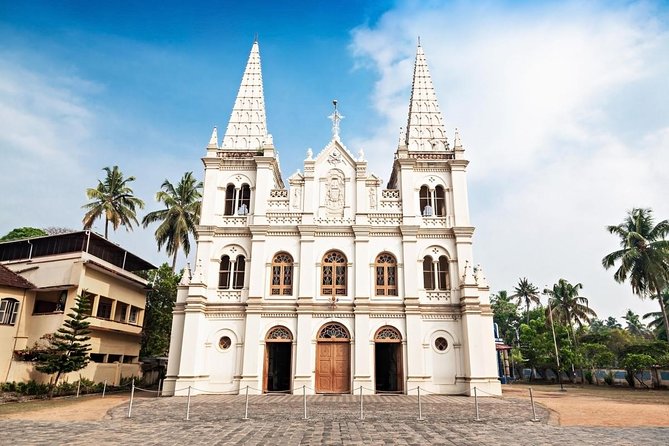
At Santa Cruz Cathedral Basilica, you’ll run into the Portuguese imprint again. It was built by the Portuguese and elevated to a cathedral status by Pope Paul IV in 1558. Later, it fell under British control in 1795 and was demolished; the narrative is part of what makes the stop feel real instead of decorative.
Admission here is marked free, so it’s a good choice if you want a meaningful stop without extra fees. Even if you’re not religious, you can appreciate how the architecture and story reflect shifting empires and changing governance.
The time on this stop is around 15 minutes. That’s enough to look, read, and walk around a bit without feeling stuck.
Stop 7: Church of Saint Francis—India’s oldest European church
The Church of Saint Francis is built by Portuguese Franciscan friars in 1503, and it’s described as India’s oldest European church. It began as timber and later was reconstructed in stone masonry. It was restored in 1779 by the Protestant Dutch, which adds another layer to the overall story you’ve been watching across the day.
This is one of those stops where you’ll notice your own curiosity shift from “what is this?” to “who changed it, and why?” The fact that it went through different phases of building and restoration makes it more than a postcard.
Admission is marked not included, so you’ll want to decide whether to pay to go inside. Even outside, the exterior details can be worth it if you’re keeping costs low.
Stop 8: Paradesi Synagogue—older than the Commonwealth claim
Next up: Paradesi Synagogue, constructed in 1568. It’s identified as the oldest synagogue in the Commonwealth, and the story of why it survived is part of the interest. It was destroyed in shelling during a Portuguese raid in 1662, then rebuilt two years later by the Dutch.
This stop gives you a different angle than the churches because it’s not centered on European Christian institutions. It’s centered on a Jewish community that had to protect itself through history, then rebuild afterward.
The tour time is around 15 minutes, and admission is marked not included. If you care about religious history and architecture, this can be one of the best payoff stops for your time.
Stop 9: Dutch Cemetery—tombstones as a record of movement
You finish with the Dutch Cemetery, where tombstones are described as an authentic record of Europeans who left their homeland on missions to expand colonial empires. It’s a sobering stop in the best way. It doesn’t feel like performance history. It feels like the evidence of real lives and real travel routes.
Admission is marked free, and the visit is short (about 5 minutes). Still, it’s a good final “pause” after earlier faith landmarks—one last place to look closely and take the day’s themes with you.
Price value: what $11.15 per person buys you (and what it doesn’t)
At $11.15 per person, the value is mostly in logistics and storytelling. You’re getting a private tuk-tuk, hotel pickup, and a structured route that hits major landmarks in a short time span. If you’ve only got half a day, this beats trying to DIY with multiple rides and guesswork.
What it doesn’t include is control over every cost. A few key stops have admission marked not included, so budget extra if you plan to go inside Mattancherry Palace, and possibly Saint Francis Church and Paradesi Synagogue. If you’re doing only exterior views, your spending will be lower, but your experience will be more “looking” than “entering.”
The other part of value is the guide. Multiple guides are named in positive experiences—Mr. Joseph, Taha, Shishendra, Manilal, and the team around Martin—so you’re not stuck with a scripted recitation. You’re more likely to get explanations that make the streets readable.
Who should book this half-day tuk-tuk tour
I’d point you to this tour if:
- you want Fort Kochi and Mattancherry highlights without planning a route
- you like history shown through buildings, not through a lecture
- you have limited time and want a private guide setup
- you prefer short, efficient stops over long museum-style visits
I’d consider another option if:
- you need strict full-time indoor visits at multiple sites (some admissions are extra)
- you dislike the idea of a possibly unclear ending point relative to your hotel
- you want a very slow pace with long dwell times
Should you book Gods Own Kochi Tuk Tuk Tour?
Yes, if your goal is a well-paced, private half-day that helps you get your bearings in Fort Kochi and Mattancherry fast. The route hits the big, distinctive places—Chinese Fishing Nets, Jew Town, Princess Street, Portuguese and Dutch church connections, Paradesi Synagogue, and the Dutch Cemetery—so you leave with a coherent picture rather than a list of random stops.
Before you book, do two quick things: confirm where the tour finishes relative to your hotel, and ask whether you plan to pay for interior admissions so you can budget. If you do that, you’ll likely enjoy what the best guides (like Mr. Joseph or Taha) tend to deliver: a calm, friendly day where the stories actually stick.
FAQ
How long is the Half Day Tuk Tuk Tour in Kochi?
The duration is listed as approximately 2 to 5 hours.
Is this tour private?
Yes. It’s a private tour/activity, and only your group participates.
Is hotel pickup included?
Pickup is offered. Based on the tour information and clarifications in experiences, pickup from your hotel is included, but you should confirm whether return drop-off back to your hotel is included, since some situations differ.
How much does the tour cost?
The price is listed as $11.15 per person.
What stops are included in the tour?
The tour includes Chinese Fishing Nets, Jew Town, Princess Street, Mattancherry Palace, Pierce Leslie Bungalow, Santa Cruz Cathedral Basilica, Church of Saint Francis, Paradesi Synagogue, and the Dutch Cemetery.
Are admission tickets included?
Some stops are marked with admission ticket free, while others are marked not included. For example, Chinese Fishing Nets and Jew Town are free, while Mattancherry Palace and Paradesi Synagogue are marked not included.
Do I get a mobile ticket?
Yes. Mobile ticket is listed as a feature.
What are the tour hours?
The listing shows it can run daily, with opening hours from 12:00 AM to 11:30 PM.
What if the weather is bad?
The experience requires good weather. If it’s canceled due to poor weather, you’ll be offered a different date or a full refund.
Is there free cancellation?
Yes. Free cancellation is available, and you can cancel up to 24 hours in advance for a full refund.