REVIEW · PONDICHERRY
Heritage & Cultural Walking Tour of Pondicherry
Book on Viator →Operated by Yo Tours · Bookable on Viator
French lanes and Tamil manuscripts in one walk. I like how this small-group Heritage & Cultural Walking Tour keeps things personal, not like a bus where you’re just shuffled along. I also love that the guide can explain what you’re seeing in English and Hindi, with stories that help Pondicherry make sense instead of staying a blur.
The main thing to plan for is that this is a true walking outing. There’s no hotel pickup or drop, and bottled water isn’t included, so wear comfy shoes and bring your own water—especially because the tour runs best in good weather.
In This Review
- Key points that make this Pondicherry tour worth your evening
- Getting oriented fast: the 5:00 pm start and 2-hour format
- Why the max-10 group feels different than a bus tour
- Stop 1: École Française d’Extrême-Orient and the world of palm-leaf manuscripts
- An 18th-century embroidery centre: craft, building history, and real support
- Old lanes, French architecture, and Pondy market energy
- The Murungapakkam angle: why stories matter as much as sights
- Practical value: what you get for $13.60
- What to bring (and what to skip)
- Logistics you should know before you go
- Should you book this Pondicherry heritage walking tour?
Key points that make this Pondicherry tour worth your evening
- Small group (up to 10 people) means you get questions answered, not ignored.
- English & Hindi storytelling guide helps you connect the buildings, crafts, and neighborhoods.
- Two hours at 5:00 pm is a practical length for an evening stroll.
- École Française d’Extrême-Orient brings you to a heritage site tied to Indology and palm-leaf manuscripts.
- Embroidery workshop stop connects art with support for underprivileged women.
- Mobile ticket and straightforward meeting points make it easier to fit into a busy stay.
Getting oriented fast: the 5:00 pm start and 2-hour format
This tour runs in the early evening, starting at 5:00 pm. The timing matters because you’re not stuck doing long sightseeing in the hottest hours, and you can still fit dinner plans after you finish.
It’s about 2 hours total, and that length is ideal for this kind of walking tour. Long enough to cover multiple stops and lane segments, but short enough that you don’t feel exhausted halfway through. You’ll move on foot between key sights in the White Town area, with a smooth flow that doesn’t require any complicated transportation.
You can also read our reviews of more walking tours in Pondicherry

Why the max-10 group feels different than a bus tour
One of the biggest wins here is the group size: no more than 10 travelers. In practice, that changes the whole vibe. You can ask why a building looks the way it does, or what to notice in the next lane, and your guide can actually respond.
The pace also feels designed for walking travelers. This isn’t a “ride-and-quick-photo” format. You’ll spend time up close with crafts and local spaces, where details like signage, textures, and workshop activity actually matter.
Stop 1: École Française d’Extrême-Orient and the world of palm-leaf manuscripts
The tour’s first major cultural stop is the École Française d’Extrême-Orient, introduced as a heritage building with a library holding over 11,000 Indology books. Even if you don’t read academic works, the point here is to see how serious research and preservation sit right inside Pondicherry’s everyday landscape.
What makes this stop especially memorable is the mention of manuscript collections in Sanskrit, Tamil, and Manipravalam—including palm-leaf manuscripts. That detail does more than sound impressive. It signals that Pondicherry isn’t only Portuguese-French architecture and beach walks; it’s also a place where languages and texts have been studied and protected.
A practical way to enjoy this stop is to pay attention to how a place like this fits into the neighborhood. Look at the setting, the feel of the building, and how the library’s role connects to the wider cultural story you’ll keep hearing through the rest of the walk.
An 18th-century embroidery centre: craft, building history, and real support
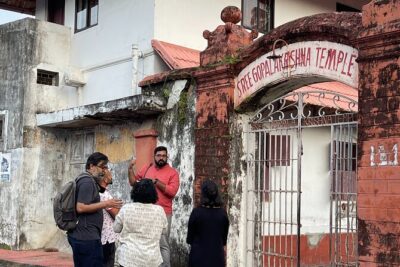
Next, you’ll visit an embroidery centre housed in a striking 18th-century building. The tour frames it as a working craft space, not a staged museum stop, and that difference matters if you care about how traditions survive.
This centre is run by a local convent and supports underprivileged women. I like that the tour doesn’t treat “craft” as just decoration. It presents embroidery as work with a social impact—skills, livelihoods, and community support in the same room.
When you’re there, focus on what you see being made and how the space is organized for production. Even if you don’t purchase anything, you’ll walk away understanding the human side of the craft. And if you do buy later, you’ll know you’re spending with context, not just buying a souvenir.
Old lanes, French architecture, and Pondy market energy
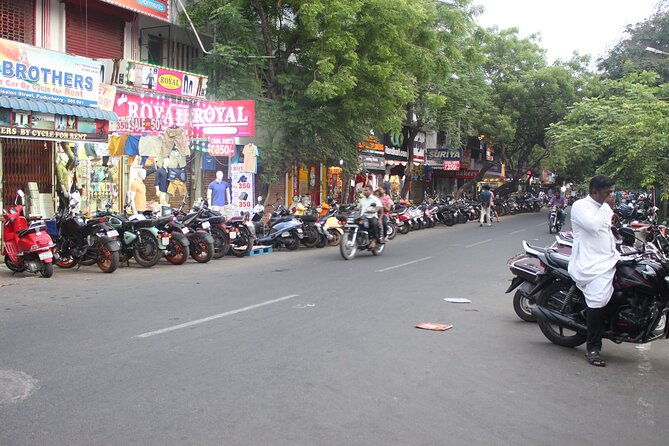
After the two culture-heavy stops, the walk turns more street-level. You’ll pass a lane with old cafes, homes built with French architectural influence, and then get a closer look at lively markets in Pondicherry.
This is where the walking format really earns its keep. On a bus, you can’t slow down for the little stuff—street corners, signs, the way lanes bend, and the mixed-use rhythm of local life. On foot, you can actually see how White Town’s layout shapes how people move and shop.
I recommend you keep your camera ready but not glued to it. Use your eyes first. Watch how shopfronts and lane widths guide the flow, then take photos only after you’ve understood the scene.




The Murungapakkam angle: why stories matter as much as sights
The walk is built around Pondicherry’s arts, crafts, and culture, with attention to Murungapakkam village. You’ll hear stories that connect what you’re looking at—art galleries, lanes, and workshop activity—to the broader identity of the place.
This is also where guides like Pachaippan and Manoj come up in the conversation. Both are praised for turning sights into something you can understand: historical significance, clear explanations, and a route that covers a lot of ground without overstaying in one location.
What I found useful is the way the guide helps you think after the tour. You don’t just finish with photos; you finish with ideas—what kind of places to seek out, how to recognize cultural cues, and how to plan the rest of your time so you don’t wander randomly.
Practical value: what you get for $13.60
At $13.60 per person, this tour is priced like a smart add-on rather than a big-ticket experience. And you’re paying mostly for three things: a guide, structured time at key cultural spots, and the ability to get your bearings fast on foot.
For the money, the “included” package is straightforward: a storyteller/guide who speaks English and Hindi, plus local tips to help you explore and save money. There’s no hotel pickup included, so the value is in the guided walking route and the cultural context you’d struggle to assemble on your own.
Also, the tour runs with group discounts and uses a mobile ticket, which helps if you’re juggling a few activities in one day. It’s worth keeping in mind that this is a popular slot—booked on average about 5 days in advance—so waiting until the last minute can narrow your options.
What to bring (and what to skip)
This is a walking tour, so build your packing around comfort. I’d wear shoes you trust for uneven pavement and narrow lanes, and keep sunscreen or light coverage handy if the weather is bright.
You’ll want water because bottled water isn’t included. I also suggest bringing a small bag or sling to keep your phone, cash, and any purchases secure while you walk between stops.
One more tip: the tour needs good weather. If conditions aren’t right, the operator will switch dates or offer a full refund—so treat it like a plan that’s weather-dependent, not a guaranteed outdoor event.
Logistics you should know before you go
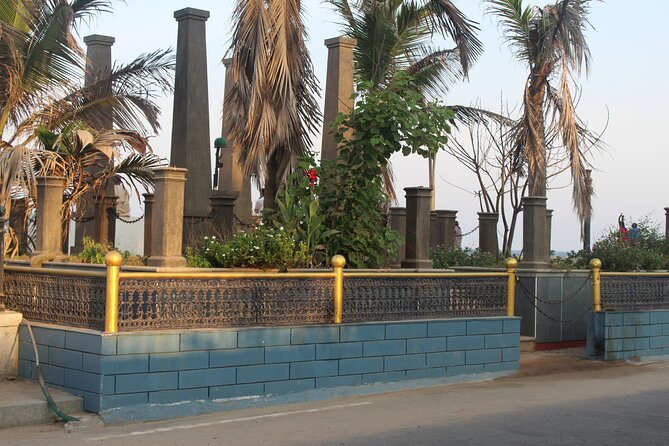
Meeting point is the Puducherry Tourism Information Centre, at 40 Old Court Building 2, Beach Road, Goubert Ave, White Town, Puducherry 605001. The end point is the Puducherry Kargil War Memorial on Beach Rd, White Town (WRPP+HHH).
You’re not picked up from hotels, so plan to reach the start area on your own. The good news is that the route focuses on a walkable part of town, so you’re not dealing with long transfers.
If your plans change, it helps to know the experience has support for schedule flexibility. One guide, Pachaippan, was specifically praised for being helpful when someone couldn’t make the original date and was offered a new slot.
Should you book this Pondicherry heritage walking tour?
I’d book it if you want a guided, culturally focused walk that stays compact—especially if you’ll be moving around on foot anyway. The highlights hit three strong areas: heritage research (through École Française d’Extrême-Orient), craft with social impact (the embroidery centre), and the lived-in feel of lanes and markets.
Skip it (or at least rethink it) if you’re not comfortable walking for two hours or you hate plans that depend on weather. Also remember you’ll need to handle your own way to the meeting point, and bottled water isn’t provided.
If you’re the type of traveler who enjoys asking “what am I looking at and why does it matter,” this tour fits your style. It’s not trying to do everything in Pondicherry—it’s trying to do the right things closely, with a guide who can explain the details in plain language.