REVIEW · PONDICHERRY
The Unique Pondicherry City Bike Tour
Book on Viator →Operated by Sita Cultural Center · Bookable on Viator
Pedal through Pondicherry before the heat hits. This tour is one of the quickest ways to see the French, Muslim and Tamil sides of town, and I really like that you don’t have to sort out anything extra: helmet, bicycle, and bottled water are included. The one thing to think about is that these are older, classic bikes, so you should feel comfortable riding for about two hours at a group pace.
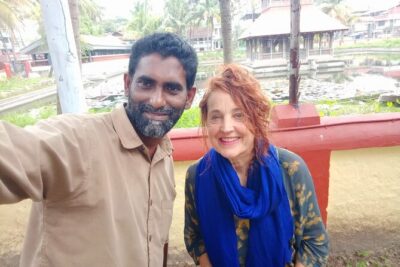
You start at 7:00 am in the MG Road area (22, Kandappa Mudaliar St). In past tours, the guide has been consistently praised, especially Manisha, for being on time, friendly, and very clear about what you’re seeing as you move through White Town and beyond.
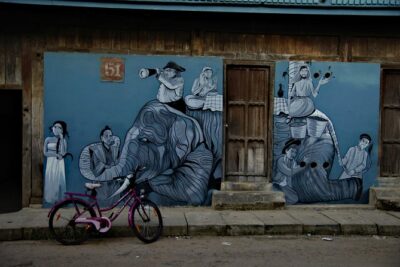
Over the ride, you’ll trace Pondicherry’s seaside rhythm: cobblestoned streets, colonial-era scenes, flower-filled public spaces, and the mix of temples, mosques, and churches that makes this city feel like several places at once. I also like that it’s small-group by design, so you can actually hear the explanations instead of just orbiting the guide.
In This Review
- Key things to know before you ride
- Why this vintage bike tour fits Pondicherry
- Price and what you actually get for $20.14
- Where you meet and how the 2-hour flow works
- The neighborhoods: French, Tamil, and Muslim quarters in motion
- Sita Cultural Center stop: the built-in pause
- Riding comfort: old-school bikes, helmets, and group pace
- What the guide experience looks like (and why it matters)
- Value check: who this tour is for
- Small practical tips so you enjoy it more
- Should you book the Unique Pondicherry City Bike Tour?
Key things to know before you ride
- Small group size: up to 6 people per booking (with a max of 8 for the activity)
- Bike-friendly sightseeing: cover more ground than walking in the same time
- Neighborhood mix: French, Tamil, and Muslim quarters are the core focus
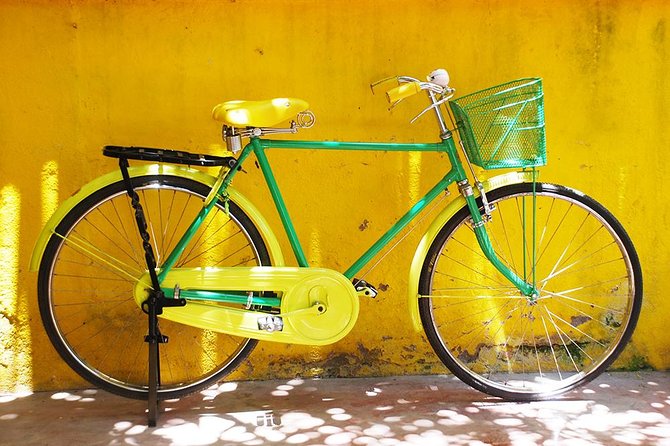
- What’s provided: helmet, bicycle, bottled water, and a driver/guide
- A real stop built in: Sita Cultural Center with free admission included
Why this vintage bike tour fits Pondicherry
Pondicherry rewards low-stress wandering. You want to notice street life, architecture details, and the little shifts in language and religion from one block to the next. On this tour, you get that without spending your whole morning stopping every few minutes to re-check directions.
Cycling also changes what you can take in. Walking makes you choose: do you go scenic or do you go practical? With a bicycle, you can do both. You glide past spots you’d likely miss on foot, then circle back to the places you care about most.
And the timing matters. A 7:00 am start is a smart move in a coastal city where afternoons can feel long. You get the cooler air, and the tour still runs long enough to feel like you saw real neighborhoods instead of just riding in circles.
You can also read our reviews of more tours and experiences in Pondicherry.


Price and what you actually get for $20.14
At $20.14 per person, this isn’t just paying for movement. You’re paying for three things that are hard to recreate on your own trip:
1) a driver/guide who explains what you’re looking at
2) a bicycle you don’t have to rent or troubleshoot
3) safety basics (helmet) plus water
You’re also covered for local taxes, and the tour includes bottled water. If you’ve ever tried to piece together a bike rental, a helmet, and a plan to avoid getting lost in a multi-language city, you know that the logistics cost real time. This tour compresses that work into a clean, fixed format.
The main “trade” is that it’s not a private tour and it’s only about two hours. So it’s best if you want a strong orientation plus highlights, not if you’re hoping for a long, slow, deep museum-style day.
Where you meet and how the 2-hour flow works
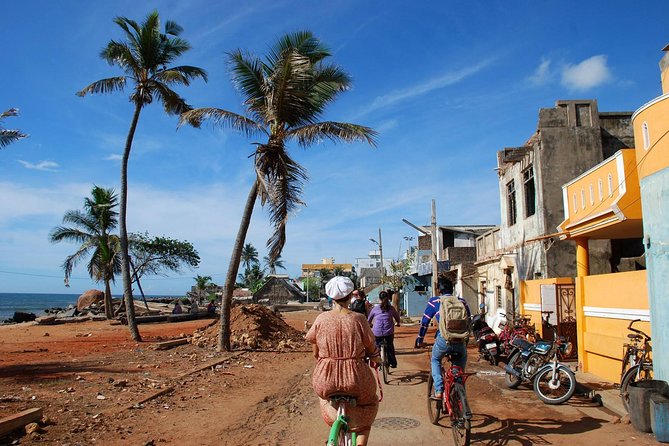
You meet at 22, Kandappa Mudaliar St, MG Road Area, Puducherry, 605001. The tour starts at 7:00 am, and it ends back at the meeting point.
No hotel pickup is included, so you’ll want to plan an easy way to get to MG Road. The good news is the meeting area is described as being near public transportation. Translation: you usually won’t have to spend the morning hunting for a taxi from far away.
Once the ride starts, think “guided loop” rather than a long chain of museum stops. The tour is designed around cycling through multiple neighborhood sides in a short window, with the guide’s commentary happening as you travel between sights.
The neighborhoods: French, Tamil, and Muslim quarters in motion
The headline is the mix: French, Tamil, and Muslim neighborhoods. That isn’t just a list of labels. It’s a clue to what you’ll experience: shifting architecture styles, different places of worship, and street scenes that feel specific to who lives there and how the community organizes daily life.
As you ride, you can expect a blend of:
- colonial-era visuals you’d probably only notice if you’re close enough
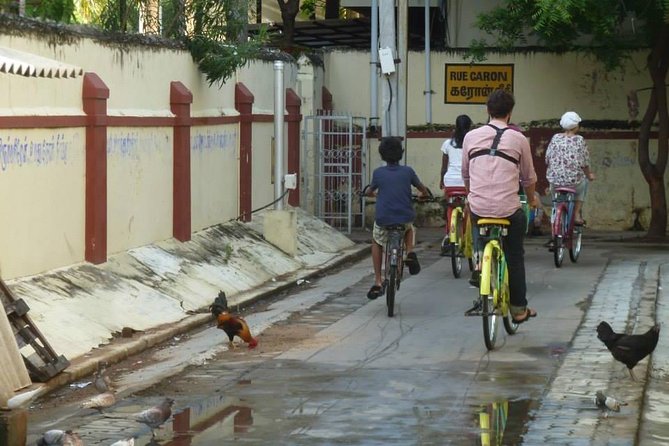
- side streets with that older, cobblestoned feel
- public areas where flowers and greenery show up in the city’s everyday look
- glimpses along the seaside promenade, where the city’s coastal pace is obvious
The tour is also built for speed-with-understanding. You’re not just racing to get photos; you’re getting a guided “what am I seeing and why does it look like that” approach while you’re moving.
A lot of the joy of this kind of route is that it teaches you how Pondicherry is organized. After one ride, you tend to get your bearings fast: which direction feels like White Town’s colonial vibe, where the religious buildings cluster, and where you see a stronger local market presence.
Sita Cultural Center stop: the built-in pause
You’ll have a stop at Sita Cultural Center during the tour, with free admission included. The exact time spent there isn’t detailed, but it functions as a clear anchor point: a place to regroup and absorb context before continuing the ride through the city.
For me, that kind of stop is valuable on a short tour. Without it, cycling can feel like nonstop motion. With a center stop, you get a reset that makes the rest of the neighborhoods connect more clearly.
Even if you’re not trying to do a full cultural-site visit, this stop helps turn the ride from sightseeing-by-glance into sightseeing-with-meaning.
Riding comfort: old-school bikes, helmets, and group pace
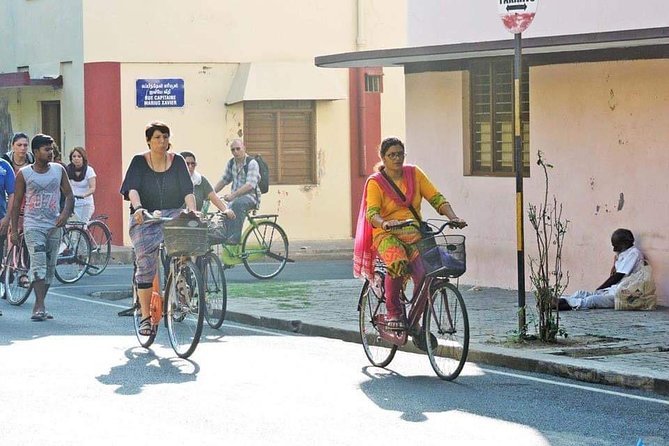
The bicycle experience is part of the charm, but it’s also where you should set expectations. The bikes are described as vintage-style, and riders have specifically pointed out that they’re old-timers. That means:
- you should expect a basic, classic bike feel rather than modern suspension or ultra-smooth handling
- you should ride with confidence on cobblestoned streets
- you’ll want to keep your speed aligned with the front of the group
One practical tip from guide-experience feedback: if you want to catch the explanations clearly, try to ride near the front. When you’re closer, you’re less likely to miss details while the group stretches out.
Helmets and bottled water are included, which removes two common hassles. You’ll just need to bring whatever you need for sun and comfort—especially if you plan to continue exploring afterward.
What the guide experience looks like (and why it matters)
This is the part that separates a bike ride from a bike rental. Guides on this tour have been repeatedly praised for being informative and friendly, with Manisha in particular getting strong mentions for being professional, easy to be around, and on time.
The best part of a good guide in a place like Pondicherry is how they connect street scenes to meaning. You don’t just pass by a temple or mosque or church—you learn how the city’s different communities shape what you see. That turns the route into a kind of practical orientation you can carry with you for the rest of your trip.
If you’re someone who loves details—names, architectural cues, why certain neighborhoods feel distinct—this format is a good match. If you prefer quiet sightseeing, you can still enjoy the ride, but you may want to bring a mindset that you’ll be listening while you move.
Value check: who this tour is for
You’ll likely be happy with this tour if:
- you want a guided orientation to Pondicherry’s main neighborhood sides
- you enjoy cycling and are comfortable riding for about two hours
- you want to see multiple communities and religious landmarks without planning a route from scratch
- you prefer small groups where you can actually hear the guide
It might be less ideal if:
- you only want a super-relaxed, stop-anywhere pace
- you’re expecting a long itinerary with many timed attractions
- your comfort level with vintage, older bikes is low
There’s also a clear baseline: the minimum age is 10 years, and most travelers can participate. That makes it broadly workable for families with older kids who can ride confidently.
Small practical tips so you enjoy it more
A few things can make the difference between fine and great on a morning ride:
- Wear shoes that grip well on uneven paving. Cobblestones are part of the experience.
- Plan to arrive with a few minutes to spare. The start time is 7:00 am.
- Ride near the front if you care about catching every bit of the explanation.
- Use the tour as your “first chapter.” Afterward, you’ll usually know where you want to return on foot.
And because bike tours often get booked, consider reserving early. The tour data notes that this experience is commonly booked about five days in advance on average, so waiting until the last minute can be risky in busy periods.
Should you book the Unique Pondicherry City Bike Tour?
Book it if you want an efficient, small-group way to understand Pondicherry’s layout and see French, Tamil, and Muslim neighborhood life in a single morning. The included helmet, bike, bottled water, and guide time make the price feel fair, especially if you’d otherwise spend energy arranging transport and building a route.
Skip it only if vintage-bike comfort is a deal-breaker for you, or if you’re looking for a longer, slower itinerary with lots of timed stops. For most people who want to get oriented fast and then explore independently, this is a smart, fun choice.