Markets beat monuments in Pondicherry. This 2-hour street tour strings together the Puducherry Sunday Market, MG Road shopping lanes, and Burma Bazaar with an English-and-Hindi guide, and I like the money-saving tips plus the chance to see daily trade up close; the main drawback is simple: there’s no hotel pickup, and the tour depends on good weather.
I also appreciate how focused the route feels. You’re not wandering randomly, you’re moving from one real local shopping zone to the next, with a guide who can explain what’s worth your time and what’s just noise. It’s sold as a small group (up to 15 people) with a mobile ticket, so it’s easy to manage without lots of logistics.
If you’re in Pondicherry for only a day or two, this is a cost-effective way to get your bearings fast in White Town and the MG Road area. At $12.81 per person, the value comes from the combination of markets, the free-admission setup listed for the experience, and the practical local recommendations you can use afterward.
In This Review
- Key things I’d plan around
- Why the markets tour beats a standard walking loop
- Start at MG Road: the meeting point and first 10 minutes
- Cluny Embroidery Centre: the start that sets the shopping mindset
- Puducherry Sunday Market: the loudest, most rewarding stop
- Goubert and Grand Market: food basics and quick comparisons
- MG Road markets: spices, household adornments, and older street texture
- A shop-lined street stop: the lanes you’d skip alone
- Burma Bazaar: DVDs, perfumes, and tech in one pocket
- The guide factor: what Abhay adds to the walk
- Price and value: $12.81 for two hours of real local coverage
- Logistics that matter: no pickup, bottled water not included
- Who this tour suits best
- Should you book this Magical Pondicherry Markets Tour?
- FAQ
- FAQ
- How long is the Magical Pondicherry Markets Tour?
- How much does the tour cost?
- Where do I meet the guide, and where does the tour end?
- Is there hotel pickup or drop-off?
- Is admission included?
- How big is the group?
- What is the cancellation policy and what happens with bad weather?
Key things I’d plan around
- Up to 15 people keeps the walk from feeling like a conveyor belt
- English and Hindi guide means fewer language hassles in busy stalls
- Money-saving tips geared for shopping, not just sightseeing
- Sunday Market + Goubert & Grand Market cover food, produce, and everyday needs
- MG Road markets mix spices, household items, and old provincial-style street texture
- Burma Bazaar is singled out for DVDs, perfumes, and tech finds
Why the markets tour beats a standard walking loop
Pondicherry can be stunning for architecture, but the real pulse is in what people buy and sell. This tour leans into that. You move through the city’s market zones where locals come for produce, snacks, cloth, jewelry, and day-to-day essentials. That’s where you learn how the city actually works.
What makes it work is the structure. Instead of you trying to guess which lanes are worth your time, you follow a route built to connect the big names (like the Sunday market and Goubert & Grand Market) with smaller shop strips that are easy to miss if you’re moving solo.
The best part for me is the guide layer. In one of the standout comments tied to this experience, the guide named Abhay is called charming and informative, with real insight into the markets. You feel the difference between someone reciting facts and someone explaining what to do, what to ask, and how to shop smarter.
You can also read our reviews of more tours and experiences in Pondicherry.



Start at MG Road: the meeting point and first 10 minutes
The tour starts at Baker Street123, Bussy Street near Clock Tower, MG Road area, Puducherry 605001. MG Road is a good choice for a start point because it’s central and walkable from multiple areas of town.
Aim to arrive early enough to settle in before the group gathers. Markets are crowded and you don’t want to be the person sprinting in mid-explanation. Once the group is together, the guide sets the tone: what you’ll see, what to look for, and where you can slow down for photos or browsing.
Also plan for the fact that this is a short tour—about 2 hours. That means the first stop matters. You’ll want comfortable shoes and a light plan in your head for what you might want to buy (or at least what kinds of stalls you’re excited to window-shop).
Cluny Embroidery Centre: the start that sets the shopping mindset
The tour’s listed first stop is Cluny Embroidery Centre. I like starting here because it gives you a quick grounding in the kind of craft and local production that you’ll see again throughout the market route. It’s not just a photo stop. It’s the kind of place that helps you notice quality and detail when you later walk past textiles and handmade-style goods.
Even the way this tour is described signals a trick: it isn’t trying to cover everything. It’s trying to show you the right pieces of the market world, plus the lanes between them—so you don’t waste time backtracking or getting lost in areas that look busy but don’t fit your interests.
Practical note: the experience lists admission as free, which is nice. Still, keep a small buffer in your day so you’re not rushing when the group moves on.
Puducherry Sunday Market: the loudest, most rewarding stop
One of the highlights is Puducherry Sunday Market, described as the city’s most famous local market. This is exactly the kind of stop that can make or break a market tour. If you arrive open-minded, you’ll come away with more than souvenirs—you’ll understand how the city buys and sells.
At the Sunday Market, you can expect a strong mix of everyday shopping categories. The tour description flags flowers, fruits, vegetables, and other goods that show up in daily life. That’s useful even if you’re not shopping. Seeing the flow—what people buy first, what’s seasonal, what’s priced for immediate use—gives you a better read on the rest of the route.
The “value” here is time. Market tours are easy to waste on repeat stalls. A Sunday market stops that problem by concentrating variety into one active zone, while your guide helps you avoid aimless wandering.
Goubert and Grand Market: food basics and quick comparisons
The next major markets are Goubert and Grand Market, described as Pondicherry’s bustling marketplaces for vegetable, fruit, and grocery stalls. If Sunday Market is the loud headline, Goubert and Grand is the practical continuation.
This is where you can make quick comparisons in your own head. You’ll see produce and grocery goods in a more routine market setting. It’s a good stop for understanding what people consider standard everyday choices versus what’s mainly for visitors.
If you plan to snack while you’re in town, this area is also a useful anchor. Even if you don’t buy, you learn what’s commonly stocked and what kinds of stalls tend to be busy for a reason.
Small warning: markets can be overwhelming if you want quiet. If you’re the type who prefers browsing with space, plan to take short breaks and let the crowd pass.
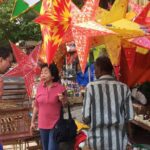


MG Road markets: spices, household adornments, and older street texture
MG Road is where the tour shifts from pure produce to a wider shopping mix. The description calls out food and spices, household adornments, and old provincial structures, plus flawless street feel. That combination matters.
Spices are the obvious draw, but the real benefit is learning what’s typical and what’s overpriced. A guide can help you spot what you’re actually looking at—so you don’t end up buying the most expensive version of something you didn’t need.
Household items and adornments also make the tour more memorable. Even if you don’t want to carry purchases all day, browsing these stalls helps you picture how people decorate and live. That adds context that you don’t get from a checklist of landmarks.
One more reason MG Road works on a short tour: it’s efficient. You get variety without losing an hour to transit.
A shop-lined street stop: the lanes you’d skip alone
The itinerary also includes a street with many charming shops and boutiques. I like this kind of stop because it breaks up the market intensity. It gives you a chance to slow down, look at textures, and notice the smaller storefronts that are easy to overlook when you’re walking on your own.
This is also where you often find practical stuff. Not every purchase needs to be dramatic. Sometimes the best souvenirs are the useful ones—fabric, small gifts, everyday items—that actually fit your home life.
Because the tour is only about 2 hours, your guide’s pacing matters. You’ll likely get a quick browse at each area, not an all-day shopping session. That’s ideal if you want variety and context, but not ideal if your main goal is to spend hours bargaining in one place.
Burma Bazaar: DVDs, perfumes, and tech in one pocket
One of the most distinctive stops is Burma Bazaar, described as a market run by Burmese refugees in Pondicherry. The tour flags it as a treasure house for DVDs, perfumes, and tech products.
This is a great stop for two reasons. First, it changes the shopping categories. After produce and spices, jumping to DVDs and tech feels like a curveball in the best way. Second, it adds a human layer. Knowing the market is run by Burmese refugees helps you understand why the selection looks different from the standard local bazaar pattern.
If you’re hoping to find a specific niche item—like a perfume or older media—it’s worth keeping your eyes open here. Even if you don’t buy, you’ll likely enjoy the contrast and the different stall energy.
The guide factor: what Abhay adds to the walk
The experience includes a highly trained and friendly storyteller/guide who speaks English & Hindi. In the best feedback tied to this tour, the guide Abhay is specifically praised as charming and informative, with insight into Pondicherry markets.
Here’s what that should mean for you in practice: a good market guide helps you translate what you’re seeing. You’ll get context for product types, and you’ll hear practical recommendations for where to focus and what might not be worth your time.
You also get money-saving help. That could be advice on where prices are more reasonable, what to look for before you buy, or how to handle browsing without getting pushed into buying something you didn’t mean to purchase.
If you’re traveling with someone who likes shopping but doesn’t want to feel lost, this guide layer is the glue.
Price and value: $12.81 for two hours of real local coverage
At $12.81 per person for about 2 hours, this tour isn’t trying to be a big-ticket cultural show. It’s a focused walking experience, and the value is in three things you can actually use:
- Route efficiency: multiple market zones in one go
- Guided interpretation: you’re not just looking at stalls, you’re learning what they are
- Tips that save money: the guide is there to help you shop smarter, not just point
Also, the experience lists admission ticket free. That means fewer surprises where you suddenly reach a paywall or entrance fee during the walk.
If you’re the type who hates spending time planning, this is a win. You pay a small amount and get a structured market tour with built-in advice.
If you’re the type who loves long, slow browsing and wants to spend most of the day in one market, this may feel short. But that’s true for most guided market walks that aim to cover multiple areas.
Logistics that matter: no pickup, bottled water not included
A few practical points can make or break your comfort level.
There’s no hotel pickup and drop. You’ll need to get yourself to the MG Road meeting point at Bussy Street near the Clock Tower area. The tour ends at Cluny Provincialate, 25 Suffren St, White Town, Puducherry 605001. So it finishes back toward the White Town area, which is convenient if you plan to keep exploring after.
Bottled water is not included, so bring your own. Markets mean walking, heat, and frequent stopping. Having water makes the tour easier on your pace.
Finally, the experience requires good weather. If conditions are poor, the tour may be offered on a different date or you can get a refund.
Who this tour suits best
I’d recommend this tour if you want:
- A fast introduction to Pondicherry’s market life in a short time window
- A guide who can explain what you’re seeing in English and Hindi
- A route that includes both big markets (like Sunday Market) and more specific zones (like Burma Bazaar)
It’s also a solid pick if you like buying practical items—spices, small household goods, textiles—or if you just want to understand what locals buy and where.
I’d be a bit cautious if:
- You need a very quiet tour (markets are crowded by nature)
- You dislike walking in heat and would rather rely on taxis
- You’re expecting a long shopping session in one single market
Should you book this Magical Pondicherry Markets Tour?
If your trip has limited time and you want the real “how people live” side of Pondicherry, I think this is an easy yes. For $12.81, you get a compact 2-hour route through recognizable market powerhouses plus Burma Bazaar’s very specific focus on DVDs, perfumes, and tech products. The best endorsement is the guide factor—Abhay is praised for being charming and informative, which is exactly what you want in a market setting.
Book it if you’re ready to walk, browse, and use a guide to shop with more confidence. Skip it or rethink the fit if you want a slow, all-day shopping spree or if you can’t do outdoor walking when the weather turns.
FAQ
FAQ
How long is the Magical Pondicherry Markets Tour?
It runs for about 2 hours.
How much does the tour cost?
The price is $12.81 per person.
Where do I meet the guide, and where does the tour end?
Meet at Baker Street123, Bussy Street near Clock Tower, MG Road area, Puducherry 605001. The tour ends at Cluny Provincialate, 25 Suffren St, White Town, Puducherry.
Is there hotel pickup or drop-off?
No. Hotel pickup and drop are not included, so you’ll need to reach the meeting point on your own.
Is admission included?
Yes. The experience lists admission ticket free.
How big is the group?
The tour has a maximum of 15 people.
What is the cancellation policy and what happens with bad weather?
You can cancel for a full refund up to 24 hours before the experience starts. If it’s canceled due to poor weather, you’ll be offered a different date or a full refund.