REVIEW · KERALA
Into the Mangroves: Calicut Mangrove Trail by Tyndis
Book on Viator →Operated by Tyndis Travel · Bookable on Viator
Mangroves teach you something fast. On this Calicut trip through Kadalundi Community Reserve, I love the local storyteller angle, and I love that you get to spot nine mangrove varieties from both land and water in about two hours. It’s not a checklist tour; it feels like you’re learning how the coast works while you’re actually there.
One thing to plan around: this is an outdoor, good-weather experience. If the weather turns, the mangrove-sapling planting may not happen, and the walking/boat time is best with a moderate fitness level.
In This Review
- Key things I think you’ll care about
- What You’re Really Seeing in Kadalundi
- How the 2-Hour Mangrove Trail Actually Plays Out
- Nine Mangrove Varieties: What to Look For
- Local Heritage Stories That Put the Ecosystem in Context
- Planting a Mangrove Sapling (When Weather Permits)
- Price and Value: What $32 Really Buys
- Getting There and What to Bring
- Who This Tour Fits Best
- Booking Smart: Make the Most of a Good-Weather Window
- Should You Book Into the Mangroves by Tyndis?
- FAQ
- FAQ
- Where does the Into the Mangroves tour start?
- How long is the Calicut mangrove trail experience?
- What’s included in the $32 price?
- Is food or drinks included?
- Do you get an air-conditioned vehicle?
- Can I plant a mangrove sapling on this tour?
- What happens if weather is poor?
Key things I think you’ll care about
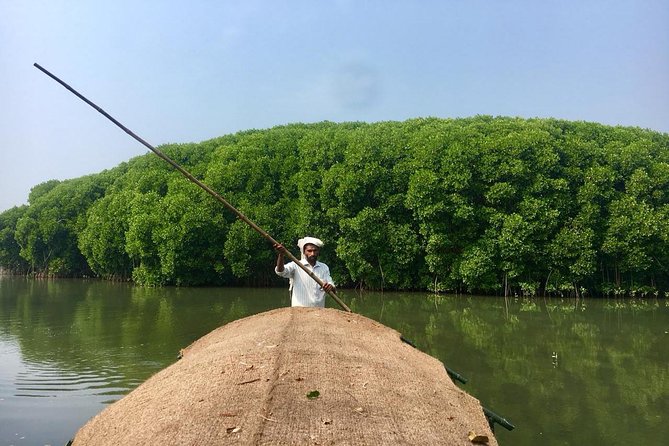
- Country-boat time in the mangrove channels: You’re out on the water, not just looking from a viewpoint.
- Nine varieties of mangrove to watch for: The guide helps you notice what makes mangroves different.
- Storyteller-led heritage: You’ll hear how local people link mangroves to their livelihoods and coastal survival.
- A chance to plant a mangrove sapling: If conditions allow, you get to contribute directly.
- Small-group feel (max 2 travelers): Easier conversation and more personal attention.
- Round-trip from Kadalundi Market Rd: Straightforward meeting point, and you end back where you started.
What You’re Really Seeing in Kadalundi
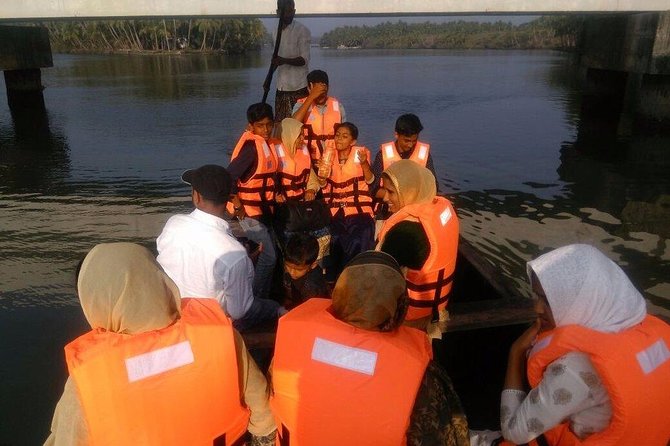
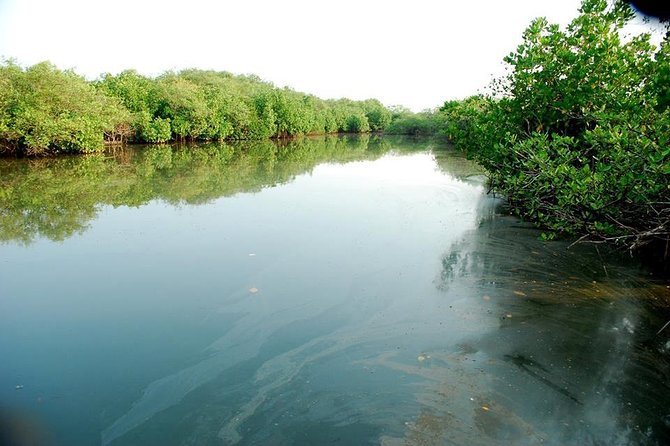
Kadalundi Community Reserve sits near Calicut in Kerala, where the coast and the river mouth meet. That matters, because mangroves are built for this kind of place: roots that can handle shifting water, salty air, and changing tides. One of the most practical ways to understand them is as a living coastal defense. They help protect the river mouth from sea impacts, while still supporting a working ecosystem that keeps going on its own.
On this trail, you’re not just looking at trees. You’re moving through a system. You’ll do a mix of walking mangrove trails and boat exploration, which is a smart way to learn: on foot you get the scale and textures up close, then by boat you see how the channels shape where the plants grow.
You can also read our reviews of more tours and experiences in Kerala.

How the 2-Hour Mangrove Trail Actually Plays Out
The flow is simple, which is a good thing on a nature tour. You start at the Kadalundi Bird Sanctuary area, at Kadalundi Market Rd (Kadalundi, Kerala 673302). From there, the experience focuses on the mangrove reserve itself, with country boats used to reach the islands and channels.
Here’s what the timing usually feels like:
- Start with the mangrove reserve setting: You’ll be oriented to what you’re seeing and why it matters.
- Walk portion: Expect moderate outdoor movement along the mangrove trails. It’s not a long hike, but it’s not a stroll either—especially if paths are damp or uneven.
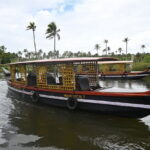
- Boat portion: You transition to a country boat to explore the islands and water routes inside the reserve.
- Stories during the trip: The storyteller service runs alongside the route, so the learning is happening while you’re watching.
- Return to the meeting point: The activity ends back at the same place you started.
That mix—walk, boat, stories—keeps it from turning into a passive ride. You’re constantly switching perspective, which makes the ecosystem feel real instead of distant.
Nine Mangrove Varieties: What to Look For
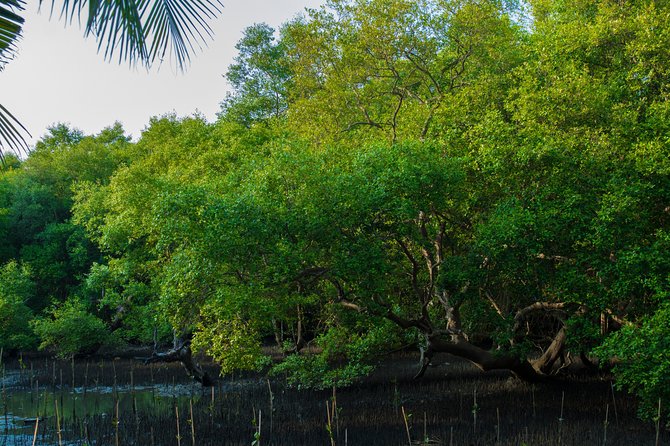
One of the standout claims here is nine varieties of mangrove. The real value isn’t just that number—it’s that you’re guided to notice differences rather than staring at the same-looking trees.
In mangrove areas, what changes by species often shows up in:
- root structure (how plants hold on in shifting water)
- leaf shape and density (how the canopy behaves)
- how the plants occupy slightly different water conditions (edges vs. channels)
Your guide’s job is to help you connect those visual cues to the broader idea: these aren’t random coastal plants. They’re adapted to survive where freshwater, saltwater, sediment, and tides all mix.
If you like nature tours that give you “aha” moments, this one has that vibe. You’re not leaving with only photos—you’re leaving with patterns you can recognize if you see mangroves again later.
Local Heritage Stories That Put the Ecosystem in Context
The storyteller service is a big part of why this tour feels different from a standard boat ride. You’ll hear stories from local community members about the region’s heritage and why the mangrove ecosystem matters to the people living nearby.
And this is more useful than it sounds. Mangrove “talk” can sometimes stay theoretical. Here, the stories are tied to how the community understands and relies on the coast. You start seeing the mangroves as infrastructure—environmental protection that also supports daily life, rather than nature scenery you visit for an hour and forget.
In feedback connected with the Tyndis team, you’ll see names like Binusha and Mr. Sreekanth tied to the storytelling experience, and also Naveen mentioned for planning support. In other words, the human part matters, and it’s not just someone reading facts off a screen.
Planting a Mangrove Sapling (When Weather Permits)
The chance to plant your own mangrove sapling is the kind of add-on that can change your whole mood on a tour. It turns the trip from observation to contribution.
That said, you should treat it as “conditional.” The experience requires good weather, and sapling planting is specifically mentioned as something you may get to do when conditions allow. So if you’re traveling during a rainy stretch, go in ready to be flexible. Even if the planting moment doesn’t happen, you still get the learning and the boat-and-walk experience.
If you do get to plant, take it seriously. This is a long-term ecosystem effort, not a one-minute gesture. The best part is that you’ll understand why planting matters after seeing the mangroves’ role up close.

Price and Value: What $32 Really Buys
At around $32 for a roughly 2-hour experience, the value is fairly strong because key costs are bundled in:
- the mangrove trail experience
- all fees and taxes
- storyteller service
- the admission ticket
What’s not included is also clear: no food and no beverages, and there’s no mention of an air-conditioned vehicle. That’s normal for an eco-style trail, but it affects your planning. If you want a full day with meals covered and a comfy ride, you’ll need to build that around the tour.
The small group cap (maximum 2 travelers) is another piece of the value puzzle. You’re more likely to get conversation, questions answered, and attention while on foot and on the boat.
If you compare this to tours that only offer a generic boat ride, what you’re paying for here is the structured learning and the community storytelling—plus the chance to contribute through sapling planting if weather is cooperative.
Getting There and What to Bring
You’ll meet at Kadalundi Market Rd, Kadalundi, near the Kadalundi Bird Sanctuary area. The listing notes that it’s near public transportation, which helps if you’re not using a private car.
Because you’ll be outdoors and on a country boat, plan like this:
- wear comfortable, grippy footwear (mangrove trails can be damp)
- bring a light layer or rain protection if rain is possible
- pack water if you’re not planning to buy drinks nearby (food and beverages aren’t included)
- bring a phone or camera with enough battery—this is a place where the details matter
If you’re sensitive to sun, take shade seriously. Even in the tropics, the boat portion can mean long exposure if skies are clear.
Who This Tour Fits Best
This experience is a great match if you:
- want nature plus story, not just photos
- like smaller groups and direct interaction with a guide
- care about conservation actions that are tied to local communities
- enjoy boat rides that feel more simple and “hands-on” than flashy
It may not be for you if:
- you strongly prefer fully air-conditioned comfort throughout (there’s no air-conditioned vehicle included)
- you’re expecting a long hike or a high-energy adventure—this is an eco trail with moderate movement, not a strenuous trek
- you’re traveling on a day when weather is extremely unreliable; the tour is weather-dependent
Booking Smart: Make the Most of a Good-Weather Window
To get the best result, aim for stable conditions and arrive ready to spend time outdoors. If you care about the sapling planting part, treat weather as a real factor in your planning.
Also, since you’re limited to a maximum of 2 travelers, this is a good choice for couples or small groups who want a more personal rhythm. If you’re the type who likes asking questions while you’re walking, you’ll probably enjoy the format.
One practical caution from past experiences with the booking process: if a promotion suggests pay-later, it still may require entering credit card details to finish the reservation. It’s worth double-checking the payment step before you confirm.
Should You Book Into the Mangroves by Tyndis?
I’d book this if your idea of a great Kerala day includes boats, mangroves, and real context from local people. The combination of country-boat exploration, nine mangrove varieties, and storyteller-led heritage is a strong package for the time and price. Add the possibility of planting a sapling, and you’ve got a tour that connects learning to action.
I’d think twice if you’re coming with strict expectations for indoor comfort or if your schedule can’t flex when weather changes. If that’s you, pick your day carefully—or plan a backup indoor activity nearby.
FAQ
FAQ
Where does the Into the Mangroves tour start?
It starts at Kadalundi Bird Sanctuary, at Kadalundi Market Rd, Kadalundi, Kerala 673302, India.
How long is the Calicut mangrove trail experience?
It runs for about 2 hours.
What’s included in the $32 price?
Mangrove Trails in Kadalundi, all fees and taxes, and storyteller service are included, along with the admission ticket.
Is food or drinks included?
No. Food and beverages are not included.
Do you get an air-conditioned vehicle?
No. An air-conditioned vehicle is not included.
Can I plant a mangrove sapling on this tour?
You may get a chance to plant your own mangrove sapling when weather permits.
What happens if weather is poor?
This experience requires good weather. If it’s canceled due to poor weather, you’ll be offered a different date or a full refund.