REVIEW · HYDERABAD
The Kingdom of Diamonds Tour
Book on Viator →Operated by The Hyderabad Walking Company · Bookable on Viator
A diamond story starts in Hyderabad’s old stones. This Kingdom of Diamonds Tour ties Golconda and the Qutb Shahi Tombs into one connected story—city of the living, city of the dead—told through architecture, trade routes, and specific moments from the dynasty.
I love how the guide, Navin, turns ruins into something you can picture: stone bazaars as marketplaces, tombs as stages for rank and rule, not just photo stops. I also like the clear pacing: about 2 hours at each highlight, so you get time to look up, not just keep moving.
One possible drawback: Stop 1 includes a climb to the top of Golconda Fort, plus time spent inside the fort complex, so bring shoes that handle uneven stone and steep steps.
In This Review
- Key things that make this tour worth your time
- A diamond story in Hyderabad: what you’re actually touring
- Morning logistics: meeting at Golconda and starting at 8:30
- Stop 1: Golconda Fort—diamonds, markets, and the fort’s real logic
- A practical consideration at Golconda
- The killbox moment: when architecture turns into a story
- Stop 2: Qutb Shahi Tombs—necropolis as political messaging
- What makes the tombs section work: reading space like a document
- Guide experience: Navin’s energy and how he keeps it human
- Value and price: what $110 buys in a 4-hour private format
- Who should book this tour (and who might prefer something else)
- Should you book the Kingdom of Diamonds Tour?
- FAQ
- How long is the Kingdom of Diamonds Tour?
- What does the tour cost?
- Is pickup offered?
- Is the tour private?
- What are the main stops?
- Are tickets included for the stops?
- What time does the tour start?
- Where does the tour meet and end?
- Do I get tickets by mobile?
- What is the cancellation policy?
Key things that make this tour worth your time
- Diamond-trade perspective: You’re not just touring landmarks; you’re learning how Golconda helped power global trade.
- Navin’s storytelling style: He explains the site as a living system—markets, defenses, rulers, and family life.
- Killbox moment at Golconda: You’ll stand where attacks were designed to be hardest for attackers.
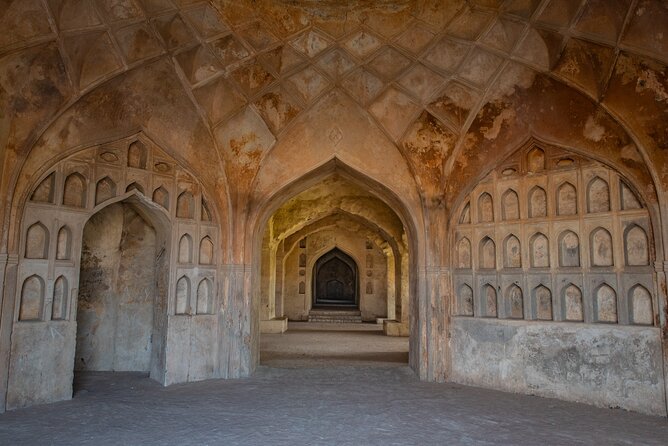
- Tombs that explain power: The Qutb Shahi necropolis is treated as politics and economy you can walk through.
- Persian-style hamam at Qutb Shahi: A public bath from the era is a standout feature on-site.
A diamond story in Hyderabad: what you’re actually touring
The Kingdom of Diamonds Tour takes on two sites that people often treat as separate: Golconda Fort (though this place is more than a “fort” in the usual sense) and the Qutb Shahi Tombs. The tour frames them as companions. The living city—Golconda as capital, trade hub, and diamond center—helps you understand the dead city—tombs built to project status, authority, and family legacy.
What makes this more interesting than a standard ruins walk is the way it connects material remains to events and stories you can follow. You’ll hear how the Qutb Shahi rulers sat at a crossroads between East and West, and how that position shaped everything from commerce to architecture. If you like your travel with context—why things were built, who benefited, and what people were trying to control—this tour is made for you.
The format is also simple: a private tour for your group, about 4 hours total, with pickup offered and a mobile ticket. That combination matters because it keeps the day focused. You’re not trying to coordinate transit between two big historical areas on your own.
You can also read our reviews of more tours and experiences in Hyderabad.

Morning logistics: meeting at Golconda and starting at 8:30
You’ll start at 8:30 am near Golconda Fort at the JS Javeed Gulshan address listed by the operator. The tour ends at the Qutb Shahi Tombs entrance (the entrance you’ll use to start exploring).
Because the schedule is built around time at both sites—roughly 2 hours each—you’ll want to arrive ready to walk. This isn’t an “inch along at a museum pace” tour. You’ll move through lanes and complexes, stop for explanations, then move again. Comfortable, grippy shoes help more than people think, especially with stone paths and stairs at Golconda.
If you’re traveling with family, this matters too. The tour’s structure gives a rhythm: explanation, viewpoint, then looking and walking again. That pattern tends to keep energy up.
Stop 1: Golconda Fort—diamonds, markets, and the fort’s real logic
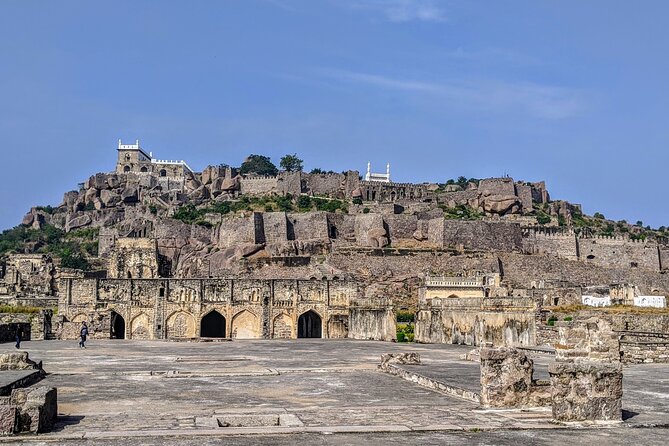
Golconda is presented as the capital city of the Qutb Shahi kingdom—ruled in the 16th and 17th centuries—and famous worldwide for diamonds. The big idea here is that you’re walking through a place that was designed for power and profit, not just defense.
You’ll spend time in the stone bazaars where trade once flowed. The tour connects those spaces to a wider network: Arabia, China, Europe, and different parts of India. It’s a reminder that “local history” can be part of global history—Golconda wasn’t isolated.
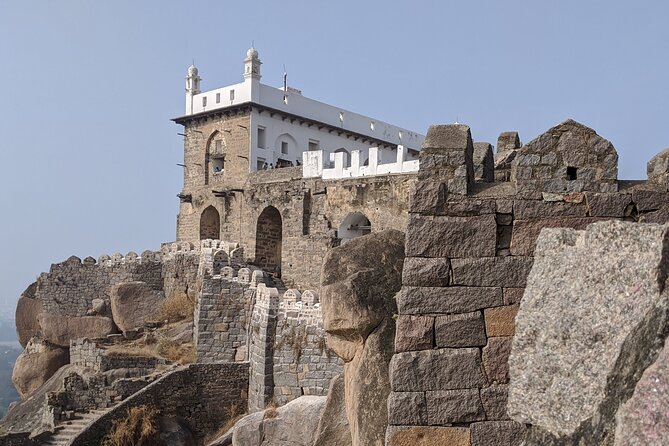
Then the story shifts from commerce to conflict. You’ll learn why the strong fortifications helped make this center of trade possible, and you’ll experience the fort’s design by standing in the so-called killbox—the area where an attacking force would have faced the worst conditions. The payoff isn’t just the dramatic name. It’s understanding that the fort was built like a system, with the battlefield layout doing part of the work for defenders.
One more highlight is the climb. You’ll go up to the top and stand in the Diamond Keep, the cool and breezy house used as home by some of the richest kings of their time. Even if you’re not a “palace person,” that stop clicks because it connects wealth to place: this is where status lived in stone and air.
Admission note: for this tour, stop 1 is listed as ticket free, which helps value on a priced tour day.
A practical consideration at Golconda
Your legs will feel it. Between the fort’s steps and the climb to the top, you should plan for a bit of effort. If you dislike heights, steep stairs, or long uphill stretches, you might want to pair this with a more relaxed option—or at least bring a pace strategy.
The killbox moment: when architecture turns into a story
The killbox is one of those spots where a tour can either do the “cool fact” thing or help you truly understand the space. Here, the explanation is what makes the moment land.
Standing in the killbox, you get a clearer sense of why fortifications mattered for a diamond kingdom. If you control the route to the capital and protect the people who run trade, you protect the economy. The Qutb Shahi rulers weren’t just ruling bodies—they were managing the flow of goods, taxes, and influence.
I like moments like this because they change how you see the whole complex. After you’ve stood where attacks were meant to be difficult, you start noticing angles, clear lines of movement, and how the fort’s layout reduces an attacker’s options. It’s not just drama; it’s planning.






Stop 2: Qutb Shahi Tombs—necropolis as political messaging
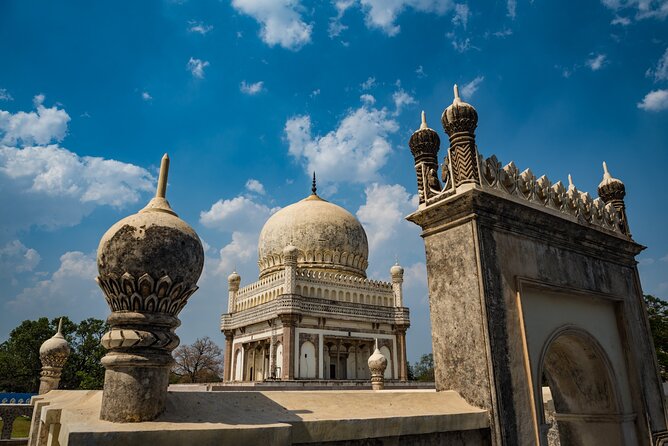
If Golconda is the city of trade and command, the Qutb Shahi Tombs are the city of remembrance and rule. This complex is described as one of the best-preserved necropolises in the world, and it earns that reputation through how much it lets you infer about daily court life and dynastic power.
You’ll explore the lives of kings and their families and learn about what it cost—socially and politically—to become a king in the 16th century. The tour also highlights a striking theme: the power of a woman who was more powerful than all the kings of Golkonda. Even if you don’t catch every historical nuance, that story lens helps you look beyond stone and see human agendas.
A standout architectural feature is the most complete, best-preserved example of a Persian-style hamam (a public bath) from that era in India. A bath might sound like a pause from the serious business of tombs, but that’s the point. Bath culture tells you about public life, comfort, and social structure. You’re seeing how rulers supported the routines and rituals that reinforced their authority.
You’ll also get explanations of the tombs’ architecture, and how the complex played an economic and political role in strengthening royal power. The tour ends with a thought-provoking question: as you wander through monuments built to project might, do you read them as mere men who died—or as something larger that their legacy tried to become?
Admission note: stop 2 is listed as ticket included, which is a smart value detail. Tomb complexes can add cost when you’re booking separately.
What makes the tombs section work: reading space like a document
I like tomb visits that do more than point out shapes. This tour treats the space like evidence. The architecture isn’t presented as decoration; it’s presented as communication.
Here’s what you get from that approach:
- You see how a dynasty reinforced status long after rule ended.
- You connect the placement and design of monuments to the idea of order, inheritance, and legitimacy.
- You understand how everyday features like a public bath fit into a wider system of rule.
This is also where your guide’s skill matters. When you’re listening to Navin explain why something was built, you start noticing details you might otherwise miss: layout choices, the way structures relate, and why certain elements feel intentionally placed.
Guide experience: Navin’s energy and how he keeps it human
One thing that comes through clearly is Navin’s passion for Hyderabad’s history and culture. He doesn’t just list facts. He makes you picture the setting. That is especially helpful at Golconda, where you can easily get lost in stone and shade. It’s also valuable at the tombs, where it can be tempting to treat everything as the same kind of monument unless a guide gives you a story thread.
The best part: his approach seems to work for different ages, including kids in the group. That’s a big deal. If you’re bringing family, you’ll usually want explanations that stay understandable without being childish.
Navin’s style also helps you appreciate the ruins you’re standing in. Instead of thinking, I’m just looking at old buildings, you start thinking, people lived, traded, ruled, and planned here. That shift makes your photos look better too, honestly.
Value and price: what $110 buys in a 4-hour private format
At $110 per person for about 4 hours, you’re paying for a private guided experience with structure: two major sites, coordinated timing, and a guide who connects the dots. You’re also getting support details that matter on a day with two separate locations—pickup is offered, and the tour uses a mobile ticket.
The value improves when you look at admissions coverage:
- Stop 1 is listed as ticket free for this tour.
- Stop 2 includes the admission ticket.
So yes, you’re paying for the guide and the organization—but admissions aren’t piling on top for both stops. That keeps the total day from creeping upward the way it often does with popular heritage sites.
If you’re comparing options, think about what you want: a self-guided walking plan costs less, but it won’t give you the diamond trade context, the killbox explanation, or the political reading of the tombs. For a short trip, a guided combo like this can be the most efficient use of your limited time.
Who should book this tour (and who might prefer something else)
This tour is a strong match if you want:
- A story-driven heritage walk rather than a photo-only route.
- Clear links between architecture and how power worked.
- Time at both Golconda and the Qutb Shahi Tombs without having to plan the “how do we get from here to there” part.
It’s especially good if you like trade history. The diamond theme plus the routes connecting Arabia, China, Europe, and India makes the day feel bigger than the local area.
You might consider a different option if:
- You want a fully relaxed stroll with no stairs. The Golconda climb is part of the program.
- You prefer extremely structured museum-style interpretation. This tour is more site-walk and explanation than gallery learning.
Should you book the Kingdom of Diamonds Tour?
If you’re spending time in Hyderabad and want a heritage day that feels purposeful, I’d book it. The biggest reason is the connection: you don’t just see two stops. You learn how the Qutb Shahi rulers built wealth and authority—then tried to preserve it through monuments that still speak today.
If you care about context, appreciate guides who can make old stone feel like a real place, and you’re okay with some walking and climbing, the tour is a smart use of a half-day. And at $110 with a private format plus ticket coverage for the tombs, it’s also priced like a practical choice, not a luxury splurge.
FAQ
How long is the Kingdom of Diamonds Tour?
It runs for about 4 hours (approximately), with about 2 hours at Golconda Fort and about 2 hours at the Qutb Shahi Tombs.
What does the tour cost?
The price is $110.00 per person.
Is pickup offered?
Yes, pickup is offered.
Is the tour private?
Yes. It’s listed as a private tour/activity, meaning only your group will participate.
What are the main stops?
The tour includes Golconda Fort and the Qutb Shahi Tombs.
Are tickets included for the stops?
For this tour, the Golconda Fort stop is listed as Admission Ticket Free, and the Qutb Shahi Tombs stop is listed as Admission Ticket Included.
What time does the tour start?
The start time is 8:30 am.
Where does the tour meet and end?
You start at the provided Golconda Fort area address (JS Javeed Gulshan, Khair Complex, Golconda Fort, Hyderabad). You end at the Qutb Shahi Tombs entrance area (listed with an open-in-Google-Maps reference).
Do I get tickets by mobile?
Yes. The tour includes a mobile ticket.
What is the cancellation policy?
Free cancellation is available. You can cancel up to 24 hours in advance for a full refund. Changes within 24 hours aren’t accepted, and cancellations inside 24 hours don’t get refunded.