REVIEW · HYDERABAD
Heritage Walk with HiTea at Falaknuma Palace
Book on Viator →Operated by Hyderabad Garuda Tourism · Bookable on Viator
Falaknuma Palace turns afternoon tea into a mini time machine. This Heritage Walk with HiTea at Taj Falaknuma Palace pairs a guided look inside the Nizam-era mansion with a proper in-hotel tea service, all while you get a new angle on Hyderabad from up high.
I especially like the way the tour leans on an art historian for the palace interiors only. You’ll also get the kind of city views that are easy to miss when you just snap photos from the entrance.
One consideration: the tea and sweets aren’t always described as top-tier, with at least one review calling out baking quality. If pastry perfection matters to you, I’d keep expectations realistic and focus on the setting and the guided palace stops.
In This Review
- Key highlights to know before you go
- Falaknuma at 3:00 pm: why the timing matters for views and tea
- Entering Taj Falaknuma Palace: the “Nizams in real rooms” feeling
- The palace interiors that make the guide part worth it
- Nizam’s Study and the Windsor-inspired Library
- Grand marble staircases and the Carrera lamp moment
- Jade Room: chandeliers, parquet, and the Versailles comparison
- Begum’s chambers: the court-life vibe
- Durbar Hall and the billiards table detail
- Hukka Lounge: politics, poetry, and Ottoman envoys
- The long dining-table highlight
- HiTea after the walk: where you’ll eat and what you can expect
- Views over Hyderabad: seeing the city from the palace
- Small-group comfort and how to get more from the guide
- Price and value check: is $94 a good deal?
- Who should book this Heritage Walk with HiTea
- Should you book this tour?
- FAQ
- What is the duration of the Heritage Walk with HiTea at Falaknuma Palace?
- How much does it cost, and is the ticket mobile?
- Where does the tour start and end?
- What time does the tour begin?
- What’s included in the price?
- Where will the afternoon tea be served?
- Is pickup and drop included?
Key highlights to know before you go
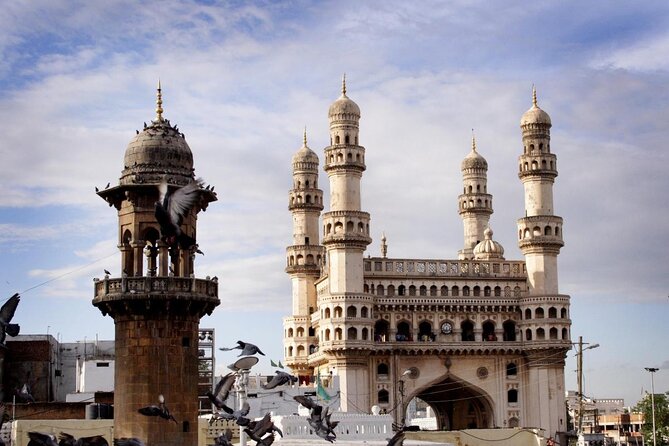
- Falaknuma is high, royal, and built for drama: about 2,000 feet (609 meters) above the city, with origins in 1884.
- You’re walking through specific Nizam-era rooms, not just a general hallway tour.
- The guide is an art historian inside the palace, so questions about design and symbolism land better.
- Tea is served in-house at places like Celeste, the Gol Bungalow, or the Jade Terrace.
- Small group size (max 15) means you can actually ask follow-up questions.
Falaknuma at 3:00 pm: why the timing matters for views and tea
This tour runs for about 2 hours 50 minutes, starting at 3:00 pm. That afternoon slot is a sweet spot in Hyderabad because you’re not starting in the heat of the day, and you’re likely to catch better lighting as you look down at the city from the palace.
Also, the schedule makes sense for how the experience is designed. You begin in the palace interior (where the guide can explain architecture, rooms, and symbolism), and then you finish with afternoon tea and snacks at an in-house restaurant terrace setup. It feels like the pacing was built to slow you down: first you absorb the details, then you sit back and enjoy the view with something warm in your hand.
There’s another practical upside: with a small group (up to 15), you’re less likely to feel rushed at each room. You can ask one more question without the guide having to sprint ahead.
You can also read our reviews of more walking tours in Hyderabad
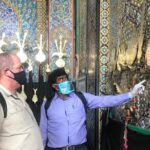


Entering Taj Falaknuma Palace: the “Nizams in real rooms” feeling

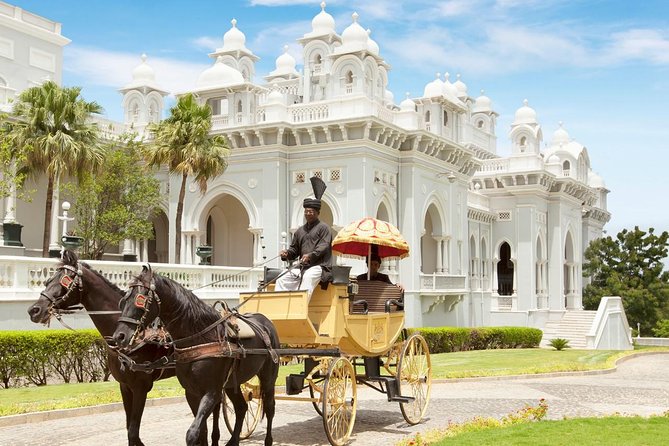
Falaknuma Palace is one of those places where the setting is part of the story. It sits roughly 2,000 feet (609 meters) above Hyderabad, and it was built in 1884. Even before you step far inside, you can sense that it was designed to communicate power and taste.
The tour focuses on the mansion as it was meant to be experienced: through rooms tied to court life, study, music, dining, and politics. This is a key reason the Heritage Walk works better than a simple self-guided visit. You’re not just looking at pretty architecture; you’re getting context for why certain design choices show up where they do.
And because the art historian guide is inside the palace only, you’ll get that concentrated “how to read the building” time when it counts most—once you’re surrounded by the details.
The palace interiors that make the guide part worth it
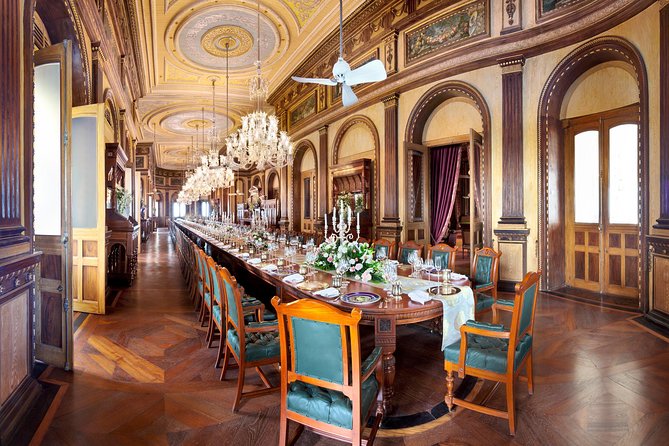
The guided portion takes you through a sequence of standout spaces. Here’s what you should expect, and why each stop matters.
Nizam’s Study and the Windsor-inspired Library
The tour begins with the Nizam’s Study and a Windsor-inspired Library said to hold 6,000 rare books, including editions related to the Titanic. That single detail is exactly the kind of thing that’s hard to notice (or even know to look for) on your own.
For me, the library is the first “memory anchor” of the visit: you come out with a couple of concrete images—bookshelves, rare editions, and the idea that the household valued learning alongside luxury. It’s also a great early stop because it frames the rest of the rooms. Once you hear how the space was used, the rest reads more clearly.
Grand marble staircases and the Carrera lamp moment
Next come grand marble staircases, plus Carrera lamps, fountains, and regal portraits. This is the part where the palace feels cinematic. It’s also the easiest place to “overlook” details if you rush. Slow down here, because the guide’s commentary tends to connect these decorative elements to status and aesthetic taste.
Tip: If your group is moving quickly, ask the guide which detail guests usually miss on the stairs. That’s a fast way to transform a photo stop into actual understanding.
You can also read our reviews of more historical tours in Hyderabad

Jade Room: chandeliers, parquet, and the Versailles comparison
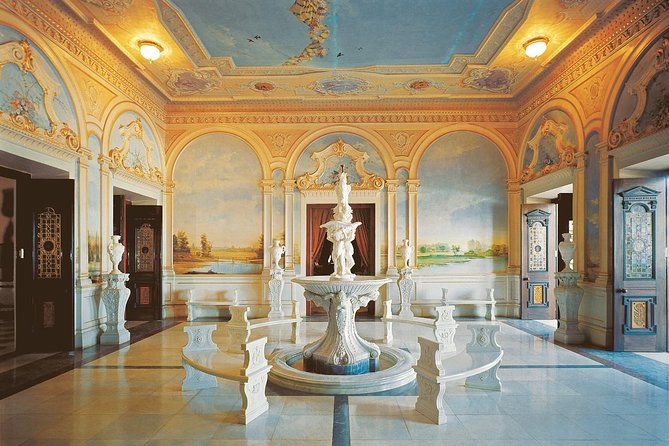
The Jade Room is described as glowing with Bohemian chandeliers and parquet floors, with a look that recalls Versailles. The value here isn’t the comparison itself—it’s that the guide helps you notice the design cues that cause those parallels.
If you like interiors, this is the room where you’ll probably spend the most time staring upward and down. It’s not just decoration; it’s a pattern of luxury choices that show up consistently across the palace.
Begum’s chambers: the court-life vibe
Then you move to the Begum’s chambers, where the atmosphere turns quieter and more personal. This stop adds balance to the more public spaces. Instead of only thinking about power halls, you get a sense of daily life and private court spaces.
Even if you’re not a “history-only” person, this is a good place to imagine what life might have felt like behind those doors. The guide’s explanations can help you avoid treating the chambers like just another photo backdrop.
Durbar Hall and the billiards table detail
The Durbar Hall is where the palace flexes. Expect Venetian chandeliers, silk, and an original Burroughs & Watts billiards table. This is one of those details that instantly makes the place feel real. It’s not a museum object that lost its purpose—it’s connected to leisure and court life.
I like that the tour doesn’t just point at splendor. It points at objects. When you hear how these rooms functioned, the palace starts feeling less like a random collection of ornate rooms and more like a working home designed for ceremony.
Hukka Lounge: politics, poetry, and Ottoman envoys
The tour also includes the Hukka Lounge, described as once praised by Ottoman envoys. The idea of the space being associated with politics and poetry gives you another layer beyond architecture: sound, conversation, and the social role of lounges in court culture.
This is a great stop for asking questions. If you’re curious about how spaces shaped conversations, bring that curiosity here. The art historian angle makes those questions land better.
The long dining-table highlight
One standout detail is the 33m teak and rosewood dining table (the description cuts off after that, but the length and materials are the key point). Long tables are a design statement: they signal ceremony, scale, and hosting.
If you’re anything like me, you’ll want to picture the room filled with people. Even without that imagination, the scale of a table like that is enough to make you slow down and look carefully.
HiTea after the walk: where you’ll eat and what you can expect
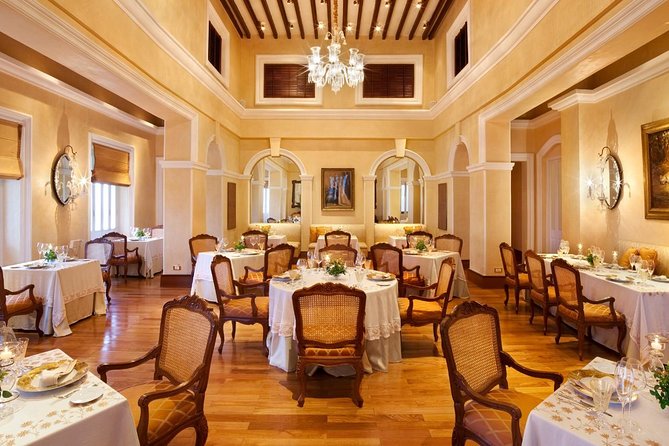
After the palace interior stops, the tour ends with tea service at an in-house location such as Celeste, the Gol Bungalow, or the Jade Terrace. That restaurant choice matters because the experience is designed as a transition: from walking through rooms to sitting in them—with time to absorb views and atmosphere.
The included food is described as afternoon tea plus snacks. There’s also mention that a British and Nizams Hi Tea menu is available. In other words, you can expect the tea service to blend familiar tea-time structure with themes linked to the Nizams.
Balancing note from reviews: the tea gets strong praise for elegance and taste in multiple comments, but at least one review critiques the sweets, saying they weren’t always baked to a five-star standard. So here’s my practical advice: treat the tea setting and variety as the main win. If you judge tea purely on pastry perfection, keep expectations slightly flexible.
Views over Hyderabad: seeing the city from the palace
Falaknuma’s height is a big part of why this tour feels special. When you look down from the palace, you get a different mental map of Hyderabad than you do from street level.
What makes this meaningful isn’t just the view itself—it’s that the view comes after you’ve learned the building’s layers. You’re not looking out while thinking only about photos. You’re looking out with context: this is a palace that was built to command space and attention.
If you want the best view moment, pay attention to how the tea terrace is set up. Don’t rush your first sip. Take two minutes to look for sightlines over the city, then settle in.
Small-group comfort and how to get more from the guide
With a maximum of 15 people, this is built for questions. The palace has enough visual detail that the guide’s explanations can change your entire experience, especially if you’re the type who notices symbols and architectural transitions.
A simple way to make it work for you:
- Ask about one room you just saw—how its function might relate to the decor.
- Ask about specific materials and why they were used in that setting.
- Ask which room is hardest to appreciate on a quick visit.
Also, remember the scope: the art historian guide is for the palace interior only. Use that time well. By the time you reach tea, the pace naturally shifts into “sit, relax, and enjoy.”
Price and value check: is $94 a good deal?
At $94 per person, this tour isn’t cheap, but it includes multiple pieces that add up in a place like this: palace access with a professional art historian inside, afternoon tea, and snacks, plus taxes and service charges are included. The “mobile ticket” detail is a minor convenience, but it does simplify check-in.
So where does the value land?
You’re paying for three things:
- Guided interpretation of the palace interiors you’d likely miss on your own
- A proper tea service on-site, rather than trying to find somewhere nearby
- A small-group experience that keeps the pace human
What can affect your personal value:
- If you’re mainly after a view or a photo, you might feel it’s more guided than you need.
- If you’re very picky about dessert quality, one negative review suggests the sweets may not always hit perfect standards.
Also note the optional extra: pickup and drop by vehicle costs ₹2,000 per booking if arranged. If you’re starting far from Falaknuma, that could change your total cost. I’d price it all together before you commit, so there are no surprises.
Who should book this Heritage Walk with HiTea
This experience is a strong fit if you:
- Like architecture, interiors, and room-by-room storytelling
- Want more than a standard palace tour and enjoy asking questions
- Appreciate tea-time experiences but also want the history-meets-lifestyle setting
It might be less ideal if you:
- Only care about being at a luxury location without learning details
- Are extremely strict about pastries and dessert baking quality
If you’re traveling solo, this is still fine because the group is small and the structure keeps you from feeling lost. If you’re with family, the main question is whether everyone will tolerate the interior walking pace through multiple rooms before settling into tea.
Should you book this tour?
Book it if you want a guided walk through Falaknuma Palace’s named rooms—including the library, Durbar Hall, and the lounge spaces—and then finish with tea in an in-house setting with real atmosphere. The value holds up best when you actually plan to use the guide’s explanations and ask questions.
Skip or reconsider if dessert perfection is your top priority or if you prefer purely self-paced visits. And one smart move: because this tour is non-refundable, only book once your schedule is solid.
If you do book, go in with the right mindset: the palace details are the core, and the tea is the elegant reward after you’ve done the walking.
FAQ
What is the duration of the Heritage Walk with HiTea at Falaknuma Palace?
The tour lasts about 2 hours 50 minutes (approximately).
How much does it cost, and is the ticket mobile?
It costs $94.00 per person. You’ll receive a mobile ticket.
Where does the tour start and end?
It starts at Taj Falaknuma Palace, Hyderabad (Engine Bowli, Falaknuma, Hyderabad, Telangana 500053) and ends back at the meeting point.
What time does the tour begin?
The start time is 3:00 pm.
What’s included in the price?
The package includes all taxes and fees, an art historian guide inside the palace only, afternoon tea, and snacks.
Where will the afternoon tea be served?
Afternoon tea is served at one of the in-house options: Celeste, the Gol Bungalow, or the Jade Terrace.
Is pickup and drop included?
Pickup and drop by vehicle are not included in the base price. It can be arranged for an additional ₹2,000 per booking.