REVIEW · MYSORE
Immersive walk in Mysore by tourism ministry approved company
Book on Viator →Operated by 5 Senses Walks · Bookable on Viator
A great walk can teach you a city fast. This one strings together 700 years of Mysore through art, clock towers, and market life in just about two hours.
I like two things most: the focus on story (not just sightseeing) and the way the guide uses humor, quizzes, and real context to connect the dots between royal Mysore and British rule. A small consideration: it’s priced at $50 and you’ll walk at a steady pace, so come prepared with comfortable shoes and a light snack mindset.
In This Review
- Key highlights before you go
- A smart first-look at Mysore, from palace walls to clock towers
- The meeting point at Jaganmohan Palace (and why it sets the tone)
- Stop 1: Jaganmohan Palace Art Gallery and Auditorium
- Landsdowne Building: a heritage landmark you pass with context
- KR Circle and Chamaraja Circle: the kingdom’s heartbeat at intersections
- Dodda Gadiyara: the clock tower that marks 25 years of rule
- City Market: bazaar color and everyday Mysore life
- Ending at Gadiyara (Dufferin Clock Tower) and Mysore Pak
- Guides, group size, and the small-group advantage
- Price and value: what you’re really paying for
- Practical tips so your 2 hours feel easy
- Should you book this Mysore heritage walk?
- FAQ
- How long is the Mysore heritage walk?
- What time does the tour start?
- Where do I start and where do I end?
- How much does it cost?
- How many people are in a group?
- Is the ticket mobile?
- Is admission included at any stops?
- What food is included in the tour?
- Are there group discounts?
- What is the cancellation policy?
Key highlights before you go
- Jaganmohan Palace art gallery with a painted 700-year story of Mysore
- Clock-tower history that explains Maharaja–British Empire connections
- A tight 2-hour loop through KR Circle, Chamaraja Circle, and market streets
- Small-group format with a maximum of 10 people
- Mysore Pak tasting at the end, plus chances for extra street tastes
A smart first-look at Mysore, from palace walls to clock towers
If Mysore is new to you, this walk gives you something many buses can’t: a clear sense of how the city thinks. You move through major landmarks while a guide connects royal power, colonial-era changes, and everyday life in the bazaars—so your photos have meaning, not just scenery.
I especially like that the tour is built around the city’s own timekeepers. The clock towers aren’t treated like random monuments. They’re used as story anchors, tying rulers and political shifts to what’s still visible today. Another plus is the guide style. In past groups, the tour has been led by guides such as Faisan, Fez, and Shiva, and the common thread is lively storytelling—full of anecdotes, quizzes, and humor. One guide even tailors the direction of the stories based on where participants are from, which makes the walk feel less like a script and more like a conversation.
One practical note: you’re paying $50 per person for a guided, ticketed experience. It’s worth it if you want structure and context. If you only want a casual stroll with minimal talking, you might prefer to explore on your own.
You can also read our reviews of more tours and experiences in Mysore.

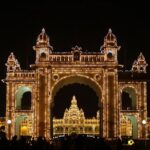
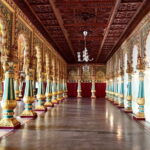
The meeting point at Jaganmohan Palace (and why it sets the tone)
You start at Jaganmohan Palace, also known as Sri Jayachamarajendra Art Gallery and Auditorium, with a 4:00 pm start time. That timing matters. Late afternoon light can make stone and brass details pop, and you also get to roll straight from “royal art” into “real city life” as the streets get busier.
The first stop is where the tour earns its keep. You’re not just looking at objects—you’re learning how the palace story leads into modern Mysore. The gallery uses paintings to tell a vivid 700-year story, so you get an immediate theme for the rest of the walk: Mysore didn’t become Mysore overnight. You’re seeing a long arc of culture, power, and change.
You’ll also have an admission ticket included here. That’s a good value point because you’re not paying extra at the door once you arrive.
Stop 1: Jaganmohan Palace Art Gallery and Auditorium
This is the anchor stop for the whole experience. The paintings are used like a timeline, helping you understand how Mysore’s identity evolved over centuries. It’s also a nice change from typical walking tours that only reference famous buildings from the outside.
What you’ll take from this stop is clarity. After you see the art, the rest of the city stops feeling random. The streets, the intersections, and the clock towers start to feel like they belong to a single story.
A possible drawback: this part includes museum time (about 30 minutes), so if you’re the type who wants to spend all your time outdoors, you’ll want to mentally pace yourself. The goal is balance—get the palace context first, then spend the second half understanding daily life.
Landsdowne Building: a heritage landmark you pass with context
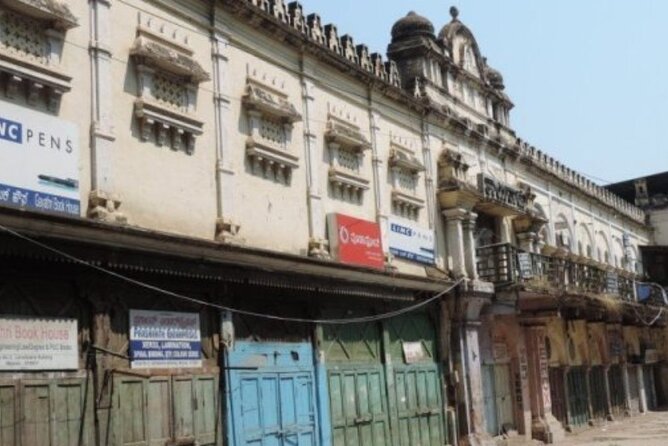
After Jaganmohan Palace, you head along the city’s central lanes, with a quick look at the Landsdowne Building. This is about understanding how impressive buildings aren’t only decorative. In Mysore, the architecture helps you read the city’s shifts in influence, from royal priorities to commercial and public power.
This stop is 15 minutes and doesn’t require extra admission. That makes it feel efficient: you get the meaning without losing your walking momentum.
If you’re someone who enjoys spotting history while moving, this style fits. If you prefer lots of time at each single site, you may feel the quick pace, but the tour’s total runtime is designed to keep things flowing.
KR Circle and Chamaraja Circle: the kingdom’s heartbeat at intersections
Next come two major intersections: KR Circle (Krushna Rajendra Circle) and Chamaraja Circle. These aren’t treated like mere traffic points. Your guide uses them to describe the history of the Kingdom and explain why these areas matter.
Both segments are about 15 minutes each, and neither includes admission costs. That makes them perfect for a walking tour format. You’re learning without burning your time deep inside buildings.
In one of the stories shared during this kind of route, the guide’s humor and quizzes help you remember names and connections. If you enjoy a guide who talks like a human and not like a textbook, this is where that energy usually peaks.
One consideration: these circles are active areas. Even though the tour is short, you’ll want to keep an eye on your footing and stay close to your group when you’re crossing.

Dodda Gadiyara: the clock tower that marks 25 years of rule
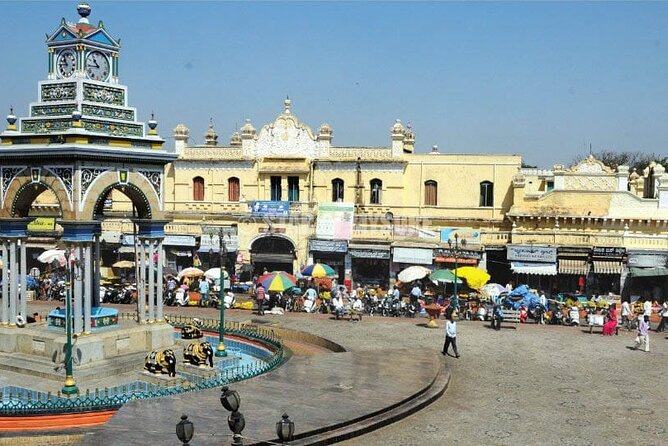
Then you reach Dodda Gadiyara, a square known for a clock tower commemorating 25 years of rule of Krishnaraja Wodeyar IV. This is where the “timekeeping” theme becomes real and concrete. You’re not just hearing about rulers in abstract terms—you’re seeing a monument tied to a specific reign and anniversary.
This stop is 15 minutes, free of admission fees. It works well as a mid-walk reset. You can stand, look up, and understand why clock towers were more than practical infrastructure. They were symbols: visible reminders of authority, planning, and celebration.
If you’re a photo person, this is one of the better moments to slow down and take pictures. The tower shape and surrounding square give you an easy frame.
City Market: bazaar color and everyday Mysore life
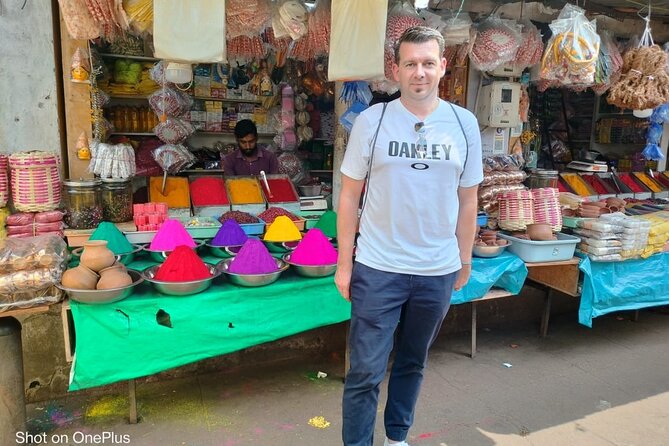
After the clock-tower stops, the walk shifts tone toward the City Market, where Mysore shows you its daily rhythm. The market is described as a riot of colours, and that’s exactly the point: you’re seeing present-day life right after learning about older power structures.
This part is a quick 15 minutes, but it’s usually where people start to feel the city’s texture—sounds, shopfront signs, and the energy of shoppers. It’s not about shopping big. It’s about understanding the city as a living place, not a museum.
One more thing: one of the experiences in this walk includes tasting street-style items such as bananas alongside the main Mysore Pak treat. Even if you’re not chasing snacks, pay attention to the food moments because they help ground the history in real culture.
Ending at Gadiyara (Dufferin Clock Tower) and Mysore Pak
The tour ends at Gadiyara, where the Dufferin clock tower acts as the finish point. Your group is dropped at the clock tower at the end, so you can keep wandering afterward without needing to backtrack.
The emotional payoff here is the taste of Mysore Pak, the famous sweet linked with Mysore identity. The tour builds to this moment at the end of the walk, which is smart: after hearing stories and seeing monuments, you get a local flavor to seal the experience.
You’ll spend about 15 minutes at the ending stop. For many people, this is the moment you realize the tour wasn’t just about buildings. It was about how Mysore signals pride—through art, through public monuments, and through food.
Guides, group size, and the small-group advantage
This tour runs with a maximum of 10 travelers, which is a big deal in India’s busiest city areas. You’re less likely to get lost in a crowd, and the guide can actually keep track of questions.
The guide talent is consistently a highlight. In the past, guides like Faisan, Fez, and Shiva have been praised for being witty and full of anecdotes, with storytelling that can shift direction depending on who’s in the group. That matters because it turns the walk into something you can personalize, not just follow.
Also, the guide is part of a community-minded setup. The company says it helps train and employ local guides and supports local businesses so travel dollars stay local. Even if you don’t ask about it on the street, it’s a good sign you’re not only paying for interpretation—you’re supporting the people who do the interpretation.
Price and value: what you’re really paying for
At $50 per person for about 2 hours, the value comes from three parts:
First, you’re paying for an expert guide who explains connections—especially the Maharaja and British Empire relationship through clock tower stories. That kind of context is hard to get from a quick self-guided map wander.
Second, your first stop includes admission at Jaganmohan Palace, which reduces friction and extra costs on the day.
Third, the format includes mobile ticket use and a small-group experience. Group discounts are also mentioned, so if you’re traveling with friends, this might be one of the easier value plays.
If you’re a traveler who likes to understand what you’re seeing, the price makes sense. If you just want the highlights at your own pace, you could potentially replicate some of the route on your own—though you’d miss the structured storytelling and the palace-to-clock-tower linking.
Practical tips so your 2 hours feel easy
A few small things can make this tour smoother:
- Wear comfortable shoes. You’re moving through intersections and market streets, and the tour is designed to keep flow.
- Plan to arrive a bit early at Jaganmohan Palace so you’re not rushing at 4:00 pm.
- Bring cash only if you like to buy snacks or small items, but the tour’s main food is the Mysore Pak at the end.
- If you like learning, come with one question about Mysore’s past. The guide style here often supports back-and-forth.
- If you’re sensitive to crowds, stay aware around the circles and market area, and follow your guide’s guidance.
Should you book this Mysore heritage walk?
I’d book it if you want a guided way to get oriented fast—palace art, clock tower history, and market life in one compact loop. The strongest reason is the guide-driven storytelling style, especially when the tour includes humor, quizzes, and tailoring based on the group. Add the included Jaganmohan admission and the Mysore Pak finish, and it feels like a complete “see and understand” package.
I’d skip or rethink it if you prefer long museum stays, dislike scheduled walking, or you only want photos with minimal explanation. In that case, you might be happier doing a self-paced route through the same parts of central Mysore.
If your goal is to leave Mysore with a sense of how the city’s landmarks connect to the people who ruled it—and how that legacy shows up today—this is a solid choice.
FAQ
How long is the Mysore heritage walk?
The walk runs for about 2 hours.
What time does the tour start?
The start time is 4:00 pm.
Where do I start and where do I end?
You start at Jaganmohan Palace (Sri Jayachamarajendra Art Gallery and Auditorium) and you end at Chikka Gadiyara / Gadiyara, where you’re dropped at the clock tower.
How much does it cost?
The price is $50.00 per person.
How many people are in a group?
The tour has a maximum size of 10 travelers.
Is the ticket mobile?
Yes, the experience uses a mobile ticket.
Is admission included at any stops?
Admission ticket is included for Jaganmohan Palace Art Gallery and Auditorium. Other listed stops are marked as admission-free.
What food is included in the tour?
You get an opportunity to taste Mysore Pak during the walk.
Are there group discounts?
Yes, group discounts are mentioned.
What is the cancellation policy?
You can cancel for a full refund if you cancel at least 24 hours before the start time.