REVIEW · MYSORE
Mysuru Through its Markets
Book on Viator →Operated by Unventured Mysore City Tours · Bookable on Viator
Markets tell Mysuru’s real story. In just three hours, you’ll move from historic clock towers into the Devaraja Market lanes, picking up color, spice, and craft details as you go. I especially love the market-to-food flow, with sweet stops like Mysore Pak and a soda origin lesson. I also like how the route keeps turning history into something you can see and photograph.
Quick, practical note: this is a city-center walk, so expect crowds and uneven sidewalks. I’d bring good walking shoes, and plan on not relying on bottled water being provided.
Your guide matters here. Unventured Mysore City Tours pairs you with a local English-speaking guide, and the style tends to be flexible—people highlight guides such as Arun, Souharda, and Nishchal for adapting to what you want to see. It’s also built for small groups (up to 14), so you’re not stuck yelling over a bus-load of tourists.
In This Review
- Quick hits (what makes this walk worth it)
- Entering Mysuru’s central market rhythm without feeling lost
- Meeting point and timing: a 3-hour route built for mornings and afternoons
- Dufferin Clock Tower: the quick heritage warm-up
- Devaraja Market: flowers, incense, spices, and vermilion piles
- Hotel Vishnu Bhavan: Mysore Pak with an origin story
- Arun Fine Arts: inlay work you can actually see up close
- Rangacharlu Memorial Hall (Town Hall) and the clock-tower theme
- Brahmin’s Soda Factory: the oldest pop soda origin stop
- Amba Vilas Palace lighting: the one timing detail worth checking
- Photography tips: colorful stalls, low drama, good angles
- Value check: $48 for 3 hours that includes fees, taxes, and snacks
- Who should book this market walk (and who should reconsider)
- Should you book Mysuru Through its Markets?
- FAQ
- How long is the Mysuru markets walk?
- What does the $48 price include?
- What is the maximum group size?
- Where does the tour start?
- Do I return to the same meeting point?
- Is bottled water included?
- Is alcohol included?
- Are there any admission fees for the stops?
- When can you see Amba Vilas Palace fully lit?
- What if the tour has to be canceled due to weather or minimum group size?
Quick hits (what makes this walk worth it)
- Three hours, small group: up to 14 people keeps it manageable and conversational.
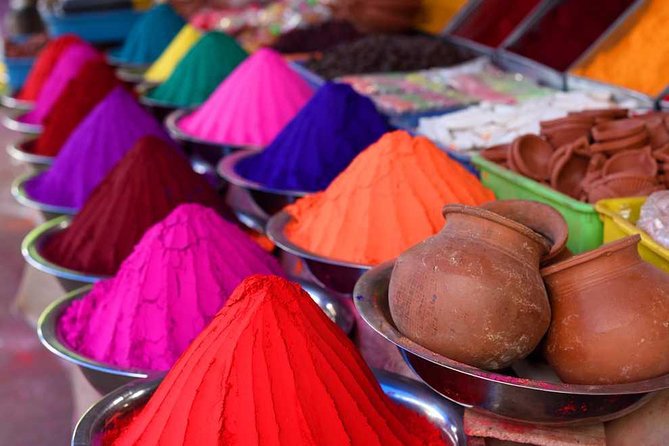
- Devaraja Market senses-first: incense, spices, flower garlands, and vivid vermilion tones in natural light.
- Food stops with backstory: Mysore Pak at Hotel Vishnu Bhavan plus an origin explanation.
- Craft viewing: inlay work gets explained in a real workshop-style setting at Arun Fine Arts.
- Old-school sweet and drink culture: a stop at Brahmin’s Soda Factory for the origin of the city’s oldest pop soda.
- Photo-friendly heritage: clock towers and town-hall architecture punctuate the market segments.
Entering Mysuru’s central market rhythm without feeling lost
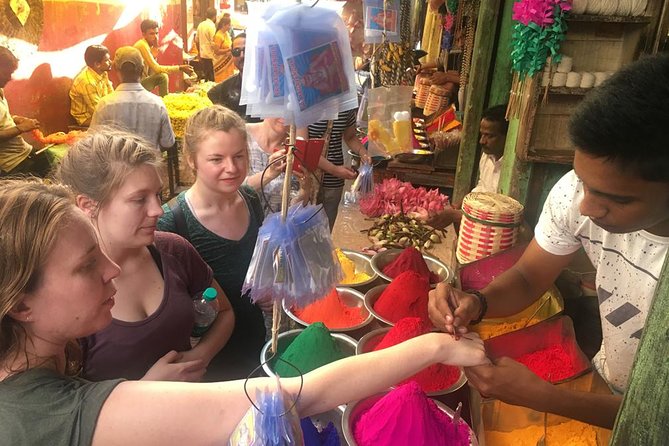
Mysuru has a way of showing you daily life up close, especially around its best-known markets. This walk is designed to help you read the city instead of just passing it. You start at Kote Sri Anjaneya Swamy Temple (Jayarama Gate) and then head into the older core where the street energy is part of the story.
The best part is that the tour isn’t only about sightseeing. It nudges you to pay attention to textures and trades: garland-making smells, incense and spice stalls, craft techniques you can actually see, and small food and drink moments that connect modern visitors to older tastes.
If you’re into photography, it helps that you’ll be moving through areas where lighting changes fast—bright signage, warm shop lamps, and hands at work. And because the stops are short, you don’t feel trapped in any one spot too long.
You can also read our reviews of more tours and experiences in Mysore.
Meeting point and timing: a 3-hour route built for mornings and afternoons
The walk starts at Kote Sri Anjaneya Swamy Temple, at Jayarama Gate on Chamaraja Circle. It ends back at the same meeting point, so you don’t have to worry about transfers or where to go next.
Time-wise, plan for about 3 hours in total. You’ll spend brief bursts at several heritage points (think: clock towers and a town hall), then longer time in the market itself, where you’ll naturally slow down.
The tour also has a weather requirement: it needs good weather to run. In practice, that means you should be ready for heat and humidity on sunny days and for rescheduling if the day turns rainy.
Dufferin Clock Tower: the quick heritage warm-up
Your first stop is Dufferin Clock Tower, also known as Chikkagadiyara, built in 1886. It’s a short visit—about 15 minutes—but it’s a smart warm-up. The tower gives you a reference point for the city’s older streets, so the market walk feels less random.
This is also a handy spot for photos. You’re not shooting just from inside alleys; you’re getting a landmark framing the urban mix—then you immediately transition into the markets’ closer, hand-work details.
Devaraja Market: flowers, incense, spices, and vermilion piles
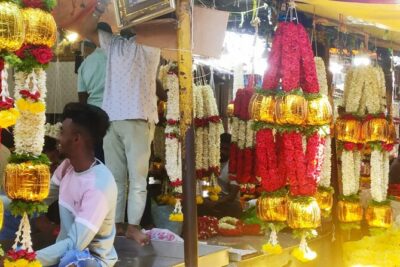
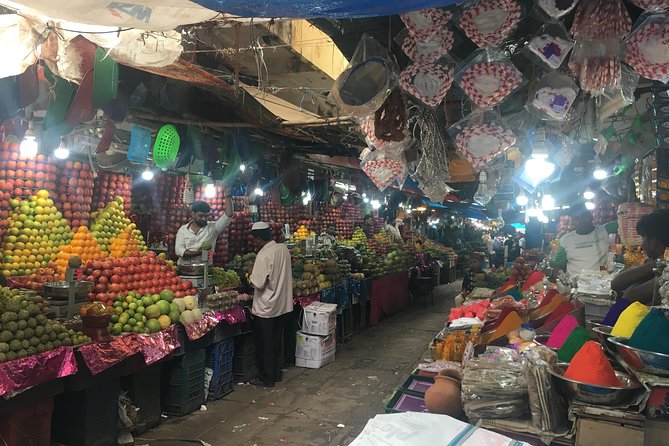
The heart of the walk is Devaraja Market, a large market dating to the era of Tipu Sultan. Here, you’re not just looking. You’re learning the logic of what people buy and why certain products dominate the stalls—garlands for worship and celebrations, incense for fragrance and ritual, and spices traded in bold, practical quantities.
Expect to see things like flower garlands, incense, spices, and conical piles of vermilion. That last detail matters for photography: those deep reds and oranges catch light differently than painted signs or pale walls.
This is also where your pace should slow down. You’ll spend about an hour in the market. If you rush, you’ll miss what makes it compelling: the small motions of sellers and makers, and the way customers move through the lanes with purpose.
Practical tip: if you plan to shop, keep small bills and coins handy. And if you stop for close-up photos, step aside so people can pass without weaving around your camera.
Hotel Vishnu Bhavan: Mysore Pak with an origin story
Next comes a sweet stop at Hotel Vishnu Bhavan. You’ll have a chance to try Mysore Pak, plus learn about its origin. It’s only about 15 minutes, but it’s one of those moments that makes the tour feel more personal.
What I like about this stop is that it turns dessert into context. Mysore Pak isn’t just a snack; it’s part of the city’s food identity. Even if you’re not usually a sweets person, it’s a useful cultural marker and a quick reset between market intensity and craft viewing.
If you’re sensitive to sweetness, you can still enjoy the story and taste a small portion. The tour keeps it short, so you’re not stuck.
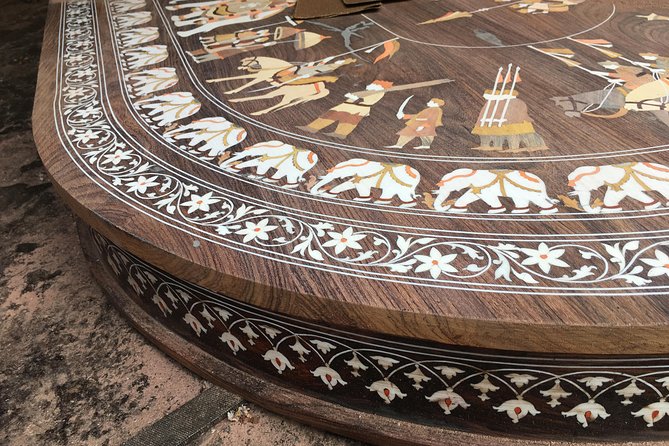
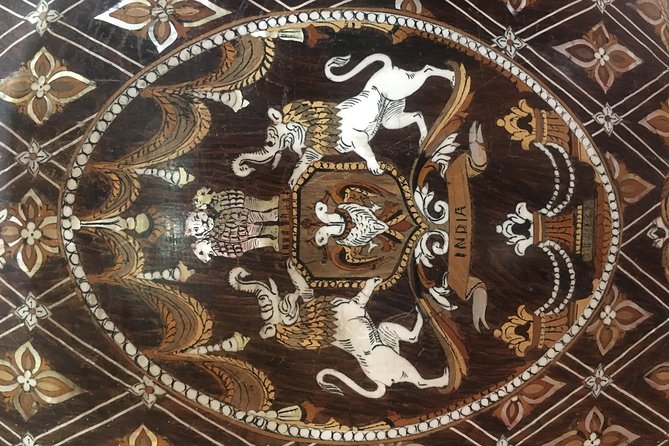
Arun Fine Arts: inlay work you can actually see up close
At Arun Fine Arts, you’ll get insight into inlay work. This is about crafts and technique, not just browsing. Since you’ll spend around 30 minutes here, you have enough time to watch how materials are arranged and how workmanship is explained.
This kind of stop is valuable because it gives you a practical lens. You start to notice details when you return later on your own—patterns in furniture-like objects, how different surfaces are finished, and why the work looks the way it does from a distance.
There’s also a nice shift in atmosphere here. After the open-air smell-and-color market, the craft space feels quieter and more “watchable.” It’s a good segment if you like process as much as product.
Rangacharlu Memorial Hall (Town Hall) and the clock-tower theme
Between market and soda, the walk punctuates with heritage points that help you map Mysuru in your head.
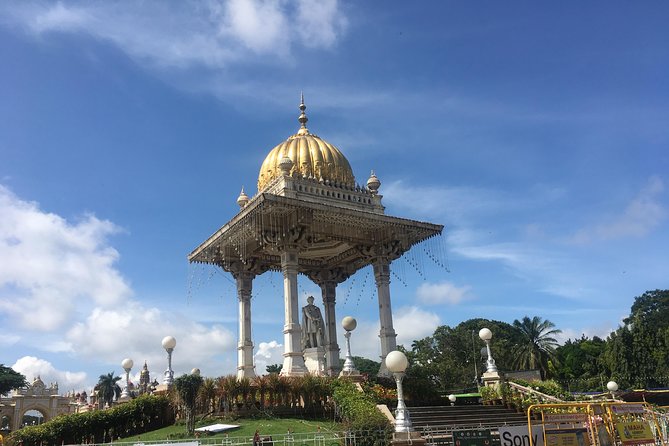
You’ll stop briefly at Rangacharlu Memorial Hall, now known as Mysore Town Hall. The structure was built in 1884 in memory of Diwan Sir C. V. Rungacharlu, the first diwan after the restoration of monarchy. The stop is short—about 5 minutes—so treat it like a visual bookmark.
Then you’ll also visit Dodda Gadiyaara, which means Big Clock Tower, built in 1972 to commemorate the silver jubilee (25 years) of Krishnaraja Wodeyar IV’s rule. Another quick 5 minutes, but it adds a different era to your mental map.
What I like about these timed “micro-stops” is that you get variety without exhausting your feet. And the clock-tower theme subtly ties everything together—old timekeeping meets everyday market commerce.
Brahmin’s Soda Factory: the oldest pop soda origin stop
The final “flavor lesson” is at Brahmin’s Soda Factory, where you try soda and learn its origin. This stop runs about 20 minutes, which is long enough to ask questions and short enough to keep momentum.
One of the highlights people talk about is how this is not just a drink-and-go stop. The story behind the soda gives you a window into what Mysuru keeps and revisits—taste traditions that live alongside modern city life.
If you’re curious, ask your guide what’s available on that day. You’ll learn the basic origin story from the team running the stop, and you can choose a portion that fits your comfort level.
Amba Vilas Palace lighting: the one timing detail worth checking
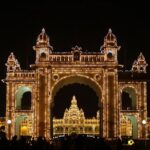
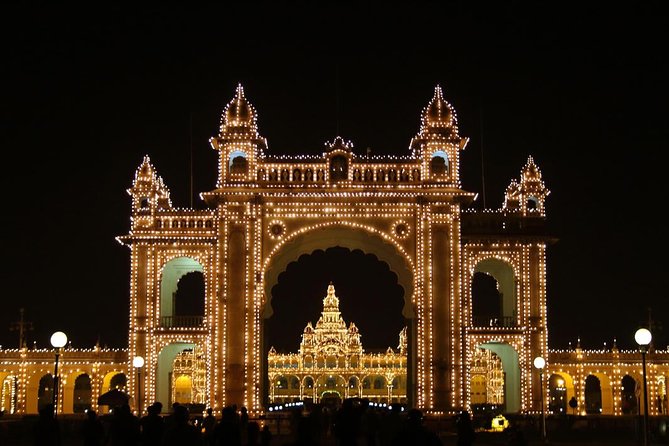
There’s one special viewing condition to keep on your radar: Amba Vilas Palace can be fully lit on Sundays and special holidays. That doesn’t mean you’ll always see the palace lighting as part of the walk, so if palace nightscapes are a priority, check your schedule before committing.
If your dates line up, this adds a strong “grand finale” feel to the day. If they don’t, don’t worry. The market-and-craft core still gives you plenty to take home—sensory memories and practical city context.
Photography tips: colorful stalls, low drama, good angles
If you’re a photo person, this tour has a built-in advantage: you’re moving between open landmarks and close-up trade areas. That means you can shoot wide (clock towers) and tight (hands working, packaging, incense/small goods).
Here’s how I’d approach it:
- Plan to shoot the market near the edges of the main lanes so you’re not blocking foot traffic.
- Use the bright reds of vermilion and the warm tones of spices as your anchors for composition.
- When you hit craft stops, slow down. The best shots are often the small process moments your eye catches only after you stop rushing.
Also, the tour’s length helps. You’re not wandering for half a day, so your photos won’t look like they were shot in a blur of heat and hurry.
Value check: $48 for 3 hours that includes fees, taxes, and snacks
At $48 per person, this is positioned as a “short, focused introduction” to central Mysuru. What makes it feel fair is what’s included.
You get:
- A local English-speaking guide
- All fees and taxes
- Snacks as mentioned
- A mobile ticket
- A group size cap (so it stays small enough to function as a real walk)
What’s not included:
- Bottled water
- Alcohol
- Personal expenses
In other words, you’re paying mainly for local expertise and a guided route that strings together markets, heritage landmarks, craft time, and food/drink history. Since many stops list admission as free, the money doesn’t get swallowed by ticket lines.
If you normally spend half a day hiring taxis or piecing together stops on your own, this can be a good value—especially because it reduces guesswork. And because the group is limited to 14, you’ll generally get more back-and-forth than on a bigger bus-style tour.
Who should book this market walk (and who should reconsider)
This works best for:
- First-time visitors who want city context fast
- People who like food that comes with a story, not just a menu
- Anyone interested in crafts, especially inlay-style workmanship
- Solo travelers who want a guide-led route without feeling stuck in a crowd
It may not be ideal if:
- You hate walking and uneven sidewalks (the tour is active, even though it’s only about 3 hours)
- Weather is unreliable on your dates—because the tour requires good weather
- You’re looking for a long, sit-down museum-style day. This is street-level and practical.
Also, if you love bargain hunting, you might enjoy it even more with time set aside after the walk—use the tour as your orientation, then return later with a clearer shopping list.
Should you book Mysuru Through its Markets?
Yes, if you want a short guided day that makes Mysuru feel real—markets you can sense, crafts you can see, and food/drink moments that come with meaning. This is the kind of tour that helps you stop looking at a city like a postcard and start reading it like a place you could live.
Before booking, check two things:
- Your comfort with a warm-weather walk in crowded areas.
- Whether your travel dates include a Sunday or special holiday, in case the Amba Vilas Palace lighting is on your wish list.
If those boxes fit, this is one of the better ways to spend a few hours in central Mysuru without wasting your energy.
FAQ
How long is the Mysuru markets walk?
It runs for about 3 hours (approx.).
What does the $48 price include?
You get a local English-speaking guide, all fees and taxes, and snacks as mentioned in the itinerary.
What is the maximum group size?
The tour has a maximum of 14 travelers.
Where does the tour start?
It starts at Kote Sri Anjaneya Swamy Temple, Jayarama Gate, Chamaraja Cir, Agrahara, Chamrajpura, Mysuru.
Do I return to the same meeting point?
Yes. The activity ends back at the meeting point.
Is bottled water included?
No. Bottled water is not included.
Is alcohol included?
No. Alcoholic beverages are not included.
Are there any admission fees for the stops?
The stops listed in the route include admission ticket free entries (and all fees and taxes are included in the tour price).
When can you see Amba Vilas Palace fully lit?
It’s available on Sundays and special holidays.
What if the tour has to be canceled due to weather or minimum group size?
If it’s canceled due to poor weather, you’ll be offered a different date or a full refund. If it’s canceled because a minimum traveler number isn’t met, you’ll also be offered a different date/experience or a full refund.