REVIEW · TRIVANDRUM
Cooking classes @ Aryavilla heritage, Varkala
Book on Viator →Operated by Cooking class with Suresh · Bookable on Viator
Kerala flavors start with the spices. In Varkala’s Aryavilla Heritage house, I love the hands-on, do-it-with-the-chef teaching and the payoff of a banana-leaf thali lunch you eat right after cooking. One consideration: this is a Kerala lunch focused class, not a broad tour of all of India’s cuisines.
The class is led by Suresh and runs about 2 hours at a home kitchen setting, with a small group capped at 15. If you’re here off season, you might get a more exclusive feel, with more attention than the usual group pace. Come with an empty stomach and a little patience for spice prep time.
In This Review
- Key highlights you’ll feel on the day
- Arriving at Aryavilla Heritage on Varkala’s Helipad Cliff
- The class format: hands-on cooking with Suresh
- Small group pace and what it means for you
- Flavor first: building Kerala spice mixes the practical way
- The dishes you’ll make: sambar, aviyal, pineapple chutney, and more
- Why these choices help you cook later
- Heads-up on the effort level
- Lunch on banana leaves: your thali meal built from your own cooking
- The dessert finish
- Price and value: $36.31 for a 2-hour skill + lunch class
- Who should book this Kerala cooking class in Varkala?
- Should you book Aryavilla Heritage Cooking with Suresh?
- FAQ
- How long is the cooking class?
- Where do I meet for Aryavilla Heritage Cooking in Varkala?
- What will we cook during the class?
- Who teaches the class?
- How large is the group?
- Do I get a mobile ticket, and can I cancel for a refund?
Key highlights you’ll feel on the day
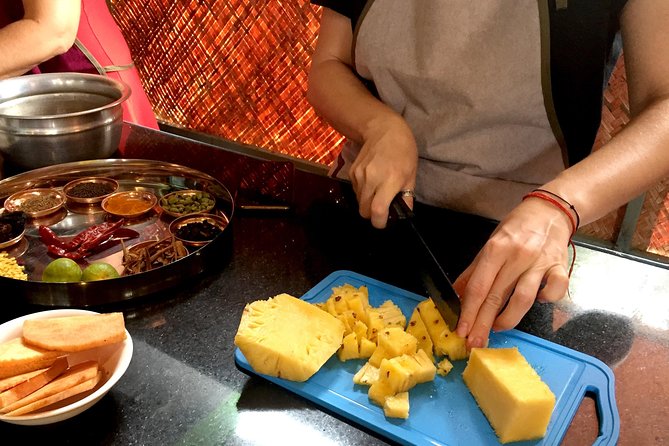
- Old Varkala house kitchen: an open-air setup with sides open for airflow, which really helps in warm weather.
- Chef-led spice thinking: you learn how combinations create flavor profiles, not just one-off recipes.
- About five Kerala dishes: including favorites like sambar and aviyal, plus condiments such as pineapple chutney.
- Spice mix building: you’ll make spice combinations as part of the cooking process.
- Banana leaf lunch, thali-style: rice, what you cooked, and extra additions come together like a proper Kerala meal.
- Recipes included: you leave with the recipes, so you can cook the flavors again later.
Arriving at Aryavilla Heritage on Varkala’s Helipad Cliff
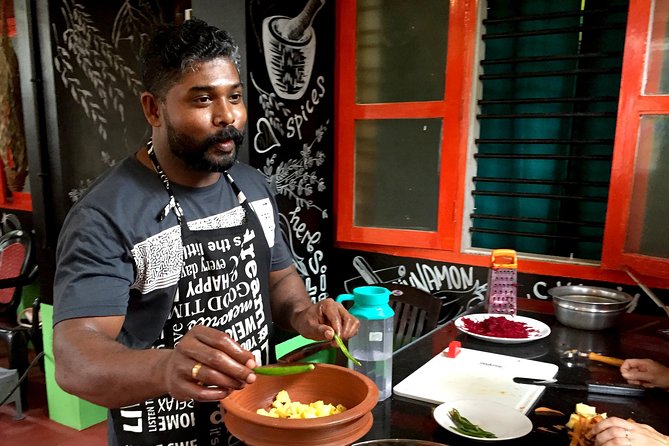
The meeting point is Aryavilla Heritage, in the Vaishakom Building by Helipad Cliff (PPP3+MJW, Varkala). It’s a good setup if you’re already exploring Varkala, because it’s close to public transportation and you’re not stuck figuring out a remote rural route.
What I like about starting here is the immediate change in pace. You’re not wandering through a market while someone reads off ingredient names. You’re stepping into a traditional home environment where the cooking is the main event, and you can see how Kerala food gets built dish by dish.
Plan to arrive a few minutes early. In a home setting, that extra time helps you settle in, meet the chef, and get your station ready before chopping and mixing starts.
You can also read our reviews of more historical tours in Trivandrum

The class format: hands-on cooking with Suresh
This is a lunch class that runs for about 2 hours. The structure is straightforward: you’ll cook together, learn core spice combinations and techniques, make around five dishes, and then eat what you made as a platter lunch.
The best part is that the teaching style is recipe plus reasoning. You’re not just copying steps. You’re learning what a spice mix is trying to do on your tongue, so the next time you cook, you’re not stuck guessing.
Suresh teaches the process as flavor profiles. That matters in Kerala cooking because small differences in spice balance can push a dish toward sweet, tangy, earthy, or hot fast. Learning those patterns is what makes this class useful beyond just one meal.
Small group pace and what it means for you
The group cap is 15 travelers, so you’re less likely to get lost. You’ll still be moving through active kitchen work, but you should feel more involved than in big workshop formats.
Also, one detail that’s worth trusting: the kitchen is designed in a way that’s open at the sides, so you get airflow. That can be a big deal for comfort during chopping, grinding, and simmering.
Flavor first: building Kerala spice mixes the practical way
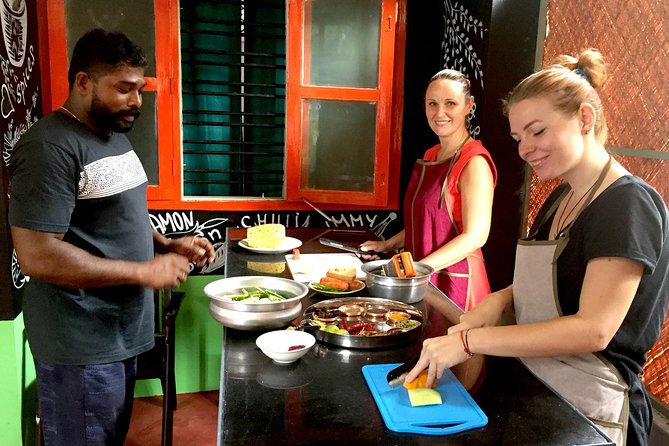
Kerala cooking can feel tricky if you try to learn from random recipe posts. The biggest challenge isn’t finding ingredients. It’s knowing how spices combine, and when to use which balance for the dish you’re making.
In this class, you get taught basic spice combinations and how they support different dishes. The goal is to help you taste the structure: what’s meant to be the main flavor, what’s meant to cut through (like tang or sweetness), and what’s meant to round out the edges.
You’ll also learn preparation concepts tied to the dishes you’re making. That might sound obvious, but it’s easy to underestimate how much your results improve when you understand why a recipe behaves the way it does.
A simple way to approach the class: don’t treat every step as isolated. Instead, think in flavor families. When you taste something during prep, ask yourself what kind of dish it could anchor, and why that dish uses those spices.
The dishes you’ll make: sambar, aviyal, pineapple chutney, and more
You’ll cook around five dishes for a traditional Kerala lunch. The class focuses on popular items you can actually recognize on a menu, not just rare experiments.
Here are the dishes you can expect to be part of the session:
- Sambar (lentil and vegetable stew): earthy, spicy, and built on a blend of lentils plus vegetables.
- Aviyal: a Kerala-style vegetable dish that leans into spice balance and texture.
- Pineapple chutney: bright and tangy, used to create contrast with rice and savory dishes.
- Plus additional Kerala classics that round out the platter-style lunch (the total is about five dishes).
What I like about the mix is that it covers different roles on the plate. You’re not only making heavy stews. You also make something that brings brightness, and that changes how the whole meal tastes together.



Why these choices help you cook later
If you only learn one dish, it can be hard to recreate an authentic Kerala-style meal at home. Learning a stew (sambar), a vegetable-forward dish (aviyal), and a sweet-tang condiment (pineapple chutney) gives you a toolkit. Even if your kitchen equipment is different, you’ll understand the flavor job each dish plays.
It also helps you learn spice mixes with context. Instead of repeating one blend everywhere, you start to see how a spice mix might be adjusted for a stew versus a chutney versus a vegetable plate.
Heads-up on the effort level
This is hands-on cooking, so you should expect real work: chopping, mixing, and standing over active cooking at least some of the time. If you prefer super-fast “watch and taste” classes, this might feel more active than you want.
But if you want to leave with the skills to repeat Kerala flavors, the effort is the point.
Lunch on banana leaves: your thali meal built from your own cooking
After cooking, you sit down for lunch where your creations come together in a classic Kerala way: a banana leaf served with a thali-style platter. You’ll get rice plus the dishes you prepared, along with additional yummy additions and a traditional dessert.
There’s something satisfying about eating from banana leaves after cooking with spice mixes and flavor profiles. The scent and feel make the meal feel more intentional, like each dish belongs to a system, not a random set of plates.
From a practical perspective, this part is also your quality check. During the class, you taste and adjust mentally. Then, at the table, you see how everything works together: stew with rice, chutney as a contrast, and vegetable dishes rounding out the meal.
If you’re the type who learns best by tasting, this format is a win. You’re not waiting until later to find out if the class actually worked.
The dessert finish
The lunch includes a traditional dessert. The key detail here is that dessert isn’t an afterthought. It signals the class is designed as a full Kerala lunch experience, not only a cooking demonstration.
Price and value: $36.31 for a 2-hour skill + lunch class
At $36.31 per person, this is positioned as a value meal experience that doubles as a cooking lesson. You’re not just paying for someone to explain spices. You’re paying for active instruction, a cook-together session with around five dishes, and a full lunch you eat right away.
Here’s where the value clicks:
- Instruction with outcomes: you learn spice combinations and flavor profiles you can apply again.
- Multiple dishes: about five dishes is a lot for a 2-hour block, especially when you’re actively making them.
- Lunch included: rice, your cooked dishes, additional items, and dessert come with the class.
- Small group limit: max 15 helps keep it interactive.
One reason I consider it good value for the destination: food classes in popular tourist areas can end up being mostly “tourist tasting.” This one ties the lesson to a real lunch structure, and it’s built around traditional Kerala food.
If you love cooking, spice blends, and learning by doing, the price is easier to justify. If you only want casual sampling, you might decide it’s more active than needed.
Who should book this Kerala cooking class in Varkala?
This class fits best if you want practical skills for Kerala food. You’ll get the most from it if you enjoy learning how flavors build, not just collecting ingredient lists.
It’s also a good option if your itinerary needs a midday anchor. The class happens during late morning to early afternoon hours (opening time window is shown as 11:00 AM to 1:00 PM), which lines up well with lunch plans in Varkala.
Book it if:
- you want a true hands-on Kerala cooking experience in an older house setting
- you’d like to learn staple dishes like sambar and aviyal
- you want to eat a proper thali on banana leaves as part of the lesson
Consider skipping it if:
- you’re expecting an all-India cooking tour or lots of variety beyond Kerala lunch staples
- you don’t want a workshop where you’ll be actively cooking
Should you book Aryavilla Heritage Cooking with Suresh?
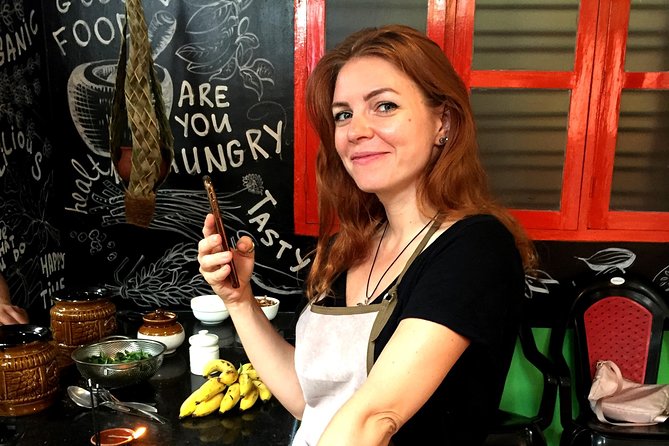
I think this is an easy yes for anyone who cares about getting Kerala food right. The setting helps, the kitchen setup is comfortable with airflow, and the focus on spice combinations and flavor profiles makes the class more than a one-time meal.
The strongest reason to book is the combo of instruction and eating. You cook around five dishes, then you eat them as a banana-leaf thali with rice and dessert. That means you leave with both the skill and the satisfaction of a complete Kerala lunch.
If you can only do one food experience in Varkala, make it this. If you’re already confident cooking Kerala at home and only want broad culinary variety, you might want a different style of class instead.
FAQ
How long is the cooking class?
The class runs for about 2 hours.
Where do I meet for Aryavilla Heritage Cooking in Varkala?
You meet at Aryavilla Heritage, Vaishakom Building, Helipad Cliff, PPP3+MJW, Varkala, Kerala 695141, India.
What will we cook during the class?
You’ll cook together around five dishes for a traditional Kerala lunch. The class includes popular items like sambar, aviyal, and pineapple chutney.
Who teaches the class?
The cooking class is with Suresh.
How large is the group?
The class has a maximum of 15 travelers.
Do I get a mobile ticket, and can I cancel for a refund?
You receive a mobile ticket. Cancellation is free up to 24 hours in advance of the experience’s start time for a full refund.