REVIEW · KOCHI
Fort Kochi Local Sightseeing Tour
Book on Viator →Operated by Forte Kochi Tuk-Tuk Tour · Bookable on Viator
Fort Kochi packs history into one ride. This 4–5 hour tuk-tuk loop links landmark after landmark in the old-world streets between Fort Kochi and Mattancherry, with time to see the famous sights and still get a feel for local life. I like that it’s built around traditional sights like the Chinese fishing nets and older European-era churches.
Two things I really like are the chance to spot Chinese fishing nets up close and the stop at Paradesi Synagogue, the oldest active synagogue in the Commonwealth of Nations. You also get a practical mix that moves from sea views to colonial cemeteries to markets, so the day doesn’t feel like a single-note history lesson.
The main consideration is that the itinerary is structured with quick visits (about 20 minutes per stop), so if you want slow wandering and long photo breaks at every site, this route may feel a bit timed.
In This Review
- Key Highlights You’ll Feel on This Fort Kochi Tuk-Tuk Tour
- A 4 to 5 Hour Fort Kochi Loop by Tuk-Tuk
- Pickup, Private Setup, and Mobile Ticket: The Practical Stuff
- Stop-by-Stop: From Chinese Fishing Nets to Cochin’s Religious and Market Stops
- Stop 1: Chinese Fishing Nets (Cheena Vala)
- Stop 2: Fort Kochi Beach
- Stop 3: Dutch Cemetery
- Stop 4: Church of Saint Francis (St. Francis Church)
- Stop 5: Santa Cruz Cathedral Basilica
- Stop 6: Dhoby Khana Public Laundry
- Stop 7: Mattancherry Palace (Dutch Palace)
- Stop 8: Paradesi Synagogue
- Stop 9: Cochin Spice Market
- Stop 10: Jain Temple (with pigeon show at noon)
- Stop 11: Cochin Thirumala Devaswom Temple
- The Value Math: Is $12 Per Person a Good Deal?
- The Tuk-Tuk Guide Factor: Getting More Than Stops
- When This Fort Kochi Tour Makes the Most Sense
- Should You Book This Fort Kochi Local Sightseeing Tour?
- FAQ
- How long is the Fort Kochi local sightseeing tour?
- What is the price per person?
- Is pickup included?
- Is this tour private?
- What kind of ticket do I get?
- Can I cancel for free?
Key Highlights You’ll Feel on This Fort Kochi Tuk-Tuk Tour
- Short, efficient hop-to-it stops across Fort Kochi and Mattancherry so you can cover more without stress
- Chinese fishing nets (Cheena vala) as an iconic Kerala coastal sight right at the start
- European colonial markers, including St. Francis Church and the Dutch Cemetery
- Mattancherry Palace with Kerala murals and a museum-style visit under ASI
- Paradesi Synagogue built in 1568 and described as the oldest active synagogue in the Commonwealth of Nations
- Cochin spice market + Jain Temple pigeon show for a real mix of sights and daily rhythm
A 4 to 5 Hour Fort Kochi Loop by Tuk-Tuk

This tour is designed like a smart “greatest hits” route: you cover a lot of ground in about 4 to 5 hours without spending the day figuring out connections on your own. The format matters in Fort Kochi because the area has a lot of interesting streets packed close together, and a tuk-tuk ride helps you keep momentum.
The big win is pacing. Each stop is given enough time to look around, take photos, and understand what you’re seeing, but not so long that you waste hours in one place. The result is a loop that helps you get your bearings fast before you go back and explore on your own later.
You can also read our reviews of more tours and experiences in Kochi.

Pickup, Private Setup, and Mobile Ticket: The Practical Stuff
You can expect pickup offered and a route that keeps you near the key sights rather than sending you far off the main areas. The tour is also private, which is a big deal for comfort and attention. It’s only your group, so you’re not stuck listening to crowd-management energy while you’re trying to enjoy architecture, cemeteries, and markets.
You’ll also use a mobile ticket, which is simple. And the tour ends back at the meeting point, so there’s no guessing where you’ll be dropped. There’s a lot to like in this kind of setup if you’re on a tight schedule, or if you’d rather spend your energy on sightseeing instead of transport math.
One more detail I appreciate: the tour includes stops with admission tickets and includes a free site (the Dutch Cemetery). That helps you budget your day without surprise charges.
Stop-by-Stop: From Chinese Fishing Nets to Cochin’s Religious and Market Stops
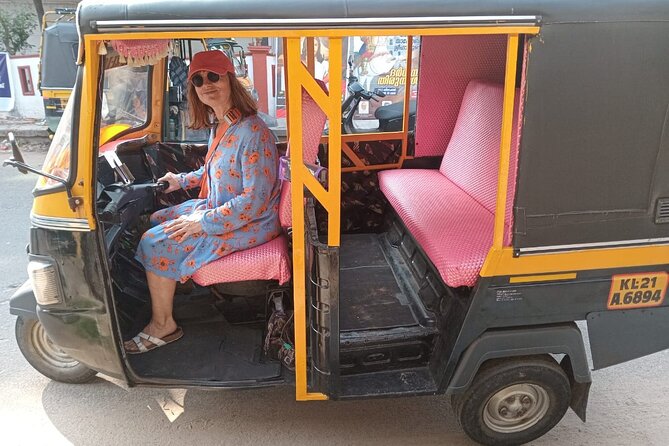
Here’s what the route looks like, and what to watch for at each stop.
Stop 1: Chinese Fishing Nets (Cheena Vala)
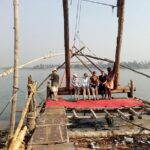
You start with the Chinese fishing nets, called Cheena vala. They’re stationary lift nets fixed as land installations for fishing, which makes the scene feel grounded and functional rather than purely scenic.
Why it’s worth the early timing: the nets set the tone for Fort Kochi, reminding you this coast is working waterfront, not just a postcard. A quick visit here also gives you context before you move into older European and local religious landmarks later.
Quick consideration: because the stop is short (about 20 minutes), focus on the big details first—how the nets are built and how people work around them—then use the remaining time for photos.
Stop 2: Fort Kochi Beach
Next is Fort Kochi Beach, along the Arabian Sea. Even with a brief visit, this stop is useful because it shifts your eyes from streets and buildings to the coastline. You’ll also get a sense of the breeze and open space before heading back into denser neighborhoods.
The drawback is the same as many short beach stops: time passes quickly. Use the visit to reset—walk a bit, grab a couple of shots, then get ready for the more structured historical stops that follow.
Stop 3: Dutch Cemetery
The Dutch Cemetery is a free stop in the itinerary, and it’s famous for the imperial inhabitants who left their homelands centuries ago. It’s the kind of place where you can feel the layers of colonial history without needing a museum label.
I like it because it adds human scale to the political history you’ll see later in churches and palace architecture. Also, cemeteries are often calmer than markets, so this can be a nice pause in the middle of the route.
Quick consideration: because it’s not an “activity” stop, you’ll get more out of it if you slow your pace for a few minutes instead of treating it as just a photo spot.
Stop 4: Church of Saint Francis (St. Francis Church)
Then you head to St. Francis Church, originally built in 1503. This is described as one of the oldest European churches in India, and it’s framed as a witness to European colonial presence in the region.
Why I think this stop works: it’s not just another church photo. The age and colonial connection help tie together the Portuguese and broader European influence you’ll keep seeing on the route.
At 20 minutes, the visit is best for looking closely at the church itself and taking in its setting. If you’re a person who reads inscriptions and small details, you might want to circle back later on your own time.
Stop 5: Santa Cruz Cathedral Basilica
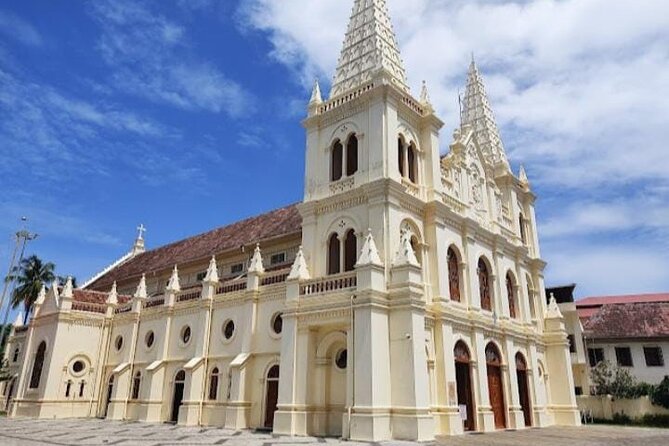
Next is Santa Cruz Cathedral Basilica, also at Fort Kochi. It’s identified as one of the eight Basilicas in Kerala and one of Kerala’s heritage edifices, noted as impressive within India.
This stop adds variety after St. Francis. Think of it as a second architectural reference point—another European-era marker with its own visual presence. You’re moving from one landmark type to another while staying in the same historical zone.
Quick consideration: if you’re sensitive to long stretches of religious sites in a row, this can feel like a lot back-to-back. Take a breath, then treat each church as a distinct style rather than repeating the same impression.
Stop 6: Dhoby Khana Public Laundry
The Dhoby Khana Public Laundry is a very different kind of stop. It was founded in the early 1700s as a central community place for cleaning laundry, and the washing process is described as being done in the old way at the facility.
This is one of the most practical cultural stops on the route because it shows “daily life history,” not just big monuments. It also pairs well with the earlier coastline stops, since laundry and water use belong to the same coastal geography.
Quick consideration: it’s easy to rush through a community facility because it doesn’t feel like a formal attraction. If you’re curious, use the time to observe how it works and what locals are doing there.
Stop 7: Mattancherry Palace (Dutch Palace)
Then you reach Mattancherry Palace, popularly known as the Dutch Palace. The tour notes it has Kerala murals with portraits and exhibits connected to the rajas, and it’s described as a museum under ASI.
This is a strong “context stop.” After seeing European church architecture and the Dutch Cemetery, the palace connects you to the storytelling side—who held power, how art was used, and how Kerala identity shows up through murals.
The 20-minute window is enough to appreciate the overall feel, but not long enough for deep museum-style reading. If you like art and historical interpretation, you’ll likely want to return later with more time.
Stop 8: Paradesi Synagogue
One of the most notable stops is Paradesi Synagogue, described as the oldest active synagogue in the Commonwealth of Nations. It was constructed in 1568 and is part of the Malabar Yehudan Jewish community’s story in Kochi.
This is valuable because it widens the European-centered narrative you might assume from churches alone. Instead, you see Kochi as a trade crossroads with multiple communities shaping the city.
Since the stop is short, your best move is to focus on the synagogue’s defining features, and if possible, take note of what makes it active—life and continuity matter as much as history here.
Stop 9: Cochin Spice Market
Next comes Cochin Spice Market, described as a down-to-earth shop with polished displays and spices sold in bulk.
This is the sensory reset. After temples, churches, and palaces, spices add smell, color, and the kind of everyday commercial energy that built Kochi’s reputation as a trade hub. It also makes sense after seeing synagogues and European churches—trade routes connect all of that.
Quick consideration: spice shopping can turn into a time sink if you’re tempted to browse everything slowly. If you’re aiming to keep the tour’s pace, decide on your target category first.
Stop 10: Jain Temple (with pigeon show at noon)
Then you visit the Jain Temple, described as well known for its pigeon show and feeding held every day at noon.
This stop has a built-in rhythm. Even if the timing doesn’t match perfectly when your group arrives, you’ll likely notice how the temple’s daily schedule shapes what visitors expect to see. It’s also a reminder that religion here isn’t just architecture; it’s routine.
Quick consideration: since your visit is about 20 minutes, the pigeon feature may or may not be at the exact moment you’re there. I’d treat it as a bonus, not a guarantee.
Stop 11: Cochin Thirumala Devaswom Temple
Finally, you end at Cochin Thirumala Devaswom Temple, also called Gosripuram. The tour description places it at Cherlai and identifies it as the biggest and most important socio-religious institution of Gowda Saraswat Brahmins of Kerala.
This is a fitting close because it moves the day into a broader view of community worship in Kerala, not only the colonial-era landmarks. It also keeps the tour from feeling one-sided—there’s variety in the last stretch.
Quick consideration: temple visits can come with rules or customs at the site level, but those specifics aren’t listed here. If anything feels unclear on the day, follow the flow of worshippers and staff directions.
The Value Math: Is $12 Per Person a Good Deal?
At $12 per person, the tour is priced to be accessible, and the structure helps it feel like a bargain rather than a rushed sampler. Most of the stops list admission tickets included, and there’s one clear free stop (Dutch Cemetery). That combination helps your money go toward entry fees instead of being spent entirely on transport.
The 4–5 hour duration is also part of the value. You’re getting tuk-tuk transport between clustered areas and covering major sights in a single block of time. If you were to plan this on your own, you’d spend energy on route planning and entry fee juggling, plus you’d likely lose some time moving between scattered locations.
Private setup matters here too. Even without pricing changes listed by group size, a private tour can be a better deal than hiring separate transport or joining a bigger group with less flexible timing.
The only reason it might not feel like value is if you’re the type who likes longer sits—longer museum time, long church photo sessions, and unhurried market wandering. The route is efficient on purpose.
The Tuk-Tuk Guide Factor: Getting More Than Stops
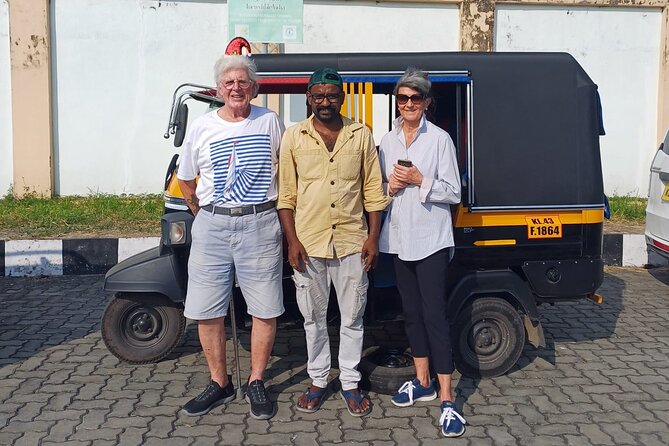
The most consistently praised part of this kind of tour is the person driving the experience, not just the vehicle. In the feedback I saw, a guide named Shihab comes up as a standout—friendly, accommodating, and especially good at handling pickup when you’re outside the usual pickup area.
That kind of flexibility matters in Fort Kochi. Street layouts and meeting points can be confusing, and the tour’s success depends on a guide who can help you find the right starting spot quickly. A friendly guide also helps you connect the dots between stops—why a synagogue sits where it does, how colonial churches fit into Portuguese and Dutch influence, and why local life sites like Dhoby Khana are part of the same story.
This is private, so you’ll likely get more attention than you would on a large group ride. It’s the difference between checking boxes and actually understanding what you’re looking at.
When This Fort Kochi Tour Makes the Most Sense
This tour is a great match if you:
- Want major Fort Kochi landmarks in one afternoon without dealing with multiple local transport steps
- Prefer a guided route that keeps you moving through Fort Kochi and Mattancherry
- Like variety: coastal views, colonial churches, a palace museum visit, a synagogue, a spice market, and temples
- Travel with a schedule that won’t stretch into a full day of slower exploring
It’s also a smart starter if you plan to return to Fort Kochi later. The tour gives you an orientation map in your head: where things are, what styles you like, and which stops you’ll want to linger at next.
If you’re the kind of traveler who wants zero timing pressure, you may feel slightly constrained by the roughly 20-minute stop pattern. Still, it’s easy to treat it as a first pass and then go back.
Should You Book This Fort Kochi Local Sightseeing Tour?
I’d book this tour if you want a well-paced introduction to Kochi’s mix of coastal life, colonial-era landmarks, and community religious sites—all wrapped into a tuk-tuk format that’s meant for short transfers. The price is low enough that the tour feels like a smart use of time, and the stop list covers big “you should see this” places without being totally museum-heavy.
Skip it (or at least treat it as a starter) if you’re hoping for long stays at a palace, deep museum reading, or a slow market day. This route is efficient. It’s built for momentum and broad coverage, not extended wandering.
FAQ
How long is the Fort Kochi local sightseeing tour?
It runs for about 4 to 5 hours.
What is the price per person?
The price is $12.00 per person.
Is pickup included?
Yes, pickup is offered.
Is this tour private?
Yes. Only your group will participate.
What kind of ticket do I get?
You’ll receive a mobile ticket.
Can I cancel for free?
Yes, you can cancel up to 24 hours in advance for a full refund. If you cancel less than 24 hours before the experience starts, the amount you paid is not refunded.