REVIEW · KOCHI
Kochi: Kathakali, Theyyam, and Kalaripayattu Evening Show
Book on GetYourGuide →Operated by Trip Buggy · Bookable on GetYourGuide
Three Kerala art forms in one night. You’ll see Kathakali transform into epic characters, then the evening flips to martial speed and ritual Theyyam energy.
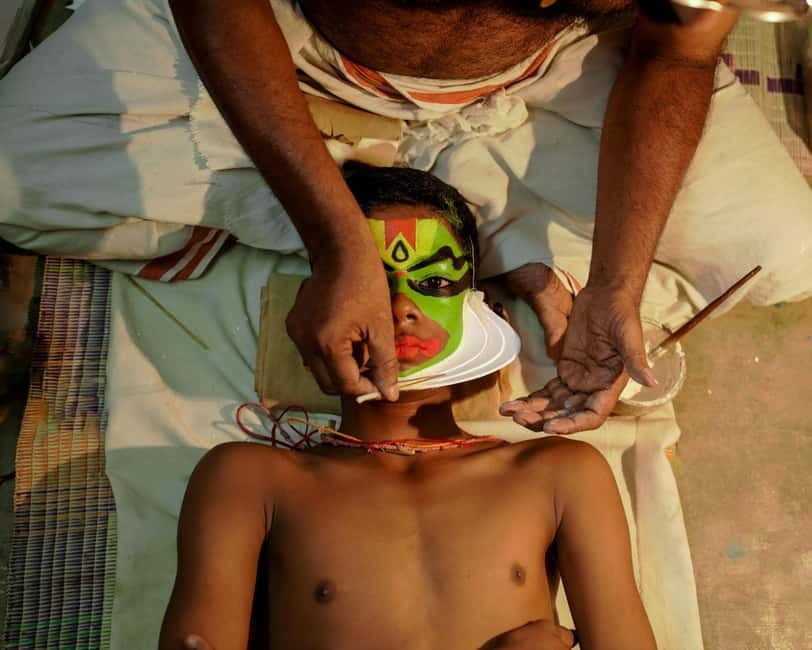
I love the Kathakali makeup demo. Watching natural pigments and facial painting build a character is half the magic, even before the story starts. I also love the way the performance communicates with big, clear expressions and gesture language like mudras.
One heads-up: flash photography is not allowed, and the total outing can run from about 1 to 7 hours. So plan a flexible evening, not a tight dinner timetable.
In This Review
- Key things to notice before you go
- Why This Kochi Night Works: Kathakali, Kalari, and Theyyam Under One Roof
- Getting There in Comfort: Hotel Pickup, AC Rides, and a Simple Return Plan
- Kathakali Makeup Magic: Natural Pigments, Eyes, and the Work Behind the Character
- Kathakali Performance: Epic Stories Told With Mudras, Expressions, and Live Music
- Kalaripayattu Kalari Display: Speed, Weapon Control, and Real Discipline
- Theyyam’s Ritual Energy: The Dance of the Gods in Stage Form
- After the Final Beat: Photos, Q&A, and One Last Look at the Craft
- Price and Value at Around $11: What You Get for the Money
- Who This Is Best For (and When to Choose Something Else)
- Should You Book This Kochi Evening Show?
- FAQ
- How long is the show?
- Where does pickup and drop-off happen?
- Is there an English guide?
- Does the tour include the Kathakali makeup demonstration?
- What performances are included?
- Can I take photos during the performance?
- Is the tour suitable for wheelchair users?
- Do I need to bring food?
- Is the show available every day?
Key things to notice before you go
- Kathakali makeup transformation: see the character-building process up close before the stage story
- Mudras, navarasas, and live voices: the drama is told with hands, faces, and percussion, not narration
- Kalaripayattu Kalari display: controlled speed, weapon skill, and athletic acrobatics
- Theyyam’s ritual feel: trance-like movement, intense makeup, and drum-led chants
- Round-trip hotel transfers: pickup and return make this easy if you’re staying in Kochi or Ernakulam
- Time to interact afterward: you can meet the performers and take photos (without flash)
Why This Kochi Night Works: Kathakali, Kalari, and Theyyam Under One Roof
If you only have one evening in Kochi and you want more than a generic cultural show, this combination makes sense. Kathakali brings the storytelling and face-to-face drama. Kalaripayattu (Kalari) brings body power and discipline. Theyyam adds something stranger and more spiritual—like the performance is pulling you into a ritual world.
The big value here is contrast. The stage language shifts fast: one moment you’re reading emotions through eyes and facial patterns, and the next you’re watching fighters move with timing that looks almost too clean to be real. Then the Theyyam performer appears with elaborate headgear and makeup, and the mood changes again.
I also like that this isn’t just “watch, then leave.” There’s time for explanations in English and a chance to interact after. That helps you leave with context, not just a nice memory.
You can also read our reviews of more evening experiences in Kochi


Getting There in Comfort: Hotel Pickup, AC Rides, and a Simple Return Plan
You’ll get round-trip transfers from your hotel in Kochi or Ernakulam (depending on the option you choose). That matters in Kerala evenings. Traffic and timing can be unpredictable, and this takes the stress out of getting to the theatre and getting back.
The ride is in an air-conditioned vehicle, and the driver waits at the end so you don’t spend your last energy hunting for transport. If you’re staying outside the centre, the pickup option is the practical difference between a smooth night and a scramble.
A couple practical notes:
- The tour includes a live English-language guide.
- It’s set up for small groups or private options, so you’re not swallowed by a huge crowd.
- Wheelchair access isn’t supported, so you’ll want to plan for stairs/steps depending on the venue.
Kathakali Makeup Magic: Natural Pigments, Eyes, and the Work Behind the Character
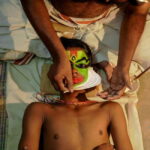
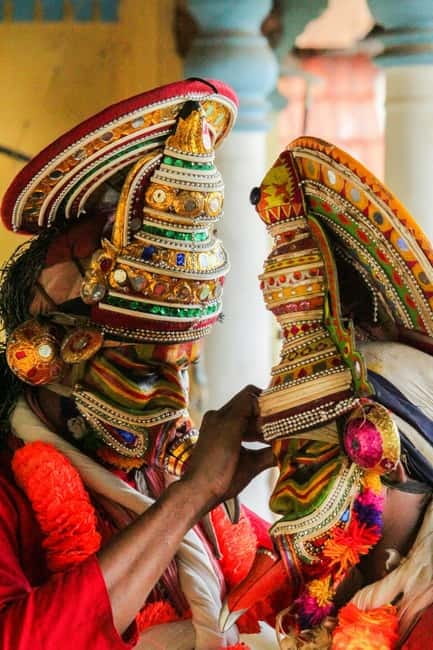
The evening typically begins with a Kathakali makeup demonstration (when that option is included). This is one of the best parts because you see the transformation process before you see the full performance.
You’ll watch performers build characters using layered facial painting and natural pigments. It’s not random decoration. Each element supports the role and the emotion. The makeup also sets you up to understand what you’re going to see later—especially the eyes, which are a huge part of how Kathakali communicates.
Here’s why this matters for you: most Kathakali shows can feel intense but abstract if you don’t know what the faces are doing. When you see the makeup steps first, you start spotting patterns faster—how the face is shaped, how the expressions are amplified, and how the character’s identity lands instantly on stage.
In some show schedules, you might notice a makeup window in the late afternoon (often around 5–6 pm), followed by the main performance later (often 6–8 pm). Times vary, but the rhythm is usually the same: preparation first, then the story.
Kathakali Performance: Epic Stories Told With Mudras, Expressions, and Live Music
After the makeup demo, the main Kathakali performance takes over under warm traditional oil lamps. The stage setup helps. Oil lamps create a focused, intimate glow, and the whole performance feels built around the performers’ faces and hands.
Kathakali performances draw from ancient Indian epics such as the Mahabharata and Ramayana. What you’ll actually feel is that the story is carried through:
- mudras (hand gestures)
- stylized movements
- exaggerated facial expressions linked to different emotional states (often discussed as navarasas)
- live percussion and vocalists
I like that the show doesn’t rely on you reading subtitles or following a script. The drama is visible. The vocal rhythms push the pace. The dancers shift intensity through posture and expression. Even if you only catch parts of the story, you still understand the emotional journey.
One more practical tip: wear comfortable clothes. You’ll be watching closely, and you’ll likely stay seated for stretches while performers reset and the musicians build momentum.
Kalaripayattu Kalari Display: Speed, Weapon Control, and Real Discipline
Then comes Kalaripayattu, also called Kalari in this context. It’s often described as the mother of all martial arts, and the show aims to prove it—without turning it into a stunt show.
You’ll watch fighters demonstrate ancient combat techniques, weapon mastery, and acrobatic moves. The key word in what you’ll see is control. Even when the movements look fast and risky, the routines are presented as training and precision, not chaos.
Why this section is worth your time:
- Martial arts can be hard to appreciate without a frame of reference. Here, you get a live presentation of techniques rather than a vague highlight reel.
- The contrast with Kathakali works well. Kathakali is about storytelling through expression. Kalari is about physical language—balance, timing, strength, and footwork.
Safety is part of the reality of martial arts. You’re not expected to participate, but it’s worth knowing that a trained performance still carries inherent risk, which is exactly why the discipline matters.
You can also read our reviews of more tours and experiences in Kochi
Theyyam’s Ritual Energy: The Dance of the Gods in Stage Form
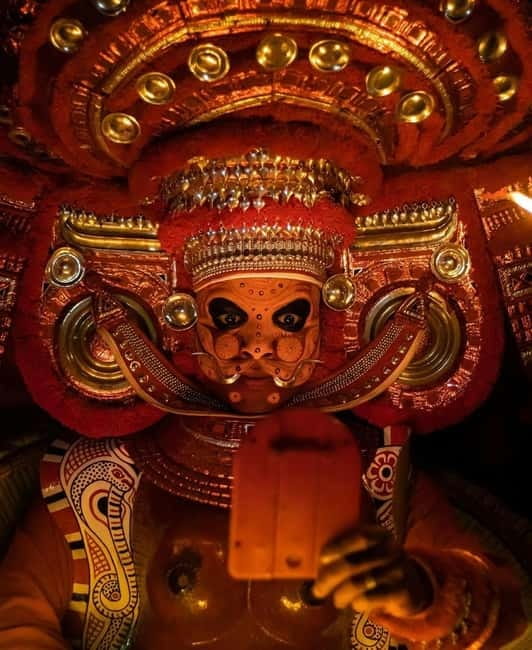
After Kathakali and Kalari, the mood shifts again for Theyyam. This ritualistic dance form comes originally from North Kerala, and in this setting it’s presented on stage for cultural appreciation.
The Theyyam performer appears in elaborate headgear and dramatic makeup, embodying a deity. The performance is accompanied by hypnotic drumbeats and ritual chants. The movement can feel trance-like, and the face and eyes do a lot of heavy lifting, just like Kathakali—but with a different spiritual feel.
What you’ll notice quickly:
- the way the drums drive the pace
- the intense expressions
- the surreal, almost ceremonial atmosphere
If you’re a person who likes performances that feel more than entertainment, this part tends to land hardest. It doesn’t try to be cute. It tries to feel sacred.
Also, remember the photography rule: flash photography isn’t allowed. If you’re the type who auto-reaches for the flash button, practice not doing that. The dim lighting and ritual mood depend on it.
After the Final Beat: Photos, Q&A, and One Last Look at the Craft
When the performances finish, there’s usually a window for interaction. You can talk with performers and take photographs. This is one of those moments that can turn a good show into a memorable one, because you get a human connection to the work.
Even a short chat can help you understand the dedication behind the art forms. Kathakali makeup, Kalari training, and Theyyam performance each require years of physical and mental practice. Seeing the effort in the people—not just on the stage—adds weight to what you watched.
This is also where the English guidance helps. If you have questions like how something is done or what you’re seeing, you’ll likely get clearer answers here than you would during the live performances.
Price and Value at Around $11: What You Get for the Money
At about $11 per person, this is strong value if you want three Kerala art forms in one evening with transfers included.
Here’s what you’re really paying for:
- Round-trip hotel transport (usually the biggest hidden cost in any evening show)
- a staged sequence that includes Kathakali, Kalaripayattu, and Theyyam
- a Kathakali makeup pre-show when your option includes it
- an English guide to connect the dots while you watch
- the ability to skip unnecessary time and move straight into the show experience
Food and drinks aren’t included, so budget for that separately. But for the price, you’re getting a full cultural evening plan rather than just a ticket to one event.
If you compare this to separate tickets and separate transport for each art form, the combined format starts looking very fair. It’s the kind of buy that makes sense when time is short and you want maximum cultural coverage without juggling logistics.
Who This Is Best For (and When to Choose Something Else)
This experience is a great fit if you:
- want a compact evening that covers multiple Kerala traditions
- like performances with strong visual language (faces, hands, movement)
- appreciate live music and vocal percussion
- value English explanations so you understand what you’re watching
- prefer small groups or a more personal feel
You might want to choose a different option if:
- you need wheelchair accessibility (this one isn’t suitable for wheelchair users)
- you hate waiting around if your pickup/show time stretches (the total duration can run from about 1 to 7 hours)
- you depend on flash photography for your photos (it’s not allowed)
Also, if you’re the type who needs absolute quiet to enjoy performances, note that the show uses live percussion, chants, and vocalists. It’s lively by design.
Should You Book This Kochi Evening Show?
I’d book this if your goal is a meaningful Kerala culture evening without over-planning. The mix of Kathakali, Kalaripayattu, and Theyyam gives you storytelling, physical mastery, and ritual atmosphere in one night. And the hotel transfers make it easy, especially if you’d rather spend your energy watching than sorting transport.
Book it even if you only know one of these art forms. The English guidance and the Kathakali makeup start you off on the right foot, so you’re not lost when the performers go full character.
Skip it only if accessibility is a problem for you or if your schedule can’t handle a longer window. Otherwise, this is a strong value cultural plan for Kochi.
FAQ
How long is the show?
The experience runs for about 1 to 7 hours, depending on the selected option and show timing. The cultural showcase itself is described as a 3-hour experience.
Where does pickup and drop-off happen?
You get round-trip transfers from your hotel in Kochi or Ernakulam (depending on your option). The return is to Ernakulam.
Is there an English guide?
Yes. English-language guidance is provided.
Does the tour include the Kathakali makeup demonstration?
It includes a pre-show Kathakali makeup demonstration when that specific option is selected.
What performances are included?
You can expect Kathakali, Kalaripayattu (Kalari), and Theyyam as part of the evening show.
Can I take photos during the performance?
Photography is allowed, but flash photography is not permitted.
Is the tour suitable for wheelchair users?
No. The experience is not suitable for wheelchair users.
Do I need to bring food?
Food and drinks are not included, so you’ll need to plan your own meal or snacks.
Is the show available every day?
Yes, the tour is available daily.