REVIEW · KOCHI
Kochi: Sightseeing Tuk-Tuk Tour With Pickup From Cruise Ship
Book on GetYourGuide →Operated by Little Kochi Tuk-Tuk Tours · Bookable on GetYourGuide
Kochi teaches itself fast on a tuk-tuk loop. I like how this tour gives you big sights without feeling rushed, and how the local driver-guides help you understand what you’re seeing as you roll between neighborhoods. One thing to plan for: there’s walking and some stops aren’t wheelchair-friendly, so bring comfy shoes and a practical attitude.
I also love the mix of Portuguese-era landmarks and Jewish heritage in the same day—Fort Kochi and Mattancherry feel like two chapters of one story. The only real drawback is simple: if your search results accidentally mix up Kochi, Kerala with Kochi, Japan, you could end up in the wrong place—so double-check the destination before you pay.
In This Review
- Key things you’ll notice on this Kochi tuk-tuk tour
- Fort Kochi and Mattancherry by tuk-tuk: why this route feels smart
- Cruise-port pickup at Cochin International: the part that saves your day
- The Chinese fishing nets: your first photo stop (and more than just a postcard)
- St. Francis Church: Portuguese footprints in Fort Kochi
- Santa Cruz Basilica: Christian art you can actually see
- Mattancherry Palace: Portuguese foundations, Dutch renovations, Kerala murals
- Jew Town and spice-market streets: shopping energy with a side of history
- Paradesi Synagogue: an active 1568 sanctuary in the middle of the market
- Mattancherry and Fort Kochi in one day: how the tuk-tuk pacing helps you remember it
- Price and value: what $15 buys you in Kochi
- What to bring and how to make each stop smoother
- Who this tuk-tuk tour is best for (and who should skip it)
- Should you book this Kochi sightseeing tuk-tuk tour?
- FAQ
- How does pickup work from the cruise ship?
- What major places are included on the tour?
- Is lunch or meals included?
- What language are the guides?
- Is the tour suitable for wheelchair users?
- What should I bring?
Key things you’ll notice on this Kochi tuk-tuk tour
- Cruise-ship pickup that’s actually organized at the Cochin International Cruise Terminal exit gate with a name placard
- Chinese fishing nets as your early photo stop, best around sunrise or sunset
- Colonial-era churches and basilicas paired with Christian art you can look at up close
- Portuguese and Dutch connections at Mattancherry Palace murals and artifacts
- Jew Town + Paradesi Synagogue for a quiet pause inside an active 1500s community
- Guide flexibility so you can spend more time where you’re curious
Fort Kochi and Mattancherry by tuk-tuk: why this route feels smart
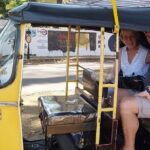
Kochi can look chaotic from the outside. Streets narrow. Traffic swirls. Signs are in multiple languages. Doing Fort Kochi and Mattancherry by tuk-tuk is a smart way to get oriented fast, because you’re not trying to “figure out logistics” while you’re also trying to enjoy your day.
The best part is how the tour groups themes naturally. You start with the iconic coast (Chinese fishing nets), then you move into layers of European influence (Portuguese churches and Dutch renovations), and then you slow down in places that feel personal and lived-in, like Jew Town and the Paradesi Synagogue. You’ll leave with more than photos—you’ll have a map in your head.
And since pickup and drop-off are handled from the cruise terminal, you don’t lose time to searching for transport. That matters in Kochi. The day can slip away quickly if you’re constantly stopping to ask for directions.
You can also read our reviews of more boat tours in Kochi
Cruise-port pickup at Cochin International: the part that saves your day
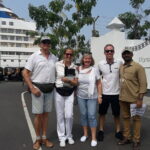
If you’re arriving by cruise, the meeting point details are a big deal. Your tuk-tuk driver meets you at the exit gate of the Cochin International cruise terminal with a name placard. It’s one of those small logistics that can make or break port days.
You’ll want to be on time. Not because you’ll miss something dramatic, but because the tour works like a route. If you show up late, you start losing the “best order” of sights—especially the Chinese fishing nets timing, which is often easiest with softer light (sunrise or sunset is ideal).
If your ship is delayed on disembarkation, you may still get looked after—guides have been reported as patient with delayed arrivals. Still, assume delays happen and plan to communicate if you can.
The Chinese fishing nets: your first photo stop (and more than just a postcard)
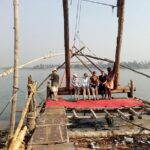
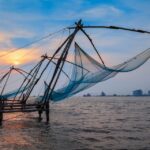
These Chinese fishing nets are the visual signature of Fort Kochi. You’ll see the long rows along the waterfront—centuries-old structures that have become a symbol of the area. Yes, it’s a photo stop. But it’s also a lesson in how Kochi has always been a trading crossroads: different peoples, different techniques, different influences staying long enough to become part of local life.
I love doing this early in the route because the light changes everything. The tour information specifically calls out sunrise or sunset for photos. That’s not just about prettier pictures. Softer light also makes the scene less harsh and easier to watch. If you can manage it, keep your camera ready and don’t treat the nets as a “walk-by.”
Practical tip: bring water and comfortable shoes right away. Even if the stops aren’t long, you’ll be standing, looking, and moving around for the best angles.
St. Francis Church: Portuguese footprints in Fort Kochi
Next comes one of India’s older European churches: St. Francis Church. It’s tied to Vasco da Gama—Portuguese explorer connections are part of why this place matters. The church reflects Kochi’s colonial past, and it’s not just a building behind a fence. It’s an important historical landmark that anchors the European chapter of the city.
What I like about this stop is the contrast with the waterfront scene. You go from open air, sea light, and movement to a place designed for reflection. If you’re the type who enjoys small details—plaques, architecture, the way a site is maintained—you’ll get more out of this visit.
The drawback? Churches often have rules about where you can stand and how you should behave. The tour doesn’t promise special access, so treat it like a respectful sightseeing visit. Comfortable shoes help here too, because you’ll still likely do a fair amount of walking between viewpoints.
Santa Cruz Basilica: Christian art you can actually see
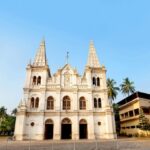
Then you’ll head to the Santa Cruz Basilica, known for Christian heritage and decorated details. The basilica is described as featuring vibrant frescoes, stained glass, and murals. In plain terms: this is a stop where slowing down helps.
You’re not just looking at “a church.” You’re looking at layers of visual storytelling. Frescoes and stained glass can be hard to appreciate in passing, especially if the group is moving quickly. With a tuk-tuk tour, you usually get a bit more time at stops to absorb what’s in front of you.
If you tend to rush photos, do one change for this stop: take a moment to look without photographing first. Then take your pictures. The second round is usually better because you’ve understood the design.
Mattancherry Palace: Portuguese foundations, Dutch renovations, Kerala murals
Mattancherry Palace is one of those places where the building makes sense once you know who touched it. The palace was built by the Portuguese and later renovated by the Dutch, and inside you’ll find murals and artifacts that point to Kerala’s cultural heritage.
I like this stop because it’s not only “European influence.” It’s European involvement showing up in a Kerala setting, and the art inside connects to local identity. You’ll see collections that help explain how culture travels—and how it gets adapted rather than copied exactly.
One consideration: palaces and museum-style interiors can be warm. The tour info recommends sun hat and water for hot days, and that advice is worth following before you head in. Also, take your time here if you enjoy artwork. If you’re tired, you might want to focus on the most striking rooms rather than trying to see everything.
Jew Town and spice-market streets: shopping energy with a side of history
After the major landmarks, you’ll walk through Jew Town, described as a busy street lined with antique shops and spice markets. Even if you’re not shopping, this is where Kochi feels human at street level. You’ll smell spices, see everyday goods, and spot the kind of small storefront variety that makes a place feel real instead of curated.
This is also a good moment for your camera, because you’ll get textures you don’t see at big monuments: shop signage, market displays, and side streets that connect Fort Kochi and Mattancherry’s feel.
A practical note: markets mean crowds and uneven footpaths. Keep your shoes grippy. If you have water and a hat, you’ll thank yourself later.
Paradesi Synagogue: an active 1568 sanctuary in the middle of the market
Then comes a wonderfully different mood. The Paradesi Synagogue, built in 1568, is the oldest active synagogue in the Commonwealth. It’s described as a serene escape amidst the lively market street.
This stop is valuable for two reasons. First, it’s genuinely historical—1568 is not recent. Second, it’s active. When a place is still used, it carries a different kind of atmosphere than a site that’s only preserved for visitors.
I recommend approaching it with a quieter mindset. You can enjoy it as a cultural landmark without turning it into a “check the box” moment. If you’re the kind of traveler who likes learning what communities looked like centuries ago, this is one of the most meaningful stops on the route.
Mattancherry and Fort Kochi in one day: how the tuk-tuk pacing helps you remember it
The tour is built like a loop: you hop between neighborhoods and major sites without having to manage transport yourself. That pacing matters because it keeps your mental energy for context. If you try to do these stops independently, you’ll spend more time figuring out how to get from one place to the next than noticing connections—European influence, local culture, coastal identity, and Jewish heritage.
Also, the guide approach is part of the value. People have praised guides like Rahim, Aneesh, and Haris for being kind, patient, and for having strong English. That kind of communication turns a list of stops into something you can actually understand.
And you’re not stuck on autopilot. The experience is set up as a personalized itinerary, so you can adjust your time based on what you care about most—nets for photos, basilica for art, or synagogue for a slower moment.
Price and value: what $15 buys you in Kochi
At $15 per person, this tour is positioned as strong value—especially because it includes cruise-ship pickup and drop-off plus experienced local drivers. In a port day scenario, that convenience can be worth a lot more than the base price, because you avoid the hassle and time costs of arranging separate transport.
The sites themselves are high-recognition: Chinese fishing nets, St. Francis Church, Santa Cruz Basilica, Mattancherry Palace, Paradesi Synagogue. You’re also getting street-level context through Jew Town. For one fixed fee, it’s a lot of variety.
Meals aren’t included, so you’ll want to plan how you’ll handle lunch or an early snack. If you’re sensitive to heat, carry a little extra water and maybe plan your timing so you aren’t starving right when you’re walking markets.
What to bring and how to make each stop smoother
This tour is practical, but you’ll enjoy it more if you pack like a grown-up (comfort first, souvenirs second).
Bring:
- Comfortable shoes (you’ll be walking between stops and around waterfront/market areas)
- Sun hat and water for hot days
- Camera/mobile for Chinese fishing nets and decorated church interiors
If you’re thinking about clothing, use common sense for churches and synagogue: shoulders and modest coverage are usually appreciated. The tour data doesn’t spell out dress rules, but it’s a safe bet in Kerala for religious sites.
One more tip: because the Chinese nets are best at sunrise or sunset, try to check your port schedule and lighting reality. If your timing is off, don’t panic. You can still take great photos—just adjust expectations and focus on composition.
Who this tuk-tuk tour is best for (and who should skip it)
This is a great fit if you want:
- A guided route that helps you see Fort Kochi and Mattancherry efficiently
- A comfortable way to move through town without solving transportation
- Time at major sites like basilicas, a palace, and the synagogue
It’s not a great fit if you’re wheelchair users. The tour is specifically noted as not suitable for wheelchair access. Also, the route includes walking, so it can be tough if you have mobility limitations.
If you enjoy human stories—why a place exists, who built it, what communities used it—this tour’s “driver-guide” style is a strong match. People have highlighted guides like Aneesh and Haris as giving warm, caring explanations and making the experience feel tailored.
Should you book this Kochi sightseeing tuk-tuk tour?
If you’re on a cruise day and you want a straightforward way to cover Fort Kochi and Mattancherry, I’d book this. The big advantage is the combination of organized pickup and a route that mixes iconic landmarks with meaningful culture stops like the Paradesi Synagogue.
Book it if you:
- Want to see the Chinese fishing nets, multiple churches, and Mattancherry Palace without planning routes yourself
- Appreciate a guide who can explain what you’re looking at
- Like the idea of adjusting time based on interest
Think twice if:
- You need wheelchair access
- You hate walking in hot weather (bring water and a hat, and pace yourself)
And before you hit confirm, do the quick sanity check: this is Kochi, Kerala, India, not Kochi elsewhere. A simple double-check can save your whole day.
FAQ
How does pickup work from the cruise ship?
Your driver meets you at the exit gate of the Cochin International cruise terminal with your name placard so you can be recognized on time.
What major places are included on the tour?
The tour covers the Chinese fishing nets, St. Francis Church, Santa Cruz Basilica, Mattancherry Palace, Jew Town, the Paradesi Synagogue, and includes time to explore these areas by tuk-tuk.
Is lunch or meals included?
No, meals are not included on this tour.
What language are the guides?
The tour is listed as available in English.
Is the tour suitable for wheelchair users?
No. The tour is not suitable for wheelchair users.
What should I bring?
Bring comfortable shoes, a sun hat, a camera/mobile, and water (especially for hot days).