REVIEW · KOCHI
5 Day Private Tour of Tigers, Taj Mahal and Palaces from Cochin
Book on Viator →Operated by Pacific Classic Tours India · Bookable on Viator
Tigers and the Taj Mahal, stitched into five days. This private tour is built for cruise timing: you start at your Kochi (Cochin) port, fly to Delhi, work your way through Agra and the Golden Triangle, and finish back in Mumbai so you can re-board your ship. The pace is fast, but the route makes sense if you only have a short window in India.
I like two things right away. First, the sunrise Taj Mahal visit is planned early enough that the monument still feels calm and monumental, not chaotic. Second, you get Ranthambore safari support with an English-speaking naturalist during your tiger hunts.
One consideration: this is a “see a lot” itinerary. You’ll fit major stops into a few days with long drives and shared safari vehicles, so if you want slow travel and downtime, you might feel pushed for time.
In This Review
- Key things that make this tour worth a look
- From Kochi cruise port to Delhi flight: how the timing really works
- Delhi in half a day: Humayun’s Tomb, Qutub Minar, and the Sikh temple pause
- Agra transfer and the sunrise Taj Mahal plan that actually helps
- Two chances at Ranthambore: morning and afternoon tiger safaris
- Jaipur after the jungle: Sheesh Mahal, Hawa Mahal, City Palace, Jantar Mantar
- Ending in Mumbai for your cruise: the last transfer that matters
- Price and value: what $1,668 per person really buys you
- The guide-and-driver factor: why the trip tends to feel smooth
- Practical tips to keep this itinerary from feeling stressful
- Should you book this Kochi-to-Mumbai Tiger and Taj tour?
- FAQ
- Where do I start and where do I finish?
- Are flights included, and what class are they?
- Are Ranthambore tiger safaris included, and how many are there?
- When do you visit the Taj Mahal?
- What about hotels and meals?
- What documents do I need for the domestic flights?
- What costs might be extra?
Key things that make this tour worth a look
- Cruise-friendly route: port pickup and drop-off, plus two domestic flights to compress distance.
- Early Taj Mahal timing: sunrise entry plus a battery bus ride from the Taj parking area.
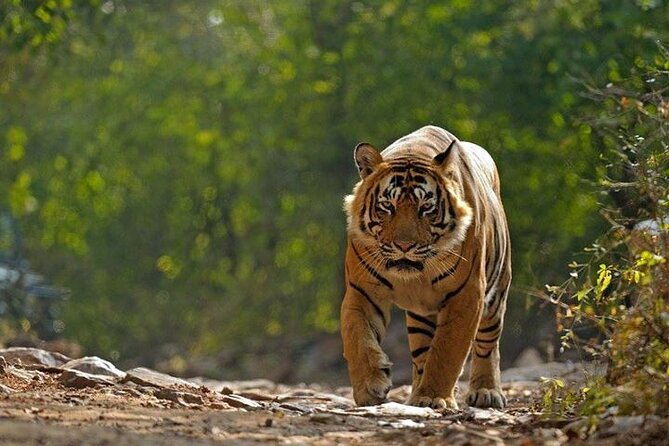
- Two Ranthambore safaris: a morning and an afternoon chance to spot Royal Bengal tigers.
- 5-star comfort for 4 nights: twin-share rooms while you bounce between cities.
- Guides and drivers that keep it moving: past travelers praised guides like Dilip Singh and Prashant, plus drivers such as Pradeep, Jewan, and Basant for safe, timely transport.
From Kochi cruise port to Delhi flight: how the timing really works

The big practical win here is that you don’t burn your limited time on long overland travel. You begin with a port pickup in Kochi (Cochin), then transfer to the airport to take a domestic commercial flight to Delhi. From there, the tour uses a private air-conditioned vehicle for city-to-city driving, so you’re not constantly switching taxis or figuring out routes.
Because this tour is designed for cruise arrivals, it runs on a schedule that tries to protect your daylight. Still, don’t underestimate travel days. Even with flights, you’ll have airport time, check-in time, and that constant rhythm of “go, see, move.” If you’re the type who gets grumpy when you’re always on the clock, plan to mentally switch into expedition mode.
Also note the tour is listed as private (only your group participates), but some parts are shared—mainly the Ranthambore safaris. That matters for expectations: you get privacy with your guide and driver, while the wildlife viewing is still “everybody lines up and watches.”
You can also read our reviews of more private tours in Kochi


Delhi in half a day: Humayun’s Tomb, Qutub Minar, and the Sikh temple pause
Delhi gets a focused introduction, not a slow wander. After breakfast and check-out, you start sightseeing and hit some of the city’s most important UNESCO-listed sights and famous monuments.
Humayun’s Tomb is a strong first stop. It’s the tomb of Mughal Emperor Humayun, and it’s the kind of place that rewards you even if you’re not a hardcore history person. The architecture gives you a clear sense of Mughal power and planning—symmetry, scale, and details that feel “designed,” not random.
Then you go to Qutub Minar, the soaring victory tower and minaret in the Qutub complex. This is one of those sights where you feel how tall it is the moment you’re standing near it. It’s also a useful change of pace from tomb-and-garden settings, since the tower dominates the whole view.
You also stop at Gurudwara Bangla Sahib, a major Sikh worship place with its white building and golden dome, plus a water pool (Sarovar) inside the complex. It’s a welcome break from the “big monument, big monument” rhythm. If you’re observant, you’ll notice how the space feels active and lived-in.
The tour also includes India Gate and photo/drive-by time for places connected with government and the presidency such as the Parliament area and Rashtrapati Bhavan. These stops are shorter, so treat them as orientation points. You’re not getting a deep museum day here—you’re getting Delhi’s headline scenes.
Small drawback: packing this much into one half-day sightseeing block can feel like a sprint. Wear comfortable shoes and keep water handy. The good news is that your guide’s job is to help you connect what you’re seeing, rather than leaving you to figure it all out.
Agra transfer and the sunrise Taj Mahal plan that actually helps

After Delhi sightseeing, you drive to Agra and check into your hotel. The drive is listed as about three hours, and that’s realistic enough to plan for a lunch break and a reset before the next day’s highlight.
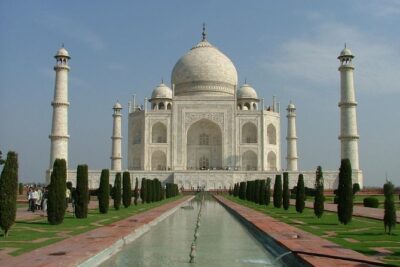
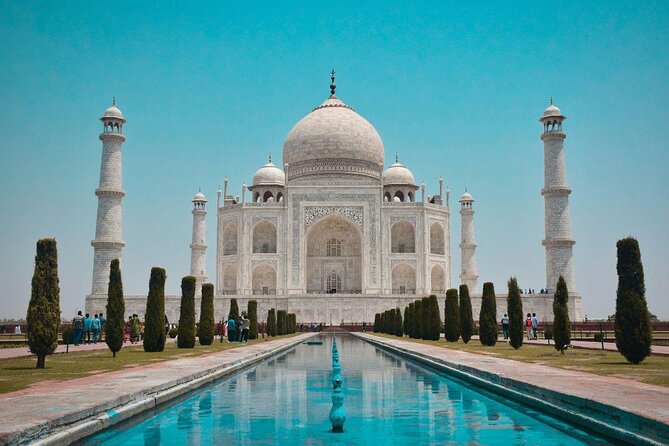
The Taj Mahal day starts early. The tour takes you to see the Taj Mahal at sunrise, which is not just about “nice light.” It’s about avoiding peak crowds and daytime heat, so your brain can stay focused on what you’re looking at instead of battling sunburn and shoulder-to-shoulder lines.
At the Taj, you’re also set up with practical help: there’s a battery bus/golf cart return ride from the parking area. It sounds minor, but in hot weather and early starts, that kind of logistics support reduces hassle fast.
Then you move to Agra Fort, another UNESCO World Heritage site and a key Mughal-era power base along the Yamuna. If the Taj Mahal is the “love-and-luxury” side of Mughal storytelling, Agra Fort is the “control and defense” side. Together, they give you a fuller picture of how empires lived and governed here.
One note for your day-of schedule: sunrise tours mean an early wake-up. It’s worth packing simple sun protection—hat or cap, sunglasses, and a light layer—so you can enjoy the morning without suffering.
Two chances at Ranthambore: morning and afternoon tiger safaris
This is the reason a lot of people book the whole trip. After the Agra segment, you head to Ranthambore Tiger Reserve (the drive is roughly five hours). You reach the area in time for the next day’s safari rhythm.
Ranthambore is described as a top choice for tiger sightings because of the density of tigers in their natural habitat. You’re also in a place with a strong legacy—Ranthambore was a former royal hunting ground. That adds a layer of meaning to what you’re doing: you’re not just “looking for wildlife,” you’re in a landscape shaped by centuries of human attention.
You get two safari rides: one in the morning and one in the afternoon. Both are included and are run in shared Jeep/Canter vehicles. This matters because you don’t pay extra for the second attempt, and that’s huge for wildlife trips. Tiger sightings aren’t guaranteed anywhere, but two shots is better than one.
During safaris, you have an English-speaking naturalist, which is a real quality factor. When you’re staring at scrub and tracks, it helps to have someone interpreting the habitat and animal signs instead of just calling out random birds.
If the shared Jeep option isn’t available, the tour states safaris will be done in a shared Canter (20-seater van). That’s a trade-off. You’ll likely have a wider view, but you might feel less personal space compared with a jeep. Still, it keeps you on the road and on schedule—better than sitting out.
A final practical safari tip: wear colors that blend with the forest—khaki, brown, olive green. Bright colors can spook animals, and even if you don’t cause trouble, the whole safari experience runs smoother when you follow the local advice.
Jaipur after the jungle: Sheesh Mahal, Hawa Mahal, City Palace, Jantar Mantar

After Ranthambore, you drive to Jaipur in the evening (about three hours). If you’re thinking your body will be ready for a full-on city tour, you’re probably wrong—and that’s why the itinerary uses a morning-to-evening structure on Day 5 rather than trying to cram too much right after the safari.
Jaipur starts with Sheesh Mahal (Mirror Palace). This kind of site is visually intense. Even if you’re tired, the shine and patterns pull you in, and it works well as a “reset” after the quiet intensity of wildlife viewing.
Next is a quick Jal Mahal (Water Palace) photo stop. The time is short, so you’re not going to walk around for long or do deep exploring. Treat it like a scenic bookmark. The value here is getting the iconic image and knowing what you’re seeing.
Then you stop for photos at Hawa Mahal (Palace of Winds). Like Jal Mahal, this is a quick hit. Hawa Mahal is instantly recognizable—the pink honeycombed facade rising through the city. The upside of a short stop: you won’t waste time when you could be spending energy later at bigger interiors.
City Palace follows, and this one is longer. It’s the residence of the royal family and includes courtyards and buildings from different eras. If you like places where you can feel the timeline layered, this stop is a good match.
Finally, you visit Jantar Mantar, an UNESCO-listed observatory. It’s a different kind of awe: geometry made to measure the sky. It’s not just “pretty stone.” It’s functional science translated into public space.
The only drawback is the day can feel packed. You’ll do a lot of “see this, then see that” in one morning and afternoon window. Comfortable sandals or walking shoes help, plus a small bag so you’re not juggling items every time you change locations.
You can also read our reviews of more tours and experiences in Kochi





Ending in Mumbai for your cruise: the last transfer that matters
After your Jaipur sightseeing, the tour finishes with travel to Mumbai. You’re transferred to Jaipur airport early evening for a commercial flight to Mumbai. From there, you’re met and transferred to your ship with Mumbai port pickup/drop-off included.
This is the critical part for cruise passengers: the tour isn’t just about sightseeing. It’s about timing your return so you don’t miss the ship. You’re also given a clear ending point—Mumbai port—so you’re not stuck wondering how to get from point A to point B after a long day.
It’s also a smart way to avoid turning the end of the trip into a road-travel slog. Two domestic flights (Kochi to Delhi, then Jaipur to Mumbai) keep your total time closer to five days of touring rather than five days of transport.
Price and value: what $1,668 per person really buys you
At $1,668 per person, this isn’t a budget tour. But it’s also not just paying for sightseeing entries. For your money, you’re getting a bundle that’s hard to stitch together on your own once you factor in flights, private guiding, and a wildlife component.
Here’s what the pricing covers according to the tour details:
- 4 nights in 5-star hotels on twin sharing
- Domestic commercial economy flights: Kochi → Delhi and Jaipur → Mumbai
- Private air-conditioned vehicle during the overland segments
- Professional private local guides for sightseeing
- Entrance fees for the listed sights and the national park component
- Two Ranthambore safaris with a naturalist
- Meals as specified in the itinerary, plus unlimited bottled water
- Port pickup and drop-off for Kochi and Mumbai
If you tried to plan this independently with similar hotel standards, plus a pair of Ranthambore safari bookings, plus local guides in Delhi, Agra, and Jaipur, the costs would start stacking quickly. Add flights because you’re time-limited, and this price starts to look like a “compressed schedule” deal.
You are paying for convenience and risk reduction. The biggest risk with wildlife trips is missing out on the best time slots or not having the right guidance once you reach the reserve. The bigger convenience risk is missing your ship connection—this itinerary is built to minimize that.
The guide-and-driver factor: why the trip tends to feel smooth
One pattern shows up in the tour feedback you provided: the human touch makes a difference. People praised guides like Vijay for strong explanations about Agra Fort and the Taj Mahal, and Dilip Singh for taking excellent care of a group and sharing passionate context about India. Others specifically called out Prashant for making the information land, and Rajni for doing an excellent job guiding.
On the driving side, you also see names tied to safe, on-time transport—Pradeep, Jewan, and Basant came up in past notes. That matters more than you’d think. When you’re doing multiple cities quickly, traffic and timing are where trips get stressful. A good driver helps you keep your day energy instead of losing it to unexpected delays.
Practical takeaway for you: ask your guide questions early, especially the day before safari. If you understand what you’re looking for—tracks, animal behavior, how the habitat works—you’ll enjoy the safari more even if the tigers are quiet.
Practical tips to keep this itinerary from feeling stressful
This tour comes with a few clear “pay attention” instructions, and they’re worth following.
For safaris, wear colors that blend—khaki, brown, olive green. Keep your movements calm and avoid standing up or changing positions unnecessarily in a moving vehicle. The goal is for animals to feel unbothered and for your viewing to stay safe.
For your body, keep a moderate fitness level. You’ll move through several major sites in a short window, and safari rides involve early and seated travel time. Comfortable shoes beat fashion on days like this.
For documents, bring a current valid passport. The tour also requests a passport copy is required for domestic flights. If you’re traveling as part of a cruise with tight check-in windows, make sure your documents are ready early.
For your budget, remember that not everything is included. Drinks aren’t covered unless specified, and there may be extra costs for things like a video camera fee at monuments. The tour also notes that a mandatory gala dinner on Christmas and New Year Eve is not included and would be charged extra if it applies to your dates.
Should you book this Kochi-to-Mumbai Tiger and Taj tour?
I think this tour fits best if you’re checking three boxes:
- You’re a cruise passenger who wants a tight, sensible route without missing the ship
- You care about India’s headline sights, especially Taj Mahal and the Golden Triangle
- You want real wildlife time with not one but two Ranthambore safari attempts
Skip it (or adjust your expectations) if you hate fast pacing. This itinerary moves. You’ll do sunrise mornings, long drives between regions, and lots of must-see sights in a short span.
If you can handle a packed schedule, you’ll likely enjoy the way the trip is structured: flying to save time, guiding you through the major monuments, and then giving you two structured chances to spot tigers in Ranthambore before ending smoothly in Mumbai.
FAQ
Where do I start and where do I finish?
You start with port pickup in Kochi (Cochin) and return to your ship in Mumbai with port pickup/drop-off included. The itinerary includes flights between cities so you can end in Mumbai again after the sightseeing and safari days.
Are flights included, and what class are they?
Yes. Domestic commercial flights are included in economy class: Kochi to Delhi and Jaipur to Mumbai.
Are Ranthambore tiger safaris included, and how many are there?
Yes. You get two jungle safaris in Ranthambore Tiger Reserve: a morning safari and an afternoon safari. They are included in a shared Jeep/Canter, with an English-speaking naturalist during the safaris.
When do you visit the Taj Mahal?
You visit the Taj Mahal at sunrise, which is intended to help you avoid daytime crowds and heat. A battery bus/golf cart return ride from the parking area is also included.
What about hotels and meals?
You get 4 nights in 5-star hotels on twin sharing. Meals are included as specified in the itinerary, and the tour lists breakfast (4) plus lunch and dinner where indicated. Unlimited bottled water is included.
What documents do I need for the domestic flights?
You need a current valid passport on the day of travel. The tour also requires a passport copy for all participants to book the domestic flights.
What costs might be extra?
Video camera fees are listed as about US$6 per video camera for the monuments. Also, food and drinks are not included unless specified, and the tour notes that a mandatory gala dinner on Christmas Eve and New Year’s Eve is not included and would be charged extra if your dates fall then.