REVIEW · BANGALORE
4-Hour Private Photowalk Tour in Bengaluru
Book on Viator →Operated by City Tours India · Bookable on Viator
Morning light turns Bangalore into your studio. This 4-hour private photowalk is built for people who want more than postcards: you start at the Grand Flower Market (KR Market) when trucks roll in and street life is just getting underway, then you move through historic landmarks like Bangalore Fort, Kote Venkataramana Temple, and Tipu Sultan’s Summer Palace. It’s interesting because the whole route is paced for photography, with your private local guide watching the timing, spacing, and photo etiquette so you can focus on getting the shot.
I especially like the early-market focus, where you get flowers, petals, and that sensory chaos that only happens in the morning. I also like that it’s private—so you’re not fighting for position or trying to keep up with a big group while you’re composing. One consideration: there’s moderate walking, and it starts early at 6:00 am, so you’ll want to feel comfortable moving on foot for a few hours.
In This Review
- Key things to know before you go
- Why a 6:00 am route matters for Bengaluru photography
- KR Market (Grand Flower Market): where trucks, petals, and color collide
- Bangalore Fort: Kempe Gowda I’s 1537 origin in short walking views
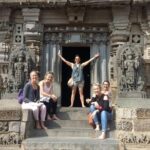
- Kote Venkataramana Temple: Dravidian lines and Vijayanagara-era details
- Tipu Sultan’s Summer Palace: teak Indo-Islamic architecture for strong frames
- Price and logistics: does $79 per person make sense for what you get?
- How to make the most of the walking (without ruining your photos)
- Who should book this Bengaluru photowalk?
- Should you book this 4-hour private photowalk?
- FAQ
- What time does the tour start?
- How long is the private photowalk in Bengaluru?
- Where does the tour start and end?
- Is this a private tour?
- Are entrance fees included?
- Is food included?
- Is hotel pickup and drop-off included?
- What is the cancellation policy?
Key things to know before you go
- 6:00 am start gives you morning street energy at KR Market and helps you dodge heavy traffic later
- Private local guide focuses on safety and photo etiquette, not just route-following
- KR Market is free-entry in the itinerary, so your paid time goes straight to shooting
- Bangalore Fort (Kempe Gowda I, 1537) offers founder-era visuals in a short stop
- Kote Venkataramana Temple (1689) mixes Dravidian and Vijayanagara styling with temple-dedication context
- Tipu Sultan’s Summer Palace ends the walk with Indo-Islamic teak architecture and strong framing angles
Why a 6:00 am route matters for Bengaluru photography
The best photos in cities often happen before most people think about leaving the house. That’s why this tour starts at 6:00 am. In Bengaluru, mornings have a different rhythm: fewer vehicles, cooler air, and crowds that are still forming rather than fully locked in place. For photography, that means you can move and shoot without feeling like you’re constantly waiting for a gap.
I like that the tour also makes “getting lost” less of a problem. Your guide takes you from site to site, and the route is designed around walking. That matters because Bangalore’s energy can be hard to decode quickly if you’re navigating on your own—especially when you’re juggling camera gear, changing light, and lots of people.
One more thing: you’ll be walking through real city spaces, not just museum grounds. That makes the experience more “lived-in,” but it also means you should plan to be present with your surroundings. Keep your pace steady, stay aware around vehicles, and let the guide handle the flow when streets get busy.
You can also read our reviews of more private tours in Bangalore
KR Market (Grand Flower Market): where trucks, petals, and color collide
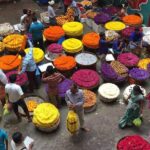
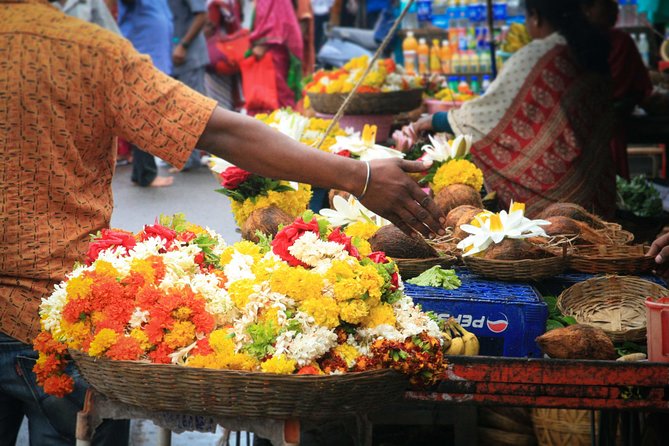
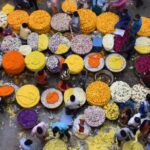
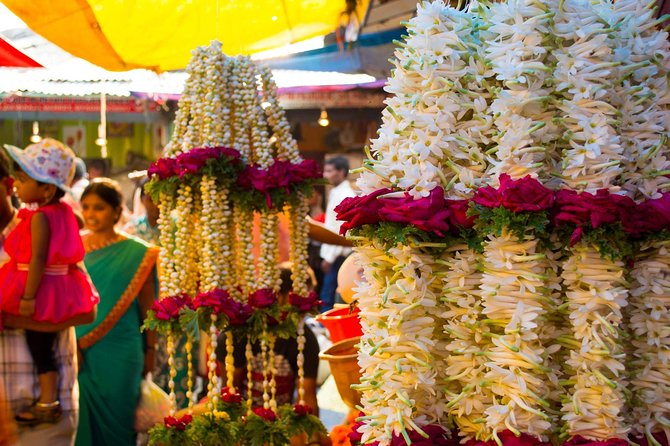
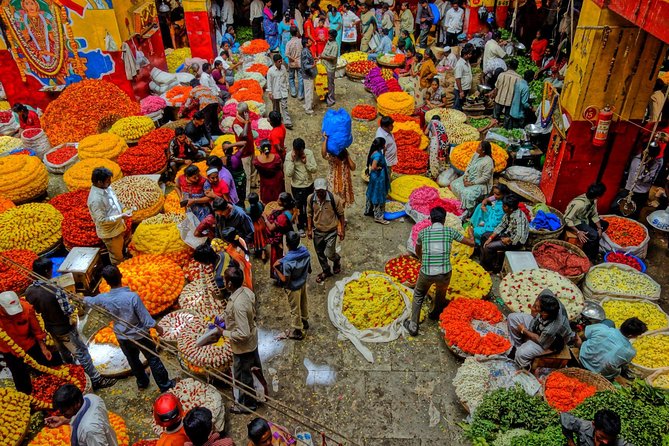
Your tour begins at KR Market, also described as the Grand Flower Market. This is the heart of the early-morning trade: trucks arrive loaded with flowers, petals, and leaves, and you’ll see the whole supply chain in motion—deliveries, sorting, sellers setting up, and the first wave of customers.
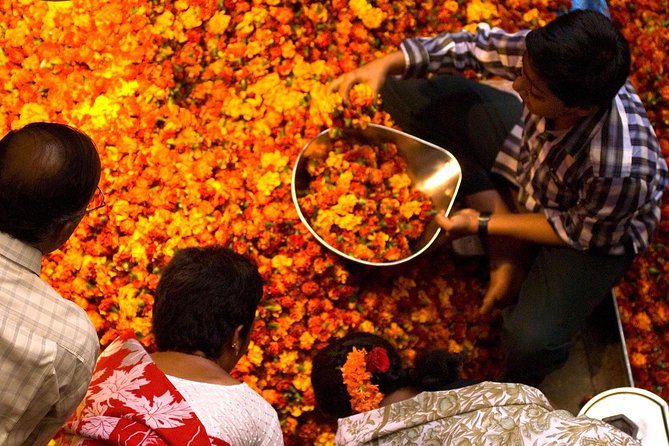
The best part here is the combination of texture and story. Flowers create obvious color, yes, but what really helps your photos are the human details: people moving quickly with morning focus, carts loaded with produce, and the constant reshuffling of goods as fresh deliveries come in. You’ll also get a look at seasonal fruits and vegetables and local specialties. Even if you’re primarily photographing, it’s a powerful way to understand what people are buying and selling right now.
This is also where a private guide helps in practical ways. Crowds and carts can create unsafe foot traffic, and photo etiquette can get tricky fast when you’re aiming a camera at close range. Having a guide managing safety and spacing means you can shoot more confidently—and spend less time worrying about when to step back.
What I’d plan for as a photographer:
- You’ll likely want a lens or setup that handles close subjects as well as wider street scenes.
- Expect sensory overload—fragrance, motion, and noise are all part of the scene.
- Keep your camera ready, but don’t rush. In markets, the best moments often happen between deliveries.
Also, the itinerary lists admission as free for this stop, so you’re not paying to “enter a place.” You’re paying for guided time in an active real-world environment—where your images can look different from what you’ll get at static tourist spots.
Bangalore Fort: Kempe Gowda I’s 1537 origin in short walking views
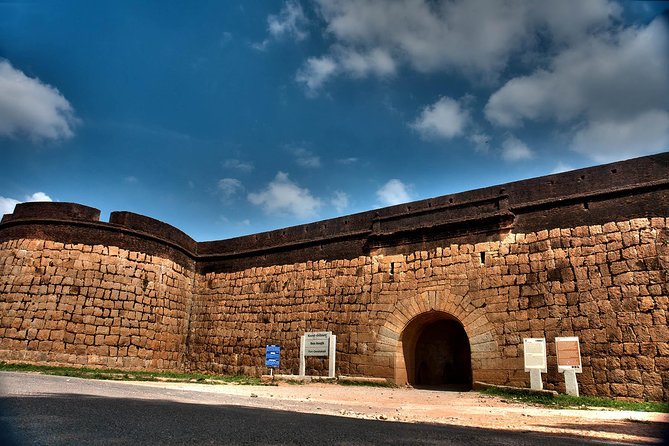
After the market, you’ll walk toward Bangalore Fort. This stop is shorter, and that’s actually a good match for what it is: you’re not trying to do an all-day archaeology project. You’re looking for a set of visuals tied to the fort’s beginning and the founder story behind Bengaluru.
Here are the key facts your visit is built around: the construction began in 1537 as a mud fort, built by Kempe Gowda I, who was a vassal of the Vijayanagar Empire and is widely credited with founding Bangalore. You get a fast, focused window to translate that origin story into images—especially through exterior views, architectural lines, and the way the fort sits in the city.
The drawback is simply time. Thirty minutes means you’ll need to choose your shooting priorities quickly. If you love sweeping wide angles, you’ll want to get your establishing shots early. If you prefer textures—stone surfaces, edges, shadow lines—you’ll want to slow down and look for small details without turning the stop into a detour.
This is also one of those transitions where your guide’s pacing matters. You’re moving on foot between stops, and the fort stop is placed as a bridge from market energy to temple and palace architecture.
Kote Venkataramana Temple: Dravidian lines and Vijayanagara-era details
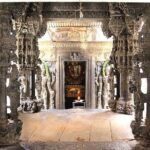
Next comes Kote Venkataramana Temple, dedicated to Venkateshwara. This stop gives you a different kind of photo challenge: more geometry, more symmetry cues, and a calmer rhythm than the market.
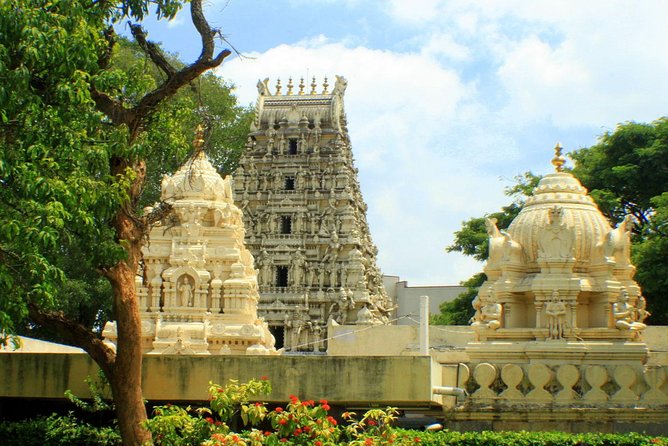
You’ll learn that the temple was built in 1689 in Dravidian and Vijayanagara style by King Chikka Devaraja Wodeyar of Mysore. That combination is useful for photography because style labels translate into shapes you can actually see: proportions, column rhythms, carved surfaces, and temple-spatial structure.
You’ll have about 45 minutes, which is enough for:
- wide frames that show how the temple sits and how entrances/edges align
- medium shots that capture architectural repetition
- close details where carvings or textures show up
Because this tour includes a local guide focused on photo etiquette and safety, you’re less likely to end up with awkward timing or blocked angles. Still, treat this stop differently from the market. When you’re photographing sacred space, you need to be respectful with your movement and patience. Let the guide set the pace and follow any rules on where you can stand.
Tipu Sultan’s Summer Palace: teak Indo-Islamic architecture for strong frames
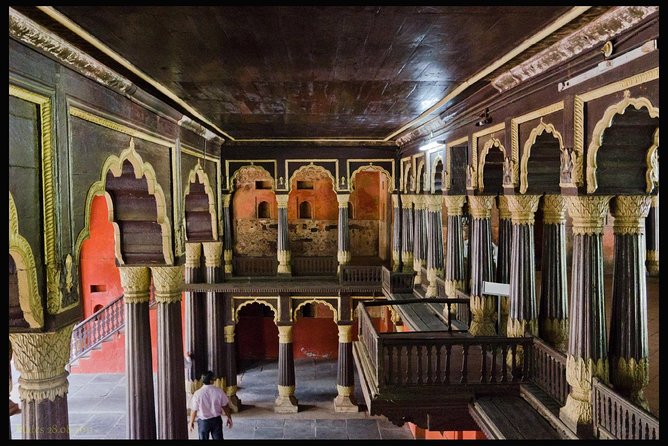
The final major stop is Tipu Sultan’s Summer Palace. This is the kind of place that rewards a photographer’s eye because it offers clean architectural forms and clear visual logic.
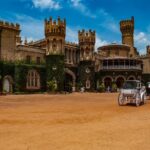
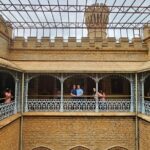
The palace is described as an example of Indo-Islamic architecture and served as the summer residence of Tipu Sultan. One detail I think is especially helpful for your photo planning: the structure was built entirely of teak. That matters because timber architecture often creates a distinct look—warm tones, smooth surfaces, and strong shadow behavior under morning light.
You’ll also see the palace’s features called out clearly: pillars, arches, and balconies. Those are your go-to elements for framing. Pillars give you vertical anchors. Arches create natural frames-within-frames. Balconies add depth and layers for composition.
The tour also connects the palace to the broader fort story: construction was started by Hyder Ali within the walls of Bangalore Fort, and the structure was completed during Tipu Sultan’s reign in 1791. Even if you don’t memorize dates for your camera notes, it gives the stop context. You’re not just shooting attractive architecture; you’re shooting a built timeline.
Timing note: the itinerary schedules about 45 minutes here, and the walk ends at this location. By the end of the tour, you’ll have already built your morning narrative—market life, historic fort origins, temple spirituality—so the palace becomes a satisfying architectural conclusion.
Price and logistics: does $79 per person make sense for what you get?
At $79 per person for roughly 4 hours, the value comes down to what’s included and what you’re paying for.
What you get:
- A private local guide
- All fees and taxes
- Included admissions for the historical/temple/palace stops listed in the route
- A route that avoids you having to figure out navigation while you’re trying to shoot
That private-guide piece is the real driver of value. You’re not just buying “access to locations.” You’re buying someone who can manage your flow, keep you safe while you walk, and help with photo etiquette in crowded areas like KR Market.
What you should plan for:
- Food and drinks are not included.
- Tips/gratuities are not included.
- Hotel pickup and drop-off are not included unless you choose an upgraded car option.
My practical take: if you’re traveling with heavy camera gear or you don’t love sprinting through new neighborhoods while also trying to find entrances and angles, this price can feel fair. If you already know the route well, don’t care about guidance, and mainly want to photograph from the outside with minimal stops, you might question the cost. But if you want the workable photo route—early start, guided walking, and included entries—this is priced in a way that fits.
Also, the tour mentions group discounts. The experience is still private for your group, but discounts can make it easier to bring a friend or split the cost without needing a huge group size.
How to make the most of the walking (without ruining your photos)
This is a walking tour with a moderate walking level, and the tour notes call for moderate physical fitness. That’s not a “sit on a bus” kind of day. You’ll be moving from stop to stop, including from the city area toward KR Market and then on to the fort, temple, and palace.
To keep it enjoyable:
- Wear shoes you don’t mind getting dusty or stepping through uneven ground.
- If you have camera straps or tripod habits, keep them under control in crowds. Markets and temples are both places where you want quick, stable movement.
- Bring water. Food isn’t provided, so you’ll need your own plan for hydration and a break.
The other practical advantage is that your guide helps you avoid navigation hassles. When you’re focused on photography, “where do we go next?” can steal your attention. This route reduces that stress.
And here’s a big reason people like this format: small groups can make the day smoother for shooting. On quieter days, it’s easier to reposition, get angles without constant crowd jostling, and communicate clearly with your guide. That’s not something you can guarantee on every date, but the structure of a private photowalk makes it more likely than a large-group tour.
Who should book this Bengaluru photowalk?
This tour is a great match if you:
- want morning street-to-heritage photography rather than only “monument sightseeing”
- enjoy markets as subjects, with real people and daily commerce
- like having local guidance for safety and photo etiquette
- prefer a structured route so you can spend your energy on framing and timing
It’s also a good fit if you’re not trying to do a marathon day. The stops are timed so you can see each place without feeling like you’re being rushed through everything at breakneck speed.
If you dislike early mornings, or if walking in crowds makes you uncomfortable, then it’s worth thinking twice. This tour is designed around that 6:00 am energy and the reality of being outdoors with people and vehicles.
Should you book this 4-hour private photowalk?
My take: book it if you want real Bengaluru energy with a photographer-minded route. The combination of KR Market early in the day plus Bangalore Fort, Kote Venkataramana Temple, and Tipu Sultan’s Summer Palace gives you variety in a single morning. That variety is exactly what helps your photo set feel like a story instead of a pile of unrelated pictures.
Skip the tour if you:
- need a full food/drinks plan built into the experience
- don’t want to walk for a few hours
- can’t handle a 6:00 am start
If you do decide to go, focus on arriving prepared for morning shooting and small transitions. Let the guide manage the flow, and you’ll spend less time figuring things out and more time capturing the details that make Bengaluru look like itself.
FAQ
What time does the tour start?
The tour starts at 6:00 am.
How long is the private photowalk in Bengaluru?
It lasts about 4 hours.
Where does the tour start and end?
It starts at Sampangi Rama Nagar, Bengaluru and ends at Tipu Sultan’s Summer Palace.
Is this a private tour?
Yes. It’s a private tour/activity, so only your group participates.
Are entrance fees included?
The itinerary indicates admission is free for KR Market, and admission is included for Bangalore Fort, Kote Venkataramana Temple, and Tipu Sultan’s Summer Palace.
Is food included?
No. Food and drinks are not included.
Is hotel pickup and drop-off included?
Not automatically. Hotel pickup and drop-off are not included unless you select an upgraded car option.
What is the cancellation policy?
There is free cancellation. You can cancel up to 24 hours in advance for a full refund.
If you want, tell me your travel dates and whether you’re bringing a phone, DSLR, or mirrorless camera, and I’ll suggest what to prioritize at each stop for the strongest photo set.