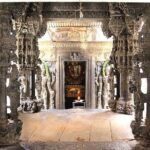
Stone temples make time stand still. A private day tour from Bangalore to UNESCO-listed Belur and Halebidu is a great way to see Hoysala-era architecture without the stress of planning. You ride in an air-conditioned car, and an English-speaking guide (Mr Gupta in at least one recent group) helps you spot what matters in the carvings and temple symbolism.
What I love most is the guide attention. At Belur’s Chennakeshava Swamy Temple, you don’t just look at stone—you get help reading the details, like the exterior bands of dancing maidens and the stone scenes inside. I also like that the price covers the hard bits: entrance fees and everything tied to getting you in and moving between sites, not just sightseeing time.
One thing to consider: it’s a long day—about 12 to 13 hours—and food isn’t included, so plan ahead for lunch breaks during transit.
In This Review
- Key highlights worth your time
- AC car comfort: how this long day stays manageable
- Belur’s Chennakeshava Swamy Temple: dancing maidens and stone storytelling
- Halebidu’s Hoysaleswara Temple: the 200-meter wall of carvings
- The guide and driver team: why this stays smooth (Mr Gupta and Mr Madhusudan)
- Price and value: what you’re paying for (and what you still need)
- What your day feels like on the ground
- Best for whom: the people most likely to love this
- Should you book this Belur and Halebidu private tour?
- FAQ
- Are entrance fees included for the monuments?
- Do you offer pickup and drop from Bangalore?
- What language is the guide?
- How long is the tour?
- Is food included?
- Can I cancel for a full refund?
- What vehicle will I ride in?
Key highlights worth your time
- Two top Hoysala temples in one day, with a focused visit length for each site
- English guide support, including practical explanations of history, techniques, and hidden details (Mr Gupta)
- AC car with hotel/airport pickup and drop, plus water in the vehicle
- Entrance fees included, so you’re not hunting for tickets on the day
- Private group setup, with sedan or 5-seater depending on party size
- Real-world driver confidence, including a safely handled return during heavy rains (Mr Madhusudan)
AC car comfort: how this long day stays manageable
This is a private, air-conditioned car day trip from Bangalore. That sounds basic until you remember what you’re doing: sitting for hours in traffic between three things—departure, two temple visits, and the ride back. Having the car ready with pickup and drop takes away a chunk of decision fatigue.
The tour also includes a bottle of mineral water per person in the vehicle. It’s a small line item, but it matters on temple days. You’ll be walking on uneven stone and spending time standing to look up at carvings, so hydration is not optional.
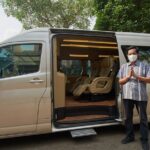
Vehicle size is handled by group size: 1–2 people typically ride in an air-conditioned sedan, while 3–4 people use an air-conditioned 5-seater. If you’re traveling with a friend or family member, this private format often feels like the sweet spot versus joining a shared group bus.
Practical thought: since your visits are time-boxed (roughly two hours at Belur, about 1.5 hours at Halebidu), you’ll want to show up at the entrances with enough energy for photos, close looking, and a bit of standing still while your guide explains what you’re seeing.
You can also read our reviews of more guided tours in Bangalore

Belur’s Chennakeshava Swamy Temple: dancing maidens and stone storytelling
Belur is where you start feeling the scale of Hoysala craftsmanship. The Sri Chennakeshava Swamy Temple visit is timed at about 2 hours, and that’s long enough to do more than a quick exterior glance.
Here’s what makes Belur special in plain terms: the carvings guide your eyes. On the exterior, you’ll notice the dancing maidens—a detail that’s famous for a reason. They’re not random ornament. They’re part of a carved program that shows skill, storytelling, and the temple’s artistic ambition.
Inside, the experience shifts from “look at art” to “read stone.” Expect stone imagery on pillars and the ceiling, and expect your guide to put those scenes into context. In one recent group, Mr Gupta helped explain history, the techniques, and hidden details—exactly the stuff you’d miss if you were relying only on signage.
You should also factor in how temples feel in real life: light changes, surfaces can be polished by touch, and there’s often more looking upward than you expect. If you wear supportive shoes and keep your pace slow, you’ll get far more from those two hours.
A small consideration: temple touring can get mentally tiring. You’ll likely want a brief reset between stops—so don’t pack too much sightseeing beyond what’s planned, and let the car time do its job.
Halebidu’s Hoysaleswara Temple: the 200-meter wall of carvings
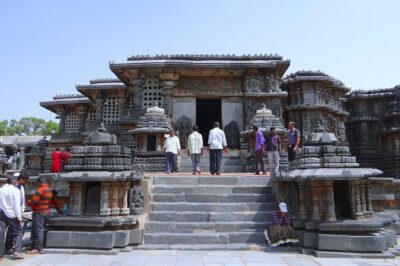
Then you head to Halebidu for the second star of the day: Hoysaleswara Temple. This temple is described as about 800 years old, and the focus here is the carvings.
The most useful thing to know before you arrive is the sheer length of the sculpted exterior walls: the temple has over 200 meters of outer-wall carvings, with scenes tied to Hindu gods and mythology. In practice, that means you shouldn’t try to “see everything.” Instead, let your guide point you to a few carving zones so you understand what you’re looking at and how the stories are organized.
In terms of what you’ll experience on site, this is a classic “walk the perimeter and look up” temple. You’ll see layers of detail covering the exterior—dozens of moments across the wall length—so it’s ideal that your visit is about 1.5 hours. That time window helps you avoid the trap of rushing just to say you finished.
The guide helps connect the visuals to meaning. Expect explanations around how the carvings work as narrative and symbolism—not only as decoration. If you enjoy art history but hate lectures, this style of guide-led viewing is usually a good compromise: you’re moving, but you’re also learning what matters.
One more reality check: sculpture-heavy sites reward calm viewing, not speed. If you like slow looking, you’ll leave Halebidu feeling satisfied. If you prefer constant motion and don’t enjoy reading symbolism, you might want to focus on the largest scenes your guide highlights rather than trying to absorb the entire wall on your own.
The guide and driver team: why this stays smooth (Mr Gupta and Mr Madhusudan)
A private temple day works or fails on two moving pieces: the guide and the driver.
In the feedback tied to this tour, the guide—Mr Gupta—was praised for explaining not just what the temples are, but the history, the techniques, and hidden details. That last part matters. Many carved elements have repeating patterns or symbolic motifs that are easy to miss. A guide who can point out what’s unusual or what to look for can turn “pretty stone” into “I get it now.”
On the driving side, Mr Madhusudan was described as polite and patient, and the group reported a safe return during heavy rains. Even when weather doesn’t become dramatic, good driving affects comfort. Temple touring includes standing and bending. If the return ride is stressful, you’ll feel it in your legs and mood later.
This is where the private setup pays off. You’re not negotiating meeting points for a bus group, and you’re not stuck waiting for someone who wandered off. Your schedule is built around your group and your guide.
Price and value: what you’re paying for (and what you still need)
At $130.34 per person for a 12–13 hour private day, the big question is value. Here’s what the price includes that usually costs extra on DIY days:
- Hotel/airport pickup and drop
- Private air-conditioned vehicle
- Entrance fees of the monuments
- All parking fees and GST
- English-speaking private local guide
- 1 bottle of mineral water per person in the vehicle
That bundle matters because temple days often become a math problem: transport cost, ticket cost, parking, and then your time getting it all sorted. This tour is designed to remove those friction points.
What’s not included is also clear:
- Food and drinks
So you’ll need to budget for lunch or snacks, and you’ll want to plan so you don’t feel rushed. If you’re the type who likes a proper sit-down meal, you’ll probably want to bring a snack for yourself in the vehicle and then pick a meal during the day gap (based on what fits the route timing).
Also note that the tour notes group discounts. The exact discount amount isn’t stated, but it’s a hint that your total cost can drop if your party size makes the operator’s logistics more efficient.
Overall, I think this price makes sense if you value convenience and guide-led viewing. If you’re traveling solo with a tight budget and you don’t care about context, DIY can be cheaper. But for many people, paying for AC comfort plus a guide is worth it on a day this long.
You can also read our reviews of more private tours in Bangalore

What your day feels like on the ground
Even without a long list of stops, this is still a full itinerary day. You’re combining two temple experiences with a long drive time out of Bangalore.
A helpful way to mentally prepare:
- Treat Belur as the detail temple—look for exterior motifs like the dancing maidens, then shift inside for pillar and ceiling stone work.
- Treat Halebidu as the scale temple—focus on the exterior wall carvings and let your guide select key sections so you don’t lose your place.
- Treat the car ride as your buffer time—bring a layer, keep water handy, and use that time to reset between art-heavy moments.
One more practical note: there’s no strict dress code, but modest clothing is recommended for both men and women. This matters in India’s temple environment. You’ll feel more comfortable if your clothes cover shoulders and keep shorts and overly sheer items out of your plan.
Best for whom: the people most likely to love this
I’d recommend this tour if you:
- Want a private experience but still like having a guide explain what you’re seeing
- Prefer comfort for a long day (AC car, pickup/drop, water provided)
- Enjoy architecture and sculpture and want help noticing symbolism, not just taking pictures
- Are traveling with a small group who would rather share a sedan or 5-seater than join larger group logistics
It may be less ideal if you:
- Have very limited patience for long car time
- Don’t want guided explanations and prefer a self-paced temple walk
- Need food included in your tour cost (since you’ll plan meals separately)
Should you book this Belur and Halebidu private tour?
If your goal is to see both Belur and Halebidu in one day with comfort and real guidance, I think this is a strong choice. The combination of entrance fees included, a private English-speaking guide, and an AC pickup-and-drop setup removes most of the typical headaches of a temple day.
Book it if you like your art viewing with context and you’re okay with a long schedule. Don’t book it if you want lots of meals included, lots of extra stops, or a short outing. For the right kind of traveler, this is a focused, efficient way to meet two of Karnataka’s most celebrated Hoysala temple experiences without scrambling on the ground.
FAQ
Are entrance fees included for the monuments?
Yes. Entrance fees for the monuments are included in the tour price.
Do you offer pickup and drop from Bangalore?
Yes. The tour includes hotel or airport pickup and drop.
What language is the guide?
The tour includes an English-speaking private local guide.
How long is the tour?
It runs about 12 to 13 hours.
Is food included?
No. Food and drinks are not included.
Can I cancel for a full refund?
Yes. You can cancel up to 24 hours in advance for a full refund.
What vehicle will I ride in?
If you are 1–2 guests, you typically use an air-conditioned sedan. If you are 3–4 guests, you typically use an air-conditioned 5-seater vehicle.