REVIEW · CHENNAI
Chennai Dosa Making Class & Home-Dining Experience with Jyashree
Book on Viator →Operated by Traveling Spoon · Bookable on Viator
A paper-thin dosa changes how you see South India. This private, hands-on class with Jyashree gives you practical lessons in classic Tamil foods like dosa and chutneys, plus the food context that makes it stick. I love the private home-kitchen format and the chance to learn from Tamil family recipes you can realistically recreate later.
One thing to consider: there’s no hotel pickup, so you’ll want to be comfortable getting yourself to the meeting point on MG Ramachandran Road in Besant Nagar.
The experience runs about 3 hours and ends right where you started, after you share a vegetarian meal you helped make. You’ll also get a more personal welcome than a restaurant setting—Jyashree’s family joins the day, and yes, their dog may be part of the household welcome, which makes it feel genuinely lived-in.
If you want more than watching someone else cook, this is the kind of workshop where you’re doing the work and learning the why behind the flavors, from chutney balance to dosa technique.
In This Review
- Key things that make this class worth your time
- A private home kitchen with Jyashree: what you’re really paying for
- Getting to the meeting point on MG Ramachandran Road (and back again)
- What you’ll cook: dosa, chutney, and the Tamil flavor logic
- The banana-leaf meal you help create
- Insider access to Tamil family recipes: the part that lasts
- How the 3-hour timing works in real life
- Price and value: is $122 per person fair for this?
- Who should book (and who might skip)
- A quick heads-up on allergies and what to tell the host
- Should you book Jyashree’s dosa class?
- FAQ
- How long is the Chennai Dosa Making Class with Jyashree?
- Is this class private or shared?
- What dishes will I learn to cook?
- What’s included in the price?
- What is not included?
- Where do I meet and where does it end?
- Will I get any materials to cook at home?
- How does confirmation work after booking?
- Can I change or cancel the booking after reserving?
Key things that make this class worth your time
- Private, hands-on teaching in a home kitchen with only your group participating
- Tamil family recipe insight, not just a copycat cooking demo
- Dosa and chutney mastery, aimed at what you can repeat at home
- Banana-leaf dining at the end of class, including a meal you helped prepare
- Recipe and spice takeaways that help you cook again after you leave Chennai
A private home kitchen with Jyashree: what you’re really paying for
The headline sounds simple: learn dosa, chutney, and a couple more South Indian staples. The real value is the teaching style and the setting. A cooking class inside a local home turns this into something closer to apprenticeship than performance.
In this 3-hour session, you cook 2–3 traditional dishes based on family recipes. That matters because South Indian cooking isn’t only about ingredients; it’s about texture, timing, and how chutneys should taste when they hit the dosa. In a restaurant, you can eat it. In a home class, you learn the steps that create it.
I also like that the experience is private and personalized. That’s not just a comfort thing; it means you can ask direct questions while you’re actively cooking. If you’ve ever tried to make dosa from a video and had no idea where things went off, a hands-on instructor makes the difference.
And then there’s the atmosphere. One guest described Jyashree as elegant and the day as a true welcome into a clean residential area. That kind of host energy—warm, calm, family-involved—helps you relax, pay attention, and actually absorb the technique.
You can also read our reviews of more tours and experiences in Chennai.


Getting to the meeting point on MG Ramachandran Road (and back again)
This is one of those experiences where your logistics matter more than you’d expect. There’s no hotel pickup or drop-off, and the class starts at a specific point: MG Ramachandran Road, Kalakshetra Colony, Besant Nagar, Chennai.
You’ll want to plan how you’re getting there and how you’ll return at the end. The good news is that the activity ends back at the meeting point, so you’re not trying to track down your transport after a meal.
If you’re traveling without much local help, factor in extra time to reach the meeting location and get oriented. Besant Nagar is a known area, but it’s still Chennai, so building in buffer time is smart.
What you’ll cook: dosa, chutney, and the Tamil flavor logic
The core of the lesson is South Indian cooking taught through Tamil family dishes. Expect classic items like dosa and chutney, along with additional dishes that can vary by season. The format is hands-on, and you’ll cook the food rather than just observing.
Here’s why that matters: dosa is deceptively technical. The batter consistency, cooking surface, heat, and spreading matter. Chutney is also a balancing act—acidity, spice, and freshness need to work together with the dosa (or whatever else you’re eating).
You also get the significance of each specialty. That’s not “story time” for the sake of it. When you understand what a dish is meant to do—cool down spice, add tang, bring freshness—you’ll be able to troubleshoot at home. You won’t just memorize a recipe; you’ll understand how the flavors are supposed to behave.
Menu may vary depending on the season. That’s a small uncertainty, but it’s also part of the authenticity. Tamil cooking changes through the year based on what’s best, freshest, and most suitable for that time.
The banana-leaf meal you help create
After cooking, you eat what you helped prepare. The meal is served on a banana leaf, and it includes more than just the main dish you cooked. This part is included, and it’s one of the best moments of the class because you finally taste the results while everything is still fresh in your mind.
Banana-leaf serving isn’t just a neat presentation. It’s part of how South Indian meals are traditionally structured—food comes together in a sequence, with chutney and sides supporting the dosa. When you eat in that format, you get a stronger sense of how each component plays a role.
One guest said the food was better than in the restaurants they visited. I take that as a clue to what you should expect: when you cook it yourself in a home setting, you’re paying attention to smell, texture, and seasoning in a way that turns the meal into a lesson.
Insider access to Tamil family recipes: the part that lasts
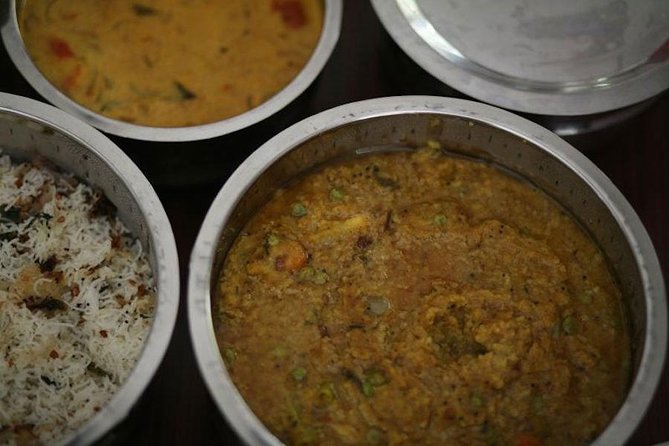
Lots of cooking classes hand you a list of ingredients. This one focuses on recipes and understanding. You’re learning from Tamil family traditions passed down over generations, which usually means you get both technique and reasoning.
And the biggest practical win: you come away with guidance you can use at home. In guest feedback, people specifically noted receiving recipes and even mixed spices, which helped them cook again for family after returning from South India. That’s a big deal if you’ve ever left a class with “inspiration” but no actionable notes.
Spices are where home cooking often fails. You can buy ingredients, but balancing a spice mix for dosa or chutney is harder to guess than most people realize. If you get access to those spice blends and recipe notes, your odds of success climb fast.



How the 3-hour timing works in real life
This is an about-3-hours experience. That length is practical: it’s long enough to learn technique and cook multiple dishes, but not so long that you end up fatigued or rushing at the end.
The structure also makes sense for retention. You cook, you taste, then you eat together. That sequence helps your brain connect the steps you did with the final flavor and texture. When you can connect cause and effect, you stop repeating mistakes.
You’ll also be around other household energy without the chaos of a public kitchen. Guests described Jyashree’s home as clean and comfortable, with a welcoming family atmosphere. That kind of environment supports learning.
Price and value: is $122 per person fair for this?
At $122 per person for about 3 hours, the price can look like a “special experience” cost. But you’re not only paying for ingredients. You’re paying for:
- Private instruction (your group only)
- A home-kitchen setting rather than a generic studio
- A meal included at the end
- Recipe and spice takeaways that help you cook again later
- Guidance that goes beyond the steps, including the significance of dishes
When you price cooking classes, the biggest variable is usually the level of teaching and how much you do yourself. Here, it’s hands-on and private. That tends to be where the value shows up, especially for dishes like dosa where technique matters.
So if you’re the type who cooks at home and wants results, this price is more reasonable than it first appears. If you’re only looking for a one-time taste of South Indian food, a restaurant meal would be cheaper. But if you want to bring Chennai flavors back with you, the class model is the point.
Also included are group discounts and a mobile ticket. Those are small perks, but they reduce hassle and can help if you’re traveling with friends.
Who should book (and who might skip)
This fits best if you want a cultural food experience with real technique. You’ll probably love it if you:
- Want South Indian cooking skills you can repeat at home
- Care about learning chutney and dosa beyond basic recipes
- Prefer a home setting over a commercial cooking studio
- Like the idea of a private class where you can ask questions while you cook
You might want to think twice if:
- You don’t want to handle your own transport to the meeting point (no hotel pickup)
- You’re strictly budget-driven and mainly want a meal, not a skill-building session
- Your schedule is tight and you can’t reach MG Ramachandran Road in Besant Nagar on time
A quick heads-up on allergies and what to tell the host
The experience notes that if anyone in your party has allergies, dietary restrictions, or cooking preferences, you should advise at booking time. That’s important in a class setting where dishes may include specific ingredients and spice mixes.
Don’t wait until the day-of if you can help it. Share details up front so the instructor has the best chance to accommodate you.
Should you book Jyashree’s dosa class?
I’d book this if your goal is to learn Tamil cooking in a way you can actually reproduce. The combination of a private home-kitchen class, hands-on dosa and chutney instruction, and the included banana-leaf meal is a strong value package for about 3 hours.
It’s also a good pick if you like authentic, household-style hospitality. Jyashree’s family welcome—and the fact that this feels like a real home day rather than a staged performance—helps the whole experience land in the “memorable” category.
If you’re traveling with limited time and don’t want to manage getting to MG Ramachandran Road yourself, factor that in before booking. For most people who can reach the meeting point, this is the kind of Chennai experience that leaves you with skills, recipe notes, and spice knowledge—long after the trip ends.
FAQ
How long is the Chennai Dosa Making Class with Jyashree?
The experience runs for about 3 hours.
Is this class private or shared?
It’s private. Only your group participates.
What dishes will I learn to cook?
You’ll cook 2–3 traditional South Indian dishes from family recipes. Dosa and chutney are key examples, and the menu may vary by season.
What’s included in the price?
Included items are the private hands-on South Indian cooking class and a home-cooked vegetarian meal in a local home.
What is not included?
Hotel pickup and drop-off are not included.
Where do I meet and where does it end?
You start at MG Ramachandran Road (MG Ramachandran Rd, Kalakshetra Colony, Besant Nagar, Chennai). The activity ends back at the meeting point.
Will I get any materials to cook at home?
Guests have noted that they receive recipes and mixed spices, which they can use after the class.
How does confirmation work after booking?
Confirmation is received within 48 hours of booking, subject to availability.
Can I change or cancel the booking after reserving?
This experience is non-refundable and cannot be changed for any reason.