REVIEW · CHENNAI
Georgetown heritage walking tour in Chennai about the founding of Chennai
Book on Viator →Operated by 5 Senses Walks Chennai · Bookable on Viator
Chennai history starts at a working port. This George Town heritage walking tour strings together the story of Chennai’s founding as the first English settlement, then threads you through churches, company headquarters, and even a World War I connection at Madras High Court.
I especially like the small-group feel (so questions don’t get lost) and the guide style that keeps complex colonial history readable, helped by clear English that’s been specifically praised.
One thing to consider: the Fort St. George stop includes time in the museum, and that portion takes about 30 minutes, which might feel long if you mainly want street-level landmarks.
In This Review
- Key highlights you’ll actually care about
- George Town’s founding story, told on your feet
- Price and value: what $50 buys you
- Group size, meeting point, and how to plan your timing
- Stop 1: Fort St. George and the East India Company story (museum included)
- Stop 2: St. Mary’s Church and the oldest Anglican landmark
- Stop 3: George Town and the old lighthouse sites
- Stop 4: Dare House #234 and Parrys company’s Thomas Parry
- Stop 5: Madras High Court and the WWI German attack narrative (tickets included)
- Stop 6: Armenian Church and the trade network behind the stones (tickets included)
- The pacing: how you avoid the usual walking-tour fatigue
- Who should book this Georgetown heritage walk
- Tips to get the most out of it
- Should you book? My take
- FAQ
- How long is the Georgetown heritage walking tour?
- How much does the tour cost?
- Where does the tour start?
- Where does the tour end?
- Is pickup offered?
- Is this a small-group tour?
- What ticket types are included in the itinerary?
- How do I get the ticket?
- What if the weather is bad?
- What’s the cancellation policy?
Key highlights you’ll actually care about
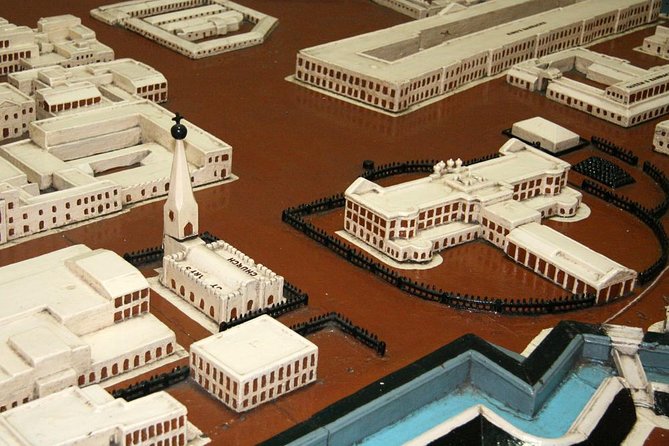
- Fort St. George (built in 1644) starts the story at the first English fortress linked to the East India Company
- St. Mary’s Church is included as the oldest Anglican church of India, with a Last Supper focus
- George Town’s port-era landmarks include the site of old lighthouses that were functional during East India Company times
- Dare House #234 connects you to Parrys company and the story of Thomas Parry
- Madras High Court lets you hear the 1914 World War I events, including the attack by Germans
- Armenian Church brings the trading story in with refugees who set up commerce in silk, spices, and gems about 300 years ago
George Town’s founding story, told on your feet
George Town is one of those parts of Chennai where layers show up fast. In a short walk, you move from the structures tied to the East India Company into a patchwork of religious buildings and civic institutions that later served the city and state. The tour’s big win is that it doesn’t treat these sites like isolated photo stops. Instead, the guide ties them to one thread: Chennai’s early European connections and how a port neighborhood grew into something more.
If you like history that has street context, this works well. You’ll see the kind of places that mattered to merchants, officials, and communities, then get the “why” behind them. The pacing is built around short segments, which keeps you from getting stuck in one location too long.
You can also read our reviews of more walking tours in Chennai

Price and value: what $50 buys you
At $50 per person, this is not a budget-to-the-bottom kind of tour, but it is priced like a focused, guided experience with entry fees included where they matter.
Here’s the practical value check:
- You get a guide-led route across multiple major landmarks in George Town rather than a self-guided scramble.
- Admission tickets are included at Fort St. George (museum time) and Madras High Court, while other stops are free entry.
- The group size is capped at 15, which usually means you get a real conversation instead of just listening from the back.
Also, it’s booked ahead often (about 10 days in advance on average). That’s a sign it sells, likely because it’s a compact way to cover a lot of meaningful ground without spending your whole day on transit.
Group size, meeting point, and how to plan your timing
The tour lasts about 3 hours, and you’ll be moving through a set route from a port-area starting point into George Town. The start point is at Chennai Port Trust (CHENNAI PORT37MV+M95), and the tour ends in George Town.
A couple things help you plan well:
- Pickup is offered, which can make this easier if you’re staying away from the port side. Still, even with pickup, it’s smart to confirm how that pickup works for your specific departure time.
- It’s described as near public transportation, so even if you’re self-arranging, you likely won’t be stranded.
- Good weather is required. If skies are bad, the operator will switch dates or refund. That means your “walk window” is more flexible than you might expect in a city tour that runs no matter what.
Stop 1: Fort St. George and the East India Company story (museum included)
You start at Fort St. George, the first English fortress built in 1644 by the East India Company. This is the moment the tour’s timeline snaps into focus. Instead of starting with general background, you begin with a power center.
What you can expect here:
- A visit to the museum inside the fort, with an explanation of how the British came to dominate India and how their control took shape.
- About 30 minutes on-site, with admission included.
Why this stop is worth your time: Fort St. George gives you the framework for everything else you’ll see. When the tour later connects to institutions like courts and churches, you’ll understand what kind of influence and bureaucracy formed around trade and governance.
Potential drawback: if you prefer roaming and landmarks over museum time, that built-in museum chunk can feel like a big slice of the overall tour. Still, for first-time visitors to the port-era story, it’s the best place to get the “alphabet” before the rest of the walk.
Stop 2: St. Mary’s Church and the oldest Anglican landmark
Next up is St. Mary’s Church, listed as the oldest Anglican church of India. The stop is short—about 15 minutes—and entry is free.
The focus here isn’t just architecture. The tour frames the visit around the church’s connection to the Last Supper, which adds meaning if you pay attention to how places of worship were used as community anchors for Europeans and local congregations.
Practical tip: since the time is limited, I’d treat this as a “look closely, then listen” stop. You don’t want to spend your energy checking every corner for long explanations—you want the guide’s context.
You can also read our reviews of more historical tours in Chennai


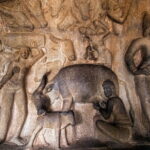

Stop 3: George Town and the old lighthouse sites
After the church, you move deeper into the George Town area with stops tied to the port world. One of the highlights is exploring the site of old lighthouses that were functional during East India Company times.
This is a different kind of history stop. Rather than big interior spaces, you’re reading the neighborhood as it relates to shipping, arrivals, and safe navigation. Even when the physical traces are small, the guide’s story helps you imagine why a lighthouse mattered when merchants and ships depended on it.
It’s also a nice pacing shift. With about 15 minutes here and free entry, it keeps the tour moving without overloading you with ticketed sites.
Stop 4: Dare House #234 and Parrys company’s Thomas Parry
Dare House #234 is one of those buildings that looks like it belongs to a specific era—and the tour gives you the backstory. It’s described as an iconic art deco building and ties directly to Parrys company, named after Thomas Parry, who was Welsh and among the first free merchants of Chennai.
This stop matters because it shows how commercial power didn’t disappear after the early fortress era. Even as the city changed, the commercial backbone stayed strong, and companies left physical marks on the streets.
Time here is about 15 minutes, and admission is free. That makes it ideal if you like quick, story-loaded stops that don’t turn into a long detour.
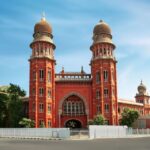
Stop 5: Madras High Court and the WWI German attack narrative (tickets included)

Then you hit Madras High Court. The tour frames it in two layers:
- Its founding: set up in 1862 by a decree from Queen Victoria
- Its wartime rupture: narration of the events in 1914 during World War I, when the building was attacked by Germans
It’s about 30 minutes, and admission is included.
Why I think this stop hits hard (in a good way): courts are institutions people associate with law and order. Hearing how a major civic building was drawn into wartime events adds complexity. The tour doesn’t let you treat history as a neat sequence of “past events.” It shows how politics and conflict can reach into everyday governance.
If you’re sensitive to heavy topics, it’s not described as graphic or dramatic in tone—just historical narration. Still, it’s one of the more intense segments, so it helps that the guide sets it up as part of a broader story.
Stop 6: Armenian Church and the trade network behind the stones (tickets included)
The last stop is Armenian Church. The tour ties it to the street where Armenian refugees set up trade in silk, spices, and gems roughly 300 years ago.
You’ll spend about 30 minutes here, with admission included.
This is where the tour expands beyond a single European narrative. The Armenian community connection helps you see George Town as a meeting point for different merchant groups—not just one empire. When you stand in and around a church tied to refugees and trade, the story becomes more human: displaced people rebuilding livelihoods, forming networks, and leaving landmarks behind.
What to expect: it’s a site-based finale, meaning you’ll end with a sense of place and community memory rather than another timed “look and move on” stop.
The pacing: how you avoid the usual walking-tour fatigue
A lot of tours promise three hours and then quietly become four. This one is designed around short blocks: 15–30 minutes each, with one longer museum stop early and another ticketed institutional stop later.
The benefits of that structure:
- Your attention stays sharper. You’re not stuck listening for too long in one place.
- You get variety: fortress museum, church, port-era sites, corporate building, court, then Armenian Church.
- The small group size helps the guide adjust. Clear English and good pacing have been specifically praised, including by guides like Kannan in past groups.
The drawback? If you’re expecting a leisurely stroll with lots of free time, this isn’t that. It’s paced to cover key founding and institution story points in a single session.
Who should book this Georgetown heritage walk
This tour is a great fit if:
- You want the founding and early European-commercial story of Chennai without reading a textbook first
- You like walking through major sites with a guide who can explain context clearly in English
- You’re comfortable with a tight schedule and short stops
It might not be the best match if:
- Museums are not your thing. The Fort St. George museum portion is the main potential time mismatch.
- You’re looking for a purely cultural neighborhood walk with lots of free wandering and shopping time. This route is focused on historic landmarks and their stories.
Tips to get the most out of it
A few practical moves will help you enjoy the full arc of the walk:
- Wear shoes that can handle city streets. You’ll be outside and moving between heritage sites for roughly three hours.
- Bring a light layer and water if it’s warm. The operator notes the experience requires good weather, which doesn’t automatically mean comfortable walking conditions.
- If you love one specific theme—like East India Company, World War I, or Armenian trade—tell the guide at the start. The tour is described as small-group and is run in a way that allows more personal attention.
- Have your phone ready for photos at the main structures, especially where time is 15 minutes and you’ll want quick visuals.
Should you book? My take
If you want a high-value way to understand how Chennai’s George Town became a port neighborhood tied to the East India Company, this is a strong booking. The Fort St. George and Madras High Court stops provide the backbone: founding-era context plus a World War I story you won’t get from random guidebooks. Add the Armenian Church trade narrative, and you get a more complete picture of how different groups left lasting marks.
I’d book it if you like guided explanation, decent pacing, and landmark-focused history. I’d hesitate only if museum time is your least favorite part of tours. Otherwise, this is a compact, well-structured way to get your bearings fast in one of Chennai’s most story-rich areas.
FAQ
How long is the Georgetown heritage walking tour?
It runs for about 3 hours (approx.).
How much does the tour cost?
The price is $50.00 per person.
Where does the tour start?
It starts at Chennai Port Trust, near CHENNAI PORT37MV+M95 in Chennai.
Where does the tour end?
The tour ends in George Town, Chennai.
Is pickup offered?
Yes, pickup is offered.
Is this a small-group tour?
Yes. The maximum group size is 15 travelers.
What ticket types are included in the itinerary?
Admission tickets are included for Fort St. George and Madras High Court. Other listed stops (St. Mary’s Church, George Town lighthouses area, and Dare House #234) are free entry.
How do I get the ticket?
You’ll receive a mobile ticket.
What if the weather is bad?
The experience requires good weather. If it’s canceled due to poor weather, you’ll be offered a different date or a full refund.
What’s the cancellation policy?
You can cancel for free up to 24 hours in advance for a full refund.