REVIEW · KOCHI
Fort Cochin Heritage Tour by The Kochi Heritage Project
Book on Viator →Operated by The Kochi Heritage Project · Bookable on Viator
Fort Kochi has stories you can walk through. This 2–3 hour heritage tour is built for people who want the “why” behind Cochin’s changing identity, from the Emporium of the World to the Queen of the Arabian Sea and into today’s art-and-tourism city. I especially like the way it connects European fort-town leftovers with real local culture—architecture, food, and even language—and the fact that you get a guided pause with coffee/tea and snacks in a Dutch-themed stop. The main thing to consider is that it’s weather dependent, and umbrellas or rain gear aren’t provided, so you’ll want to show up prepared.
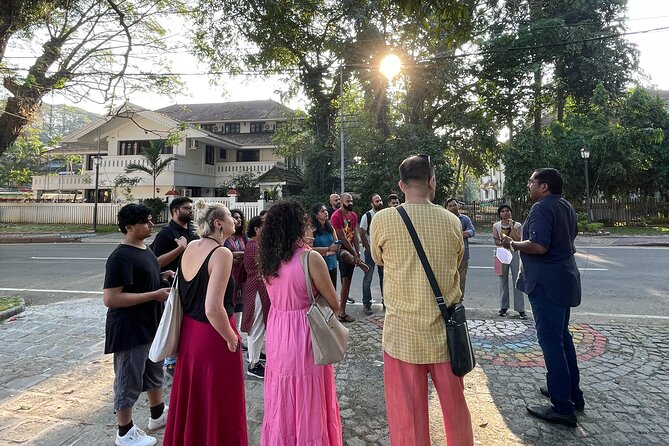
What makes it work is the tone: a local storyteller who knows how to keep history human. In the best moments, the guide’s name is Johann, and you can feel the work behind the stories—research, local pride, and a smooth flow from street to street without turning it into a lecture. The route is also a sensible size for most people: a small group capped at 8, moving through Fort Kochi at a pace that leaves time to look, ask, and catch details you’d miss alone.
One possible drawback: this is a walking heritage experience, not a “grab the best photo” route. You’ll get the most from it if you’re the type who likes context—Portuguese ships, Dutch influences, British power shifts—and you don’t mind reading the street-level clues as you go.
In This Review
- Key things you’ll notice on the walk
- A walking timeline of Fort Kochi’s European power shifts
- Price and pacing: what $27.96 buys you in real terms
- Where you start and finish (and how that shapes the walk)
- Stop-by-stop: Chinese Fishing Nets to Vasco da Gama Square
- Chinese Fishing Nets: an icon with a backstory
- Vasco da Gama Square: Portuguese ambition and trade
- Santa Cruz and the “beginnings” of a European fort town
- David Hall Gallery & Cafe: Dutch architecture and Ayurveda ties
- Parade Ground: tea, cricket, and art festivals
- Fort Kochi Beach: British supremacy and the long fight
- The small details that make this tour feel worth it
- Who this tour is best for (and who might want something else)
- Should you book the Fort Cochin Heritage Tour?
- FAQ
- How long is the Fort Cochin Heritage Tour?
- How much does the tour cost?
- Where does the tour start and where does it end?
- Is the ticket mobile?
- What’s included in the price?
- Is the tour entering heritage monuments?
- Are there admission fees for the listed stops?
- How big is the group?
- What happens if the weather is bad?
- Are alcoholic beverages included?
Key things you’ll notice on the walk
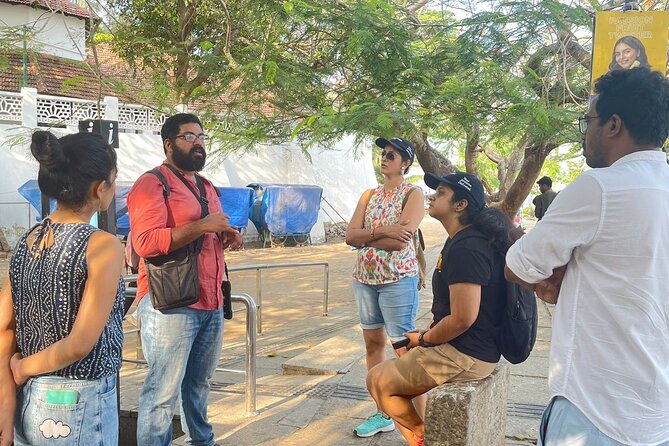
- Small group size (max 8 travelers) for a more conversational pace
- Local storyteller with Fort Kochi roots (Johann) and a research-heavy approach
- A route that follows layers of Portuguese, Dutch, and British influence
- Coffee/tea and snacks at a Dutch-themed stop to reset halfway through
- Short, focused stops (Chinese nets, Vasco da Gama Square, gallery pause, Parade Ground, beach) that add up to 2–3 hours
A walking timeline of Fort Kochi’s European power shifts
If you’ve ever wondered how a single coastal city can wear so many historical hats, this tour is a direct answer. You start in Fort Kochi and move along the remnants of the old European fort town, with stories that connect the city’s bigger roles in global trade to what you see on the street.
The tour’s core promise is simple: you don’t just hear names and dates—you get stories about architecture, culture, food, and the people who shaped those changes. Cochin’s reputation as the Emporium of the World and its later nickname, the Queen of the Arabian Sea, are used as anchors for why outsiders kept showing up, why power shifted, and why the city’s cultural mix looks the way it does today.
This also matters for value. At $27.96 per person for a 2–3 hour, guided, small-group walk with a refreshment stop, you’re paying for interpretation. You could wander Fort Kochi on your own, but this route helps you connect the dots fast.
You can also read our reviews of more historical tours in Kochi


Price and pacing: what $27.96 buys you in real terms
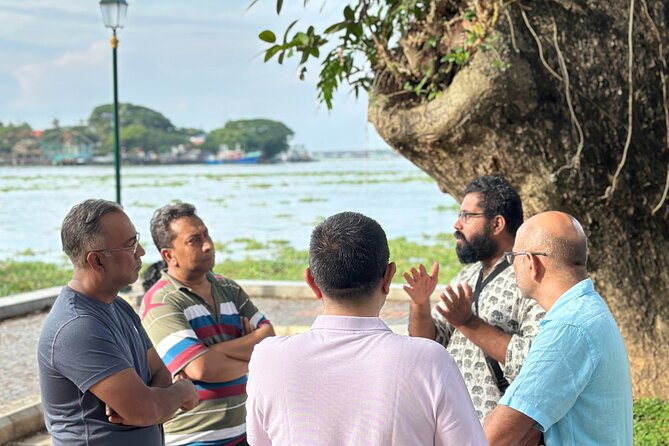
At $27.96 per person and roughly 2–3 hours, this is priced like a neighborhood walking tour, not a museum day. The “deal” is that the included elements do more than fill time:
- Guided storytelling by a local storyteller (the main value driver here)
- Coffee and/or tea plus snacks at a Dutch-themed hotel stop
- Visits to Indo-European heritage structures and establishments, including how those places are adapted today
The stop durations are also thoughtfully short:
- Chinese Fishing Nets: about 15 minutes
- Vasco da Gama Square: about 20 minutes
- David Hall Gallery & Cafe: about 30 minutes
- Parade Ground: about 15 minutes
- Fort Kochi Beach: about 30 minutes
That rhythm keeps the experience from dragging. You’re not stuck for long periods in one place, and you don’t feel rushed from stop to stop.
The other practical upside: the group limit is 8 travelers, so the guide can actually respond to questions. If you like walking tours where you can ask why something looks the way it does, that small size makes a difference.
Where you start and finish (and how that shapes the walk)
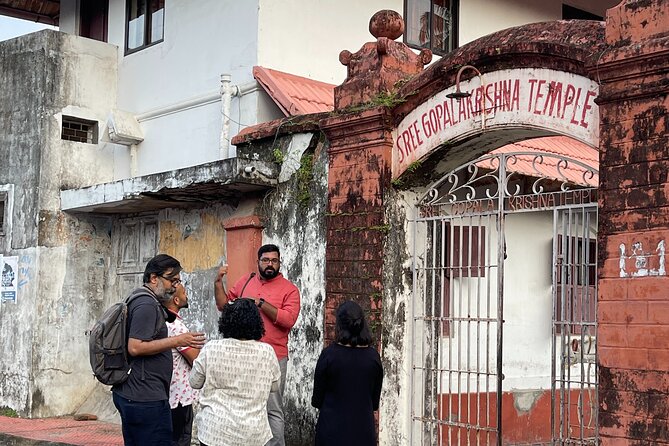
The tour begins at Folklore Cultural Theatre Bus stand building, Fort Kochi and ends at Princess Street, Fort Nagar, Fort Kochi. That’s a nice setup because you finish in a lively street zone rather than back where you started.
In plain terms: you can treat this as your “morning/early afternoon grounding walk.” After it ends on Princess Street, you’ll usually have an easier time navigating what to do next—cafés, art browsing, and just figuring out the city’s layout without staring at your map every few minutes.
Also, this is a mobile ticket tour. That’s one less thing to manage while you’re moving around.
Stop-by-stop: Chinese Fishing Nets to Vasco da Gama Square
Chinese Fishing Nets: an icon with a backstory
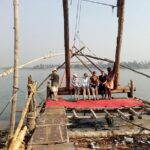
The first stop is the Chinese Fishing Nets, a famous visual landmark in Cochin. The point isn’t only to look at the nets, but to understand why they became part of the local scene—especially the stories about Chinese sailors and Malabar.
Even if you’ve seen photos of the nets before, this is the kind of place where context turns a pretty view into a clue about trade links across the Arabian Sea. It also works as a warm-up stop: you learn how to read the city like a timeline, one layer at a time.
Practical note: this is about a 15-minute stop, so don’t plan to linger too long if you want to keep up with the group pace.



Vasco da Gama Square: Portuguese ambition and trade
Next up is Vasco da Gama Square, where the story shifts from coastal livelihoods to European navigation and the hunt for profit. You’ll hear about the Portuguese setting out to find pepper and Christians in India.
This is one of the tour’s big themes: the Portuguese weren’t just arriving—they were trying to change how the region’s trade worked. You’ll start noticing how the tour connects these motivations back to what people built, how they lived, and what cultural traces remained.
The stop is around 20 minutes, so again, it’s focused. You’ll come away with a clearer sense of why Portuguese names and influences appear across Kerala’s coastal history.
Santa Cruz and the “beginnings” of a European fort town
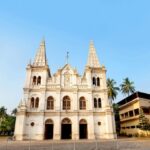
After Vasco da Gama Square, the walk moves into the heart of the European fort-town story: the beginnings of a European city in India, centered on the Fort and the City of Santa Cruz.
What I like about this segment is that it’s not vague. You’re given the framework for how a fort town forms—what it protects, what it enables, and how the settlement becomes a hub where different cultures collide. That framing pays off later when you reach the Dutch-leaning story and then the British power-shift at the beach.
This is also where the tour doesn’t shy away from complicated parts of the past. You’ll learn about Portuguese influences in Kerala, from culture to cuisine to language. You’ll also hear about the Portuguese slave trade, plus tales of protective spirits passed on for generations.
That mix can feel intense, but it’s historically grounded in the idea that the city’s layers weren’t all polite exchanges. For me, it makes the walking tour feel honest: you’re not cleaning history up for tourists.
David Hall Gallery & Cafe: Dutch architecture and Ayurveda ties
The next stop is David Hall Gallery & Cafe, with about 30 minutes on the ground. This is a smart pivot because it changes the tone from fort-town politics to the built environment and local knowledge systems.
Here you’ll learn about Dutch architecture influences in Cochin. You’ll also get a very specific cultural bridge: a story about a 17th-century treatise that’s still relevant in Ayurveda.
That’s a good moment for your brain. Instead of staying stuck in “Europe did X,” you see how ideas travel and get repurposed. The Dutch influence isn’t treated like wallpaper; it’s placed next to what locals continued to practice and understand.
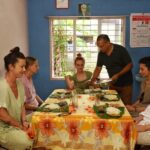
It also lines up with the tour’s included break. You’ll have coffee and/or tea plus snacks at a Dutch-themed stop, which makes this a comfortable checkpoint rather than just another photo stop.
If you’re sensitive to a tight schedule, this is the best place to slow down a bit within the allotted time: look at details, try to spot how the architecture echoes the explanation you just heard, then grab your drink and snack before moving on.
Parade Ground: tea, cricket, and art festivals
At Parade Ground, the stories shift again—this time into the everyday rhythms that grew around colonial presence. You’ll hear about tea, cricket, and art festivals, and how those social habits become part of the city’s identity.
This stop lasts about 15 minutes, so you don’t go deep into any one topic. But it gives you a useful lens: cultural influence is not only buildings and politics. It’s also what people do for fun, what they gather for, and how shared activities create a sense of familiarity.
Think of it like the tour’s reset button: after Portuguese and Dutch layers, you get a lighter, more social snapshot.
Fort Kochi Beach: British supremacy and the long fight
The final major sight is Fort Kochi Beach, with about 30 minutes. The story here focuses on the British and their struggle for supremacy in the Indian subcontinent.
This is where the tour’s historical arc tightens. You’ve already walked through Portuguese and Dutch influence—now you see how European power didn’t stay fixed. It shifted, competed, and reshaped the coastal world again.
The beach segment also has a practical side: it’s open-air. If you’ve been in hot sun or sticky humidity, you may appreciate that you’re not locked in a closed space. Still, it’s not a free roam “hangout.” It’s a guided stop with a story focus, so stay with the group timing.
When you’re done, the tour winds down and heads toward Princess Street, where colonial charm meets modern-day Fort Kochi life—colorful Portuguese- and Dutch-era buildings, cafés, art boutiques, and independent shops.
The small details that make this tour feel worth it
Some tours list stops. This one uses the stops as teaching tools. A few small elements make it click:
- Free admission is built into the stop plan for the key sights listed (Chinese Fishing Nets, Vasco da Gama Square, Parade Ground, Fort Kochi Beach), so you’re not juggling ticket fees mid-walk.
- The guide isn’t just repeating a script. The tour is framed as story-driven exploration, and the best segment comes from a storyteller who clearly knows Fort Kochi and its themes.
- The pacing favors attention. Short segments mean you’re never far from a new clue, and the inclusion of coffee/tea/snacks prevents the tour from feeling like pure walking slog.
And because the tour ends on Princess Street, you’re set up for easy follow-on exploring without needing a taxi immediately.
Who this tour is best for (and who might want something else)
You’ll get the most from this Fort Cochin Heritage Tour if you:
- Like walking tours with context, not just visuals
- Want a quick framework for Portuguese, Dutch, and British presence in Fort Kochi
- Enjoy learning how historical trade and power shifts show up in the street-level mix of culture and architecture
- Prefer small groups (max 8) with time to ask questions
It might feel less satisfying if you:
- Want deep museum-style detail at one site for a long stretch
- Prefer a self-guided photo walk without heavy explanation
- Are visiting during poor weather and hate shifting plans (this experience requires good weather)
Should you book the Fort Cochin Heritage Tour?
I’d book it if you want an efficient way to understand why Fort Kochi looks the way it does, and you care about the story behind the architecture and street names. The price is reasonable for what you get: a guided, small-group walk with coffee/tea and snacks, plus a sequence of stops that collectively explain Portuguese, Dutch, and British influence in a way that feels grounded rather than vague.
Skip it only if your idea of a perfect day is mostly downtime, not walking and listening. Otherwise, this is a strong choice for a first-time Fort Kochi visit—or a second visit when you want to see the city with better context.
FAQ
How long is the Fort Cochin Heritage Tour?
It runs about 2 to 3 hours (approx.).
How much does the tour cost?
The price is listed as $27.96 per person.
Where does the tour start and where does it end?
It starts at Folklore Cultural Theatre Bus stand building, Fort Kochi, and ends at Princess Street in Fort Nagar, Fort Kochi.
Is the ticket mobile?
Yes, the tour features a mobile ticket.
What’s included in the price?
Coffee and/or tea, snacks, and a tour led by a local storyteller. It also includes visits to Indo-European heritage structures and establishments with modern-day adaptations.
Is the tour entering heritage monuments?
No. The tour does not enter any heritage monuments except what is mentioned in the inclusions.
Are there admission fees for the listed stops?
The stops mentioned (such as Chinese Fishing Nets and Vasco da Gama Square) show admission ticket free, and the other listed stops in the route are also presented without admission fees.
How big is the group?
The tour has a maximum of 8 travelers.
What happens if the weather is bad?
The experience requires good weather. If it’s canceled due to poor weather, you’ll be offered a different date or a full refund.
Are alcoholic beverages included?
No, alcoholic beverages are not included.