REVIEW · BANGALORE
From Bangalore: Day Trip to Somnathpur & Talakadu with Lunch
Book on GetYourGuide →Operated by 5 Senses Tours · Bookable on GetYourGuide
Stone temples and sand myths in one long day.
I love how this trip links Talakadu’s sand-buried legends to Somnathpur’s finely carved 13th-century stonework, all with a real guided walk through places that feel older than the road to get there. You start early, see temples that were literally recovered from dunes, then end at a monument where the details are the whole point.
Two things I particularly like: first, the visit to Somnathpur’s soapstone-era architecture, including the 13th-century temple set on a star-shaped pedestal and the Chennakesava complex’s standout carving and layout. Second, Talakadu’s atmosphere: the queen’s curse story, the idea of geological oddities, and the temples excavated from sand, including Pataleshwara where the lingam is said to change colors during the day.
One drawback to plan for: it’s an 8-hour day that starts at 7:30 am, and you’ll want to dress for temple rules (no shorts, short skirts, or sleeveless shirts). If you hate early starts or you’re visiting in heat, bring that energy management mindset.
In This Review
- Key things worth knowing before you go
- Talakadu Meets Somnathpur: What This 8-Hour Circuit Actually Gives You
- Starting 7:30 AM From Bangalore: The Drive Time and How to Prep
- Talakadu’s Sand-Temple Story and the 5 Sites Worth the Detour
- What to notice in Talakadu
- Vaidyanatheswara, Pataleshwara, and Keertinarayana: What You Should Notice
- Vaidyanatheswara Temple (one of the sand-excavated five)
- Pataleshwara Shiva Temple and the color-shifting lingam legend
- Keertinarayana Temple: Hoysala style and a 2 meter main deity
- A quick reality check
- Chennakesava Temple at Somnathpur: Stone Craft, Banana-Flower Ceilings
- The soapstone vibe and the star-shaped pedestal
- Three shrines, three carved peaks, one shared mandapa
- The 16 ceilings and the banana-flower theme
- Central wall figures with jewelry and ornaments
- The English Live Guide and Private Group Pace
- Price and Value: Is $129 per Person Worth It?
- Practical Tips: Clothing, Timing, and Photo Strategy
- Who This Day Trip Fits Best (and Who Might Want Something Different)
- Should You Book This Talakadu and Somnathpur Day Trip?
- FAQ
- How long is the trip?
- What time does the day trip leave Bangalore?
- Where does the tour go during the day?
- Which temples are visited at Talakadu?
- What is special about Pataleshwara Shiva Temple?
- Who leads the tour?
- Is this a private group tour?
- What clothing is not allowed?
- Can I cancel and get a refund?
Key things worth knowing before you go
- Talakadu’s sand-heap origin: a once-flourishing town with more than 30 temples buried by dunes, now revealed in a small cluster
- Pataleshwara’s color-changing lingam legend: the lingam is said to shift red, black, and white through the day
- Keertinarayana’s big focal deity: a 2 meter tall main deity at a Hoysala-style temple built with black granite and bricks
- Somnathpur’s Chennakesava details: three shrines, three carved peaks, and multiple ceiling designs tied to a banana-flower theme
- A private group with an English live guide: enough explanation to make the stone feel readable, not just pretty
Talakadu Meets Somnathpur: What This 8-Hour Circuit Actually Gives You
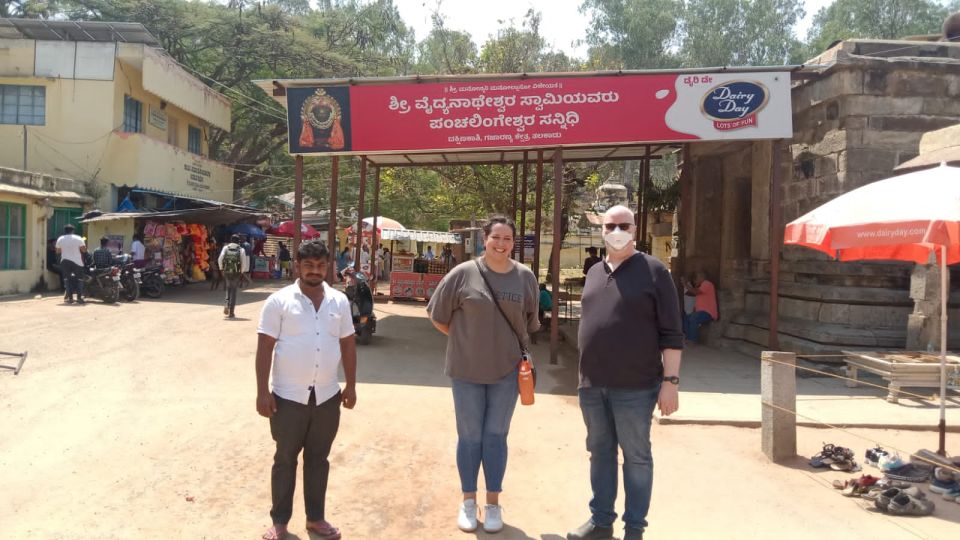
This is a temple-focused day trip that works best if you like stone craftsmanship and stories that come with physical places. Talakadu gives you the drama: sand dunes, lost temples, and the claim that something about the earth itself behaves oddly. Somnathpur gives you the precision: tightly planned shrine areas and sculptural detail you’ll keep noticing even after you’ve moved on.
I like that the itinerary is not just a checklist of “see temple, take photo, leave.” It’s built around contrasts: excavated temples at Talakadu versus the highly designed Chennakesava temple at Somnathpur. You get the sense that Karnataka’s temple culture isn’t one style. It changes by period, politics, and patronage.
You can also read our reviews of more tours and experiences in Bangalore

Starting 7:30 AM From Bangalore: The Drive Time and How to Prep
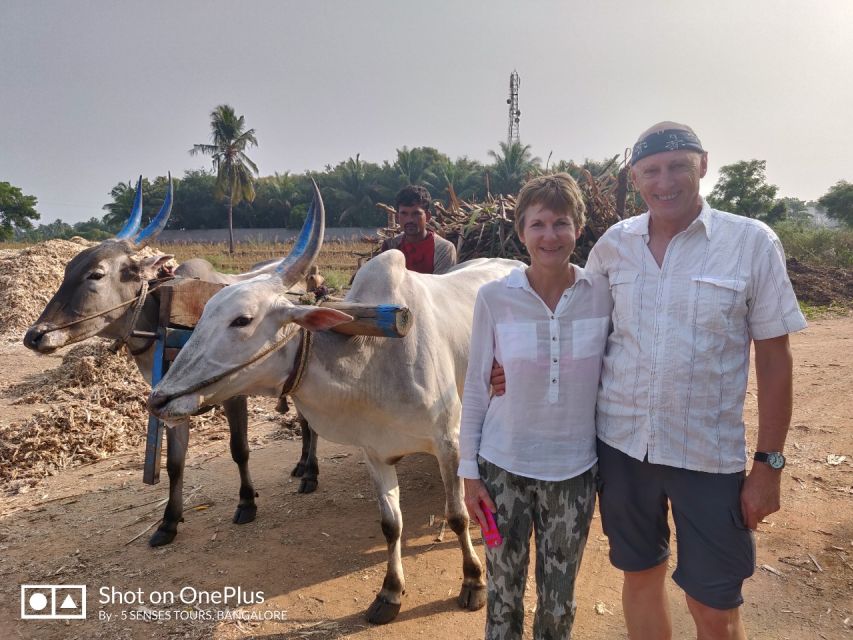
You leave Bangalore at 7:30 am and drive toward Talakadu, about 130 km away. That early departure matters. You’ll want daylight for temple interiors and carvings, and you’ll also want to beat the worst heat if you’re traveling during hotter months.
Prep is simple and practical:
- Wear light, breathable layers that still match the dress code (more on that later).
- Carry water and a small snack, even if lunch is included, because temple visits can stretch longer than you expect.
- If you’re serious about photos, aim for steadier light in the morning and save your last interior shots for the part of the day when your eyes adjust.
A private group also changes your experience. You can move at a human pace instead of feeling shuffled. You’re less likely to miss the guide’s explanations when there’s a pause for questions or you want a second look at a carving.
Talakadu’s Sand-Temple Story and the 5 Sites Worth the Detour
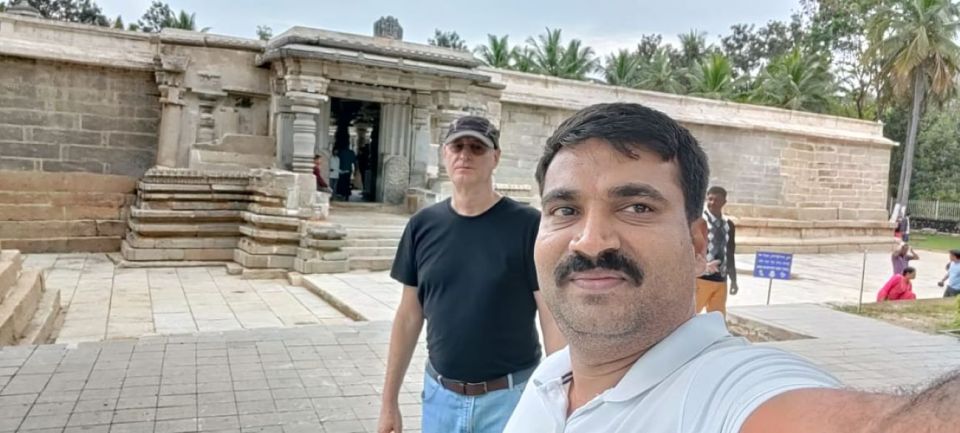
Talakadu used to be a thriving town with more than 30 temples. The legend says a queen’s curse buried the entire place under sand dunes. Whether you treat it as myth or historical memory, the effect is real: today, you can find a cluster of temples that were excavated from sand over time.
This is what makes Talakadu different from many temple visits in India. You’re not just seeing sacred buildings. You’re seeing what survival looks like after the landscape changes. The story of lost and recovered temples gives you context for why these sites matter so much.
On this trip, you’ll specifically visit temples from the set of five spectacular sand-excavated temples. Not all of those five are described in the itinerary details you’re given, but you’ll definitely focus on key stops such as Vaidyanatheswara and Pataleshwara, plus Keertinarayana later.
What to notice in Talakadu
Look for the mix of granite and older forms that feel heavy and enduring. Then look for how the temples relate to their surroundings. Even if you don’t fully grasp the geology or the legends right away, you’ll start feeling the theme: the earth and belief are tied together here.
Vaidyanatheswara, Pataleshwara, and Keertinarayana: What You Should Notice
Talakadu temple time is where the tour gets most vivid, because each stop offers a different visual and narrative hook.
You can also read our reviews of more tours and experiences in Bangalore


Vaidyanatheswara Temple (one of the sand-excavated five)
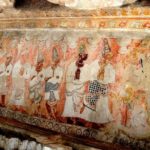
You’ll start with Vaidyanatheswara Temple, one of the five temples excavated from Talakadu’s sand. This kind of site has a particular emotional pull. Stone that reappeared after being buried feels less like a monument you pass by and more like a discovery.
What I like is that Vaidyanatheswara sets a baseline: you see the granite massing and the older devotional intent before moving to more specific claims and more famous architectural styles.
Pataleshwara Shiva Temple and the color-shifting lingam legend
Next is Pataleshwara Shiva Temple. Here’s the headline detail: the lingam is supposed to change colors through the day—from red, black, and white.
I treat this as a blend of belief, observation, and lighting effects. Even if the change is explained through stone properties or day-time conditions, the point is that the site is designed to be experienced over time. You’re encouraged to look, wait, and notice rather than just rush in for one quick snapshot.
If you’re someone who likes practical viewing—watching how things change with angle and light—this stop will reward you.
Keertinarayana Temple: Hoysala style and a 2 meter main deity
Then you’ll move to Keertinarayana Temple, built using black granite and bricks. This temple is a standout example of Hoysala style architecture, and it was built to commemorate King Vishnuvardhan’s victory over the Cholas.
The detail that makes Keertinarayana memorable is the scale of its devotional focus: the main deity is about 2 meters tall. That’s not a minor feature. It changes your posture and your sense of space. Instead of feeling like you’re looking at a small shrine object, you feel like the temple’s design is built around a large, central presence.
A quick reality check
Talakadu is not a place you visit only for one perfect photo. It’s a place you visit to learn how temple culture can attach meaning to both people and landforms. If that’s your thing, you’ll enjoy it a lot.
Chennakesava Temple at Somnathpur: Stone Craft, Banana-Flower Ceilings
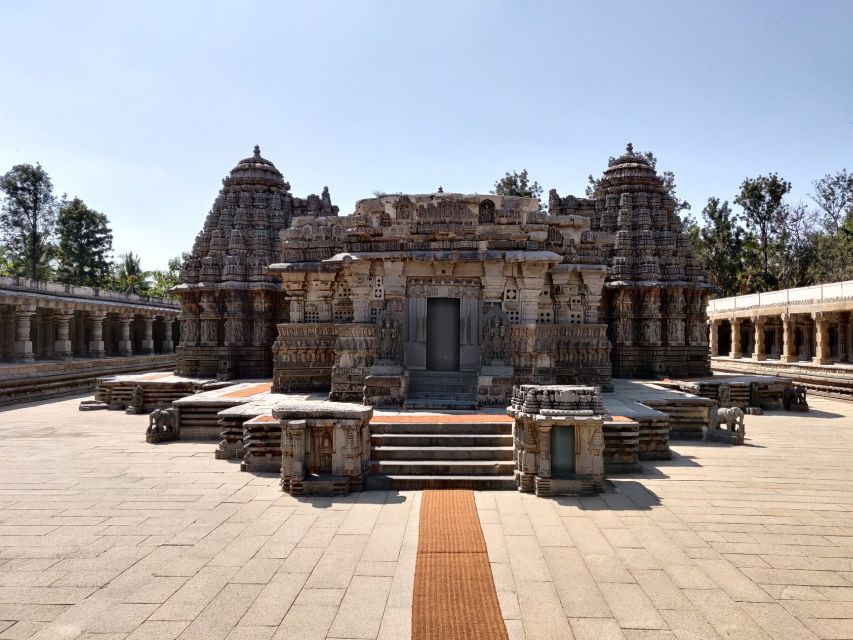
After Talakadu, you shift to Somnathpur, home to the famous Chennakesava Temple. This is the kind of stop that makes you slow down, because the design is packed with intentional detail.
Chennakesava was built in 1268 by Somanatha, a general of King Narasimha III. That matters because it ties the temple to a specific political and personal world, not just a vague idea of medieval devotion. You’re seeing one group’s vision made stone-true.
The soapstone vibe and the star-shaped pedestal
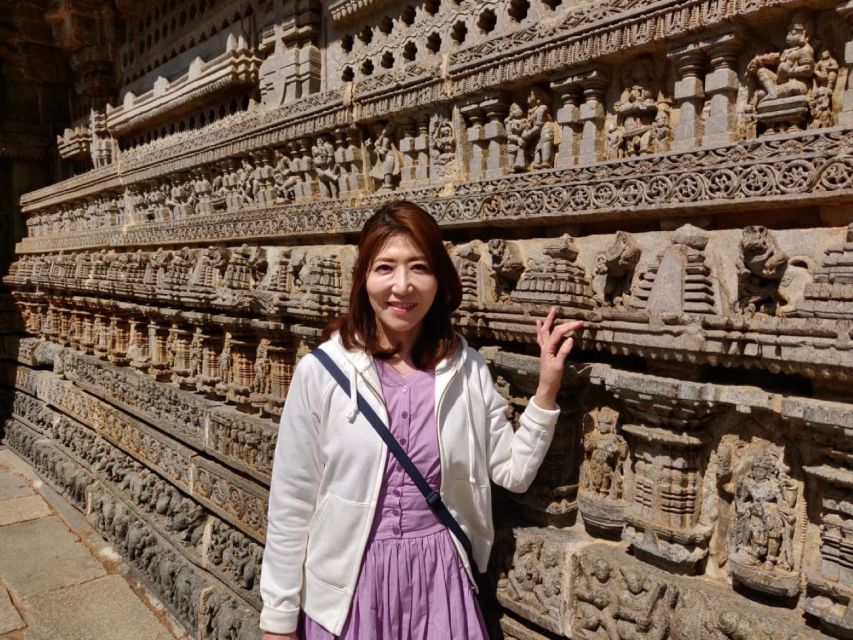
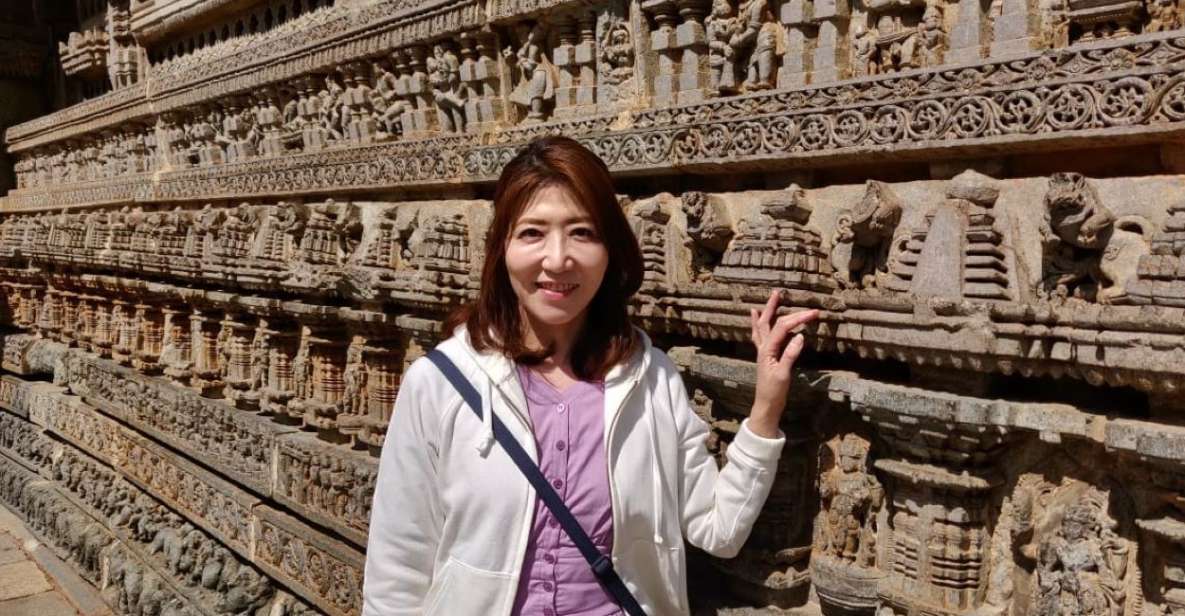
Somnathpur’s highlight is often described as a 13th-century soapstone temple set on a star-shaped pedestal. That base style isn’t just decoration. It’s a clue that this complex was planned with both symbolism and geometry in mind.
If you’re used to modern concrete temples, this kind of craftsmanship can feel like a different species entirely. The stonework reads differently, and you can often spot how old artisans planned for shadow, depth, and long-lasting texture.
Three shrines, three carved peaks, one shared mandapa
You’ll explore the temple’s three shrines and three wonderfully carved peaks that share a common mandapa. That layout helps you understand how the complex is meant to guide movement and attention.
Instead of one single doorway moment, you get repeated visual beats. You keep turning, and the story keeps adjusting to your angle.
The 16 ceilings and the banana-flower theme
The most specific and fascinating detail here is the ceiling work. You’ll spend time appreciating 16 different ceilings, each depicting a stage of a blooming banana flower.
This is exactly the kind of detail you’ll miss if you only do a fast walk-through. Take your time here. The point of those ceilings is not just decoration. It’s a devotional sense of time and life cycles, translated into stone pattern and form.
Central wall figures with jewelry and ornaments
The central wall space is also decorated with images of deities adorned with jewelry, bangles, crowns, and anklets. When you see the ornamentation clearly, it adds a layer of realism to the iconography. It stops being only symbols and starts feeling like costumes for the divine.
If you like art that’s equal parts theology and design, you’ll enjoy these stops more than you expect.
The English Live Guide and Private Group Pace
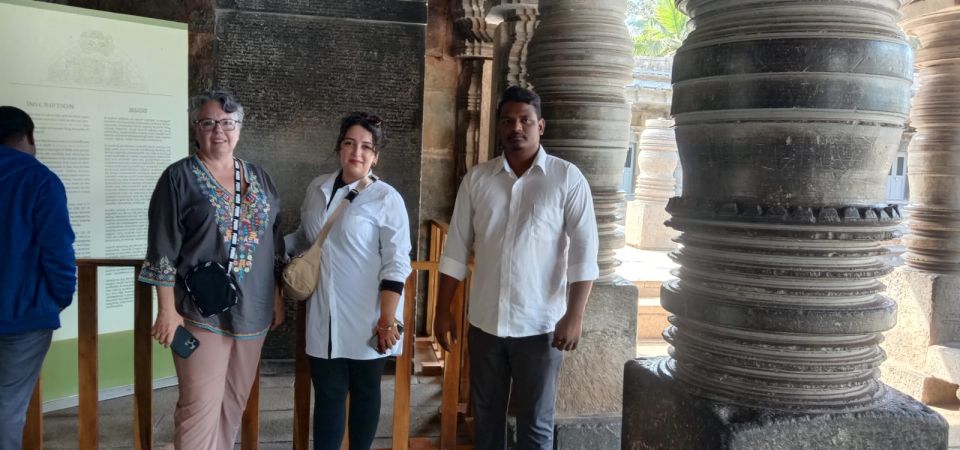
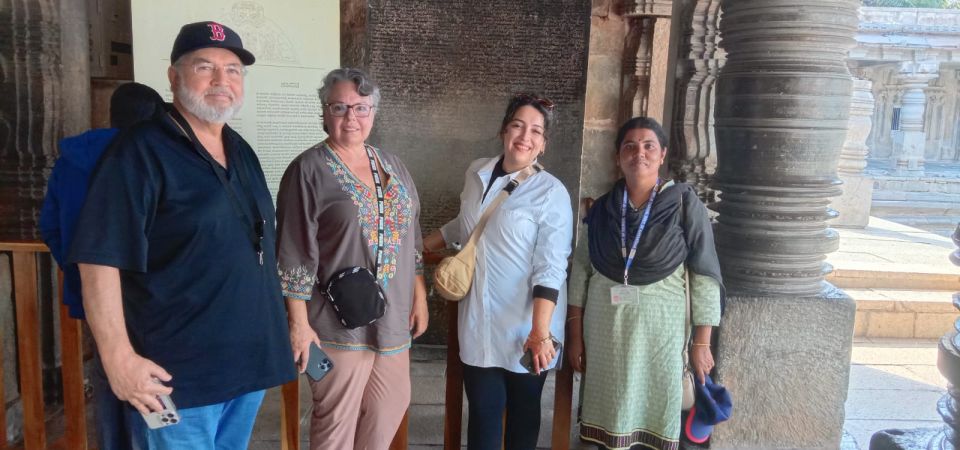
This tour uses a live tour guide in English and runs as a private group. That combination is a big deal because temple architecture can feel confusing if you don’t have someone to point out what matters.
The guide doesn’t just recite dates. The value here is in connecting the stone features to the story: why these temples were built, why Talakadu is tied to sand and legends, and what the key architectural choices at Somnathpur are trying to communicate.
In a private setting, questions don’t feel like an interruption. You can ask for clarification when you’re staring at carvings and trying to understand what you’re seeing.
Price and Value: Is $129 per Person Worth It?
At $129 per person for about 8 hours, the price looks fair when you factor in three things.
First, you’re doing two major temple clusters in one day: Talakadu and Somnathpur. That’s not a small commute. You’re starting with a 130 km drive to Talakadu alone, and then you’re continuing onward to Somnathpur.
Second, you’re getting a live English guide who explains what you’re looking at. For temples like these, that guidance tends to multiply your enjoyment. If you’re the type who likes reading stone like a language, the guide time pays off quickly.
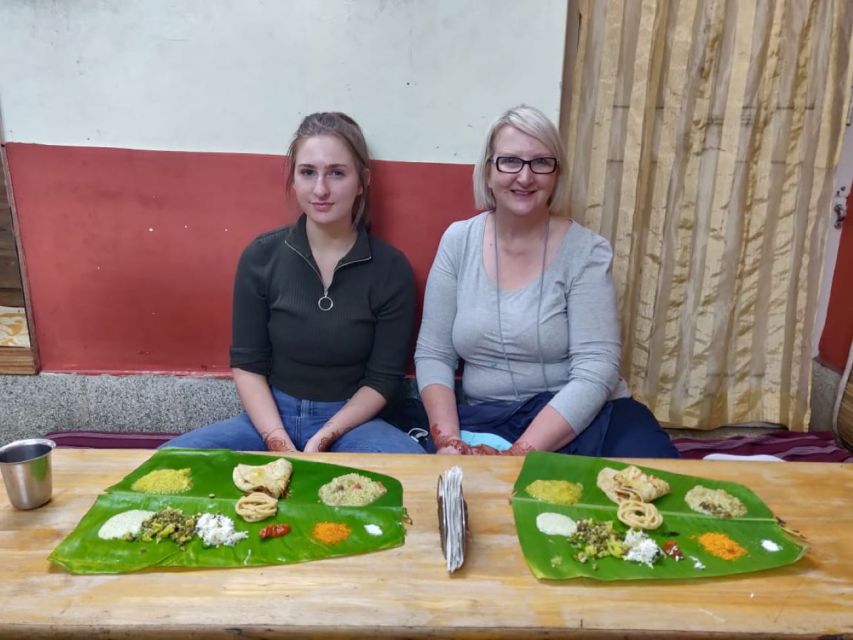
Third, the trip includes lunch, which matters on an early-start day. It keeps the day from turning into a frantic hunt for food between temples.
If you’re traveling with someone who is less excited about temples, a private guide still helps. It gives you a way to keep the day meaningful without turning it into long, silent sightseeing.
Practical Tips: Clothing, Timing, and Photo Strategy
The tour has a straightforward dress rule: no shorts, no short skirts, and no sleeveless shirts. Plan your outfit around that. In practice, you’ll be happiest with lightweight long pants or a long skirt, plus a shirt with sleeves.
For the rest, think like this:
- Bring a hat or cap for sun.
- Keep water handy.
- Expect temple floors and stairs, so wear comfortable footwear.
- If you care about interior photos, do a quick test before spending too much time on gear. Some areas won’t give you the angle you want, and the guide will usually help you choose where it’s worth trying.
Talakadu’s experience is also tied to time of day because of the Pataleshwara color-changing claim. You can’t fully control lighting, but you can control whether you rush. Slow down at that lingam stop.
Who This Day Trip Fits Best (and Who Might Want Something Different)
This is a great fit if you:
- enjoy temple architecture and want the guide help to make sense of details
- like mythology that connects directly to place, not only text
- want a guided day trip that covers two distinct temple worlds efficiently
It may be less ideal if you:
- hate early mornings and long drives
- prefer lounging more than walking and looking
- are not comfortable following basic temple dress rules
The sweet spot is someone who wants a concentrated cultural day without turning it into a stress-fest.
Should You Book This Talakadu and Somnathpur Day Trip?
If you want a day that feels focused, this booking is a strong candidate. You’ll start with Talakadu’s sand-buried temple story, including Pataleshwara’s color-changing lingam legend and Keertinarayana’s Hoysala-style presence with a large central deity. Then you’ll finish at Somnathpur to see Chennakesava Temple’s design logic, including the banana-flower ceiling theme.
Book it if stonework and guided interpretation are your kind of travel. Consider it twice only if the early 7:30 am start or the dress code is a problem for you.
FAQ
How long is the trip?
The duration is 8 hours.
What time does the day trip leave Bangalore?
The trip departs Bangalore at 7:30 am.
Where does the tour go during the day?
It includes visits to Talakadu and Somnathpur, focusing on their main temples.
Which temples are visited at Talakadu?
You visit Vaidyanatheswara Temple, Pataleshwara Shiva Temple, and Keertinarayana Temple.
What is special about Pataleshwara Shiva Temple?
The lingam is supposed to change colors through the day, described as red, black, and white.
Who leads the tour?
You’ll have a live tour guide who speaks English.
Is this a private group tour?
Yes, it’s listed as a private group.
What clothing is not allowed?
Shorts, short skirts, and sleeveless shirts are not allowed.
Can I cancel and get a refund?
Yes. Free cancellation is available up to 24 hours in advance for a full refund.