REVIEW · MADURAI
Vannakam Madurai – Explore Madurai like a local
Book on GetYourGuide →Operated by Chuttibaaz · Bookable on GetYourGuide
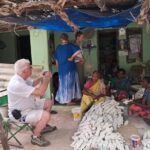
Rice lines on the street start the morning right. This 4-hour private Madurai tour blends hands-on Kolam drawing with cow milking, local market stops, flower garland making, and a finish with piping hot South Indian filter coffee. I like the way it feels practical and grounded, not staged. One heads-up: you’ll do some walking, and temple stop moments can mean shoe rules—plan your footwear and clothing accordingly.
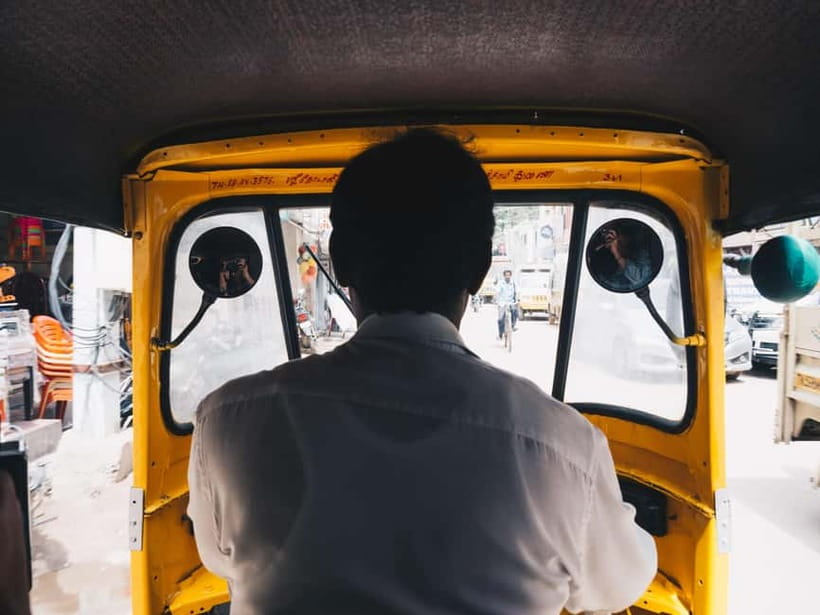
What makes it especially worth your time is the small, local details. In at least some runs, the guide name Dhanabalan shows up with extra context, like how to handle temple etiquette and what to offer if you want to participate respectfully (including the chance to learn when to ask about the temple elephant). You also get an English-speaking guide, hotel/airport/rail pickup, and a tuk-tuk ride to keep things easy.
In This Review
- Key things that make this Madurai tour click
- Kolam drawing: street-art patterns with meaning
- Cow milking: a peaceful look at rural rhythm
- Madurai markets: vegetables, bananas, and real buying habits
- Flower stringing and garlands: learning with fragrant hands
- Temple moments and respectful choices with Dhanabalan
- Filter coffee finish: the taste test you’ll remember
- Price and value: what $77 buys you in real time
- Who should book this, and who should skip it
- Before you go: what to bring and what to leave out
- Should you book Vannakam Madurai?
- FAQ
- How long is the Vannakam Madurai tour?
- Where do you get picked up from, and how is transportation handled?
- Is the tour private, and is there an English-speaking guide?
- What activities are included in the tour?
- Do I need to remove my shoes during the tour?
- What should I bring?
- Is the tour suitable for everyone?
Key things that make this Madurai tour click
- Kolam drawing practice right where people actually do it, with guidance on the meaning behind the patterns
- Cow milking with local farmers, focused on how cattle fit into daily life and practice
- Vegetable and banana market walks so you see what locals buy and why
- Flower stringing and garland making using fragrant blooms you’ll later see in temple and home use
- Filter coffee tasting at the end, so you cap the tour with something you can taste, not just watch
Kolam drawing: street-art patterns with meaning
Kolam is one of those traditions that looks simple until you try it. The tour starts with the chance to watch local women create intricate floor patterns, usually with rice flour (or chalk, depending on the setup). Then you get to try making your own lines and loops, with a guide explaining what the practice represents in everyday life.
Why this part matters for your trip: you’re not just collecting photos of “culture.” You’re learning the logic of the design—how careful placement and repetition create the pattern. It’s also a quick way to understand how Tamil Nadu expresses spirituality through daily routines. If you’re the kind of traveler who likes seeing how people live, not just where they go, this is a strong start.
Practical note: wear comfortable clothes and shoes you can manage easily. You might be standing for periods, and you’ll likely be near low-level surfaces while drawing.
You can also read our reviews of more tours and experiences in Madurai.
Cow milking: a peaceful look at rural rhythm
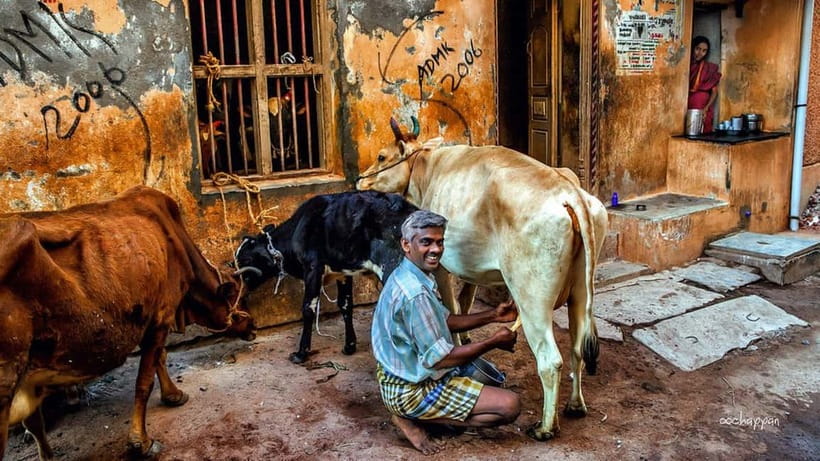
Next up is a cow milking session with local farmers. This is less about spectacle and more about role and routine—how cattle support farming and how they show up in religious customs. If you’ve only seen cows from a distance, this gives you a closer understanding of why cattle matter beyond food.
What you’ll likely take away is the respect behind the work. Even if you don’t know the Tamil words, you can pick up the practical steps and the calm pace. It’s also a good contrast with the market stops later, because it anchors the tour in the agricultural side of South Indian life.
Consideration: this is a rural-feeling moment. You may smell what farmers smell, and you might have dust or farm-floor contact. Bring a camera if you want, but keep your expectations human: you’re a learner here, not an onlooker to be entertained.
Madurai markets: vegetables, bananas, and real buying habits
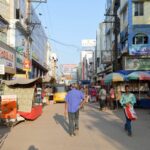
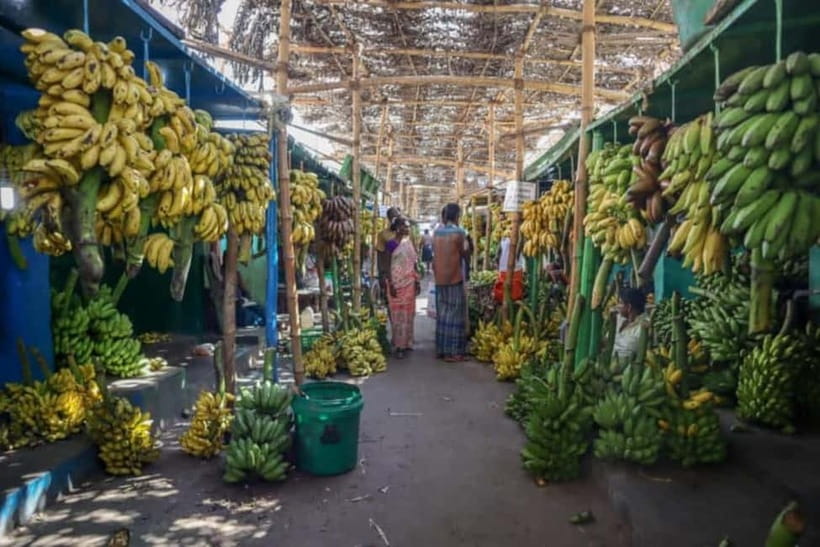
After the hands-on tradition time, the tour turns into a walk through local markets. First comes the vegetable market—colors, aromas, and the daily decisions behind what ends up on plates. You’ll stroll alongside vendors, learn about seasonal produce, and get context for how ingredients show up in everyday South Indian cooking.
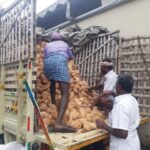
Then there’s a banana market stop. Madurai is known for bananas, and this visit is more fun than you’d expect. You’ll see different types, and the guide shares how they’re grown and harvested, plus why they’re important in local meals and festivals. It’s one of those stops that turns a common fruit into a cultural clue.
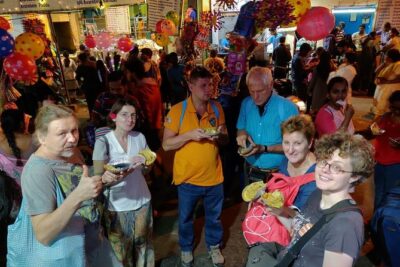
Why this is valuable: markets can be chaotic if you wander alone. With a guide, you learn what to notice. Are people buying for breakfast or ceremonies? Are certain items in season right now? You’ll start connecting the dots between the religious and the practical—exactly what makes a local-style morning work.
Small drawback to plan for: markets mean movement and crowds. If you’re sensitive to noise or tight space, this part may feel busy. Still, that’s also the point. You’re seeing how locals shop when they’re not thinking about tourists.
Flower stringing and garlands: learning with fragrant hands
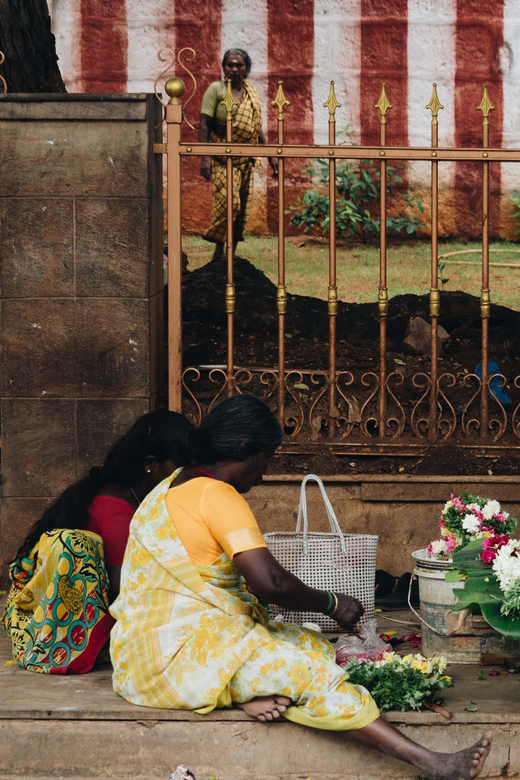
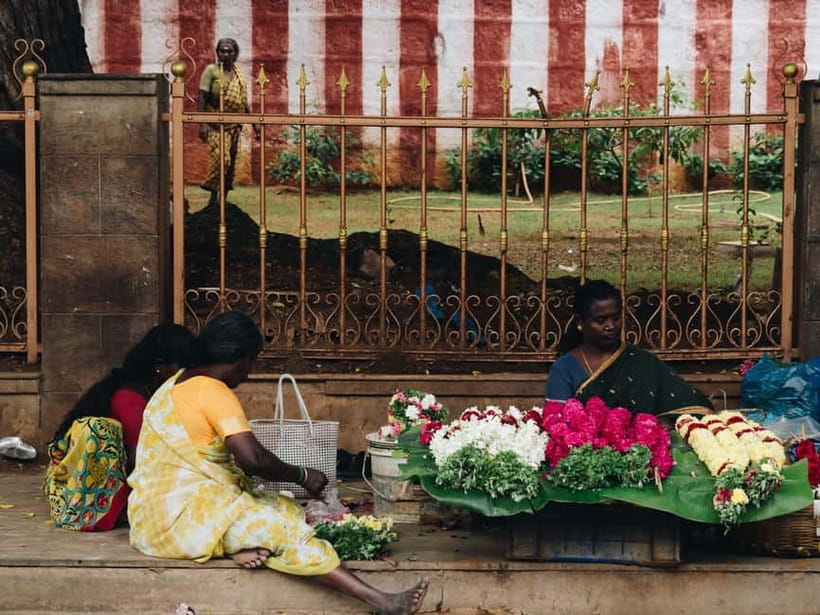
Then comes flower stringing—turning fresh blossoms into garlands using traditional methods. The flowers you’ll work with often include jasmine and marigolds (and other fragrant blooms, depending on what’s available). You’ll get guidance from locals on how to handle the flowers and create a wearable or temple-ready string.
This is one of the best “hands-on” segments because the finished product has instant meaning. You’re not just watching; you’re making something that belongs in temples, homes, and ceremonies across South India. And because the materials smell so good, it sticks in your memory longer than another market photo.
Practical tip: keep your hands clean-ish. You don’t need to overthink it, but plan for gentle mess. Also, if you’re heading to other parts of the city afterward, consider how you’ll carry your garland without crushing it.
Temple moments and respectful choices with Dhanabalan
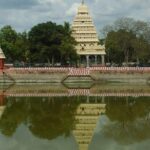
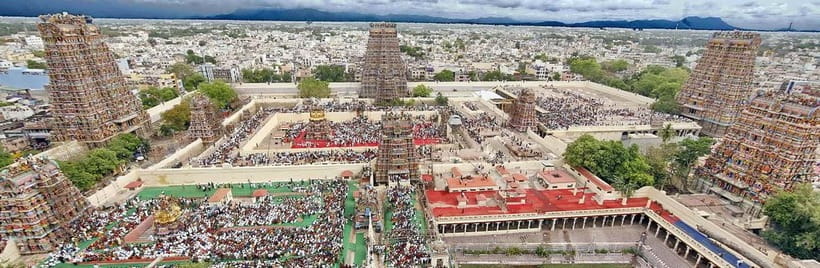
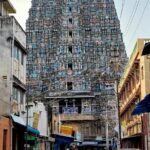
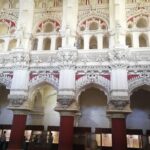
Even though the core flow focuses on Kolam, milking, and markets, the experience can include a temple stop. In one standout review, the guide Dhanabalan helped make temple etiquette straightforward—what to offer and how to do it correctly for Ganesh. That kind of guidance matters. If you don’t know the rules, you can easily feel awkward or accidentally do the wrong thing.
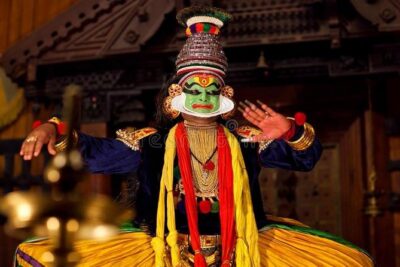
That same review also mentions a chance to see a traditional dance inside the temple. Another helpful detail: ask the guide when to look for the temple elephant. Timing can matter, and a local guide is the person who knows what’s possible that day.
What to prepare: the tour info is clear about dress and shoe rules. You’ll need to remove shoes when entering a temple, church, or mosque. Plan on modest clothing and respect local customs.

Filter coffee finish: the taste test you’ll remember
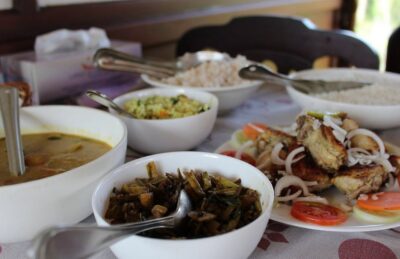
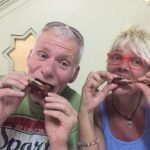
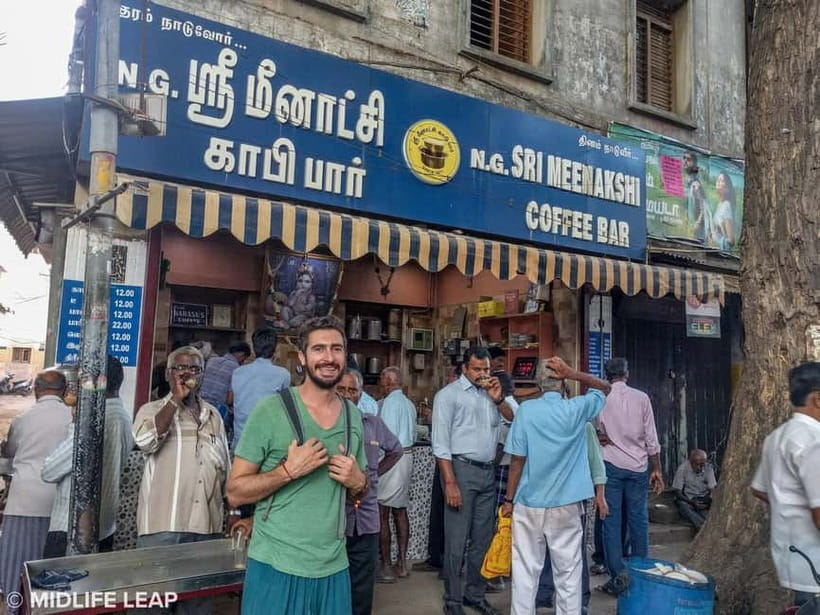
You wrap up with a visit to a local coffee house for South Indian filter coffee. This is not the instant-bag version. You’ll get the chance to sip freshly brewed filter coffee, served piping hot.
Why end here: it’s a clean reset after hands-on morning walking. It also turns the trip into something sensory that lasts. If you’re traveling with food curiosity, you’ll appreciate the chance to compare what you taste in one place versus another back home.
What you can do with this stop: take a few minutes to slow down and ask your guide what to expect in the flavors, like how milk and strength are balanced. You can also ask how locals normally drink it, but don’t expect a lecture—just enough to help you taste with intention.
Price and value: what $77 buys you in real time
At about $77 per person for roughly 4 hours, the price can feel high or fair depending on how you travel.
Here’s what’s included that affects value:
- A guided walking tour (about 3 hours) with cultural context
- Hotel/airport/rail pickup and drop-off by tuk tuk
- Kolam drawing and cow milking experiences
- Market visits with vendor interaction
- Flower garland making activity
- Filter coffee tasting
- English-speaking local guide and local taxes/service fees
If you tried to recreate this alone, you’d pay for a driver, guide time, and entry moments, plus you’d still be guessing about what’s appropriate in temples and how to approach farm activities. The biggest value is the guidance that helps you do the experiences correctly and respectfully, not just watch them.
Balance check: with only three reviews in total and an average rating of 3.3, this isn’t a “everyone will love it” situation. But the praise that shows up repeatedly focuses on guide support and on-the-ground cultural clarity—exactly the areas that make this tour worth it when you get a great guide.
Who should book this, and who should skip it
This tour is a strong match if you:
- like cultural mornings built around daily life
- want hands-on activities (drawing, stringing, milking)
- enjoy markets but want help understanding what you’re seeing
- care about etiquette, especially around temple participation
It’s likely not the best choice if:
- you’re pregnant (not suitable per tour details)
- you’re very elderly (not suitable for people over 95)
- you dislike walking in crowded market areas
- you’re uncomfortable with shoe removal and modest dress expectations
Before you go: what to bring and what to leave out
Bring:
- your passport or ID card
- a camera
- comfortable clothes
- cash
Be ready for shoe rules at religious sites. Dress moderately and respect local customs.
Leave out:
- pets
- smoking in the vehicle
- alcohol and drugs
- drinks in the vehicle
- tight clothing
No fireworks or explosives are mentioned, and of course keep things normal and respectful around people’s daily spaces.
Should you book Vannakam Madurai?
I’d book it if you want a Madurai morning that’s specific and active: Kolam practice, a cow milking window into rural rhythm, and market context that turns produce into a story. I’d also lean toward it if you appreciate a guide who can help you participate appropriately—especially if temple moments are included in your day.
I would skip it if you want a relaxed, sit-mostly tour. This experience is designed for walking, hands-on participation, and close-up cultural contact. And if you’re not comfortable with shoe removal and modest dress rules, you may end up focusing on the rules instead of the learning.
If you can handle that, this is a nice way to feel like you spent your morning with locals, not just through sights.
FAQ
How long is the Vannakam Madurai tour?
The tour lasts 4 hours.
Where do you get picked up from, and how is transportation handled?
You can be picked up from your hotel, the airport, or the railway station, and you’ll use a tuk tuk. Pickup is included, and you return to Madurai at the end.
Is the tour private, and is there an English-speaking guide?
Yes, it’s a private group. The guide is live and English-speaking.
What activities are included in the tour?
Kolam drawing, cow milking, market visits (including vegetables and bananas), flower garland making, and filter coffee tasting are included.
Do I need to remove my shoes during the tour?
Yes. You need to remove shoes when entering a temple, church, or mosque.
What should I bring?
Bring your passport or ID card, a camera, comfortable clothes, and cash.
Is the tour suitable for everyone?
No. It is not suitable for pregnant women, and it’s also not suitable for people over 95 years.