REVIEW · BANGALORE
A Spiritual Day Trip to Vidurashwatha, Lepakshi & Adiyogi Statue
Book on Viator →Operated by Bangalore and Beyond · Bookable on Viator
A day of stone, snake statues, and big ideas. This spiritual circuit packs three major stops into one long day, connecting Shiva’s presence, serpent worship at Vidurashwatha, and the sculpted mastery of Lepakshi. The best part is how the route turns temples into living stories, not just photos, especially with an English tour guide keeping everything clear and human.
I really like the sensory contrast: one minute you’re facing Adiyogi’s massive, outdoors-in-nature scale, and the next you’re stepping into a place filled with tens of thousands of cobra images at Vidurashwatha. I also love that the day doesn’t just chase famous monuments; it includes a memorial on the grounds, linked to the 1938 protest where 32 Indians were killed by the British.
One drawback to plan for: you’ll remove footwear multiple times, and the temples expect covered legs and shoulders. If you don’t come prepared with the right clothes and spare socks, the day can feel like a chore instead of a calm spiritual journey.
In This Review
- Key Highlights to Plan For
- How This 10–11 Hour Spiritual Circuit Really Works
- Morning Logistics: Pickup, Timing, and the Footwear Reality
- Stop 1: Adiyogi Shiva Statue at Chikkaballapur
- What to watch for
- Possible drawback
- Stop 2: Sri Vidurashwatha Temple and the Cobra Forest Effect
- The history you can’t ignore
- A guide makes a difference here
- Possible drawback
- Stop 3: Lepakshi’s Vijayanagara-Era Veerabhadra Swamy Temple
- Why Lepakshi matters
- Possible drawback
- Lunch Break: Modest South Indian Vegetarian and a Real Reset
- Price and Value: Is $135.99 Worth It?
- What I’d Do Differently Next Time
- Should You Book This Day Trip?
- FAQ
- How long is the day trip?
- What time does the tour start?
- Where do we meet and where does it end?
- Is pickup included?
- Is lunch included?
- Are entry fees included?
- Is an English guide included?
- What should I wear or bring for the temples?
- Is this tour private?
- Is cancellation free?
Key Highlights to Plan For
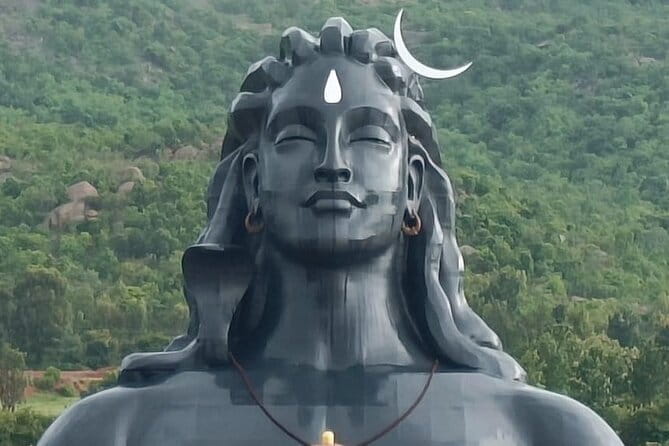
- Adiyogi’s scale in real life: the largest Shiva bust statue in the world, set in nature and built for visual impact.
- Vidurashwatha’s cobra-forest effect: tens of thousands of snake (cobra) statues give the place a surreal feel.
- More than mythology at Vidurashwatha: a memorial on-site connects the spiritual space with real 1938 history.
- Lepakshi’s sculpted stonework: Vijayanagara-era temple art with a style people often compare to Hampi.
- A guide that explains meanings: several guides on this route are praised for making the symbolism understandable, not preachy.
- Footwear and clothing rules: expect repeated shoe removal and plan to bring spare socks.
How This 10–11 Hour Spiritual Circuit Really Works
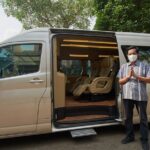
This is a full-day outing that starts early at 7:30 am from Mahatma Gandhi Road in Shivajinagar (Bengaluru). You’ll get picked up and brought back to the same meeting point, and you’ll move in a private group with an air-conditioned car. Total time on the clock is about 10–11 hours, which is long, but the structure matters: you’re not sprinting between random sights. You’re doing three spiritual stops that connect thematically, so the drive time feels like part of the story rather than downtime you didn’t plan for.
The pace is also “guided-first.” You’re given English interpretation and time inside each site, plus entry fees are included. That combination matters because temple architecture and iconography can be intimidating if you’re reading it alone. With the guide’s help, you spend your attention on the meanings, the motifs, and the reasons these places earned devotion over generations.
Finally, there’s a practical reality to acknowledge: this day lives or dies by comfort. You’ll be sitting in transit for a good chunk of the morning and afternoon, and you’ll do repeated shoe removal at active temples. If you’re the type who travels with good footwear habits and light layers that cover your body, you’ll glide through this day. If you show up with sandals you love but no backup socks, you may spend more time dealing with feet than temples.
You can also read our reviews of more tours and experiences in Bangalore

Morning Logistics: Pickup, Timing, and the Footwear Reality
The tour starts at 7:30 am at Mahatma Gandhi Road, Shivajinagar. From there it’s direct travel to the first major temple stop, with scheduled time for the sites afterward. Expect a long day, but it’s organized: time at each location is included, and you don’t have to negotiate anything on the ground.
Now, the big practical tip: plan your outfit like a temple day, not a city day. You’re visiting active temples, so you should cover your legs and shoulders. And yes, you’ll need to remove footwear before visiting all three temple areas. The tour guidance specifically recommends sandals because they’re easier to take off and put back on multiple times.
Bring spare socks. Seriously. If your shoes come off three times, socks become the difference between feeling fresh and feeling grumpy by mid-afternoon. This is the kind of detail that sounds minor until you’re standing barefoot longer than you expected.
Stop 1: Adiyogi Shiva Statue at Chikkaballapur
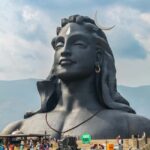
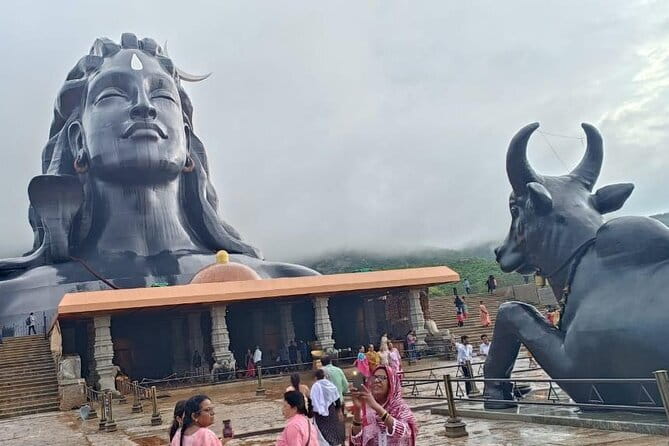
Adiyogi is the opening act, and it’s a strong one. This is a massive Shiva statue set in the lap of nature, about 70 km from Bangalore, and it’s known for being the largest bust statue of Shiva in the world. When you first see it, the scale is the story. You don’t just look at the carving; you register the sheer presence of it in the landscape.
What I like here is how the site feels both monumental and approachable. You’re not just staring at stone details; you’re absorbing an atmosphere designed for reverence. The tour also includes admission, and the time at the site is long enough to do more than walk in, snap a photo, and rush out.
What to watch for
The value of this stop is less about checklist items and more about context. With an English guide explaining symbolism, you’re better able to connect Adiyogi to what you’ll see later: serpent worship at Vidurashwatha and the sculptural storytelling style at Lepakshi. It’s like setting the spiritual “key” before the music starts.
Possible drawback
Because this is an outdoor, high-impact visual site, if you’re sensitive to heat or glare, you’ll want comfortable sun habits. The tour runs in daylight, and you’re likely to be outside for part of your visit.




Stop 2: Sri Vidurashwatha Temple and the Cobra Forest Effect
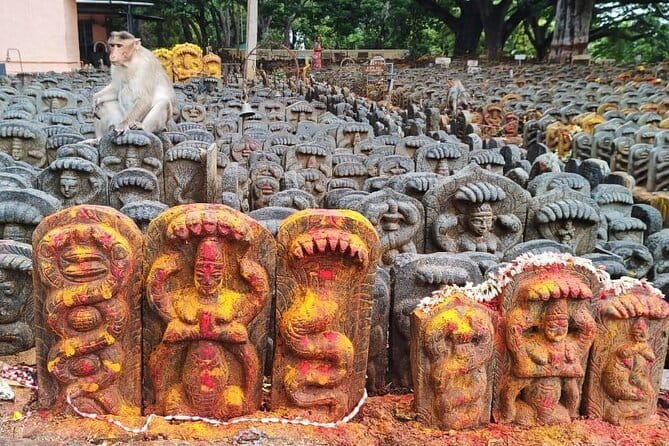
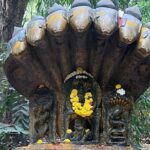
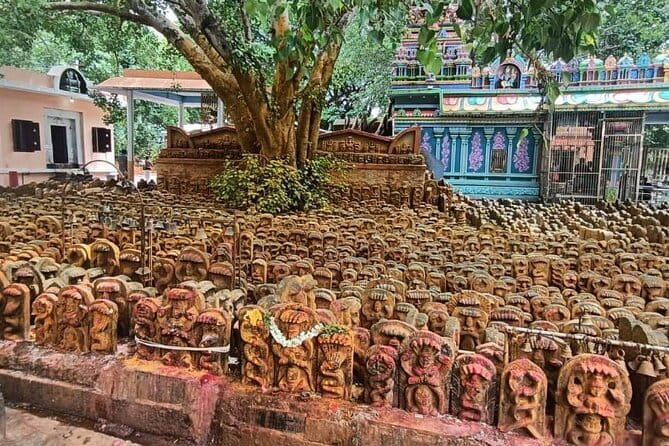
After Adiyogi, the tour heads toward Vidurashwatha, often described as a place that feels mystical and almost surreal. This is where you’ll meet the Snake Temple experience: tens of thousands of cobra statues (serpent imagery) populate the space, creating a visual effect like you’ve stepped into a living myth.
Here’s what makes this stop stand out in a meaningful way: you’re not just seeing one statue or one shrine. The place has a whole environment dedicated to snake divinities and related themes. That makes your visit more immersive than typical temple stops, because your eyes keep finding new patterns—faces, forms, and repeating motifs.
The history you can’t ignore
Also on the grounds is a memorial connected to a real event: in 1938, 32 Indians were killed by the British during a protest. That adds weight to the spiritual setting. It gives you a chance to reflect on how belief and community have lived through politics and violence, not in isolation from history.
A guide makes a difference here
One of the most praised aspects of this day is the explanation quality. Guides like Phaneesh, Raghu, and Vasuki (and their assistants on some groups) are specifically noted for making the meanings easier to grasp and more emotional in a good way. You’ll get more from the cobra imagery when someone connects the symbolism to the cultural context instead of letting you guess.
Possible drawback
This stop can be visually intense. If you prefer calm, spacious sightseeing over repetition and close iconography, you’ll need a bit of mental pacing. I’d treat this like a meditation moment: slow down, look longer, then step out when you feel saturated.
Stop 3: Lepakshi’s Vijayanagara-Era Veerabhadra Swamy Temple
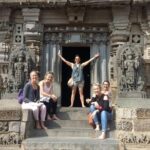
Lepakshi is where the day shifts from serpent worship to sculpted storytelling. You’ll visit the Vijayanagara era Shri Veerabhadra Swamy Temple, and the stonework here is the main attraction. The sculptures are often compared to Hampi, which is a big clue: expect impressive stone carving density and a feeling of craftsmanship that took generations of effort.
Why Lepakshi matters
This is a temple where the architecture and sculpture are doing the speaking. You’re looking at figures and forms that were designed for devotion, but also for legibility—visual cues meant to guide your attention. With a good guide, you’re not just admiring the carvings; you’re understanding what they represent and why this style became influential.
The stop includes admission and plenty of time, so you can actually move around at a sensible pace. That matters because Lepakshi is the kind of place where you can lose track of time if you’re rushed. Better to give it the time it demands.
Possible drawback
This is the third temple of the day, which means you’re likely dealing with cumulative fatigue—plus you’ll keep your footwear routine going. If you planned your socks and clothing well, Lepakshi feels like a satisfying payoff. If you didn’t, it can feel exhausting instead of inspiring.
Lunch Break: Modest South Indian Vegetarian and a Real Reset
Lunch is included and described as a modest South Indian vegetarian meal. That’s exactly the kind of inclusion you want on a long temple day. You don’t need to negotiate food options mid-route, and you won’t waste time hunting for something that matches your schedule.
Think of lunch as your energy reset, not a culinary quest. You’re going to spend the afternoon walking and standing in temple spaces, so a straightforward, familiar meal helps you keep your day moving.
If you’re someone who needs a lot of snacks in between meals, consider bringing a small backup plan (like tea biscuits or fruit) in your day bag. The tour includes lunch, but the day’s rhythm is still temple-and-transit heavy.
Price and Value: Is $135.99 Worth It?
At $135.99 per person, this isn’t a cheap impulse trip—but it also isn’t overpriced for what you get if you value guidance and convenience.
Here’s the practical value breakdown:
- Entry fees are included for all monuments.
- You get a private group setup with pickup and drop-off.
- You have an English tour guide, and the big reviews emphasize the quality of explanations.
- Lunch is included, plus the tour includes mobile tickets.
For this kind of day, the real cost isn’t only the transportation. It’s paying for someone to interpret what you’re seeing and to manage a smooth route so you can focus on the sites. If you tried to do this independently, you’d still pay for transport and tickets—and you’d likely spend more time figuring things out than appreciating the meaning.
So who gets the best value? You’ll probably feel it most if you:
- want English interpretation,
- don’t want to manage the logistics of multiple temple visits,
- enjoy symbolic art and spiritual context more than random sightseeing.
What I’d Do Differently Next Time
If I were optimizing this day for comfort and focus, I’d treat it like a “temple day kit” trip:
- Wear clothing that covers legs and shoulders without overheating.
- Use sandals that are easy to remove.
- Pack spare socks, because repeated shoe removal is part of the routine.
- Go in expecting a long drive and plan your energy for the full arc: Shiva (Adiyogi) → serpents and remembrance (Vidurashwatha) → sculpture and story (Lepakshi).
Also, I’d mentally switch your goal for the day. Don’t try to collect every visual detail. Instead, pick one “question” per stop—what the site is teaching, what the iconography means, and how it connects to the next place.
Should You Book This Day Trip?
Book this tour if you like spiritual sites with context and you want an organized route that saves you time and confusion. It’s especially worth it if you value explanation quality—this day’s standout strength is how the guide helps you read meaning in architecture, symbols, and iconography.
Skip it or rethink if you:
- hate repeated footwear removal,
- are easily overwhelmed by dense visual repetition,
- dislike long days with lots of transit.
If you show up prepared—covered clothing, sandals, and spare socks—you’ll get a satisfying, story-connected day rather than a checklist scramble. For many people from Bangalore looking for something deeper than standard city sightseeing, this is the kind of outing that makes the drive feel worth it.
FAQ
How long is the day trip?
It lasts about 10 to 11 hours.
What time does the tour start?
The tour starts at 7:30 am.
Where do we meet and where does it end?
You meet at Mahatma Gandhi Road, Shivajinagar, Bengaluru, Karnataka 560001, and the tour ends back at the meeting point.
Is pickup included?
Yes, pickup is offered.
Is lunch included?
Yes. Lunch is included and is a modest South Indian vegetarian meal.
Are entry fees included?
Yes, entry fees at all monuments are included.
Is an English guide included?
Yes, an English tour guide is included.
What should I wear or bring for the temples?
You should wear clothes that cover your legs and shoulders, since these are active temples. You’ll remove shoes before visiting the temple areas, so sandals are preferable and you should carry spare socks.
Is this tour private?
Yes, it’s private. Only your group participates.
Is cancellation free?
Yes. You can cancel up to 24 hours in advance for a full refund.