REVIEW · CHENNAI
British Architecture Walk in Chennai by Wonder tours
Book on Viator →Operated by Wonder tours · Bookable on Viator
Chennai’s British buildings tell fast, real stories. This 3-hour walk with Wonder tours connects you to the city’s colonial-era architecture—where Gothic Revival details and Indo–Saracenic flourishes sit side by side. You start near the city’s civic core and end at a major education landmark, with several stops that still function as working institutions.
I like two things a lot: the tight, walkable route (about 3 hours covering seven major sites) and the fact that admission tickets are included for the key buildings you visit, plus a local snack and coffee or tea. It’s the kind of tour where you don’t waste half the day figuring out what costs extra.
One thing to consider: hotel pickup and drop-off are not included, so you’ll want to be confident reaching the start point by public transportation and then staying on the walking schedule. If you prefer a car-first tour, this may feel like more effort than you want.
In This Review
- Key things to look forward to
- A 3-hour Chennai walk that focuses on buildings you can still use
- Starting at the Greater Chennai Corporation Office: a good launch point
- Ripon Building: colonial-era civic design tied to local self-rule
- Chennai Central Railway Station: Gothic Revival in a city that still moves
- Southern Railway Headquarters: Indo–Saracenic design and the 1921 finish
- Victory War Memorial and Fort St George: from WWI memory to Anglican roots
- Victory War Memorial
- Fort St George (and St Mary’s Church and the museum)
- Napier Bridge and the University of Madras: Chennai’s icons of movement and learning
- Napier Bridge
- University of Madras
- Price and value: what $49 buys you (and what it doesn’t)
- What guides do well here: clear explanations and friendly pacing
- Who this walking tour suits best
- Should you book this British Architecture Walk in Chennai?
- FAQ
- How long is the British Architecture Walk in Chennai?
- How much does it cost per person?
- Is this tour private?
- Where does the tour start?
- Where does the tour end?
- What’s included in the tour price?
- Are admission tickets included?
- Is hotel pickup and drop-off included?
- Are camera or video fees included?
- Is this booking refundable if I cancel?
Key things to look forward to

- A 3-hour circuit through seven standout British-era landmarks in Chennai
- Admission tickets included at every stop on the route
- Architecture lessons with real details, from designers’ names to build dates
- A local snack and coffee or tea included, so you’re not walking on an empty stomach
- Friendly, clear guiding associated with local guides like Rajesh and Nanda
- City icons with layers of meaning, from a WWI memorial to the University of Madras
A 3-hour Chennai walk that focuses on buildings you can still use
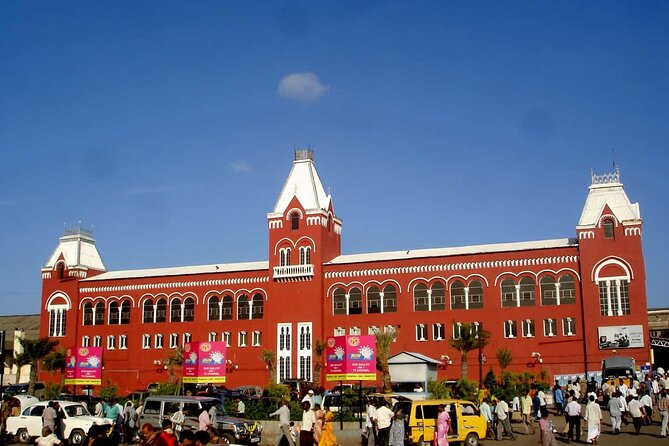
This is not one of those “stand in a parking lot and point” tours. You’re moving on foot between institutions that still matter today: railways, courts/civic spaces nearby, war commemoration sites, churches and museums, a bridge used constantly in city imagery, and a university complex.
The best part for me is the pacing. At roughly 3 hours, you get enough time to learn what you’re seeing without turning it into an all-day slog. Each stop is planned for a short visit, which helps if you want a learning-focused outing rather than a long drawn-out tour.
If you like architecture, you’ll enjoy how the tour names specific creators and styles. You’re not just hearing generic facts; you get enough detail to look at a facade and understand what to notice next.
You can also read our reviews of more tours and experiences in Chennai.

Starting at the Greater Chennai Corporation Office: a good launch point
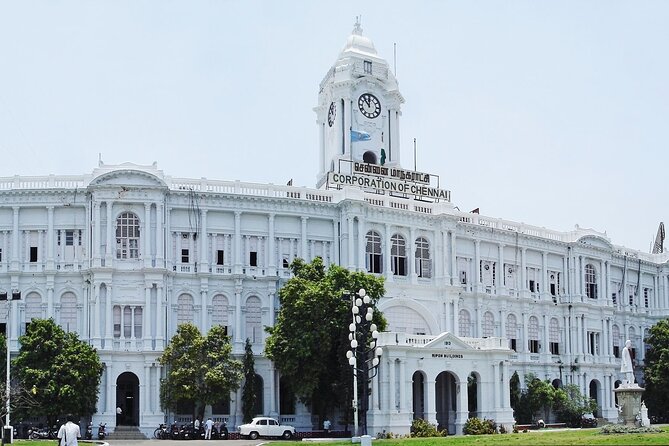
You meet at the Greater Chennai Corporation Office on Raja Muthiah Rd, in the Periamet area (Kannappar Thidal, Poongavanapuram). That location matters because it’s a central hub for getting your bearings before you head to the railway and the older administrative landmarks.
It also means you can plan your day around public transport. The tour says it’s near public transportation, which is helpful since hotel pickup isn’t part of the package.
And yes, you’ll end back at the meeting point. That’s a practical detail that makes this easier to pair with other Chennai plans afterward, since you’re not wondering how to get back across the city at the end.
Ripon Building: colonial-era civic design tied to local self-rule
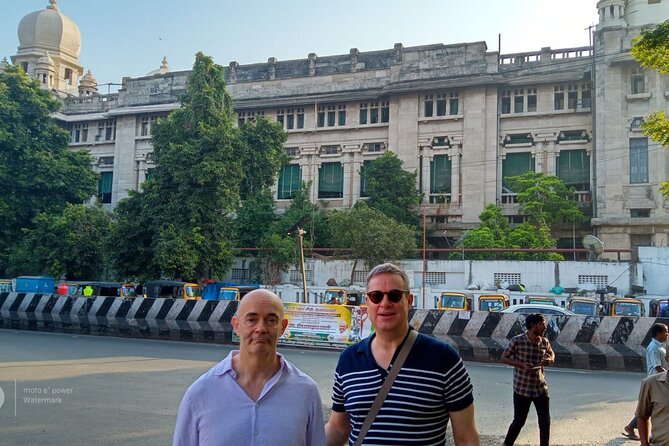
The walk’s first stop is the Ripon Building, visited for about 15 minutes. It’s designed by G.S.T. Harris and built by Loganatha Mudaliar, and it’s named after Lord Ripon, a Governor-General of British India described as the father of local self-government.
What I like here is that the building isn’t treated as decoration. You get a key idea right away: colonial architecture in Chennai wasn’t only about prestige. It also reflects how rulers thought about administration and local governance.
If you’re the kind of person who likes to connect a street scene to the political story behind it, this is a strong opener. You start with a structure whose name points directly to ideas of civic power.
Chennai Central Railway Station: Gothic Revival in a city that still moves
Next you head to Chennai Central Railway Station for around 30 minutes. This is one of the most compelling contrasts on the route: it’s built to handle modern crowds, but its architecture traces back to the British era.
The station is said to handle more than 350,000 passengers every day today. It was built in 1873 in a Gothic Revival style by British architect George Harding, then modified by Robert Chisholm. Seeing that kind of timeline in one place is a real eye-opener.
A drawback to keep in mind: you’re touring a live transport hub, so it can feel busier than the more ceremonial stops. Still, that’s part of the value. You’re not viewing architecture behind velvet ropes—you’re seeing how a historic design still sits inside daily life.
Southern Railway Headquarters: Indo–Saracenic design and the 1921 finish
After that, you visit the Southern Railway Headquarters for about 15 minutes. This building is described as Indo–Saracenic in style, designed by N. Grayson and built by Samynada Pillai, completed in 1921.
This is the stop where you’ll likely start noticing how Chennai’s British-era architecture can mix influences. Indo–Saracenic style alone tells you the design isn’t purely copy-paste European. It’s a blend that reflects local interpretation and imported building language.
If you care about details, you’ll appreciate that the tour includes the names of the architect and builder. Those specifics help you remember the building, not just the general period.


Victory War Memorial and Fort St George: from WWI memory to Anglican roots
This section gives the tour its emotional and cultural range.
Victory War Memorial
The Victory War Memorial is about a 30-minute stop. It was formerly called Cupid’s bow, and it’s described as a memorial to commemorate Allied victory in World War I (1914–1918), before becoming known as the Victory War Memorial.
Even if war memorials aren’t your main interest, it’s worth taking this portion seriously. It shows you that British rule in Chennai wasn’t only administrative and architectural; it also produced lasting public memory in stone and design.
Fort St George (and St Mary’s Church and the museum)
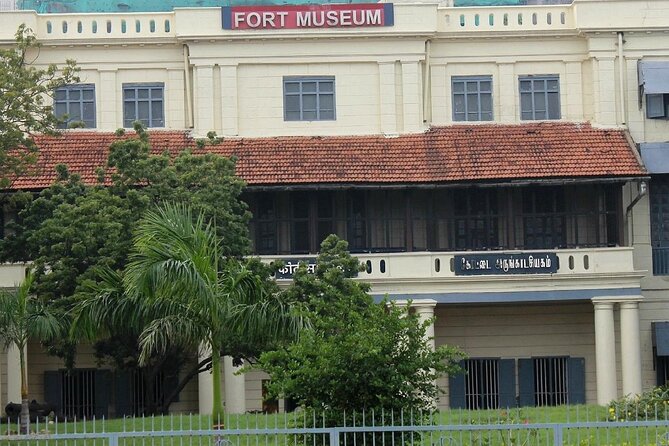
From there, you continue to Fort St George for another 30 minutes. The tour includes St Mary’s Church, described as the oldest Anglican Church of India, plus a museum with relics from colonial times.
This is a strong pairing. The church gives you a spiritual landmark tied to the colonial period, while the museum adds physical context through objects and relics. If you’re trying to understand how colonial institutions shaped everyday culture and power, this is where the tour moves from facades to artifacts.
One practical consideration: indoor viewing and museum pacing can vary depending on how much time you spend reading and looking carefully. Since the tour keeps stops to short windows, it’s best to stay focused during the walkthrough rather than planning to linger for long periods at each object.
Napier Bridge and the University of Madras: Chennai’s icons of movement and learning
The final stretch leans into two places that feel like modern Chennai while still carrying historical identity.
Napier Bridge
Napier Bridge is a short, 15-minute stop. The tour notes that it was broadened and converted into a concrete structure, opened to the general public in July 1943, and is often used by the media to represent the city of Chennai.
For many visitors, bridges are just ways to get across. Here, it’s an architectural and visual marker. You get a date, a concrete transformation, and the idea that the bridge has become part of Chennai’s public image.
University of Madras
Then you finish at the University of Madras for about 30 minutes. The complex was constructed between April 1874 and 1879. It includes a convocation hall, porticos, a parapet, meeting halls, and a library. The tour also points out that the Senate House is the administrative center of the university.
This stop works well as an ending because it ties the colonial era to education and long-term institution-building. You’re leaving with a sense of how design supported learning and governance over time.
If you like architecture that carries function, the University of Madras is a good final note. It’s not just a monument; it’s a system of rooms meant for academic and administrative life.
Price and value: what $49 buys you (and what it doesn’t)
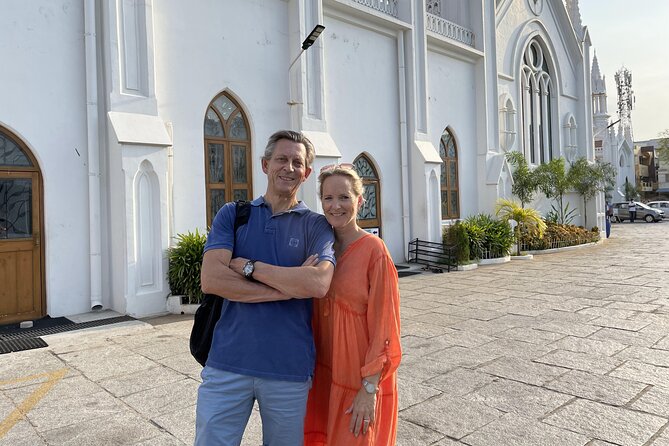
At $49 per person for about 3 hours, this tour sits in a mid-range value band for an architecture-focused walk. The big reason it feels like good value is what’s included.
You get a local guide, a local snack and coffee or tea, and all taxes, fees, and handling charges. On top of that, admission tickets are included for the listed stops, which is often where group tours get expensive at the last minute.
What’s not included is also clear. Porterage and tips are not included, and camera or video camera fees aren’t included. Hotel pickup and drop-off also aren’t included, so you’ll factor that into your plan if you’re staying farther from the meeting point.
My practical advice: treat it as a structured walking day with built-in entries. If you would pay separately for guide time and building access, this price starts to make sense fast.
What guides do well here: clear explanations and friendly pacing
The experience is led by local guides, and the standout pattern in the provided information is that guides like Rajesh and Nanda are described as friendly and strong at explaining the history and architecture clearly.
That matters on a tour like this. If you’re not getting guidance on what to look for—style choices, why a building is named, what a memorial represents—you could easily walk past details and miss the meaning.
So if you want to come away with names, dates, and architectural cues you can actually use while you’re sightseeing, this is the right format.
Who this walking tour suits best
This walk fits best if you:
- enjoy architecture and want the style and creator names, not just general descriptions
- like a shorter, focused outing (about 3 hours)
- prefer walking between sites rather than hopping by car all day
- want multiple stops with admission tickets included and not a bunch of optional extras
If you’re someone who dislikes walking or needs door-to-door transport, you might find the lack of hotel pickup and the urban walking pace less comfortable. In that case, you may prefer a different format that reduces walking time.
Should you book this British Architecture Walk in Chennai?
Yes—if you want a guided, building-focused route that covers the British-era story in a practical loop. It’s a good match for a first or second day in Chennai because it gives you names, styles, and institutional landmarks without forcing you to spend the whole day on buses.
Book it when you can easily reach the meeting point by public transportation and when you’re happy to walk a few short segments between stops. With admission tickets and a snack included, it’s also a low-stress way to learn without constant add-on costs.
FAQ
How long is the British Architecture Walk in Chennai?
The tour lasts about 3 hours.
How much does it cost per person?
The price is $49.00 per person.
Is this tour private?
Yes. It’s a private tour/activity, and only your group will participate.
Where does the tour start?
It starts at Greater Chennai Corporation Office, 53 Raja Muthiah Rd, Periamet, Kannappar Thidal, Poongavanapuram, Chennai, Tamil Nadu 600003, India.
Where does the tour end?
The activity ends back at the meeting point.
What’s included in the tour price?
Included are the local guide, a local snack and coffee or tea, and all taxes, fees, and handling charges.
Are admission tickets included?
Yes. Admission tickets are included for the stops listed in the route.
Is hotel pickup and drop-off included?
No. Hotel pickup and drop-off are not included.
Are camera or video fees included?
No. Camera and video camera fees are not included.
Is this booking refundable if I cancel?
No. The experience is non-refundable and cannot be changed for any reason.