REVIEW · BANGALORE
World heritage site of Belur & Halebid with temple sculptures
Book on Viator →Operated by 5 Senses Walks · Bookable on Viator
Stone carvings talk back to you. This day trip links Belur and Halebid UNESCO sites and walks you through 12th-century Hoysalas artistry at real “stand close and look again” distance.
I love the focus on Chennakesava Temple in Belur—especially how the guide helps you notice the kind of detail most people miss when they just rush for photos. The second big win is Halebid, where the temple complex and the monumental Nandi statue make the whole experience feel grand without turning it into a theme park.
One thing to consider: it’s a long day starting at 7:00 am, and most of your time is spent inside temple complexes rather than free-roaming the area.
In This Review
- Key highlights worth your time
- Belur’s Chennakesava: 100 Years of Temple Stone Art
- The Hoysalas Signature Style: How the Guide Helps You Read the Stone
- Halebid’s Hoysaleswara and Shantalesvara: UNESCO on a Smaller Scale
- The Giant Nandi Statue: Veins, Time, and “How Long Did This Take?”
- Lunch on the Schedule: Vegetarian South Indian Food Without the Planning
- Transport From Bangalore: Comfort Matters on a 12-Hour Day
- Price and Value: What $170 Buys You Here
- Who This Tour Fits Best (and Who Might Prefer Less Structure)
- Should You Book This Belur & Halebid UNESCO Tour?
- FAQ
- What time does the tour start?
- How long is the tour?
- Is hotel pickup and drop-off included?
- Are entrance fees included?
- What food is included?
- Do I need to bring printed tickets?
- Is this tour private?
- What are the two main temple stops?
- What if plans change? Can I cancel?
Key highlights worth your time
- Belur’s Chennakesava carvings: animals, dancers, and epic stories carved into stone
- Moveable sculpture details: dancer bracelets and a headdress ring you can spot as designed to move
- UNESCO Halebid temple complex: two major temples on-site—Hoysalesvara and Shantalesvara
- Giant Nandi statue craftsmanship: built over 86 years, including graceful vein details on the face
- Included vegetarian South Indian lunch: planned into the day so you’re not hunting mid-tour
Belur’s Chennakesava: 100 Years of Temple Stone Art
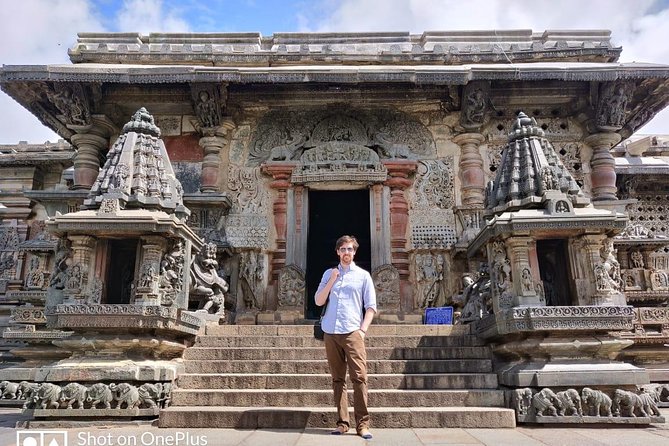
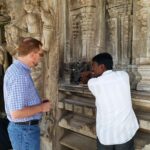
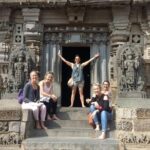
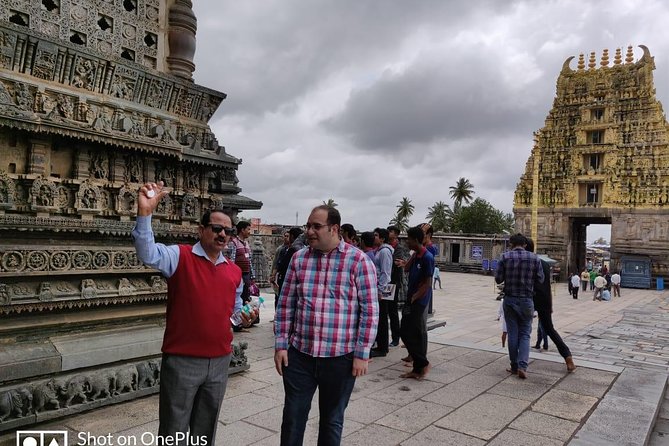
Belur starts strong. You’ll visit the Shri Chennakeshava Swamy Temple, the one that took over 100 years to build. The tour gives you about two hours inside the temple complex, which is just enough time to see the main halls and still circle back for the small things.
What makes Chennakesava special is the density of storytelling. You’ll see intricate carvings of animals and dancers on the walls, not as filler but as part of a bigger visual program. And stone isn’t used only to decorate—episodes from Ramayana and Mahabharata are also carved here, so you start recognizing the themes even if you don’t read the carvings like a scholar.
Then there’s the stuff that feels almost mechanical. I like that this temple doesn’t just present carvings as frozen images. Some dancer sculptures have bracelets on the arms that can be moved up and down, and another dancer’s headdress has a moveable ring. It’s a reminder that the sculptors weren’t only chasing beauty; they were thinking about form and function like artists.
A detail I really appreciate: the sculptors signed their work. At Belur, the sculptures are said to be signed off by the respective sculptors like in a painting, often as a confident epithet. It changes how you look at the carvings—you’re not just seeing anonymous architecture. You’re seeing identifiable people leaving marks.
Best for: art lovers, people who enjoy close-up looking, and anyone who wants a structured guide to point out the “how did they do that?” moments.
Potential drawback here: two hours inside a carved complex can feel fast if you like lingering. If you’re the type who needs to sit and study one panel for 20 minutes, you may wish you had a bit more time.
You can also read our reviews of more historical tours in Bangalore
The Hoysalas Signature Style: How the Guide Helps You Read the Stone
This tour is built around understanding, not just sightseeing. With a guide included, you get help connecting what you see—dancers, animals, myth scenes—to the larger idea of Hoysala artistry in the 12th century.
One practical value of having a guide: you’ll likely notice patterns that your eye might skip on its own. For example, when you hear that sculptors sometimes signed their work, you can start spotting where those marks are and what they add to the experience. When you learn to watch for design elements like movable jewelry in sculptures, you stop treating the carvings as still decoration and start seeing craftsmanship.
Also, temples like these reward repeat attention. A good guide doesn’t rush you past the carvings; they help you slow down enough to understand why the craftsmanship matters. And that’s exactly what you want with UNESCO-level sites: not just attendance, but comprehension.
Halebid’s Hoysaleswara and Shantalesvara: UNESCO on a Smaller Scale
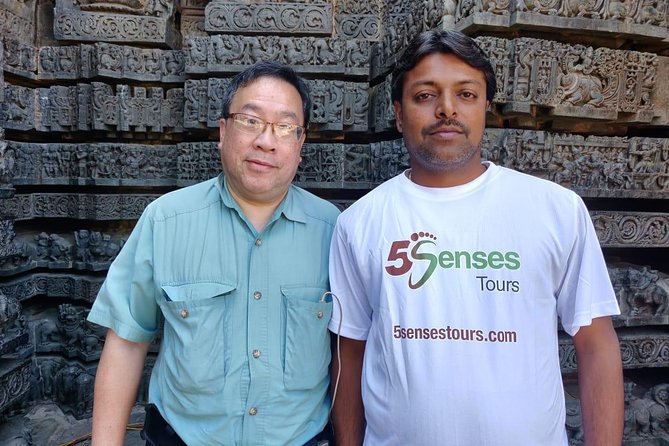
After lunch, you head to Halebid, the other capital of the Hoysalas. It’s about 16 km from Belur, and the travel is handled by the tour’s transport, so you’re not thinking about directions or timing.
At Halebid, you’ll spend a couple of hours in the main temple complex. The tour focuses on two major temples inside the area:
- Hoysalesvara Temple
- Shantalesvara Temple
This is a good pairing because it keeps your time efficient. Instead of bouncing between random points, you get a concentrated look at the most important structures in the complex.
The carvings continue the same “close look required” style as Belur, with mythological iconography and sculptural detail that feels planned, not accidental. You’re still looking at dancers and story scenes, but the overall mood shifts with the space and layout of Halebid’s complex.
The Giant Nandi Statue: Veins, Time, and “How Long Did This Take?”
The other headline in Halebid is the giant Nandi statue, the sacred bull of Lord Shiva. This statue took 86 years to build, which is the kind of fact that instantly puts the whole place into perspective. You realize this wasn’t a quick project; it was a multi-generation commitment.
What I’d tell you to watch for is the face detail. The tour highlights the veins depicted gracefully on the face, and once you’ve been pointed there, you’ll likely keep seeing that same careful attention across the statue. It’s not just scale for the sake of scale. The sculptors gave the Nandi physical character.
This is also where the experience can feel cinematic, even if you’re just walking at a human pace. The statue is a perfect “pause and absorb” moment between temple interiors—your eyes get a break from the dense wall carvings while still staying in the same sculptural world.
Lunch on the Schedule: Vegetarian South Indian Food Without the Planning
You get a traditional vegetarian South Indian lunch during the tour. The important part for your day: lunch is included, and it’s timed so you don’t lose hours figuring out where to eat.
Beverages aren’t included, so if you want water, juice, or anything else, plan for that extra cost. Since the tour runs about 12 hours and starts early, you’ll want to treat drinks as part of your own packing math.
South Indian lunches can be filling and varied, and that’s useful here. Temple days can be slow, and you’ll be doing plenty of looking and walking within the sites. A solid meal helps you keep energy steady for the second UNESCO stop.




Transport From Bangalore: Comfort Matters on a 12-Hour Day
This is a door-to-door style outing. You get hotel pickup and drop-off, and you travel in an air-conditioned vehicle. On a long day—especially with an early 7:00 am start—that comfort is not a minor detail. It helps you arrive sharper for the temples and stay comfortable while moving between Belur and Halebid.
You also get an included guide and entrance charges, which keeps the day from turning into a money-and-ticket puzzle. The tour uses a mobile ticket, which is usually handy when you’re coordinating with a group schedule.
Price and Value: What $170 Buys You Here
At $170 per person, you’re paying for a full package: two UNESCO sites, a guide, entrance fees, air-conditioned transport, hotel pickup/drop-off, and lunch.
Here’s why that can be good value for the right traveler:
- You’re not paying separately for entrances and a guide on top of transport and meals.
- The itinerary is tight: you’re seeing Belur and Halebid in one day rather than treating them as separate planning projects.
- You’re getting help noticing the details that matter, like moveable elements on the dancers and sculptor signatures.
That said, $170 is still $170. If you’re traveling with a very flexible schedule and prefer slow, independent exploration, you might not love a structured day with fixed stop times. But if you want a guided, efficient UNESCO hit with fewer logistics headaches, this package price looks more reasonable.
Who This Tour Fits Best (and Who Might Prefer Less Structure)
This tour is a strong match if you:
- care about stone-carving craftsmanship and want help spotting meaningful details
- like guided context around Hoysala temples and iconography
- want a long-day cultural itinerary that’s handled end-to-end, including pickup and lunch
It also makes sense for people who want a smoother day because it’s set up as a private group experience where only your group participates. That can feel calmer than a large open schedule.
If you don’t like temple visits—especially ones that require close attention to carvings—or if you hate early mornings, you might find the pacing a bit intense. The day is built around two temple complexes and their signature sculptures, not lots of extra stops.
Should You Book This Belur & Halebid UNESCO Tour?
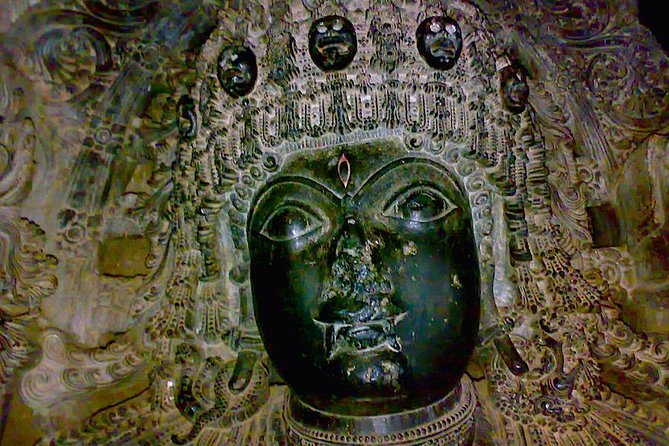
I’d book it if your idea of a great day is standing in front of carved stone and learning how to see what’s actually there: dancers with moveable details, epic scenes in stone, signed work, and the monumental Nandi with its vein-like facial detail.
I’d think twice if you want lots of free time for wandering beyond the main monuments, or if you’re the type who needs a slower pace than a 12-hour scheduled day starting at 7:00 am.
FAQ
What time does the tour start?
The tour starts at 7:00 am.
How long is the tour?
The duration is about 12 hours.
Is hotel pickup and drop-off included?
Yes. Hotel pickup and drop-off are included.
Are entrance fees included?
Yes. Entrance charges are included, and admission tickets are covered for the stops.
What food is included?
You get a traditional vegetarian South Indian lunch. Beverages are not included.
Do I need to bring printed tickets?
No. You receive a mobile ticket.
Is this tour private?
It’s private in the sense that only your group will participate.
What are the two main temple stops?
You’ll visit Belur’s Chennakesava Temple and then Halebid’s Hoysaleswara Temple complex.
What if plans change? Can I cancel?
Yes. You can cancel for free up to 24 hours in advance for a full refund.