REVIEW · BANGALORE
Old Bangalore Historical Walk thro Palace, Temples, Fort & Market
Book on Viator →Operated by Bangalore and Beyond · Bookable on Viator
Old Bangalore has a lot to teach. This walk strings together iconic sights you normally see on separate days: a Teak Tipu Palace stop, a live market experience, and two temples that show how faith shapes the city. I love the pacing and the way the guide turns history into street-level stories you can actually picture.
I also like that the tour keeps it practical: temple visits come with clear dress guidance, and you spend real time at the landmarks rather than rushing for photos. One thing to consider is that this is an active, busy neighborhood walk, so plan for crowds, noise, and some walking on uneven local streets.
In This Review
- Key highlights you’ll feel immediately
- Why old Bangalore feels different on foot
- Stop 1: Tipu Sultan’s Summer Palace area and the teak palace view
- Stop 2: Kote Venkataramana Temple, stone carvings, and myth on the walls
- Stop 3: Bangalore Fort remnants (about 5% open) in a neatly kept space
- Stop 4: Sri Krishnarajendra Market area, sensory overload in the best way
- Stop 5: Shri Adinath Jain Shwetamber Mandir, quiet carvings and inlay work
- Pacing and group size: why this feels manageable
- Price and value: what you’re really paying for
- Best time to go and how to plan your day
- Who this walk suits best
- Final take: should you book this Old Bangalore walk?
- FAQ
- How long is the Old Bangalore Historical Walk?
- How much does the tour cost?
- What’s included in the price?
- Is lunch included?
- Do I get transport from my hotel?
- Where does the tour start and end?
- Are temple visits included, and can they change?
- What should I wear for this walk?
- What’s the group size limit?
Key highlights you’ll feel immediately
- Teak Tipu Palace: Islamic-style architecture from a palace built about 230 years ago
- Kote Venkataramana Temple (1690): carved stone sculptures of mythological figures
- Bangalore Fort remnants: only about 5% of the original fort area is open, but it’s carefully maintained
- Krishnarajendra Market area: fruit, flowers, and vegetables with nonstop street energy
- Jain temple calm: quiet carvings and inlay work at the Shri Adinath Jain Shwetamber Mandir
- Small group size (max 10): easier questions, smoother movement, and a more personal guide pace
Why old Bangalore feels different on foot
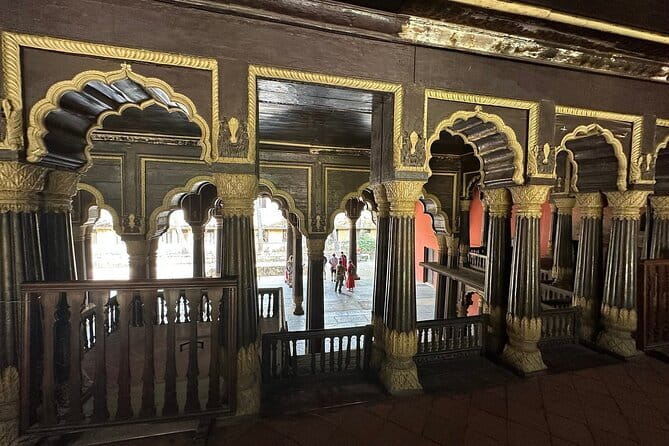
Old Bangalore isn’t about one “big ticket” monument. It’s about layers. You’ll move from palace woodwork to temple carvings, then straight into the market rhythm where goods, people, and vehicles share the same narrow lanes.
This walk works well because it’s built like a timeline you can see. You start at Tipu Sultan’s Summer Palace area, then connect to a temple next door, then head to the fort remnants, and finally you close with the Jain temple—still in the same older-city atmosphere, but with a quieter finish.
You’re also walking with a Govt. of India approved and licensed guide, which matters in Bangalore. A good guide doesn’t just point. They explain why the place looks the way it does, and what to notice when you’re standing in front of it with your phone in hand.
You can also read our reviews of more walking tours in Bangalore

Stop 1: Tipu Sultan’s Summer Palace area and the teak palace view
Your walk begins at Tipu Sultan’s Summer Palace (Tipu Sultan’s Summer Palace Road, Kamalanagar, Chamrajpet). This is the “wow” opener for a reason: you’re stepping into a palace space built from teak wood, about 230 years old.
Tipu’s palace is associated with typical Islamic architecture, and the teak construction is a big part of why the place feels so distinctive. Even if you’re not the kind of person who reads every plaque, it’s the kind of site where the materials and shapes pull your attention fast.
What I like about this first stop: it sets the tone. You get grandeur and craft right away, and then the tour naturally “zooms out” into surrounding life—temples and fort, then the market.
Timing note: plan for about 45 minutes here, including entry. If you care about details, keep your eyes on the overall architectural style first, then go back for close-up elements once your bearings are set.
Stop 2: Kote Venkataramana Temple, stone carvings, and myth on the walls

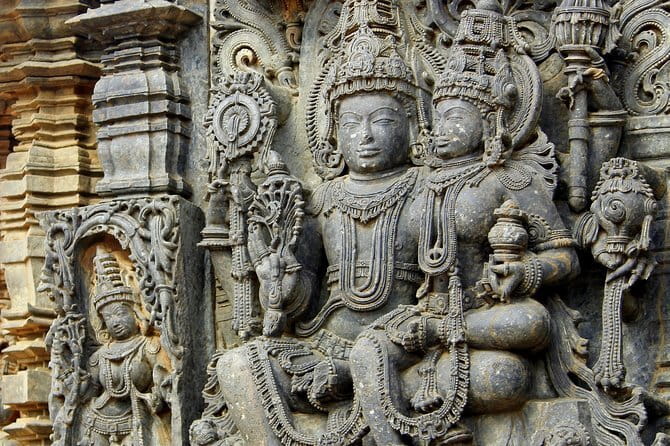
Next comes Kote Venkataramana Temple, adjoining the palace zone. The key detail here is the date and the style: it was built in 1690 AD by Chikkadevaraja Wodeyar. You’ll spend around 30 minutes, and it’s a strong stop if you like sculpture work.
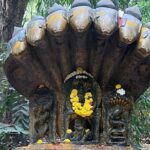
The walls carry stone sculptures of Indian mythological characters. The important thing isn’t just that the carvings exist—it’s how they connect to daily belief. When you’re walking through older neighborhoods like this, temples aren’t museum objects. They’re part of the neighborhood’s normal schedule and visual language.
Small practical tip: wear clothing that meets the temple guidance (legs and shoulders covered). Ladies should bring a scarf as well. Even if you’re not religious, you’ll feel more comfortable moving through temple spaces when you’re dressed appropriately.
Stop 3: Bangalore Fort remnants (about 5% open) in a neatly kept space
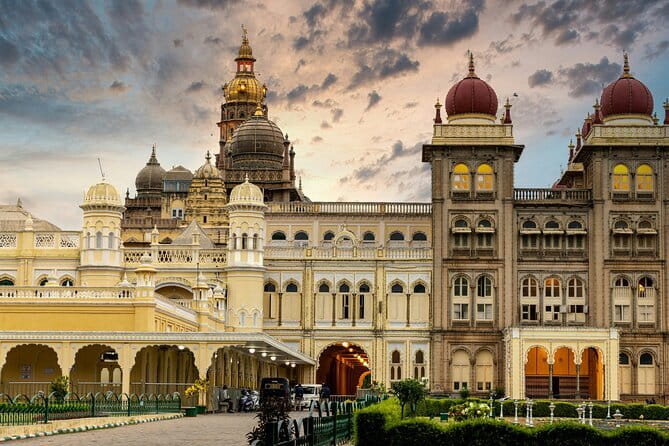
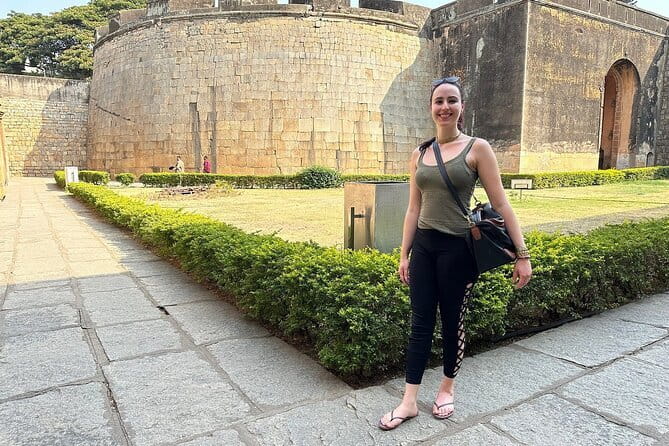
After the temples, you’ll head to Bangalore Fort. The history is layered: Kempegowda (the city’s founder) built a mud fort in the 16th century, and later Hyder Ali rebuilt it in stone in the 1760s. Today, you can see only about 5% of the fort area, and that remaining section is neatly maintained for visitors.
This stop is short—about 30 minutes—but it works because it gives you a reality check. You’ll understand that Bangalore’s “old” isn’t one preserved fortress. It’s fragments and foundations, kept alive through careful upkeep and guided interpretation.
What to notice: look for how the remaining fort portion is arranged and protected. Even in what you can’t see, you can sense the city’s defensive past—then the walk moves you into the commercial energy that replaced that old priority.
Stop 4: Sri Krishnarajendra Market area, sensory overload in the best way
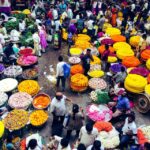
Now you hit the part many people came for: the market. Sri Krishnarajendra Market is where you see typical India in motion—vendors, workers, hawkers, buyers, and yes, animals and everyday street flow all mixed together.
The tour gives you about one full hour here, which is smart. Markets need time. If you rush, you just get noise. With time, you start noticing patterns: how people price, where goods are stacked, what’s being traded right now, and how the market connects to nearby life.
If you enjoy photography, bring your patience. In these lanes, things move fast: cycles, pedestrians, carts, and shoppers all share the same space. A good guide’s photo advice helps a lot. In this experience, guides are known for giving practical picture tips before you go to the busiest corners, so you don’t just end up with blurry shots.
What I like most here: markets are where you can feel Bangalore as a working city, not just a city of monuments. The “smells, sounds, and sights” element is real, but you don’t have to love chaos to appreciate it. The guide helps you understand what you’re seeing.
You can also read our reviews of more historical tours in Bangalore

Stop 5: Shri Adinath Jain Shwetamber Mandir, quiet carvings and inlay work
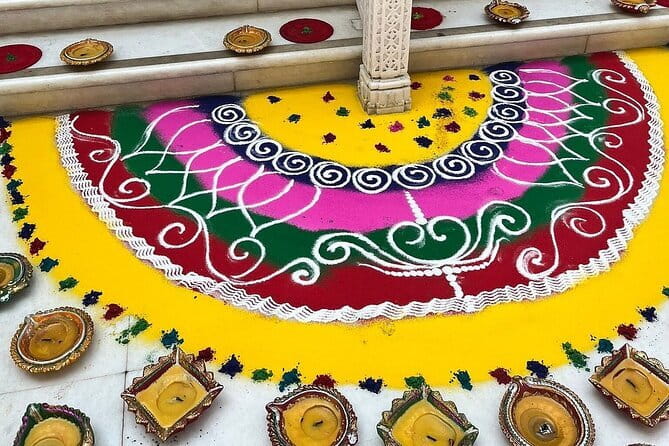
To close the walk, you go to the Shri Adinath Jain Shwetamber Mandir near the Chickpet area. This is where the atmosphere changes. After the market energy, the temple offers quietude and focus.
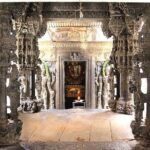
Jainism is presented in the tour context as one of the world’s oldest religions, with a history at least 2500 years in India, and it’s connected to principles like non-violence. You’ll also see the kind of artistry Jain spaces often protect—carvings and inlay work that reward slow attention.
This stop lasts about one hour. It’s also a strong point for anyone who wants a non-Hindu religious site in the same older-city circuit. You’re comparing two temple worlds in one afternoon: Hindu mythology and stone sculpture, then Jain iconography, workmanship, and the calmer pace of a Shwetamber mandir setting.
Practical head’s-up: keep the scarf and covered clothing mindset. Temple etiquette isn’t just rules—it makes your visit smoother and more respectful.
Pacing and group size: why this feels manageable

This walk is designed for about 3 to 4 hours. That’s long enough to cover several meaningful stops, but short enough that the market hour doesn’t turn into a full-day commitment.
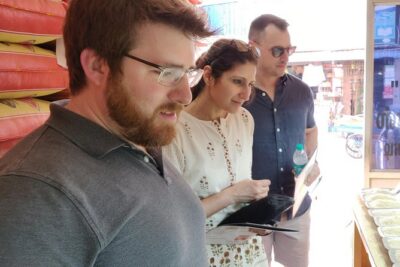
Group size is capped at 10 travelers. That matters more than people expect. Smaller groups move better on crowded lanes, and you get more chances to ask questions without waiting your turn.
The experience also includes the entry fee at all monuments, so you’re not doing mental math mid-walk. You’re paying for guidance plus access, and that’s part of why the overall value works—especially if you only have a few hours in Bangalore.
Price and value: what you’re really paying for
At $22.38 per person, the price is fairly easy to justify if you think about two things:
First, you get guided access to multiple sites, not just one highlight. The itinerary combines Tipu’s palace, a temple built in 1690, fort remnants, a major market area, and a Jain temple with notable carvings.
Second, the guide role isn’t vague. Guides in this experience are known for being communicative before and during the walk, including help with photo timing and on-the-spot explanations. One guide name that comes up in past participants’ accounts is Vasuki, and other names include Raghavendra and Vanaja. The consistent theme: they answer questions and help you get more meaning from each stop.
Also, you have a real option if you don’t want to navigate on your own. Transport from your hotel to the walk and back is available for a small additional fee. You just need to tell the operator where you’re staying so they can quote the pickup.
Best time to go and how to plan your day
You didn’t get a specific time-of-day start in the details here, but the structure suggests a daytime plan. The walk covers places that function on working hours and seasonal schedules, especially for temple entry.
So if you’re fitting this into a tight schedule, keep your day flexible by a couple of hours. That way, if a temple’s access changes due to season or daily timing, you’re not forced to cut the walk short.
What to bring:
- Covered outfit for temples (legs and shoulders)
- A scarf if you’re a woman (so you’re ready)
- Comfortable walking shoes (market streets can be uneven)
- Phone camera charged, plus patience for crowded scenes
Who this walk suits best
This is a great fit if you:
- Have only a half-day in Bangalore and want old-city highlights
- Like comparisons—palace vs fort vs Hindu temple vs Jain temple vs market street life
- Prefer small groups with a guide who gives context, not just directions
- Enjoy photography but want help making it work in busy lanes
It might be less ideal if you:
- Want mostly quiet, low-stimulation sightseeing (the market stop can feel intense)
- Dislike walking through active neighborhoods with lots of movement
Final take: should you book this Old Bangalore walk?
Yes—if you want a compact, guided dose of old Bangalore that’s practical, not touristy, and built around real city life.
The best reasons to book are the combination: Teak Tipu Palace, carved temple stops, fort remnants that are still accessible, and a market hour that shows the city working. The biggest reason not to book is simple: if noise, crowds, and moving street scenes stress you out, plan a different kind of day.
If you’re curious about how faith and commerce coexist in the same neighborhood, this walk is a smart way to understand Bangalore in a few hours.
FAQ
How long is the Old Bangalore Historical Walk?
It runs about 3 to 4 hours.
How much does the tour cost?
The price is listed as $22.38 per person.
What’s included in the price?
Entry fees for all temples and monuments are included.
Is lunch included?
No, lunch is not included.
Do I get transport from my hotel?
Transport from your hotel to the walk venue and back is available for a small additional fee, based on your hotel location.
Where does the tour start and end?
It starts near Tipu Sultan’s Summer Palace (Tipu Sultan Palace Rd, Kamalanagar, Chamrajpet) and ends at the Shri Adinath Jain Shwetamber Mandir area, close to Chickpet metro station.
Are temple visits included, and can they change?
Temple and monument entry depends on working hours and seasonal variations.
What should I wear for this walk?
You should cover your legs and shoulders for temple visits. Ladies need to carry a scarf.
What’s the group size limit?
The group size maximum is 10 travelers.