REVIEW · BANGALORE
Bangalore: Walk In the Footsteps of Maharajas & Sultans
Book on Viator →Operated by Hidden Gems Tours · Bookable on Viator
Tipu, Mysore, the British, and local life all in one walk. This Bangalore experience packs a lot of story into a short 2.5 km stroll, with an English-speaking native guide who explains how power changed the city. I especially like the tight small-group size, which makes it easy to ask questions, and the mix of royal sites plus everyday markets so the history feels real, not staged.
The main thing to plan for is practical temple etiquette: you’ll remove footwear at a few stops, and ladies need a scarf. If you forget those basics, it can slow you down.
In This Review
- Key highlights worth your attention
- Royal Names, Real Streets: Why This Walk Works
- Tipu Sultan’s Summer Palace: Where Power Got Stylish
- Bangalore Fort: The Defensive Teardrop That Changed the City
- Jamia Masjid: Five Stories of Marble, Arches, and Jali
- KR Market: A 200-Year-Old Bazaar Still Doing Its Job
- Shri Adinath Jain Shwetamber Mandir: Marble Calm at the End
- Coffee Break, Walking Distance, and Timing That Won’t Wear You Out
- Guide Power: The Storytelling That Makes Stops Click
- Price and Ticket Value: What $22.70 Gets You
- Practical Stuff That Keeps the Walk Smooth
- Who Should Book This and Who Might Skip It
- Should You Book? My Decision Guide for Royal Bangalore on Foot
- FAQ
- What is the duration of the Bangalore walking tour?
- How much does the tour cost?
- How long is the walking route?
- How many people are in the group?
- Which major sights are included on the route?
- Are admission tickets included?
- Is filter coffee included?
- Where does the tour start and end?
- Do I need to follow a dress code?
- Is hotel pickup available?
Key highlights worth your attention
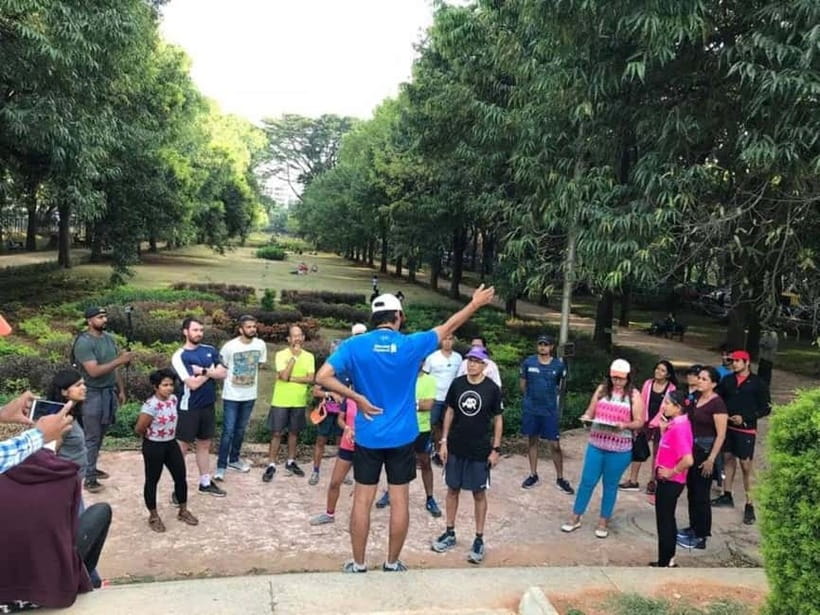
- Small group feel: maximum 8 per booking, with a hard cap of 10 travelers total
- Royal-to-market route: palace, fort, mosque, Jain temple, and KR Market in one outing
- Filter coffee pause: included with the 3-hour option, plus a chance to snack nearby
- Tickets handled for key stops: Tipu Sultan’s Summer Palace (3-hour option) and Bangalore Fort are included
- Local pace and streets: you end at Shri Adinath Jain Shwetamber Mandir near Chickpet Metro Station
Royal Names, Real Streets: Why This Walk Works
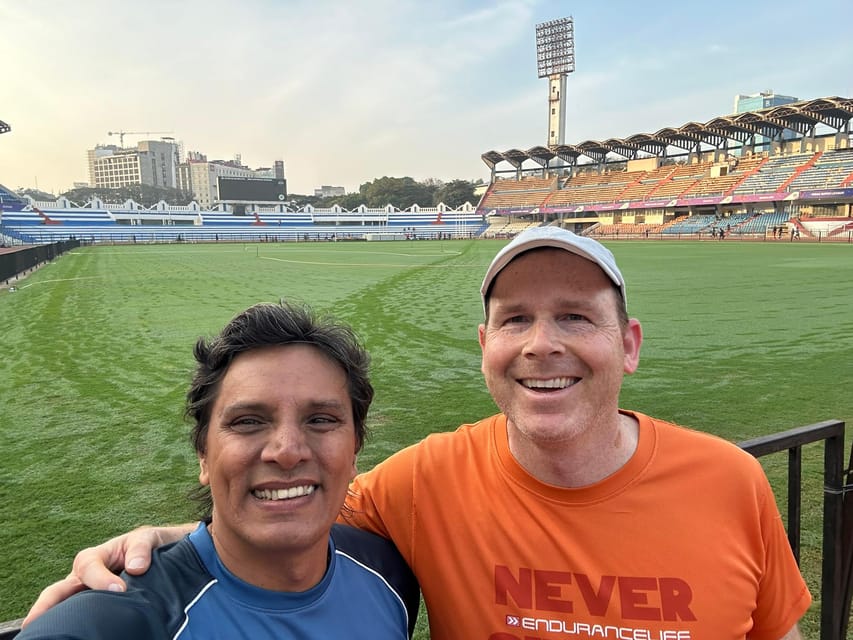
If you only visit Bangalore’s big-name sights, you can miss how the city was actually built: by rulers, faiths, and trade all rubbing shoulders. This is the type of guided walk that helps you get your bearings fast. You start with Tipu Sultan’s era, then move through the defensive muscle of Bangalore Fort, and from there it shifts into living neighborhoods—where mosques, Jain marble, and a historic bazaar shape what you see today.
What makes the experience genuinely useful is that it links the architecture to the people behind it. You’re not just looking at buildings. You’re learning why they were built, who used them, and how later rulers and ordinary Bangaloreans kept moving the city forward. Add a short coffee break and you get something rare: a walking tour that stays interesting without turning into a marathon.
You can also read our reviews of more tours and experiences in Bangalore.


Tipu Sultan’s Summer Palace: Where Power Got Stylish
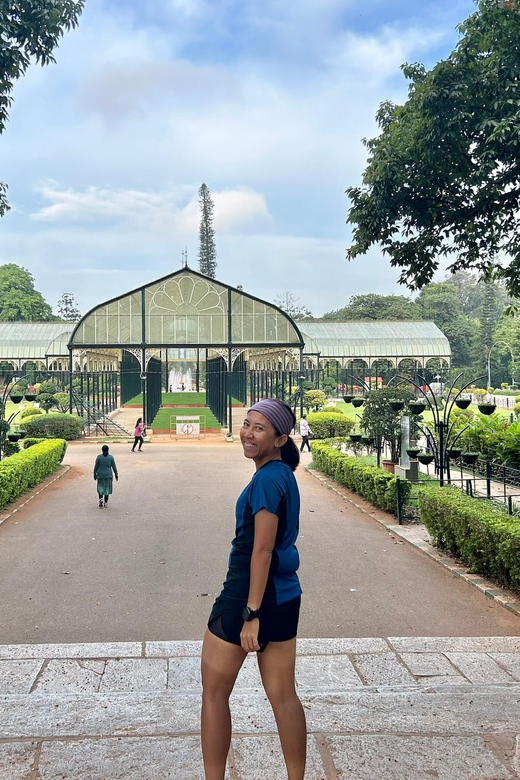
Your tour begins at Tipu Sultan’s Summer Palace, with its famous entrance plaque setting the tone right away. Built by Hyder Ali and completed by his son Tipu, the palace is an elegant reminder that even in a tough political world, rulers wanted beauty and comfort.
I like this first stop because it sets a clear theme for the rest of the walk. From here, the stories don’t stay trapped in the past. You’ll see how later chapters of Bangalore’s history echo back into the same streets you’re standing on now. If you’re choosing between time options, this is the place to pay attention to value: admission to the Summer Palace is included for the 3-hour option.
Practical note: you’ll want to arrive ready for walking right from the start, since the schedule moves steadily. There’s about 30 minutes here, so it’s enough time to look around and still keep the tour moving.
Bangalore Fort: The Defensive Teardrop That Changed the City
Next up is Bangalore Fort. The story goes beyond “there used to be a fort here.” You get a sense of scale and shape: in its heyday, it was a stronghold that stretched across nearly a square mile and was known for its teardrop layout.
The best part of a guided stop like this is how a guide turns uneven traces into meaning. Even if you’re not seeing a perfectly preserved wall line, you can still understand the defensive logic—why a location matters and how a kingdom protects itself. This stop also has about 20 minutes on the clock, and the entry/admission is included.
If you’re the kind of person who likes your history with maps in your head, this is a good anchor. It helps you understand why the later religious and commercial landmarks aren’t random. They grew in the shadow of political centers.
Jamia Masjid: Five Stories of Marble, Arches, and Jali

After the fort, the mood shifts from defense to devotion at Jamia Masjid. This is a striking mosque made of white Rajasthan marble, with five stories and delicate jali work—those stone screens and patterns that control light and airflow in a way that feels both artistic and practical.
You’ll also notice the arches and slender minarets that give the building its clean, elegant silhouette. It’s one of those places where your brain automatically slows down, because the design is meant to frame a moment of worship and reflection.
The entry here is free, so you’re not hit with extra costs mid-route. You’re looking at roughly 20 minutes, which works well: enough time to appreciate the details without turning your visit into a long detour.
Dress matters here. For modesty, plan on covering shoulders and legs, and if you’re a woman, have your scarf ready for worship spaces.
KR Market: A 200-Year-Old Bazaar Still Doing Its Job
Then the tour steps into street-level Bangalore at KR Market, a bazaar with about a 200-year backstory. The market is still active with colors, scents, and the kind of everyday energy you can’t replicate in a museum.
One detail I find especially memorable is the origin story: KR Market was once a quiet waterbody called Siddi Katte. Knowing that before you walk in makes the space feel layered. You’re not just shopping. You’re seeing how the city repurposed land and kept moving.
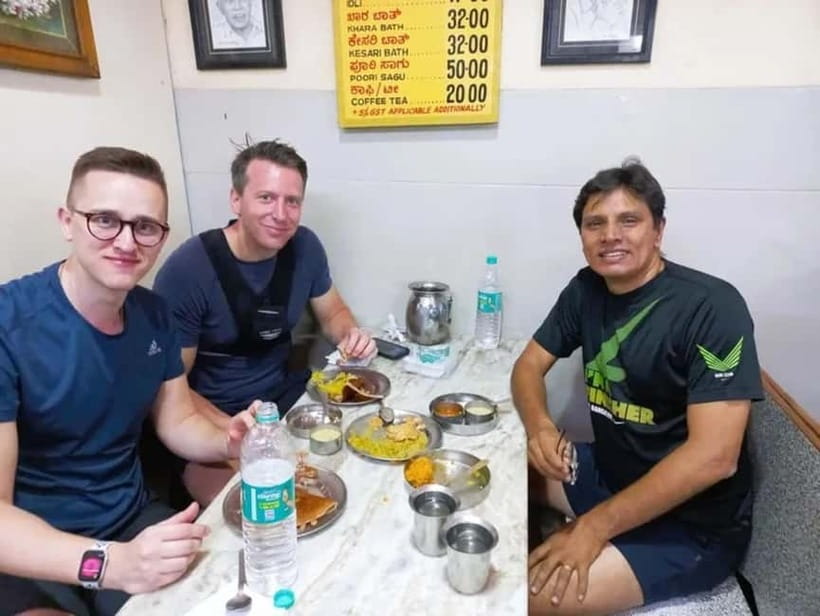
You’ll spend about 30 minutes here, and the stop is ticket-free. This is also where the tour can feel most local, because you’re surrounded by the real rhythms of commerce—especially fruit and vegetables.
A nice touch in practice: guides often help with small things like recommending what to try or how to navigate the stalls quickly. In at least one instance, a guide helped with flowers and fruit purchases and then steered people toward a good final refreshment spot.





Shri Adinath Jain Shwetamber Mandir: Marble Calm at the End

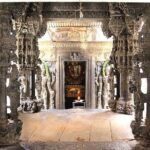
The route finishes at Shri Adinath Jain Shwetamber Mandir in Chickpet. After the noise of KR Market, this temple feels like a breather. It’s a marble sanctuary with intricate carvings and marble inlay work that you can actually see up close if you take a minute instead of rushing.
The stop runs about 20 minutes, and admission here is free. The experience ends near Chickpet Metro Station, which is convenient because you can plug into transport easily without needing a separate plan.
This ending matters. It gives you a mental full stop after a walk that includes political power, religious architecture, and market life. You get to close the loop with a place built for quiet.
Also remember the practical part again: you’ll remove footwear at a few stops. Socks help if the surfaces are cool or you don’t want to do that barefoot-in-crowds shuffle.
Coffee Break, Walking Distance, and Timing That Won’t Wear You Out

The tour is designed as a compact heritage stroll: about 2.5 km total. That’s short enough to feel manageable, even if you’re not a serious walker. It also keeps the route focused—no long commutes between eras.
Time-wise, it’s listed at 2 to 3 hours. One useful thing to know: sometimes the guide runs a bit longer when stories take an extra minute or when the group has questions. If you’re on a tight schedule, it’s smart to keep a little buffer. If you’re not, that extra time can be a gift rather than a burden.
Here’s the value detail that matters: traditional filter coffee or local tea is included only with the 3-hour option. So if you care about that break, choose the longer option. If you choose the shorter version, you might still get a tea/coffee moment depending on what’s offered on the day—but don’t count on it unless you pick the 3-hour plan.
Guide Power: The Storytelling That Makes Stops Click

What turns a list of landmarks into a tour is the guide’s ability to connect dots. The best results here come from native guides who tell the story in a way you can follow—plain, structured, and focused on why each place mattered.
In the reviews, Praveen and Ahmad are both called out for making history accessible. One guide stood out for providing a holistic view that changes how you look at the sites. Another did a careful job managing the crowd and keeping people comfortable, even when the streets and market lanes get busy.
I also like how the strongest guide moments here aren’t about grand lectures. They’re about practical context: what you’re seeing, what it likely meant, and how it fits into the broader timeline of Maharajas, Sultans, Gowdas, and later British rule.
If you’re the type who enjoys asking questions, a small group helps. With no more than 8 people per booking, it’s easier to get a real back-and-forth instead of watching someone else’s photos from the back.
Price and Ticket Value: What $22.70 Gets You
At about $22.70 per person, this is priced like a solid local-guided walk, not a high-end production. Where it becomes good value is what you actually get bundled in.
You get:
- English-speaking native guide
- Local taxes
- Admission for Bangalore Fort
- Admission for Tipu Sultan’s Summer Palace with the 3-hour option
- Traditional filter coffee or local tea with the 3-hour option
Because the palace ticket and coffee depend on the 3-hour choice, I’d treat that option as the “best deal” version if it fits your schedule. If you choose only a shorter window, you’re still seeing major landmarks, but you’ll miss some included extras.
A second value point: the tour uses a mobile ticket. That sounds minor, but it cuts down on hassle at entrances.
Practical Stuff That Keeps the Walk Smooth
This tour is near public transportation, and it uses a walkable route inside a compact area. Still, you’ll want to come prepared.
- Dress code: Men should cover legs and shoulders. Women should dress modestly and bring a scarf for worship spaces.
- Footwear: You’ll remove shoes at a few points. Bring socks if you can. Your feet will thank you.
- Moderate fitness: The schedule is short, but you are walking through active streets and sites, including standing time at each stop.
- Hotel pickup: Not included, but pickup/drop-off may be available for a small additional fee. If you’re staying close to the route, you can likely skip the extra cost.
- Weather: It requires good weather. If it’s canceled due to poor weather, you’ll be offered another date or a full refund.
And one small tip from how these tours tend to run: bring cash for small purchases at the market if you want snacks or fruit, even though coffee/tea is already included for the right option.
Who Should Book This and Who Might Skip It
This walk is ideal if you want a focused Bangalore orientation without hopping across the city. It’s also great if you like history explained through the real layout of neighborhoods: where markets sit, how sacred architecture appears in the same urban fabric, and how rulers left physical clues that still guide your route.
You might consider something else if:
- You need a fully relaxed pace with minimal walking and lots of sit-down time.
- You dislike religious-site etiquette and shoe removal. (You can prepare, but it’s part of the deal.)
- You’re only interested in one era, like purely Tipu or purely British. This tour stitches eras together fast.
Should You Book? My Decision Guide for Royal Bangalore on Foot
If you want an easy way to understand Bangalore’s “who ruled here, who prayed here, and how people traded here” story, book this. It’s short, structured, and guided in a way that makes the city feel coherent.
I’d especially recommend it if you choose the 3-hour option, because that’s when the Tipu Sultan’s Summer Palace admission and filter coffee or local tea are included. You also get a better chance of finishing the route feeling like you’ve actually tasted and understood the neighborhood, not just photographed it.
One last thought: keep a little timing cushion. With the right guide, the storytelling can run long, and that’s usually when the tour gets memorable.
FAQ
What is the duration of the Bangalore walking tour?
It runs about 2 to 3 hours.
How much does the tour cost?
The price is $22.70 per person.
How long is the walking route?
The total walk is about 2.5 km.
How many people are in the group?
There can be a maximum of 8 people per booking, with a maximum of 10 travelers.
Which major sights are included on the route?
You’ll visit Tipu Sultan’s Summer Palace, Bangalore Fort, Jamia Masjid, KR Market, and Shri Adinath Jain Shwetamber Mandir. The route may also include the Kote Venkataramana Temple.
Are admission tickets included?
Yes. Tipu Sultan’s Summer Palace admission is included for the 3-hour option, and Bangalore Fort admission is included. Jamia Masjid and the market/temple stops are marked as free.
Is filter coffee included?
Traditional filter coffee or local tea is included only with the 3-hour option.
Where does the tour start and end?
It starts at Tipu Sultan’s Summer Palace and ends at Shri Adinath Jain Shwetamber Mandir near Chickpet Metro Station.
Do I need to follow a dress code?
Yes. Men should cover legs and shoulders. Women should dress modestly and a scarf is required for visits to places of worship.
Is hotel pickup available?
Hotel pickup and drop-off are not included, but pickup/drop-off may be offered for an additional fee.