REVIEW · CHENNAI
Private Day Tour: Explore Silk city Kanchipuram from Chennai
Book on GetYourGuide →Operated by TREASURE TOURS · Bookable on GetYourGuide
Kanchipuram feels like a living temple atlas. I like the private car ride with a real driver-guide so the day stays relaxed, and I like the temple-to-temple explanations that help you read what you’re seeing. One watch-out: if you’re counting on a promised skip-the-line Darshan process at Kamakshi, confirm it clearly ahead of time because the on-site setup can be inconsistent.
This is a long, well-paced full day (about 10 hours) that stacks major Pallava-era sites plus a hands-on look at Kanchipuram silk weaving. You’ll walk, you’ll remove shoes in several places, and you’ll spend real money only where you choose to, like lunch and silk purchases. If you’re very sensitive to crowds, shopping pressure, or timing slips, plan smart and keep expectations realistic.
In This Review
- Key things you should know before you go
- Getting From Chennai: Private Car Comfort and a Fast Start
- Ekambareswarar Temple: Dravidian Stone and a 3,500-Year Mango Tree
- Kailasanathar Temple: The Oldest Stone Temple Feel in Kanchipuram
- Vaikunta Perumal and Pallava Royal Storytelling in Stone
- Kamakshi Amman: Shakti Peetha Power and Darshan Expectations
- Varadaraja Perumal: Divya Desam, Gopurams, and a Different Temple Mood
- Kanchipuram Silk Weaving Centre: Living Craft, Short Time, Real Choices
- Lunch, Temple Etiquette, and What Can Trip You Up
- Price and Value: Does $72 Per Person Make Sense?
- Who This Tour Fits Best (and Who Should Skip It)
- Should You Book This Kanchipuram Tour?
- FAQ
- How long is the Kanchipuram private day tour from Chennai?
- Where is the pickup?
- What language is the tour guide?
- How many temples are included in the day?
- Is there a silk weaving visit?
- What is included in the price?
- Is lunch included?
- Does the tour include skip-the-line access?
- What should I bring for temple visits?
- Is this tour wheelchair accessible or suitable for pregnant travelers?
Key things you should know before you go
- Five major temples in one day: Ekambareswarar, Kailasanathar, Vaikunta Perumal, Kamakshi Amman, and Varadaraja Perumal.
- Pallava architecture makes the story easier: You’ll see early Dravidian stone work and later royal-era carvings.
- Silk weaving visit is short, so watch carefully: You get about an hour at the weaving center, then it can shift toward retail.
- Early start matters: An on-time 7:00 AM departure helps you avoid closed gates and rush hour.
- Comfort beats style for feet: Many temple entrances require shoe removal, often including socks.
- Darshan expectations should be managed: The tour includes Kamakshi, but skip-the-line handling may vary.
Getting From Chennai: Private Car Comfort and a Fast Start
This day tour runs on the clock, and that’s a good thing in Kanchipuram. You meet around 7:00 AM in Chennai (hotel pickup in the city or from Chennai International Airport), then you’re on the road by about 7:30 AM. The drive is roughly 2 hours, so starting early is what lets you see temples without feeling rushed.
The big practical win is that you’re not stitching together rickshaws, buses, and ticket lines. The private, air-conditioned car with a driver-guide means you can focus on the sites and the explanations instead of logistics. It also helps when you hit temple entry rules like shoe removal and modest dress.
The one caution: timing depends on your actual pickup and traffic. If you start late, you risk arriving at one or more temples when their visitor flow changes or gates are not at their most open. If your schedule is tight, double-check the pickup point and give yourself a little buffer.
You can also read our reviews of more city tours in Chennai


Ekambareswarar Temple: Dravidian Stone and a 3,500-Year Mango Tree
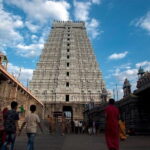
Your first major stop is Ekambareswarar Temple, a site with UNESCO-influenced heritage significance in the way it’s discussed and preserved. This is one of the Pancha Bhoota temples dedicated to Lord Shiva, so the place isn’t just about architecture—it’s also about meaning. You’ll be walking through a complex that feels layered: huge structures, inscriptions, and symbols that get explained as you move.
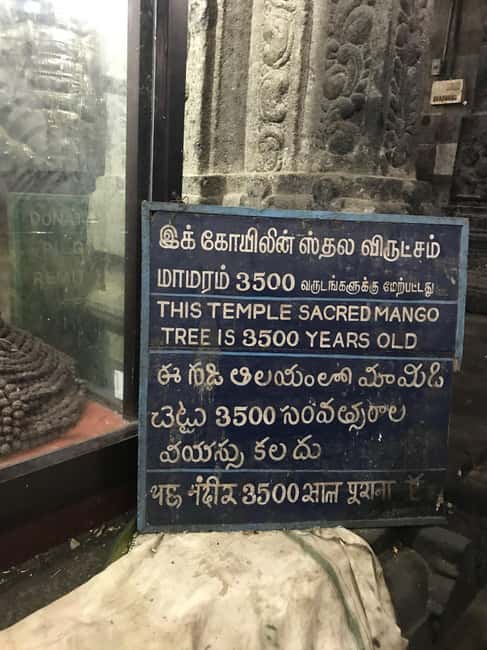
One detail to listen for is the sacred mango tree believed to be over 3,500 years old. Even if you’re not the type to chase legends, this is a useful anchor for understanding why Kanchipuram earns its City of a Thousand Temples reputation. The story behind the tree turns a big compound into something personal and local, not just tourist photography.
How to make this stop work for you: wear comfortable shoes you can take on and off quickly, and plan for some walking on temple grounds. If you’re the kind of visitor who likes context, this is the moment to lean in to the guide’s explanations, because it sets the tone for the rest of the day.
Kailasanathar Temple: The Oldest Stone Temple Feel in Kanchipuram
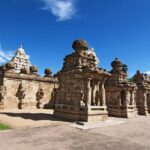
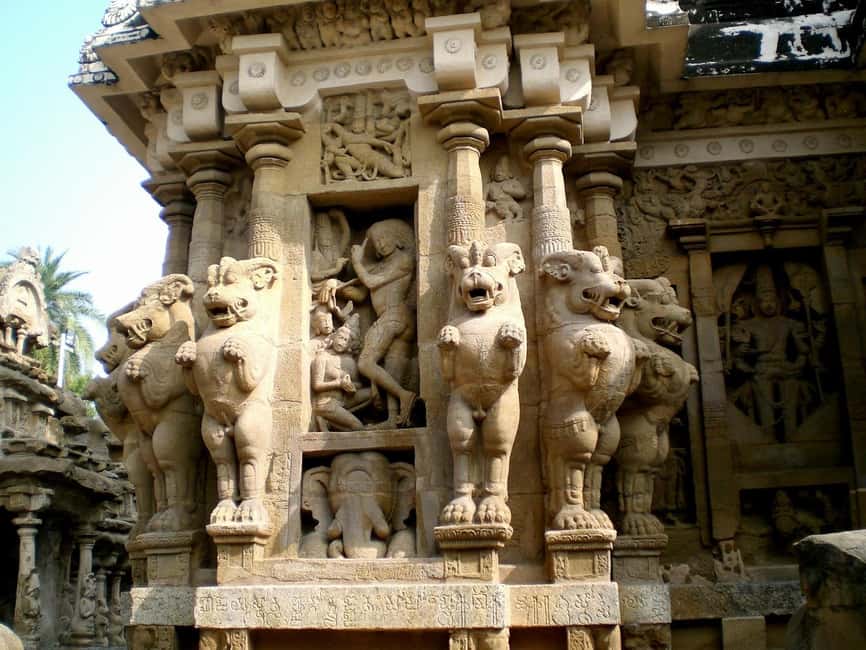
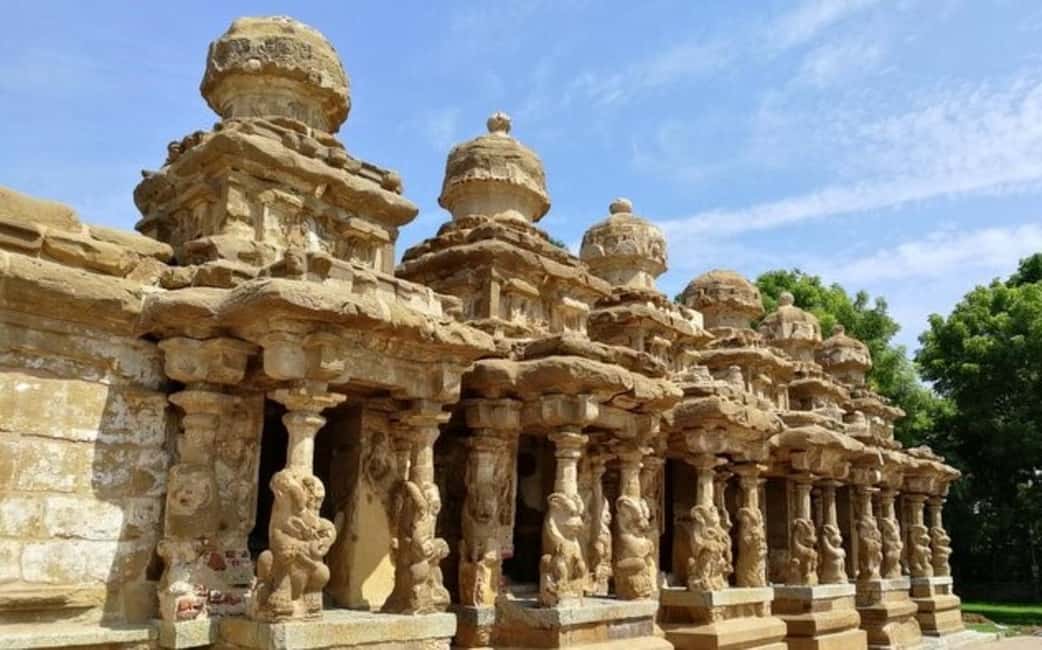
Next comes Kailasanathar Temple, often described as the oldest stone temple in Kanchipuram built by the Pallavas. This is where you start seeing early Dravidian design with more clarity. If you’ve seen other South Indian temples but found them all visually similar, this is a stop that helps you separate eras: stone proportions, carvings, and the overall build style.
At Kailasanathar, the experience is not about one single “wow” view from a distance. It’s about noticing structure and craft up close—how the temple was conceived as an artwork meant to last. With a guided visit, you’re less likely to just skim and more likely to understand why certain shapes and details matter.
Possible drawback: if you’re traveling on a day when you’re tired or jet-late, the temple walking can add up. Keep your water intake steady and don’t rush your shoe-on, shoe-off rhythm. A smooth pace here makes the rest of the day more enjoyable.
Vaikunta Perumal and Pallava Royal Storytelling in Stone
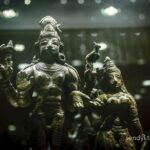
After Kailasanathar, you’ll visit Vaikunta Perumal Temple, an 8th-century site built by Pallava king Nandivarman II. What makes it particularly interesting is that the stone panels and sculptural elements act like a history lesson. Instead of learning dates in a textbook, you’re seeing royal memory turned into stone.
This temple also pairs well with the earlier stop because it keeps the Pallava thread going. The guide’s job here is to connect what you’re seeing—architecture, panels, royal references—into one story about how Kanchipuram developed as a cultural power.
For your camera: plan for photos, but also plan time to look slowly. The most interesting carvings are rarely the ones you can capture cleanly from far away. If you only glance, you’ll miss why this stop deserves its place on a five-temple itinerary.
Kamakshi Amman: Shakti Peetha Power and Darshan Expectations
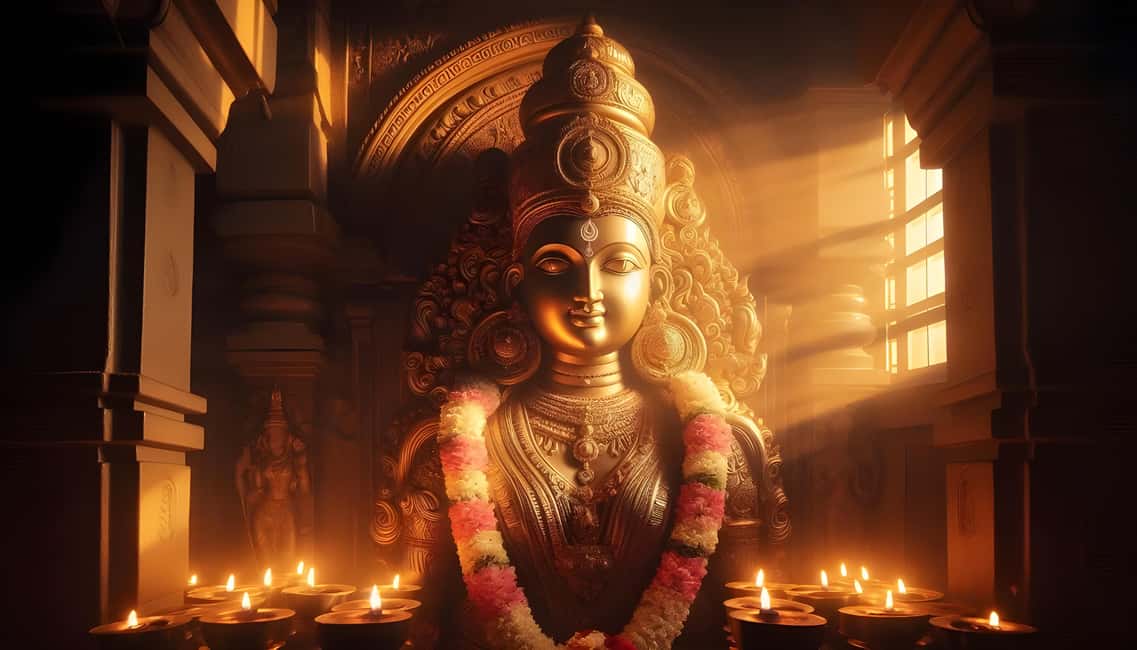
Kamakshi Amman Temple is the spiritual heartbeat of the day. This stop matters because Kamakshi is described as one of the revered Shakti Peethas, linked to Goddess Kamakshi. You’re also specifically visiting for homage, and that changes the vibe from “tourist sights” to “religious experience.”
The tour also advertises skip-the-line style access through a separate entrance. Here’s the honest consideration: in real life, that kind of access depends on how the local process is handled that day. One past guest reported that the guide wasn’t able to manage the promised Darshan flow on arrival, and they ended up paying a priest for the Darshan anyway. That doesn’t mean it will happen to you—but it’s a reminder to keep your expectations flexible.
How to handle this well: be respectful, dress modestly, and arrive ready to follow temple instructions quickly. If Darshan guidance is a major part of your trip planning, message your provider ahead of time and ask how the Darshan arrangement works in practice for Kamakshi on your date.
You can also read our reviews of more private tours in Chennai



Varadaraja Perumal: Divya Desam, Gopurams, and a Different Temple Mood
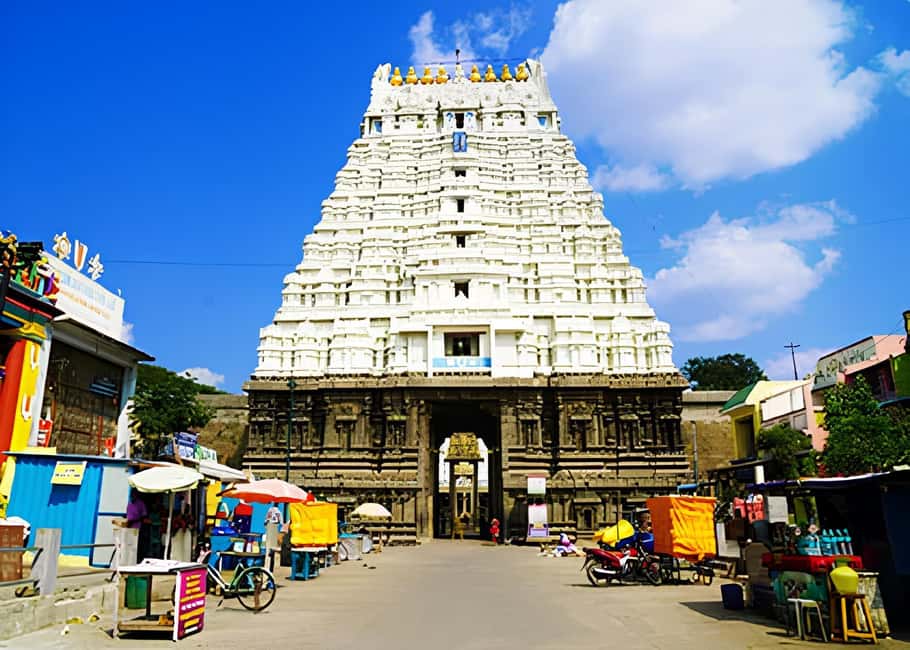
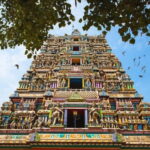
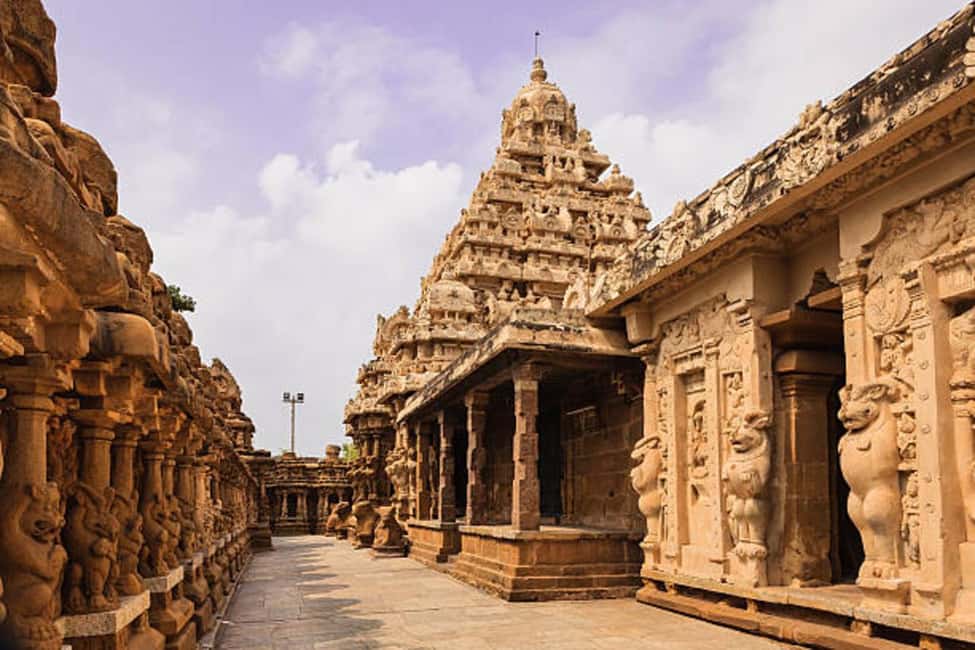
You’ll finish the main temple circuit with Varadaraja Perumal Temple, a Divya Desam important for Vaishnavite heritage. This stop has a different energy than Shiva-focused sites you visited earlier. The temple is known for towering gopurams, which immediately change how you perceive scale and sacred space.
This is a good temple to slow down slightly, because by the time you arrive here you understand the pattern of Kanchipuram: huge compounds, layered symbolism, and a strong link between devotion and art. The guide can help you spot what makes this temple read as Vaishnavite, rather than treating every South Indian temple as the same style.
If you’re someone who likes to connect architecture to belief, this is one of the better moments to do that. It’s also a solid “last temple” because it leaves you with a sense of grandeur instead of exhaustion—assuming your timing is on track.
Kanchipuram Silk Weaving Centre: Living Craft, Short Time, Real Choices
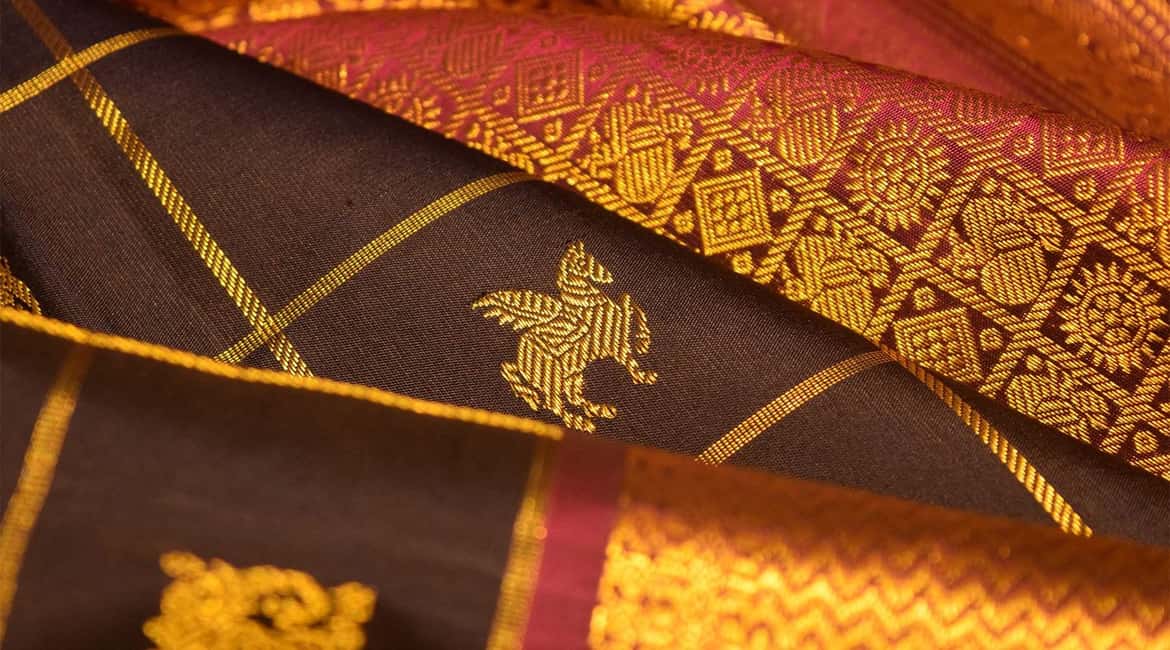
Then you shift from stone to silk. You’ll spend about 1 hour at a traditional Kanchipuram silk weaving centre, where you learn how the world-famous sarees are made and why the craft is so time-sensitive. This is the right kind of stop for Kanchipuram, because the city’s identity isn’t only temples—it’s also textile skill passed down over generations.
One thing to plan for: the weaving visit can feel brief, and it may include a move toward shopping. Some visitors have said they felt more expected at the shop than focused on the full weaving process. That doesn’t make the craft less real—it just means your time is limited, so watch actively while you’re there.
Smart shopping tip: decide in advance whether you want silk now, or only want to learn. If you do want to buy, compare what you’re offered and don’t let a quick pitch rush you. Kanchipuram silk is famous for a reason, but you still need to be clear about what you’re paying for.
Lunch, Temple Etiquette, and What Can Trip You Up
Lunch is typically your own expense, and the tour includes a break around early afternoon. You’ll likely end up with a South Indian meal suggestion based on location and timing, but it’s not built into the tour price. If you’re vegetarian, ask what options are available before you sit down.
Temple etiquette is the other big practical topic. You should plan for modest attire at religious sites and comfortable shoes because many entrances ask visitors to remove footwear. One useful tip from experience: expect places to require taking off not only shoes but also socks, so wear slip-in footwear that can handle quick changes.
Also keep these reminders in mind:
- Bring a charged smartphone and a camera if you want photos.
- Carry some local currency for small purchases where cards might not work.
- Follow rules like no smoking and no alcohol in the vehicle.
Price and Value: Does $72 Per Person Make Sense?
At $72 per person for a private full-day tour, you’re paying for three things: the private car, guided temple access, and entrance fees across multiple sites. In other words, you’re not just buying sightseeing—you’re buying time saved and stress reduced. If you have even a small group or you hate traffic puzzles, value goes up fast.
Where value can dip is when expectations aren’t aligned. For example, if you strongly care about guaranteed skip-the-line Darshan at Kamakshi, you’ll want clarity ahead of time. Also, if you’re hoping for a deep, long weaving demonstration, remember the weaving centre stop is about an hour and can include retail time.
Still, for many visitors, the biggest value is the structure: five iconic temples plus silk craft in one day without you needing to plan routes, tickets, and temple timing. That’s the kind of convenience you feel immediately when you’re actually on the ground.
Who This Tour Fits Best (and Who Should Skip It)
This tour works well if you want a focused Kanchipuram day with minimal hassle. It’s also a good match for anyone who enjoys temple art and wants help reading symbolism instead of only taking photos. If you’re visiting around Pongal, you may feel extra ceremonial energy, and the early start becomes even more important to beat crowds and traffic.
On the other hand, it’s not suitable for:
- Pregnant women
- Wheelchair users
- People over 95 years
- People over 70 years
Also, if you’re the type who needs long stops without walking, this itinerary may feel like a steady sequence rather than a slow, lingering day. It’s designed to cover major highlights, not to let you wander freely between them.
Should You Book This Kanchipuram Tour?
Book it if you want a private, driver-supported day that takes you to the temples people actually travel to Kanchipuram for—plus a chance to see silk weaving in action. I’d also book it if you’re comfortable with temple etiquette, shoe removal, and the reality that the day is paced to fit multiple major sites.
Don’t book it if skip-the-line Darshan is the single most important thing in your plan and you can’t tolerate uncertainty about how it’s handled on arrival. Also reconsider if you dislike shopping moments around craft centres, since the weaving stop may lean toward retail time as your hour winds down.
If you do book, my best advice is simple: message your provider for clarity about the Kamakshi Darshan process, wear foot-friendly slip-in shoes, and plan your budget for lunch and any silk purchases. Then you’ll get a day that feels both spiritual and practical—temples in the morning, craft in the afternoon, and a smooth return to Chennai.
FAQ
How long is the Kanchipuram private day tour from Chennai?
The tour lasts about 10 hours.
Where is the pickup?
You can be picked up from Chennai city hotels or from Chennai International Airport.
What language is the tour guide?
The tour is conducted in English.
How many temples are included in the day?
You visit five iconic temples: Ekambareswarar, Kailasanathar, Vaikunta Perumal, Kamakshi Amman, and Varadaraja Perumal.
Is there a silk weaving visit?
Yes. You visit a Kanchipuram silk weaving centre for about 1 hour.
What is included in the price?
The price includes hotel pickup and drop-off, air-conditioned transportation, a professional English-speaking guide, entry fees to attractions in the itinerary, bottled water, and customer support.
Is lunch included?
No. Lunch is not included, and it’s at your own expense.
Does the tour include skip-the-line access?
It includes skip-the-line style access through a separate entrance.
What should I bring for temple visits?
Bring comfortable shoes, a camera, comfortable clothes, long pants (modest dress is required), a charged smartphone, and your passport or ID card (a copy is accepted).
Is this tour wheelchair accessible or suitable for pregnant travelers?
No. It is not suitable for wheelchair users or pregnant women.