REVIEW · CHENNAI
Private Day Trip to Mahabalipuram from Chennai with Expert Guide
Book on Viator →Operated by Wonder tours · Bookable on Viator
Stone stories, packed into one day.
This private Mahabalipuram day trip turns Pallava-era carving into a simple, guided route, starting with pickup from your Chennai stay and ending with lunch. What I like most is the way the guide helps you read the scenes in the rock—people even called out guides like Rajesh for making the timeline and details click. The other big plus is entrance charges and lunch included, so you’re not constantly doing ticket math while trying to enjoy the sites. One thing to keep in mind: the whole circuit is time-boxed to about 7 hours, so you’ll need to move at a steady pace (and keep photo stops efficient).
Mahabalipuram is famous for rock-cut sculptures and temples, and this tour hits the highlights without wasting your day. You’ll stand by the Shore Temple with the Bay of Bengal nearby, then work your way through caves, rathas (chariot-temples), and giant reliefs—basically a walking lesson in how imagination got carved into stone. If you’re the kind of person who wants long, slow study time in every corner, you may feel a bit rushed.
Still, for a first trip from Chennai, it’s hard to beat a structured day with an air-conditioned vehicle, a professional guide, and included admissions. Just bring comfortable shoes and a hat—because once you’re outside, the sun has a say in your pace.
In This Review
- Key highlights worth planning for
- Mahabalipuram is the easiest win if you have one day from Chennai
- Private transport and timing: how the day moves
- Shore Temple by the Bay of Bengal: where the story starts
- Mahishasura Mardini Cave: two giant scenes, one compact stop
- The Mahabalipuram Lighthouse (built 640): an unusual heritage angle
- Ganesh Ratha: chariot-temple carving in one stone
- Trimurti Cave with elephant carvings: when the Pallavas flexed
- Krishna’s Butter Ball: the “how is that balanced?” moment
- Arjuna’s Penance: a massive epic relief you can’t ignore
- Pancha Rathas: five rock-cut chariots in a manageable loop
- Hotel Mamalla Bhavan lunch: simple, included energy for the ride back
- Value for $99: what you really get for the money
- What kind of traveler should choose this day trip
- Should you book this private Mahabalipuram day trip?
- FAQ
- How long is the Mahabalipuram day trip from Chennai?
- Is pickup included, and where do we start from?
- What’s included in the tour price?
- Which sites are part of the itinerary?
- Is this tour private?
- Do you provide tickets, and are entrances covered?
- Can I cancel for a full refund?
Key highlights worth planning for
- A tight Pallava monument route with long reliefs and small caves, so you get variety without switching buses
- Entrance charges included at every stop that matters on this circuit
- Oldest-light-house bragging rights: the Mahabalipuram Lighthouse dates to 640
- Arjuna’s Penance scale: a bas-relief stretching about 100 feet long and 45 feet tall
- Lunch with a clear vegetarian choice at Hotel Mamalla Bhavan (included)
Mahabalipuram is the easiest win if you have one day from Chennai
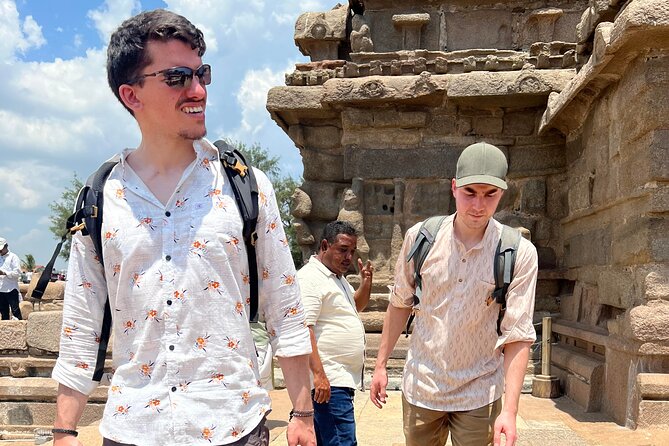
Mahabalipuram works because it’s all in one concentrated zone. In a single day you can go from a coastal granite temple to cave bas-reliefs, to “how did they even do that?” monolith chariots. The scale can feel sudden: one minute you’re looking at a huge narrative relief, the next you’re staring at a stone boulder that seems to defy gravity.
This is also a good way to understand southern Indian temple art without needing to be an art historian. With a good guide, you can connect names like Pallava kings and epic figures to what you’re seeing on the walls—otherwise the carvings can look impressive but disconnected.
If you love architecture, mythology, or just clever stonework, this tour hits the sweet spot: iconic sites, short enough stops, and just enough time to look closely.
You can also read our reviews of more guided tours in Chennai


Private transport and timing: how the day moves
This is a private day trip, so it’s only your group. You get pickup offered from your stay in Chennai and travel in an air-conditioned vehicle. The schedule is built like a classic “see the key monuments” loop, with most stops in the 15–30 minute range.
That timing is why it’s such a good value. With a shared taxi you’d likely spend part of the day figuring out routes and entry points. With this setup, the driving and admissions are handled, and the guide keeps the order logical so you’re not zig-zagging across the site area.
A practical note: because stops are short, your best strategy is to pick one or two features to focus on at each location (a main carving, a specific panel, or the building’s shape). You’ll get more out of the day than trying to “cover everything” in quick glances.
Shore Temple by the Bay of Bengal: where the story starts
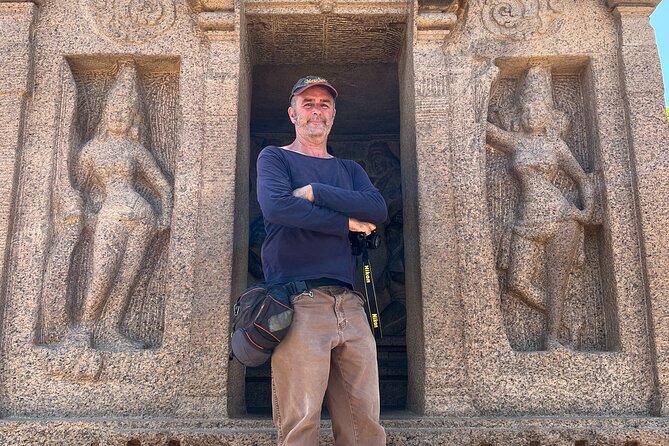
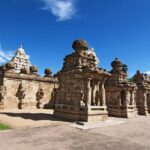
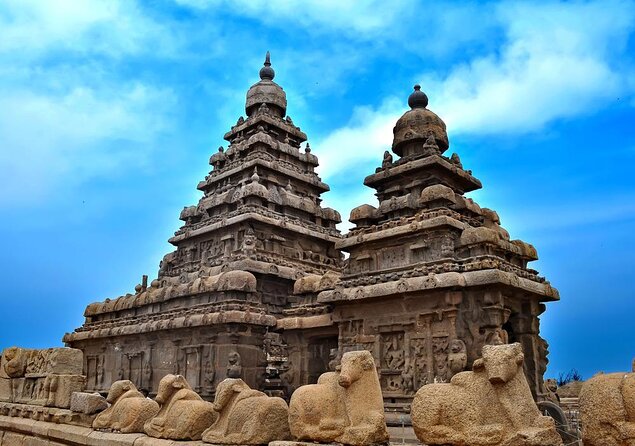
Your first major stop is the Mahabalipuram Seashore Temple, a granite temple overlooking the Bay of Bengal. It’s tied to the Pallavas, and the tour framing connects it to when Mahabalipuram was a major port for their kingdom.
What makes this stop worth your attention is the setting. Looking at the temple with the sea context in mind helps you understand why a coastal temple mattered. Even if you’re not reading every carving from up close, you’ll feel the “port city” logic instantly: this is architecture built for a world that moved by water.
Time at the temple is listed at about 30 minutes, including admission. That’s enough for a careful exterior look and a good first orientation before you jump into the rock-cut world deeper inland.
Mahishasura Mardini Cave: two giant scenes, one compact stop
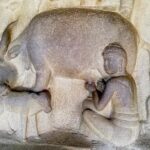
Next comes the Mahishasura Mardini Cave, where you’ll see two imposing bas-reliefs. One shows Lord Vishnu sleeping on coils of a serpent, and the other shows Goddess Durga fighting the demon Mahishasura—Durga mounted on a lion, mid-action.
Caves like this can be hit-or-miss depending on how the carvings are explained. With a guide, the scenes become more than generic religious art. You start noticing how each story is staged: the resting posture, the tension of the fight, and how the figures are arranged to make the action readable.
This stop is about 20 minutes with admission included. If you’re prone to wandering, set a plan: locate both main panels, then spend extra time on the one that catches you first. You don’t need long to get the meaning if your guide points out the key visual cues.
The Mahabalipuram Lighthouse (built 640): an unusual heritage angle

Then you get a change of pace: the Mahabalipuram Lighthouse, built in the year 640. The tour information calls it India’s oldest lighthouse and one of the oldest in the world, and it connects its purpose to Mahabalipuram’s busy port life since the 7th century.
Even if you’re not normally a lighthouse person, this stop adds context. The monuments you’ve been looking at are about belief and power. The lighthouse is about travel safety and trade—different motives, same world.
You’ll spend about 20 minutes here. It’s short, but the “built in 640” detail gives the stop instant weight. If the weather is harsh (bright sun, wind off the sea), bring water and keep moving—this is not the place for a long sit-down.
You can also read our reviews of more private tours in Chennai

Ganesh Ratha: chariot-temple carving in one stone
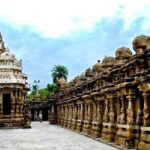
The Ganesh Ratha Temple is a sculpted “chariot” carved out of a single stone. The tour data notes it was originally dedicated to Lord Shiva, and it now has the deity of his son Lord Ganesh. It dates to the 7th century under King Mahendravarman I.
Rathas can surprise you because they look like forms with function, not just decorations. You’re essentially standing before architecture that imitates a vehicle shape—stone doing the job of wood and craftwork.
Your time is short here (about 15 minutes), so use that window wisely: look for the overall chariot silhouette first, then zoom in on how the carving transitions between sections. If your guide talks through why the dedication shifted, you’ll get more out of those minutes than just admiring the craftsmanship.
Trimurti Cave with elephant carvings: when the Pallavas flexed
The Trimurti Cave is described as a fine example of the Pallavas’ rock-cut architecture style, dedicated to the holy trinity of Hindu gods: Brahma, Vishnu, and Shiva. There are also fine carvings of elephants.
This is one of those stops where the explanation makes the art easier to navigate. With the Trimurti theme in mind, you’ll have a clearer reason for what you’re seeing instead of treating it like a collection of figures. And the elephant carvings are a helpful hook—animals often act like visual anchors when carvings feel dense.
You’re given about 20 minutes here with admission included. I’d recommend using your guide’s cues to spot the main deity-related elements, then only afterward letting yourself get distracted by secondary details like elephants.
Krishna’s Butter Ball: the “how is that balanced?” moment
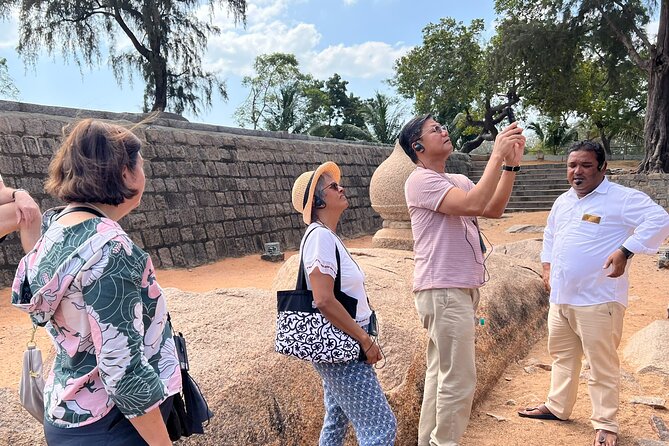
Next is Krishna’s Butter Ball, a granite boulder poised on a sloped stony surface. The tour description says it seems to defy Newton’s laws of gravity and has not moved an inch despite its precarious position.
This stop is more playful than the caves and temples, and that’s a good thing. It breaks the heaviness and gives you a “pause and react” moment. Even without a long explanation, your eyes will do the work: you’ll stare at the angle and feel the disbelief.
It’s about 20 minutes, admission included. Don’t spend the whole time hunting for the single best angle for a photo—take a minute to look, then move on. The best part is the contrast: after you’ve seen carefully staged mythological scenes, it’s fun to encounter a stone that feels like a magic trick.
Arjuna’s Penance: a massive epic relief you can’t ignore
Then you reach Arjuna’s Penance, described as one of India’s most magnificent pieces of ancient art, a bas-relief monument depicting scenes from the Mahabharata. The relief runs about 100 feet long and about 45 feet tall.
Scale changes how you experience reliefs. At this size, you stop seeing it as “one carving” and start seeing it as a story wall. You’ll likely notice recurring groups of figures and narrative moments as you walk along the viewing path.
Time is listed at about 20 minutes with admission included. That’s enough if you follow a simple method: watch the “big picture” from farther back, then choose a section where the figures are most active and read it like a comic strip. If you try to scan the entire relief like it’s a book, you’ll end the stop tired.
This is also a major reason I like doing Mahabalipuram with a guide. The guide can point you to the scenes that people commonly miss, so your time doesn’t get wasted.
Pancha Rathas: five rock-cut chariots in a manageable loop
Your next stop is Pancha Rathas, also called the five chariots. The tour description says these are rock-cut monolith structures, with chariots dedicated to figures from the Mahabharata epic—Draupadi, Arjuna, Nakul, and Sahadeva are specifically mentioned.
This area feels different from the cave and the giant relief. It’s more architectural. You can compare forms. You can also do a bit of “walk and compare” logic: notice how the shapes change, how the carving style shifts, and how each ratha seems to be its own mini world.
Your time here is about 30 minutes, with admission included. That extra half-hour matters. It gives you breathing room to move between structures and actually notice differences instead of rushing.
Hotel Mamalla Bhavan lunch: simple, included energy for the ride back
Lunch is included at Hotel Mamalla Bhavan, and the tour information specifies it’s a pure vegetarian restaurant. You’ll have about 30 minutes.
After stone monuments, a predictable vegetarian lunch is a relief. It keeps the day flowing, and it’s one less decision you have to make while you’re traveling. If you have dietary needs beyond vegetarian, the tour data doesn’t spell that out—so it’s smart to ask in advance when you book.
30 minutes is enough to eat and reset without turning lunch into a second “destination.” You’ll want that energy for the final stretch of the day back toward Chennai.
Value for $99: what you really get for the money
At $99 per person, this private day trip is competing with two common costs: a day driver plus separate museum/temple entrances plus lunch. Here, the big expenses are included: entrance charges, lunch, the professional guide, and an air-conditioned vehicle.
That matters for two reasons:
First, it reduces hassle. You don’t need to stop and figure out who pays what.
Second, a guide can make a short stop actually count. A 15–30 minute site becomes more meaningful when the story is explained, and you’re not left guessing what you’re looking at.
There’s also the “private” part. Even though it’s a private tour, the tour summary notes group discounts may be available. If you’re traveling with others, it may lower the per-person feeling of cost.
Not included items are portage and tips, which is standard for many tours. If you’re the type who carries your own small bag and travels light, you might barely notice this. If you’ll rely on staff for luggage, budget a bit more.
What kind of traveler should choose this day trip
This tour fits best if you want:
- A structured route that covers the main Mahabalipuram monuments in one go
- A day that’s doable even if you don’t have local knowledge of temples
- Short, focused visits where a guide helps you understand what you’re seeing
It may be less ideal if you want hours of silence in every cave or plan to treat each ratha like a museum exhibit. The schedule is efficient, not slow.
It’s also a great option for a Chennai stopover. One of the common themes in the kind of feedback this tour gets is that people use limited time in Chennai to squeeze in Mahabalipuram without turning the day into logistics.
Should you book this private Mahabalipuram day trip?
Yes—if you want a well-paced “greatest hits” day with included admissions, a pro guide, and a comfortable ride. The stops are the kind that reward explanations, especially the caves and the big reliefs, and the route is tight enough to keep your day simple.
I’d consider booking especially if you value:
- a guide who can connect the carvings to the stories,
- included entrances so you can focus on looking,
- and a vegetarian lunch that keeps the day moving.
If you’re very sensitive to crowds and heat, or if you need long dwell time at each monument, then you might feel the short stop durations. In that case, a slower multi-day approach could suit you better. But for one day from Chennai, this is a strong, practical pick.
FAQ
How long is the Mahabalipuram day trip from Chennai?
It’s about 7 hours (approx.).
Is pickup included, and where do we start from?
Pickup is offered from your stay in Chennai.
What’s included in the tour price?
Lunch, all fees and taxes, a professional guide, entrance charges, and an air-conditioned vehicle are included.
Which sites are part of the itinerary?
You’ll visit the Shore Temple, Mahishasura Mardini Cave, the Mahabalipuram Lighthouse, Ganesh Ratha Temple, Trimurti Cave, Krishna’s Butter Ball, Arjuna’s Penance, and Pancha Rathas, plus lunch at Hotel Mamalla Bhavan.
Is this tour private?
Yes, it’s a private tour/activity, and only your group participates.
Do you provide tickets, and are entrances covered?
Entrance charges are included, and a mobile ticket is provided.
Can I cancel for a full refund?
Yes. You can cancel up to 24 hours in advance for a full refund.