REVIEW · BANGALORE
Cubbon Park Walking Tour and Explore Bangalore’s Heritage
Book on Viator →Operated by 5 Senses Walks · Bookable on Viator
Cubbon Park tells Bangalore’s story in two hours. This guided walk strings together major landmarks—State Central Library, Attara Kacheri, and Vidhana Soudha—so the city’s shift from colonial-era power to modern democracy makes sense fast. You get a guide who turns statues, buildings, and street symbolism into clear, human stories.
I like two things most here: first, the walk is short and focused, so you still feel like you saw the core of central Bangalore without spending a whole day in transit. Second, the guide’s storytelling connects British-era administration and the Mysore Kingdom’s presence in ways that help you read the architecture instead of just looking at it. One consideration: most of the experience is outdoors in a park setting, so plan for walking time and steady pacing rather than long stops.
In This Review
- Key highlights before you go
- Why Cubbon Park is the smartest first stop in central Bangalore
- Timing and meeting point: a walk that fits real sightseeing days
- Stop 1: Cubbon Park paths, statues, and the political geography of the city
- Stop 2: Seshadari Iyer Memorial and the State Central Library
- Stop 3: Karnataka High Court and Attara Kacheri (Eighteen Offices)
- Stop 4: Vidhana Soudha and the shift to post-independence India
- What the guide actually adds (and why it changes the tour)
- Price check: is $55 per person good value?
- How to get the most from Cubbon Park (practical, no-nonsense tips)
- Who this tour is best for
- Should you book the Cubbon Park heritage walk?
- FAQ
- FAQ
- How long is the Cubbon Park walking tour?
- How much does the tour cost?
- Where does the tour start?
- Where does the tour end?
- Are admission tickets included?
- What is the group size limit?
- Is free cancellation available?
Key highlights before you go
- A tight 2-hour route through Cubbon Park and the government-and-law district right after
- State Central Library inside a red Gothic landmark, with access to a major book-and-manuscript collection
- Attara Kacheri explained (the “eighteen offices” idea) at the Karnataka High Court setting
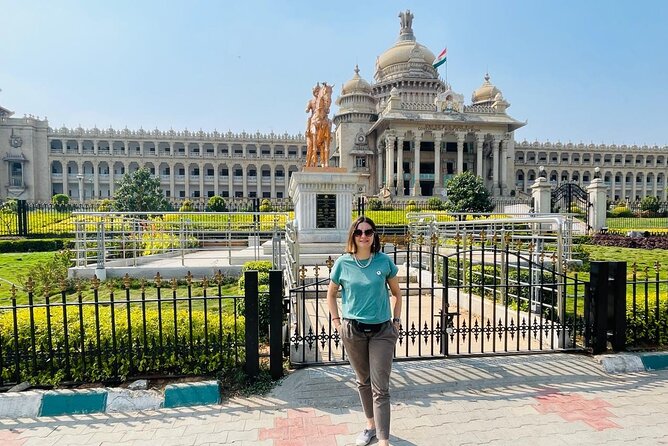
- Vidhana Soudha’s Neo-Dravidian look and why it matters in post-independence Bangalore
- Max 15 people keeps the group manageable and the guide’s attention more personal
- Mobile ticket and near public transportation make it easier to start on time
Why Cubbon Park is the smartest first stop in central Bangalore
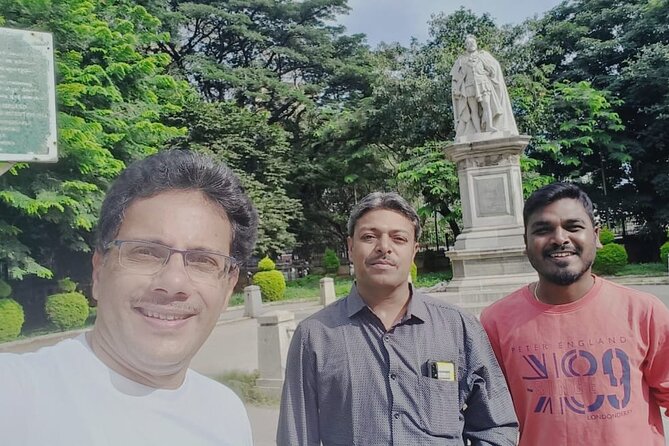
Cubbon Park is one of those rare places where you can get grounded in a city’s layout quickly. You’re walking inside a big green breathing space, but the boundaries are close enough to major institutions that the “park vs. government” contrast feels immediate. That matters because Bangalore’s central core is where power, law, and education show up in stone, not just in museum exhibits.
What makes this walk especially useful is the story logic. You’re not treating each stop like a random photo spot. Instead, the guide helps you connect the dots: who governed, how the city administered day-to-day life, and how India’s political identity changed over time. By the time you reach Vidhana Soudha, you’re already holding the background in your head.
You can also read our reviews of more walking tours in Bangalore


Timing and meeting point: a walk that fits real sightseeing days
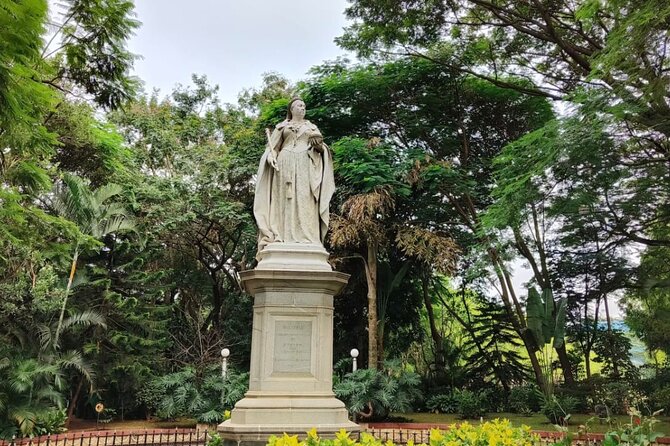
This is designed as a 2-hour guided outing with a small group capped at 15 people. The route runs roughly like this: about 45 minutes in Cubbon Park, then 15 minutes at the Seshadari Iyer Memorial/State Central Library, around 30 minutes at the Karnataka High Court/Attara Kacheri, and another 30 minutes at Vidhana Soudha and Attara Kacheri across the avenue.
The meeting point is at the Main gate, 27 Cubbon Rd, near St. Andrew’s Church, in Tasker Town, Shivaji Nagar. The walk finishes at Vidhana Soudha, Ambedkar Veedhi, Sampangi Rama Nagar.
Why you should care about this layout: you start at a clear landmark (St. Andrew’s Church area), spend the first part in greenery, then end right at the biggest government building. That means your walk ends where a lot of central sightseeing and transport options are likely to be convenient.
Stop 1: Cubbon Park paths, statues, and the political geography of the city
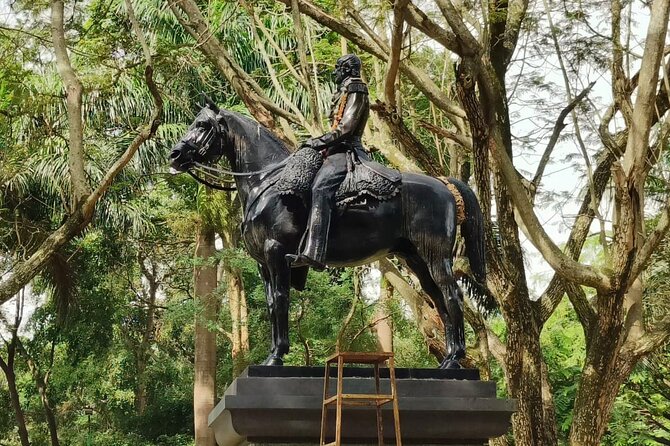
You begin in Cubbon Park itself, and that’s the secret sauce. The park isn’t just a break from traffic; it’s part of the city’s power map. As you walk, you’ll see how open grounds and planned landscaping frame the institutions around the park edges. The guide’s job here is to help you notice details you’d normally miss—statues, building alignments, and how the park functions as a central public space.
A big plus is the pacing: 45 minutes is long enough to feel you’re “in” the park, but short enough that you’re not losing the thread of the heritage story. You’ll likely leave with a better sense of where Bangalore’s historic core sits relative to today’s streets.
A small drawback to keep in mind: because it’s a walking tour, you won’t get long, slow museum-style time inside buildings yet. Save that expectation—this is more about learning to read the city as you move through it.
Stop 2: Seshadari Iyer Memorial and the State Central Library
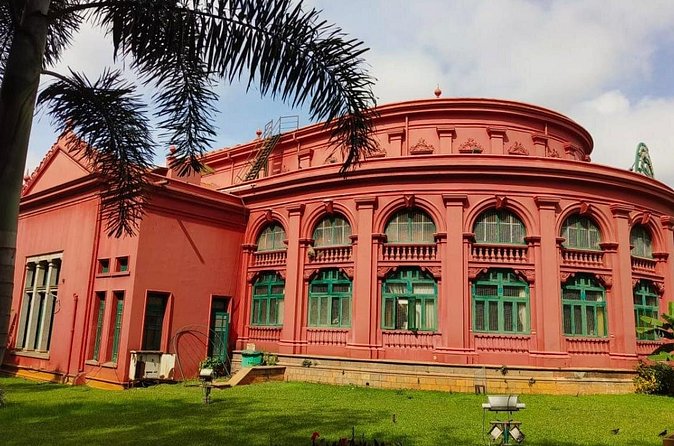
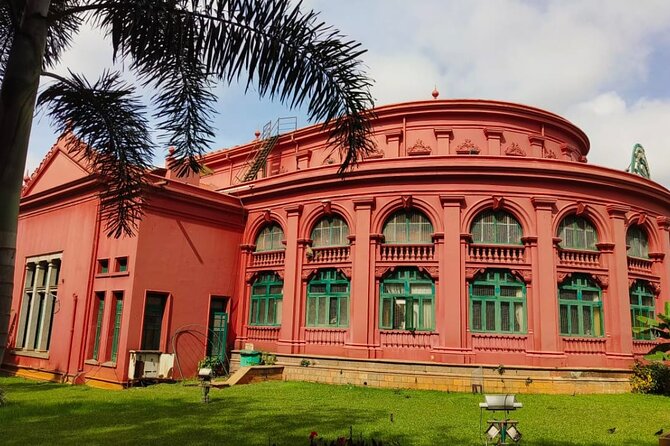
The tour’s first indoor-type moment centers on the State Central Library, housed in the Seshadari Iyer Memorial. The standout here is the setting: a striking red Gothic building inside the park. That visual matters because the architecture helps you feel how education and administration were framed as important public roles.
The State Central Library is said to hold over 300,000 books plus rare manuscripts, so even if you’re not a deep-drawer book collector, it gives the visit weight. This is a place where the city’s idea of knowledge becomes physical—books treated like assets of cultural memory, not just private property.
You’ll also learn about Sir Sheshadri Iyer, the person connected with this memorial. The value isn’t trivia for its own sake. It’s context: when you understand who a building honors, you understand what the era wanted to signal about learning, civic identity, and authority.
Time on this stop is about 15 minutes, with entry included. It’s a quick introduction, so if you’re the type who wants to do a full library day, you’ll probably want to pair this tour with a separate time for longer exploration later.
Stop 3: Karnataka High Court and Attara Kacheri (Eighteen Offices)
From the library, you move toward legal and administrative history at the Karnataka High Court. The guide’s storytelling focuses on Attara Kacheri, a name you’ll hear explained as “eighteen offices.” That phrase is a helpful anchor: it hints that this wasn’t just a courthouse. It was part of the machinery of governance.
The building context here is concrete: it was built in 1868 and today serves as the High Court of Karnataka. Seeing “justice” in this kind of setting gives you a different angle on rule of law. It’s not an abstract concept; it’s in the same halls, within walls designed for authority.
Another reason this stop lands: it bridges eras. Colonial administration structures and the later Indian state’s institutions overlap in the same general physical story. That’s exactly the kind of continuity you want a guide for, because it can be hard to understand from street level alone.
This section runs about 30 minutes, and entry is included. Expect this to be more about understanding function and symbolism than about long interior wandering.
You can also read our reviews of more historical tours in Bangalore
Stop 4: Vidhana Soudha and the shift to post-independence India
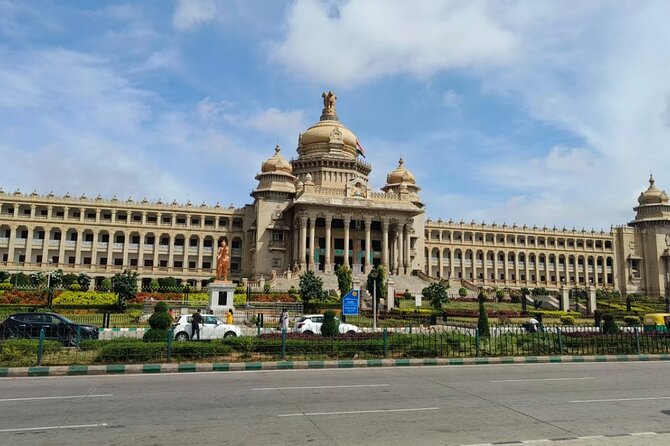
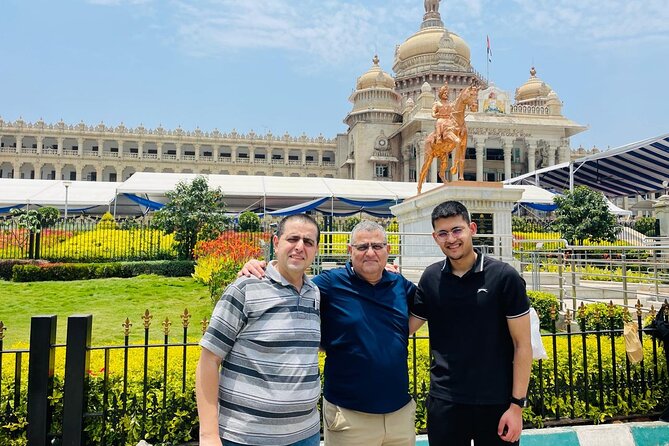
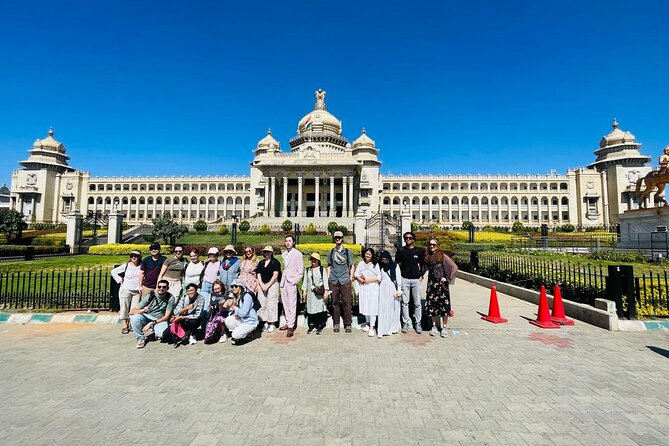
Across the avenue, you reach Vidhana Soudha, which is described as India’s largest legislative building. This is the payoff moment where the city’s political identity becomes visible in architecture.
What you’ll learn here is the “why” behind its design. Vidhana Soudha was completed in 1956 in a Neo-Dravidian style. That detail matters because it signals confidence and cultural self-definition in the years after independence. It’s not copying older forms just to decorate; it’s using design language to communicate identity and legitimacy.
The tour also ties Vidhana Soudha back to Attara Kacheri. In practical terms, you get to compare two different “power styles” across a roadway: one rooted in administrative history and legal continuity, the other representing India’s legislative future building itself in public view.
This last stretch takes about 30 minutes, with stops focused on Vidhana Soudha and the Attara Kacheri area. You end right where it’s easiest to keep exploring nearby. If you’re planning your own rest of the day, this finish point is a strong place to pivot into additional central Bangalore sights.
What the guide actually adds (and why it changes the tour)
A heritage walk can turn into a list of buildings if the guide doesn’t connect the dots. This one is built around a guide who treats the landmarks like chapters in a story. You’ll hear explanations tied to colonial power structures and the way Indian heritage and modern democracy took shape in the same central zone.
In particular, the tour’s stand-out value is that the stories aren’t stuck in one era. You’re guided through the connection between the British and the Mysore Kingdom as it relates to Cubbon Park and the surrounding institutions. That kind of linkage helps you avoid the common travel mistake: memorizing facts but not feeling the timeline.
If your group gets a guide named Vignesh, the style noted is friendly and story-driven, with a knack for keeping the group engaged while moving at a good pace. Even if you’re not focused on architecture, that energy makes the two hours feel like it passes quickly—in a good way.
Price check: is $55 per person good value?
At $55 per person for about 2 hours, the key question is what you’re buying besides walking and photos.
You’re paying for:
- A guided route through multiple high-signal landmarks in central Bangalore
- Entry where included (with park admission free and other stops listing included tickets)
- A small group cap (15), which often means less “lost time” and better chances to ask questions
- A mobile ticket, so you’re not scrambling for paper
- A guided narrative that saves you from doing all the “who built what and why” research yourself
If you plan to visit only one or two of these places on your own, you might spend similar money on transport and independent ticketing—without the story that makes them click. This tour is most worth it when you want understanding, not just stamps on a sightseeing checklist.
Also, group discounts are available, which can make the price feel more manageable if you’re going with friends. I’d treat this as a solid “orientation + deep context” experience for your first couple of days in Bangalore.
How to get the most from Cubbon Park (practical, no-nonsense tips)
Here’s how I’d set yourself up for a smooth experience.
Wear comfortable walking shoes. The itinerary includes multiple outdoor-to-indoor transitions and a decent stretch of park walking before you reach the buildings.
Plan your photo expectations. This is a guided walking format with short stops: about 15 minutes for the library and 30 minutes at each major government/justice focus point. You’ll get chances for photos, but you won’t have endless time to set up a full shoot at every location.
Bring a basic day bag. Since the tour starts at the Cubbon Rd area and ends at Vidhana Soudha, you’ll appreciate having water and sun protection. (It’s a park day, so conditions can change quickly between shade and open sun.)
Use the guide’s context while you’re still there. The best way to enjoy this kind of walk is to listen for one clear idea at a time—like what Attara Kacheri means, or why Neo-Dravidian style matters in 1956—then look for that idea in the building details while you’re standing close.
Who this tour is best for
This walk is a great match if you:
- Want a fast way to understand Bangalore’s central heritage without jumping between far-flung neighborhoods
- Like your sightseeing tied to explanations—especially where architecture and politics overlap
- Prefer smaller groups and a guide-led storyline rather than a self-guided scramble
It’s less ideal if you:
- Want a long museum-style pace
- Hate walking outdoors, even if it’s in a greener setting
- Expect a deep research session at each indoor site (the time is short by design)
Should you book the Cubbon Park heritage walk?
Yes, if you’re in Bangalore for a short stay or you want your first encounter with Cubbon Park to come with meaning. This is one of the better “use-your-time” options because it bundles the park, education, law, and legislation into a single coherent narrative—and does it in about two hours with a small group.
I’d book it especially if you care about how cities grow politically and culturally, because the guide’s stories connect the British-era administrative imprint and the Mysore Kingdom’s links to the places you see today. If you’re mainly chasing views, this will still be pleasant, but it shines most when you want understanding as part of the sightseeing.
FAQ
FAQ
How long is the Cubbon Park walking tour?
The tour lasts about 2 hours.
How much does the tour cost?
It costs $55.00 per person.
Where does the tour start?
The start point is the main gate at 27 Cubbon Rd, near St. Andrew’s Church, Tasker Town, Shivaji Nagar, Bengaluru.
Where does the tour end?
The tour ends at Vidhana Soudha, Ambedkar Veedhi, Sampangi Rama Nagar, Bengaluru.
Are admission tickets included?
Cubbon Park admission is free, and tickets are included for the State Central Library and the Karnataka High Court/Attara Kacheri and the Vidhana Soudha area.
What is the group size limit?
The tour has a maximum of 15 travelers.
Is free cancellation available?
Yes. You can cancel for a full refund up to 24 hours in advance of the experience start time.