REVIEW · CHENNAI
Exploring Georgetown: A Heritage Walking Tour of Chennai
Book on Viator →Operated by Wonder tours · Bookable on Viator
Chennai’s market streets have a memory. On this heritage walk through George Town (the old Black Town), I like how the area’s trade routes feel alive, not museum-still. You’ll also get major sights worked into the route, from Madras High Court to the Armenian Church, so the walk turns into more than just shopping lanes. One thing to consider: market coverage can depend on shop hours, and one past booking noted a meeting-point mismatch that caused confusion until the guide adjusted the plan.
This tour is a practical way to see the “working” side of Chennai in about 2.5 hours. At $29 per person, you’re paying for a guided route plus admissions at the stops, with bottled water and snacks included. It’s a private tour for your group, so you can ask questions and move at a pace that doesn’t feel like a human conveyor belt.
In This Review
- Key highlights worth showing up for
- Georgetown’s story is written in the streets
- Price and value: what $29 buys you (and what it doesn’t)
- Meeting up in George Town without losing your mind
- Kotwal Chavadi Market: the wholesale heartbeat of the neighborhood
- Madras High Court: Indo-Saracenic grandeur in a short stop
- Armenian Church: centuries of trade and refugee community links
- Dare House (#234): Art Deco business power by Parry’s
- The tour experience overall: guide-led, ticketed, and easy to fit
- Who this tour suits best (and who should pick something else)
- Should you book the Georgetown heritage walking tour?
Key highlights worth showing up for
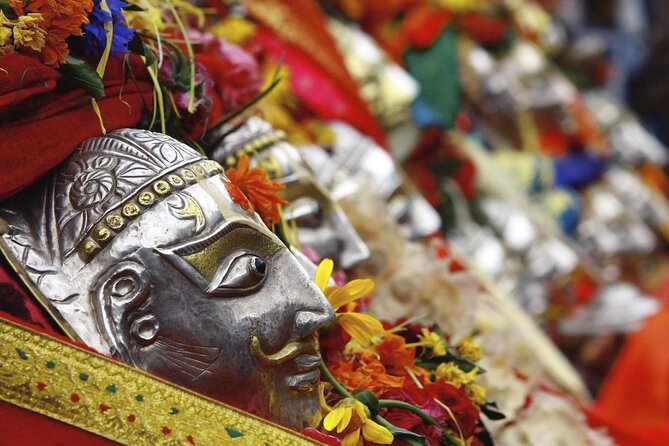
- Follow the Black Town to Georgetown timeline without reading a single textbook page
- Kotwal Chavadi Market gives you that wholesale-market feel in the heart of George Town
- Madras High Court is a quick stop with serious architectural presence
- Armenian Church connects the neighborhood to centuries of trade across communities
- Dare House hints at how Parry’s business shaped local history
- Admissions, water, and snacks are bundled in, so you’re not doing extra budgeting on the fly
Georgetown’s story is written in the streets
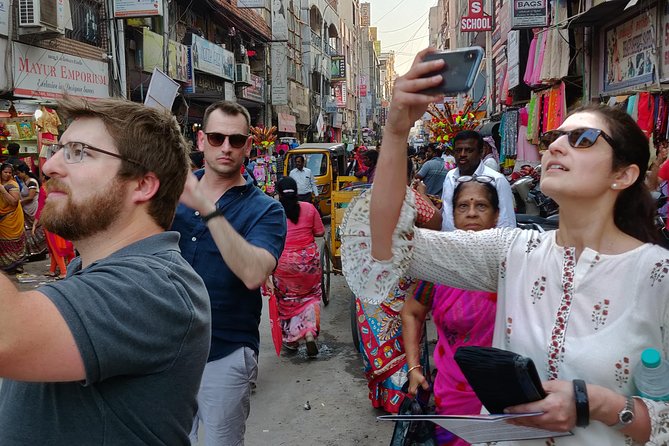
Georgetown is one of those places where you can see layers of Chennai history while still dealing with the present day. The neighborhood grew after the founding of Fort St. George in the late 1600s, when locals settled nearby to trade with the fort. Over time, parts of the original Black Town were cleared to make space for an open area outside the fort. When people moved and the area’s name shifted, the vibe stayed commercial—just with new buildings and new “who trades with whom” stories.
The name Georgetown came later. In 1910, when King George visited India, Black Town was renamed Georgetown. That matters because you’re not just walking through old streets—you’re walking through an economy that kept adapting. You’ll notice it most at market level: narrow lanes, warehouses, covered wholesale spaces, street stalls, and shopfronts packed with goods. It’s a working neighborhood, not a theme park.
The tour’s route is built around that idea: trade first, then institutions, then community history. That sequence makes the sights feel connected, not random. I like that you get context on why people settled here and what the streets were used for, instead of treating each stop like a photo-op.
You can also read our reviews of more walking tours in Chennai
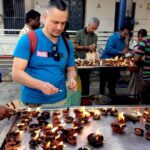


Price and value: what $29 buys you (and what it doesn’t)
At $29 per person, this is priced like a solid city walking tour, not a long private driver day. The value is in the mix: you’re getting a guide, bottled water and snacks, and admission tickets included for each of the main indoor stops.
In plain terms, the tour helps you avoid the two common headaches in busy places:
- You don’t have to figure out which buildings are worth your time.
- You don’t have to pay extra entrance fees one by one.
Also, the tour is private for your group, so you can ask practical questions as you go. If you’re the type who likes to understand what you’re looking at—how a market became a market, why a building was built, who lived nearby—you’ll feel your money doing real work.
What it doesn’t replace is free time. This is not an “all-day market roam” where you can bargain for hours. It’s more like a guided “get your bearings fast” route—use it to learn, then decide what you want to revisit afterward.
Meeting up in George Town without losing your mind
This walk starts at C1 Flower Bazaar Police Station on Rattan Bazaar Rd, in George Town. That’s helpful because police-station landmarks tend to be easier to reference than small shop names that change day to day.
One caution from past participants: the meeting point in the confirmation can sometimes be different from what you expect, and market sections may open later than you assume. If you’re arriving early, don’t assume every stall will be ready. Plan to arrive a little before start time and keep an eye on any last-minute message from the provider.
If you want this to feel smooth, do this:
- Have your mobile ticket ready on your phone.
- Take a screenshot of the exact meeting pin you were given.
- If your guide contacts you, follow their directions even if it means a slight adjustment.
A small planning habit like that can save 20 minutes of stressful wandering in a crowded bazaar.
Kotwal Chavadi Market: the wholesale heartbeat of the neighborhood
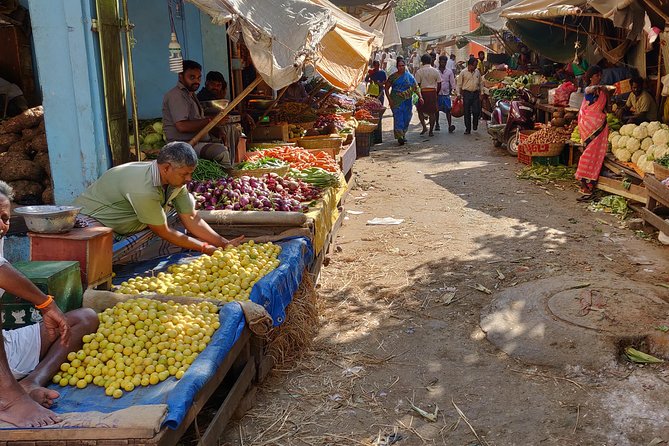
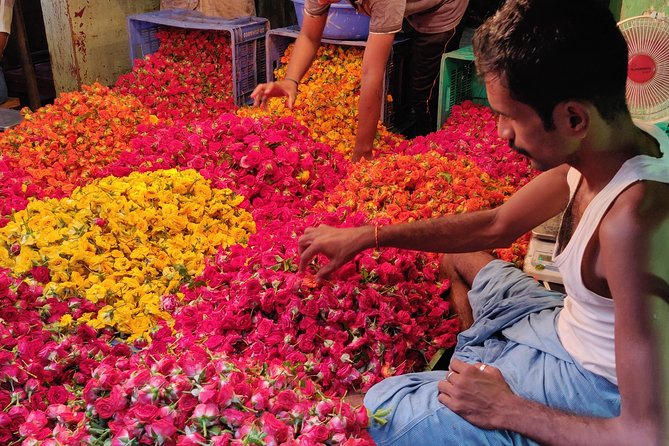
Your first stop is Kotwal Chavadi Market, where George Town’s commercial reputation becomes real. This is the kind of place where you can find plenty of legally sold goods—everything from what people wear to what people cook with and what people write with. Think bangles, fabrics, fruit and vegetables, spices, stationery, jewelry, and more. You’ll see how markets here aren’t “one street of shopping.” They’re networks of stalls, wholesale spaces, warehouses, and retail counters layered close together.
What I like most about starting here is that it sets the frame for the rest of the tour. If you start at the courthouse, you might treat the market as background noise. Starting at the market shows you the economic reason the area grew in the first place.
The downside is also obvious: markets can be loud, crowded, and a bit chaotic—especially if you’re trying to photograph while people are moving around you. Wear comfortable shoes, keep your phone secure, and expect to walk through tight sections.
A practical tip: don’t try to “shop your way through” at the same time as the guide is explaining. If you want to shop, do a quick browse after the tour. During the tour, focus on learning the layout and the story. You’ll shop better afterward because you’ll understand what you’re looking for.
Madras High Court: Indo-Saracenic grandeur in a short stop
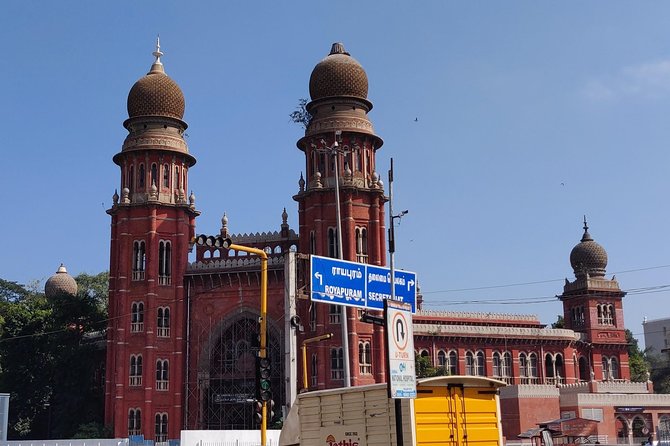
Next you head to Madras High Court, originally established in 1862 by a decree associated with Queen Victoria. The building’s look is described as Indo-Saracenic, which is a good clue that this isn’t just a plain government structure. It’s a major landmark, and even when your time here is limited, the architecture gives you something to read visually.
A 30-minute stop is enough to:
- Get a feel for the building’s scale.
- Take photos without feeling rushed.
- Understand why this site matters in the story of George Town.
You’ll also get a sense of how the neighborhood evolved. The open area outside Fort St. George (part of old Black Town) later became the space where this grand courthouse was built. So this stop is not random; it’s a pivot point from trade-based settlement to institutional power and colonial-era civic development.
The only consideration: this is still a public landmark area. You might need to follow local rules for movement and photography. Go with patience and a calm pace. If you’re hoping for a long, detailed tour of the building interior, this route is not built for that. It’s built to connect the dots.
You can also read our reviews of more historical tours in Chennai



Armenian Church: centuries of trade and refugee community links
The route then moves to the Armenian Church, tied to the historic street where Armenian refugees established trade in silk, spices, and gems over 300 years. That time depth changes how you look at the neighborhood. You stop seeing it as simply “a place where tourists go to shop” and start seeing it as a set of communities that shaped each other through commerce.
This stop is about 30 minutes, which is usually enough to:
- Learn the background of the Armenian trading presence.
- See the church’s place within the neighborhood fabric.
- Get a quiet break from the busier market crush.
If you enjoy cultural history—how migration routes and trade relationships physically shape cities—this is one of the more meaningful parts of the walk. The history isn’t abstract. It connects directly to goods people handled: silk, spices, and precious stones. Those commodities were the engines of long-distance networks, which is exactly what George Town was built to support.
A practical note: religious buildings can have stricter rules than markets. Dress neatly and be respectful with movement and photos. If you feel that the atmosphere is more solemn than the market streets, that’s exactly the point.
Dare House (#234): Art Deco business power by Parry’s
Your final sights include Dare House #234, an iconic Art Deco building that once served as headquarters for Parry’s. The company is tied to Thomas Parry, a Welshman and one of Chennai’s early free merchants. This is a shorter stop (about 15 minutes), but it still lands an important message: commercial history here wasn’t only about local bazaars. Big businesses also left their fingerprints on the skyline and the street-level economy.
Why this stop works on a heritage walk: it shows the modern business layer sitting right beside older trade traditions. The neighborhood didn’t just change names. It changed structures—companies needed office space, infrastructure, and visibility.
Because your time is brief, I’d treat this stop like a “spot it, understand it, photograph it” moment. If you’re the type who likes long explanations, ask your guide a follow-up question. Since the tour is private for your group, you’ll usually get more than just a quick pointer and a walk-on.
If you’re thinking about doing more in George Town after the tour, Dare House is a good anchor. It helps you see where institutional business likely influenced what happened in the markets around it.
The tour experience overall: guide-led, ticketed, and easy to fit
A big part of why this kind of walk is worth it in a city like Chennai is the structure. This tour lasts about 2 hours 30 minutes, and the stops are timed so you get:
- a long market start,
- two mid-length historical landmarks,
- and one shorter architectural/business stop.
You’ll also have admission included at each main stop, which reduces friction. In busy areas, friction is everything. Less time spent figuring out tickets means more time walking with context.
The “private tour for your group” setup also changes the feel. You’re not squeezed into a large group where everyone hears a different version of the story through the noise. It’s easier to ask, to slow down, and to get clarification when something in the street doesn’t make immediate sense.
One more value point: the tour includes bottled water and snacks. That sounds small until you’re in a hot, crowded market area. Those basics keep you comfortable enough to actually enjoy the historical parts instead of rushing just to cool off.
Who this tour suits best (and who should pick something else)
This walk is a great match if you:
- want to understand George Town’s history without reading a long guidebook first
- like markets, old streets, and the logic of how neighborhoods evolved
- want a high-signal route in a limited time window
- prefer a guide-led experience with tickets and basic comfort included
You might look for a different style of tour if you:
- want a lot of free time for shopping at multiple stalls during the tour itself
- need a slow-paced, fully accessible route with long indoor time (the walk includes market streets)
- are expecting a deep, multi-hour museum-style walkthrough
For most people, this is a smart first taste of Chennai’s commercial heart.
Should you book the Georgetown heritage walking tour?
I think you should book if you want a guided way to connect Fort St. George, Black Town, Georgetown’s renaming in 1910, and the community layers visible today. The value is real because admissions and basic comfort are included, and the route mixes market life with landmark stops that explain why the neighborhood looks the way it does.
If you’re deciding last minute, here’s my practical checklist:
- You’re okay with market crowds and narrow streets.
- You want structure more than maximum shopping time.
- You’ll double-check the meeting point info in your confirmation and expect that shop hours can affect what’s open.
If that sounds like your travel style, this is a strong, time-efficient way to experience Chennai beyond the obvious sights.