REVIEW · CHENNAI
Mahabalipuram walking tour by certified travel company
Book on Viator →Operated by Wonder tours · Bookable on Viator
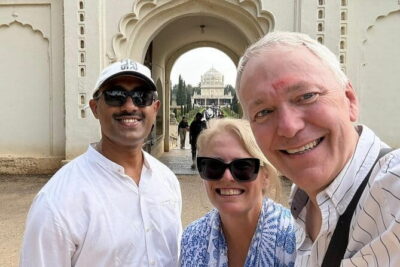
Ancient stone, close up, in a few hours. This Mahabalipuram walking tour is a smart way to hit the big UNESCO sights in a tight time window, with a guide adding the why behind the carvings at every stop. I especially like having a guide who can point out the details and keep the pace moving, whether you’re hearing the stories behind Pallava-era monuments or stopping for extra photos with Rajesh or Basha.
The second thing I like: the plan is built for convenience. Entrance fees are included, and you get a clear end-to-end route (starting at Shore Temple and finishing near Krishna’s Butter Ball), so you’re not spending your precious time figuring out what’s worth your effort. The main drawback is simple: with only 2 to 3 hours and quick stops (most are 15–30 minutes), this is best if you want highlights—not if you’re looking for slow, sit-down study time in every carving.
Key things worth your attention
- Shore Temple: see how Mahabalipuram mattered to Pallava power and sea trade, with Bay of Bengal views
- Pancha Rathas: five monolith “chariot” temples from the 7th century, each tied to characters from the Mahabharata
- Arjuna’s Penance: a long bas-relief that’s easier to understand when you have a guide calling out the scenes
- Krishna’s Butter Ball: the famous boulder that looks like it should move, but has stayed put for centuries
- Three cave temples (Varaha, Pancha Pandava, Mahishasuramardini): expect thick granite carving and a lot of visual storytelling
- Old Lighthouse: a quick look at Mahabalipuram Lighthouse, noted as India’s oldest light house
In This Review
- A 2–3 hour Mahabalipuram walk that actually respects your time
- Shore Temple: where the sea view meets the Pallavas
- Pancha Rathas: five 7th-century rock-cut chariots
- Arjuna’s Penance: one long bas-relief story
- Krishna’s Butter Ball and Varaha Cave: the tour’s best contrast
- Pancha Pandava Cave and Mahishasuramardini Cave: where the carvings feel biggest
- Ganesh Ratha Temple and the Mahabalipuram Lighthouse finish
- Price and value: what $47 buys you in this part of India
- Guides, pacing, and the small extras that make it feel personal
- Who this walking tour is best for
- Should you book this Mahabalipuram walking tour?
- FAQ
- How long is the Mahabalipuram walking tour?
- What’s included in the ticket price?
- Where do we start and where does the tour end?
- Is this tour shared or private?
- Do I get a mobile ticket?
- Is cancellation allowed?
- Is the tour suitable for most people?
A 2–3 hour Mahabalipuram walk that actually respects your time
Mahabalipuram (also spelled Mamallapuram) is one of those places where you feel like you should plan a full day—then you realize the best way to enjoy it is to choose smart stops and let a guide connect the dots. This tour is designed for exactly that: a focused loop that covers major rock-cut and temple sites in about 2 to 3 hours.
You’ll be walking between monuments and stopping often enough to keep your brain engaged, not overwhelmed. Each segment is timed—starting with two longer stops (about 30 minutes each) and then shifting into shorter viewing blocks (mostly 15–20 minutes). That rhythm is great if you’re visiting for the first time or you only have a half day between other plans.
Also, the “why” matters here. The best part of these monuments isn’t just how they look—it’s what they were doing in the 7th century: religious storytelling, royal identity, and artistic experimentation in Dravidian stonework. With a certified guide in your group, you’re not just looking at carvings; you’re understanding what you’re looking at.
Shore Temple: where the sea view meets the Pallavas

Your tour begins at Mahabalipuram Shore Temple, right on Beach Rd. From the start, you get that signature mix: stone temple architecture plus the feeling of the coast. The Shore Temple is described as overlooking the Bay of Bengal, and it was an important center during the reign of the Pallavas when Mahabalipuram served as the main port of their kingdom.
What you’ll notice (and what a good guide helps you see) is that Shore Temple isn’t just a standalone structure. It’s a landmark that signals Mahabalipuram’s role—religion tied to trade routes and power. If you’re the type who enjoys context, this opening stop sets the tone for everything you’ll see later.
Time on this stop is about 30 minutes, and the entrance ticket is included. That’s enough time to look from different angles, take photos, and still move on before fatigue sets in.
You can also read our reviews of more walking tours in Chennai



Pancha Rathas: five 7th-century rock-cut chariots
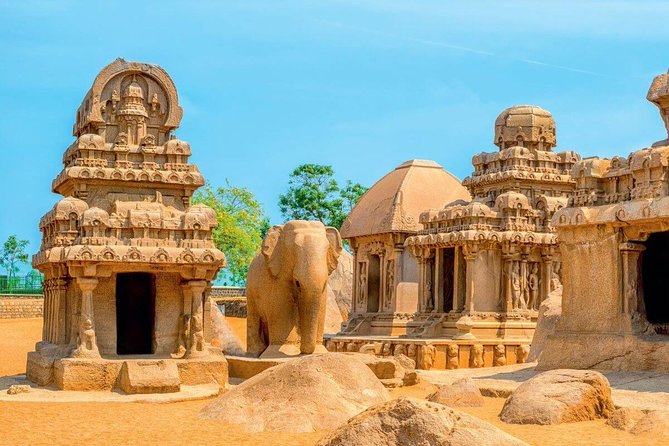
Next up: Pancha Rathas. These are rock-cut monolith temples shaped like chariots, built in the 7th century. Each of the five rathas is dedicated to key characters from the Mahabharata—listed as Draupadi, Arjuna, Nakul-Sahadeva, Bhima, and (the fifth associated with those epic themes in the set).
Why this stop works on a walking tour: you can look at the shapes quickly, compare them, and still catch the deeper meaning through your guide’s commentary. If you’ve ever wondered why ancient sites repeat characters or themes across different buildings, this is a good place to get that connection.
You’ll spend about 30 minutes here, with admission included. It’s long enough to do more than a glance, but short enough to keep the tour from turning into a museum lecture.
Arjuna’s Penance: one long bas-relief story
Then comes Arjuna’s Penance, a bas-relief monument described as one of India’s most magnificent ancient art works. It’s huge—about 100 feet long and 45 feet tall—and the scenes depict stories from the Mahabharata.
Here’s the practical advantage of having a guide: it’s easy to get lost when a wall is covered in figures. A good guide helps you orient yourself—what you’re seeing, how the scenes flow, and what makes the artistry stand out. The stop is about 20 minutes, with admission included, which is usually enough time to take in the overall narrative without getting mentally exhausted.
If you love detail, you might want extra time here. But for most visitors, 20 minutes hits the sweet spot: impressive and memorable, not draining.
Krishna’s Butter Ball and Varaha Cave: the tour’s best contrast

After Arjuna’s Penance, you’ll head to Krishna’s Butter Ball—a boulder that looks like it should slide down a slope but hasn’t reportedly moved for more than a thousand years.
This is one of those stops where your camera will do half the work. The storytelling comes from understanding the famous “impossible” stillness and how the stone sits in its surroundings. The stop is about 15 minutes, with admission included. It’s short, but it’s the kind of short stop that still feels satisfying because the visual impact is immediate.
Next: Varaha Cave Temple. The Varaha cave is carved out of a large piece of granite and dates to the 7th century. It’s described as having taken several decades to complete—an eye-opener when you’re watching how much labor goes into one long-term artistic project.
This stop is also about 15 minutes. The quick timing is the trade-off: caves like Varaha reward slower viewing, but the tour format keeps momentum. If you’re the type who can’t resist studying faces and carvings, focus your time on a few key sections instead of trying to read everything.
Pancha Pandava Cave and Mahishasuramardini Cave: where the carvings feel biggest
Two more cave stops follow, both about 15 minutes each, with admission included.
First is Pancha Pandava Cave, described as the largest cave-temple at Mahabalipuram. It’s supported on six pillars and two pilasters. A quick tip: when you’re in a cave, look up and outward before you start scanning the walls. The structure helps you understand how the space is meant to frame the art.
Then comes Mahishasuramardini Cave, which features some of Mahabalipuram’s most impressive works of art. Unlike the “big single attraction” feel of Butter Ball, this cave is all about density—lots to see in a compact space. Again, your guide’s role becomes more important here: they can point you to the scenes that best represent the cave’s theme, so you’re not just walking along the perimeter trying to guess what’s important.
Even with short timing, these caves tend to be the points where people remember the tour most, because the scale of the carving feels different from open-air structures.
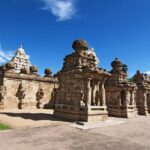


Ganesh Ratha Temple and the Mahabalipuram Lighthouse finish
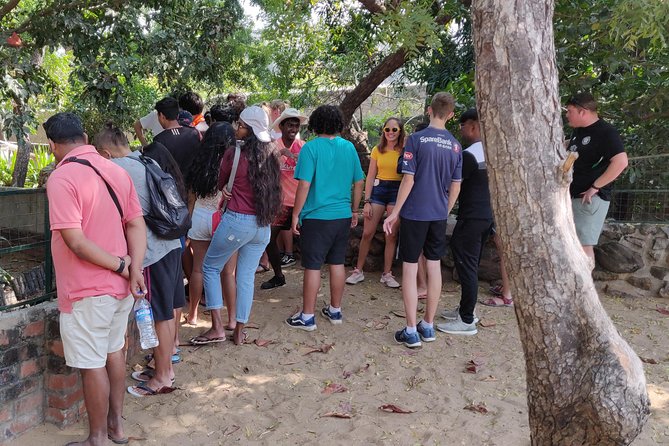
The final monument stop is Ganesh Ratha Temple. It’s an imposing chariot carved from a single stone and originally dedicated to Lord Shiva, later associated with Lord Ganesh. This change in dedication is interesting because it shows how these sites can shift in meaning over time.
You’ll spend about 15 minutes here, with admission included. It’s also a good “last big visual” before you wrap up.
The tour ends near Mahabalipuram Lighthouse, noted as being built in 640 and described as India’s oldest light house and one of the oldest in the world. This is a neat ending because it brings you from religious stonework into the maritime story of the town—Shore Temple and sea views at the start, lighthouse and coast connection at the end.
Time is about 15 minutes. It’s perfect as a finish line, especially after multiple stone-carving stops in a row.
Price and value: what $47 buys you in this part of India
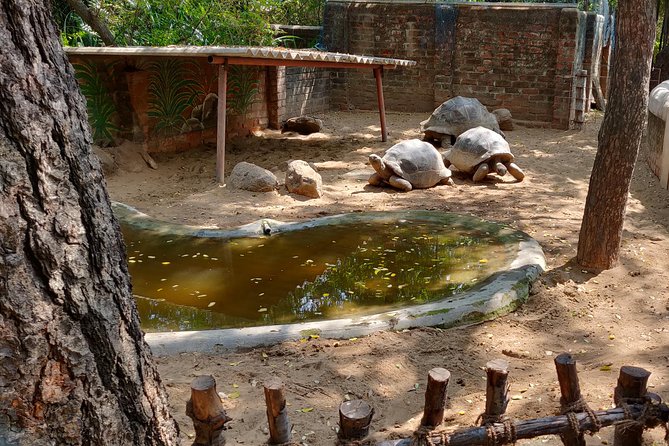
At $47 per person, this tour is priced like a solid half-day experience—especially because entrance fees are included and you’re getting a certified guide for the entire route.
Here’s how to judge the value in practical terms:
- If you would otherwise pay for multiple sites on your own, the admission fees add up quickly. Including them helps.
- If you only have 2–3 hours, you’re paying for efficiency plus interpretation. That’s the difference between seeing stone and understanding stone.
- You also get the option structure: the experience can be a shared tour or you can upgrade to a private tour depending on what you prefer.
One more detail that matters: the tour uses a mobile ticket, which is simple when you’re traveling and don’t want extra paper.
Booking seems to be best if you plan ahead. It’s noted that, on average, people book about 8 days in advance, so aiming for at least a week ahead is a smart move if you’re traveling during busy periods.
Guides, pacing, and the small extras that make it feel personal
The tour’s reviews heavily favor the guides. Names that come up again and again include Rajesh and Basha. People point out that the guidance is not just factual—it’s practical and friendly, with a sense of humor and lots of photo help.
If you’re traveling solo, that personal attention matters even more. One review specifically mentioned the owner, Rajesh, staying with a solo traveler and not leaving her to rely only on a driver. Even if you’re not traveling solo, it’s a useful sign: the company appears engaged, not distant.
You’ll also likely get help with transport choices between monuments. The overall tour idea includes moving between sights on foot, with an option to explore sights on rickshaw. One review also mentioned a tuk-tuk ride offered to see monuments. So if the heat is intense or the walking feels like too much in one stretch, it sounds like your guide won’t ignore the comfort factor.
And yes—food shows up in reviews too. While lunch isn’t listed as an included item, at least a couple of guests described having a great local meal (including fish curry) arranged or recommended around the day. For you, that means: ask your guide what restaurant they’d choose nearby, especially if you want something local rather than a random option.
Who this walking tour is best for
This is a great fit if:
- You’re first-timers in Mahabalipuram and want the headline sites without guesswork
- You like learning the story behind the stone carvings, not just taking photos
- You have a tight schedule and want a route that fits into a 2–3 hour window
- You prefer a private experience where only your group participates (while still being able to choose shared if you want)
It may feel less ideal if:
- You want deep, slow study at one monument. The timing is tight by design.
- You have mobility issues that make stepping around uneven stone or walking between stops hard. The tour does say most travelers can participate, but that doesn’t mean every site will be equally easy to navigate.
Should you book this Mahabalipuram walking tour?
If you want a smart, efficient way to experience Mahabalipuram’s most famous UNESCO-era monuments—Shore Temple, Pancha Rathas, Arjuna’s Penance, Krishna’s Butter Ball, the major cave temples, and the lighthouse—this tour is an easy yes.
Book it if you value a certified guide who can point out what matters and keep the day from dragging. It’s also good value because entrance fees are included, and the route is timed so you actually see everything you came for.
Skip it (or consider a slower private approach) if your travel style is heavy on lingering. With 15–30 minute stops, you’ll get the highlights, not hours of optional rabbit-holing.
FAQ
How long is the Mahabalipuram walking tour?
It runs about 2 to 3 hours.
What’s included in the ticket price?
The tour includes entrance fees and a certified guide.
Where do we start and where does the tour end?
You start at Mahabalipuram Shore Temple (Beach Rd) and the tour ends near Krishna’s Butter Ball (E Raja St).
Is this tour shared or private?
You can choose a shared tour, or upgrade to a private tour for a more personalized experience.
Do I get a mobile ticket?
Yes. The tour offers a mobile ticket.
Is cancellation allowed?
Yes, free cancellation is available up to 24 hours in advance for a full refund.
Is the tour suitable for most people?
The info says most travelers can participate, and it’s near public transportation.