REVIEW · BANGALORE
World Heritage Hampi & Chitradurga in 2 days from Bangalore+Lunch
Book on Viator →Operated by Bangalore and Beyond · Bookable on Viator
One long day of temples can feel like a blur. This two-day trip turns Hampi and Chitradurga Fort into a tight, teachable route: you’ll see major Vijayanagara-era sites, plus the big-scale drama of a mighty fortification—all with tickets handled and a licensed local guide keeping the story straight. It’s a strong way to go from Bangalore with less planning stress and more time actually looking.
I especially like two things: first, the route hits the must-sees (Virupaksha, Vittala, Queen’s Bath, and more) without wasting your mornings. Second, the pacing makes it feel doable even when you’re dealing with sun, stone, and plenty of walking—plus the guide I learned from, Rama Krishna, was warm and detailed. The main drawback is practical: you’ll be on rocky terrain in the heat, so if you’re not comfortable walking a lot, this won’t be your kind of vacation.
In This Review
- Key highlights at a glance
- Bangalore to Hampi and Chitradurga in 2 days: what you’re really buying
- Morning pickup and the ride out: smoother than DIY, still real travel
- Hampi day 1: temples, carvings, and that first wow-factor
- Virupaksha Temple: the living heart of Hampi
- Badavi Linga: the Shiva Lingas that stop you mid-step
- Hazara Rama Temple: stone walls that tell stories
- Sasivekalu Ganesha: a monolithic Ganesha at the hill’s feet
- Malyavanta Raghunathaswamy Temple (Fatik Shilla): sunset views that matter
- Hampi day 2: the iconic Vijaya Vittala area and royal waterworks
- Vijaya Vittala Temple: the stone chariot
- Lotus Mahal and the Zenana enclosure: royals in stone comfort
- Dasara Dibba: the king’s enclosure and the origin point
- Queen’s Bath: ornate royal waterwork
- Chitradurga Fort: switching from temple scale to fort scale
- What’s included (and why it matters more than you think)
- Walking, sun, and temple etiquette: how to show up and actually enjoy it
- How the small-group format changes the feel
- Language options: a detail that can change comfort
- Price, timing, and booking sense
- Should you book this 2-day Hampi & Chitradurga tour?
- FAQ
- What time does the tour start?
- Is pickup available from Bangalore?
- Are admission tickets included for the sites?
- Is lunch included?
- How much walking should I expect?
- Do I need to dress a certain way for temples?
- What if the weather is bad?
Key highlights at a glance
- UNESCO Hampi across major Vijayanagara sites in one focused two-day loop
- Chitradurga Fort added for a second dose of fort, legend, and big views
- Tickets and guide included at every listed temple/monument stop
- Two lunches included, which keeps the day from turning into a snack hunt
- Small group size (max 10) helps the tour feel manageable
- Living temples + covered-shoulder guidance, so you dress smart from the start
Bangalore to Hampi and Chitradurga in 2 days: what you’re really buying
This is a practical “high-impact” itinerary. You start from Central Bengaluru at 8:00 am, ride in an air-conditioned vehicle, and spend the day moving between major sights that sit far enough apart that independent travel turns into extra time and extra hassle. The tour also includes the things that quietly add up on a DIY trip: admission tickets at each stop, a government licensed local guide, and two lunches.
The price—$215.32 per person—isn’t just for transportation. It’s for the combo of (1) guided access to many key sites in Hampi, (2) ticket coverage at those sites, and (3) the second destination in Chitradurga Fort. If you’ve ever tried to line up drivers, tickets, and timing across two heritage areas, you’ll understand why this can feel like better value than it first appears.
And here’s the honest vibe: this isn’t a sit-and-stare tour. You’ll walk. You’ll climb. You’ll pause for views. Then you’ll walk some more. The payoff is that you’re seeing the monuments where they live—temples you can still enter, corridors of stone carvings, and fort walls that make the region feel strategically important.
You can also read our reviews of more historical tours in Bangalore
Morning pickup and the ride out: smoother than DIY, still real travel
The tour includes hotel pickup and drop-off from Central Bengaluru, plus an air-conditioned vehicle. That matters because Hampi isn’t a quick hop. You’re trading the stress of arranging transport for a more guided rhythm.
Your day isn’t only sightseeing time. After the morning temple sequence on Day 1, you’ll spend additional hours in transportation—so the tour stays efficient without pretending the drive doesn’t exist. If you’re the type who likes to fully control your schedule, you’ll still feel the guide’s discretion in how the order plays out. That’s normal here because the day’s flow depends on site conditions and timing.
Also: you’ll be moving as a group, and there’s a cap of 10 travelers. That’s small enough that you’re not lost in a crowd, but big enough to keep the logistics smooth. Expect the guide to manage pacing for stops that can look short on a timetable but take time in real life when you’re stopping to read carvings and take photos.
Hampi day 1: temples, carvings, and that first wow-factor
Day 1 is built around the core temple zone of Hampi, with short, focused stops. The total time on each site is listed as about 10–30 minutes, but in practice those windows work because you’re bouncing between nearby highlights rather than sitting in traffic inside the ruins.
Virupaksha Temple: the living heart of Hampi
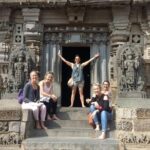
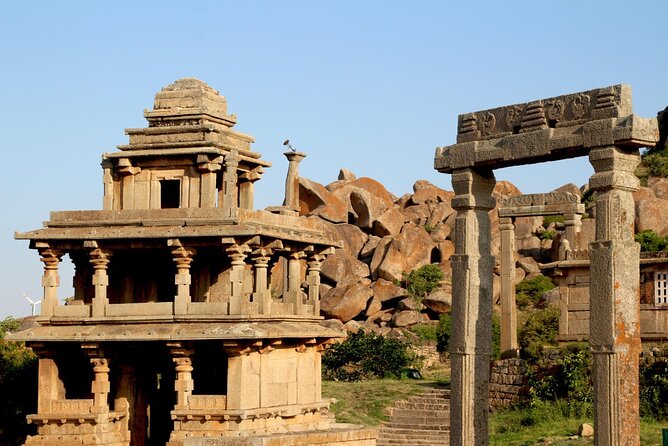
You’ll start at Virupaksha Temple, described as the biggest living temple in Hampi, with Hemakuta Hill on one side and the Tungabhadra River on the other. This isn’t only a monument—it’s still functioning. That changes the feel. You’re not just looking at stones behind a fence. You’re seeing a temple that continues its day-to-day life while the ancient city surrounds it.
What I like about this first stop is that it gives you context fast. Once you see the temple’s scale and placement, the rest of Hampi clicks into place as a real urban center, not just a collection of ruins.
Badavi Linga: the Shiva Lingas that stop you mid-step
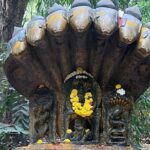
Next up is Badavi Linga, where the standout is the Lakshmi Narasimha statue nearby and the idea that Badavi Linga is among the top Shiva Lingas in the country. These kinds of sites are often “blink and you miss it” if you go alone, because you might not know what to pay attention to.
Here, the guide framing helps. You end up looking longer at details you would otherwise skip: the scale of the stonework, the ritual focus of the space, and the way Hampi layers different sacred themes in close proximity.
You can also read our reviews of more tours and experiences in Bangalore





Hazara Rama Temple: stone walls that tell stories
At Hazara Rama Temple, you’re looking at hundreds of Ramayana stories carved on the walls. This is where you slow down a bit, because carvings like that feel like visual text. Even if you only catch pieces, you’ll understand why Hampi is famous for workmanship.
One practical note: this stop involves standing and looking up. If you hate neck strain, bring your water and keep your breaks short and frequent.
Sasivekalu Ganesha: a monolithic Ganesha at the hill’s feet
Then you’ll visit Sasivekalu Ganesha Temple, known for its huge monolithic statue of Lord Ganesha at the foothills of Hemakuta. This is the kind of moment that changes photos from “temple pictures” into “okay, I get why people talk about this place.”
The stone is the star, and the setting makes it feel even more monumental.
Malyavanta Raghunathaswamy Temple (Fatik Shilla): sunset views that matter
Day 1 finishes with Malyavanta Raghunathaswamy Temple – Fatik Shilla, plus a sunset view from the top. The tour calls it an alluring visual you’ll likely remember, and that checks out logically: after a day of carvings and courtyards, you finally get the wide perspective.
This is also where the tour’s fitness note becomes real. You’ll be walking on uneven ground. Dress for legs and shoulders to be covered (especially at living temples), and aim for breathable clothing that you don’t mind dusting off. A hat helps. Sunglasses help more.
Hampi day 2: the iconic Vijaya Vittala area and royal waterworks
Day 2 shifts to the famous Vijayanagara structures that people come to Hampi for: Vijaya Vittala Temple, the Lotus Mahal enclosure, the royal king’s court area, and the bath complex. Then you add Chitradurga Fort for contrast.
Vijaya Vittala Temple: the stone chariot
At Vijaya Vittala Temple, you’ll see key Vijayanagara architecture, including the iconic Stone Chariot. This is often the photo everyone recognizes, but it’s still worth seeing in person because the surrounding stone structures have the same high-detail style in multiple scales.
This is also a good moment to slow down and notice how the temple area is built as a whole, not just one monument. Even if you only have an hour across the day, you’ll leave with a clearer mental map of what made Vijayanagara powerful.
Lotus Mahal and the Zenana enclosure: royals in stone comfort
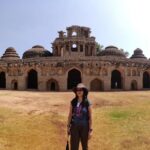
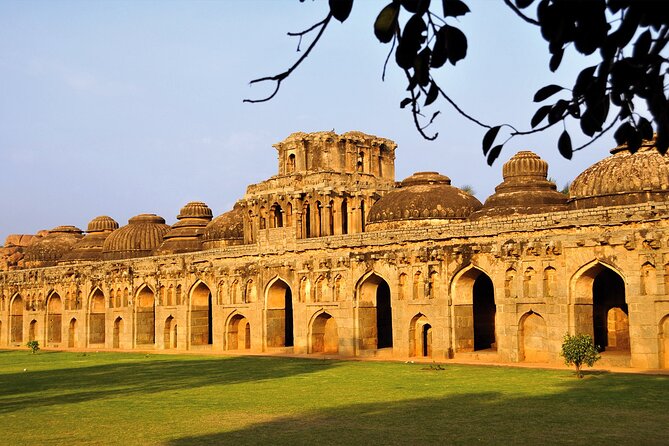
Next is Lotus Mahal, part of the Zenana enclosure. The main structures here include Lotus Mahal and the Elephant Stables. This stop is especially valuable if you like how historical spaces were designed for specific people and daily routines—not only for prayers.
You’ll see a more domestic-feeling side of the era, even though it’s carved from stone. It’s a nice change from the temple-only sequence of Day 1.
Dasara Dibba: the king’s enclosure and the origin point
At Dasara Dibba, you’re visiting a part of the king’s enclosure that is mostly ruins. The tour notes that the world-famous Dasara procession has its origin here. Even if you’re not an expert on the festival, the place matters because it connects architecture to a tradition.
This is one of those stops where the guide’s interpretation helps you read the space. Ruins can feel like random piles if you don’t know what function used to happen in that exact spot.
Queen’s Bath: ornate royal waterwork
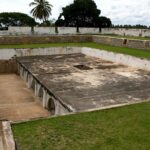
Then comes Queen’s Bath, an ornate bathing area built for royal ladies during the Vijayanagar regime. It’s short at about 15 minutes, but it’s focused. The details are what you’ll want to spot: how the pool is built, how it’s shaped, and how “private luxury” gets translated into architecture.
If you’re sweating in the sun, this is also a mental reset—your brain gets to picture water as part of the city’s design.
Chitradurga Fort: switching from temple scale to fort scale
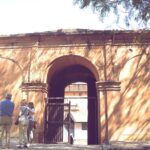
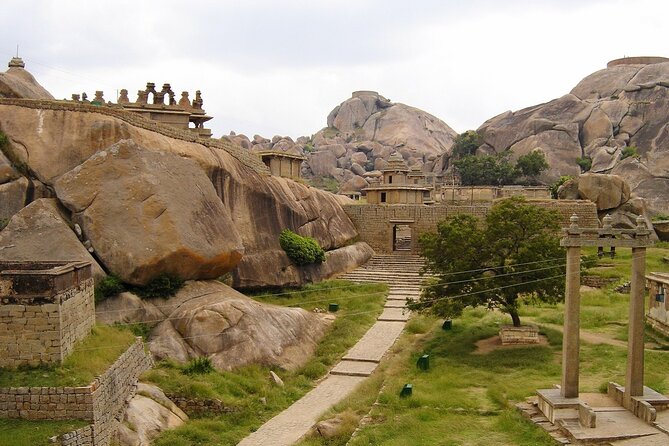
Chitradurga Fort is the Day 2 finale, and it plays a different role than Hampi. If Hampi feels like stone devotion and royal city planning, Chitradurga Fort feels like defense and control of terrain. The tour describes it as among the finest fortifications in South India and uses strong language like impregnable and formidable. Even if you don’t take every word literally, the fort’s mood is hard to miss.
You’ll have about 30 minutes here, including admission. That’s enough to walk the key areas, take photos from strategic angles, and notice the engineering logic behind the fort’s structure. It’s also locally known as Elusuttina Kote, which is a fun name to remember because it gives the fort an identity beyond English labels.
Practical reality: forts mean more steps and more uneven ground. Keep your shoes solid and non-slip.
What’s included (and why it matters more than you think)
This tour includes:
- Hotel pickup and drop-off from Central Bengaluru
- A government licensed local guide
- Air-conditioned vehicle
- All fees and taxes
- Lunch (2)
- Admission tickets included for the listed stops
- Mobile ticket
- Group discounts (when applicable)
The big practical value is the admission coverage and guide. In a place like Hampi, a lot of what you enjoy depends on noticing the right details: carvings, significance of monuments, and how the city functioned. A good guide turns a “temple run” into an understandable route.
And the lunches help. When you’re visiting multiple monuments and walking all day, the wrong plan becomes a constant snack search. Here, lunch is already baked in.
Walking, sun, and temple etiquette: how to show up and actually enjoy it

The tour explicitly warns about plenty of walking on rocky terrain under hot sun on both days. That’s not a small detail. It affects what kind of photos you can take, how long you’ll want to pause, and whether you’ll end up rushing through parts.
Your best moves:
- Wear comfortable walking shoes with grip
- Bring water and take short breaks before you feel wiped out
- Dress with legs and shoulders covered, since it’s required for living temples
- Use a hat and sunscreen if you’re sun-sensitive
Moderate physical fitness is recommended. Also, it’s not advisable for children below 5. If you’re traveling with older kids, plan around the walking and the heat.
How the small-group format changes the feel
With a maximum of 10 travelers, the guide can manage questions and keep the group together without constant regrouping. That helps in Hampi, where sightlines and photo stops can slow groups down.
One of the strongest signals from the experience is that the pacing works. Even with the density of stops, it doesn’t feel like you’re constantly being herded. The goal is to keep the day moving while still giving you enough time to look at carvings and soak up the big views when they happen.
Language options: a detail that can change comfort
Guides speaking French, German, and Italian are available subject to availability. If you’re choosing this tour because you want easier communication, this is one of the quiet advantages. You’ll follow the explanations better, and you’ll likely enjoy the carvings and story points more.
Price, timing, and booking sense
You’re looking at a 2-day trip from Bangalore with two heritage areas packed together. It’s scheduled to start at 8:00 am, and confirmations happen at booking. It’s also described as being commonly booked around 25 days in advance, which tells me demand is steady in season.
If you’re trying to minimize uncertainty, book early. If weather conditions are rough, the tour says it needs good weather and may be offered a different date or refunded. That’s a fair trade when the sites involve outdoor walking and views.
Should you book this 2-day Hampi & Chitradurga tour?
Book it if you want:
- A guided shortcut through two major heritage zones
- Tickets handled and a licensed local guide at key sites
- A route that’s active but not chaotic, with lunch included
- The big Hampi hits plus a solid add-on in Chitradurga Fort
Skip it (or consider a different pace) if:
- You don’t handle heat or uneven rocky walking well
- You prefer slow travel with long stays in fewer places
- You’re looking for a mostly indoor experience (this isn’t that)
For most visitors, this is a smart way to use limited time in Karnataka. You’ll come away with a clear mental picture of Vijayanagara power at Hampi, then switch gears to see why Chitradurga mattered strategically. It’s a lot in two days—but it’s the kind of lot that’s worth doing with help.
FAQ
What time does the tour start?
The tour start time is 8:00 am.
Is pickup available from Bangalore?
Yes. The tour includes hotel pickup and drop-off from Central Bengaluru.
Are admission tickets included for the sites?
Yes. Admission tickets are included for each listed stop on both days.
Is lunch included?
Yes. Lunch is included for both days (2 lunches total). Breakfast and dinner are not included.
How much walking should I expect?
The tour includes plenty of walking on rocky terrain under hot sun on both days, and you’ll also be going to hilltop viewpoints.
Do I need to dress a certain way for temples?
Yes. It’s advised to cover your legs and shoulders to visit living temples.
What if the weather is bad?
The experience requires good weather. If it’s canceled due to poor weather, you’ll be offered a different date or a full refund.